
Why Shymkent Data Centers Need a Dedicated Blowdown Strategy
Shymkent's continental semi-arid climate forces cooling-tower operators to set cycles of concentration, not raw flow, as the binding design lever, because hot summers drive evaporative loss and concentrate dissolved solids faster than in temperate sites. At roughly 4 cycles of concentration, about 25–30% of makeup water is purged as blowdown, a stream that grows more mineralized and more chemically loaded the harder the tower is pushed (genesiswatertech.com).
Pushing to 6–8 cycles shrinks that fraction but raises TDS, silica, and scaling risk to the point where antiscalant programs and recovery limits become the constraints. Shymkent draws from the Sayram and Badam river system with transboundary contributions, a watershed already shared with municipal demand, irrigated agriculture, and existing industry, so a new hyperscale or colocation hall adds a constant, inflexible withdrawal to an allocated basin. Sprenger, the NC State hydrologist quoted on the US data-center boom, frames the same problem in US terms: a large, continuous industrial user "fundamentally alters a watershed because its water demand never sleeps," and open-loop evaporative cooling "extracts water and evaporates it every day of the year" until the natural balance is disrupted (cnr.ncsu.edu). On the indirect side, Kazakhstan's grid mix is dominated by gas- and coal-fired thermal generation, and the Ceres analysis cited in the same reporting found that 78% of electricity in the surveyed states came from water-using thermal plants, with 66% of that generation in medium-high to extremely high water-stress basins, a logic that translates directly to Central-Asia thermal cooling demand (cnr.ncsu.edu). The practical answer for a Shymkent 2026 build is to design for discharge compliance in year 1, partial reuse in year 2 as cycles of concentration are pushed, and partial ZLD via MVC only when basin limits or discharge fees force it, an approach that mirrors the engineering logic in our parallel data-center blowdown engineering guide for Virar.
What the Shymkent Blowdown Stream Actually Looks Like
A Shymkent blowdown specification has to be built from cycles of concentration multiplied by makeup quality, because the same tower can produce a vastly different stream depending on which city supply feeds it. Genesis Water Technologies documents TDS of 1,200–6,000 mg/L, scaling minerals (calcium, magnesium, silica, alkalinity) that concentrate proportionally, and suspended solids of 10–50 mg/L from corrosion products, biofilm fragments, and airborne dust (genesiswatertech.com). Because Shymkent's municipal supply sits on the harder end of typical Central-Asia tap water, the upper half of that TDS band is the realistic design point, and silica is usually the first foulant to defeat a conventional RO on this stream. Treatment-chemistry residuals are part of the influent, not an afterthought: biocides, corrosion and scale inhibitors, and dispersants accumulate at cycles of concentration, and legacy chromate or high-phosphate programs are incompatible with downstream membranes and with any reuse or discharge permit scrutiny (genesiswatertech.com). Suspended solids have to be cut to <10–15 microns before any RO or NF stage, and biological content (planktonic bacteria, algae, biofilm organisms) has to be controlled in any recovery system, especially in a hot climate where biofilm growth is aggressive. A defensible Shymkent influent specification, used the same way as in the Meerut data-center blowdown engineering guide, looks like this:
| Parameter | Typical Shymkent blowdown range | Design implication |
|---|---|---|
| TDS | 1,200–6,000 mg/L (4–8× makeup) | Sets osmotic pressure and recovery ceiling on RO |
| Silica (as SiO₂) | Concentrates with cycles; often the binding foulant | Pushes design toward RO over NF; demands high-silica-tolerant antiscalant |
| Hardness (Ca, Mg) | Scales with cycles, often >1,000 mg/L as CaCO₃ | Drives antiscalant dose and CIP frequency |
| Suspended solids | 10–50 mg/L | Must be cut to <10–15 µm before RO/NF |
| Treatment-chemistry residuals | Biocides, scale/corrosion inhibitors, dispersants | Non-phosphate, low-toxicity programs required for reuse/discharge |
| Biological content | Planktonic bacteria, algae, biofilm fragments | Needs control in any recovery loop, especially in hot climate |
The 2026 Treatment Train: Side-Stream Filtration to RO (and When to Add MVC)
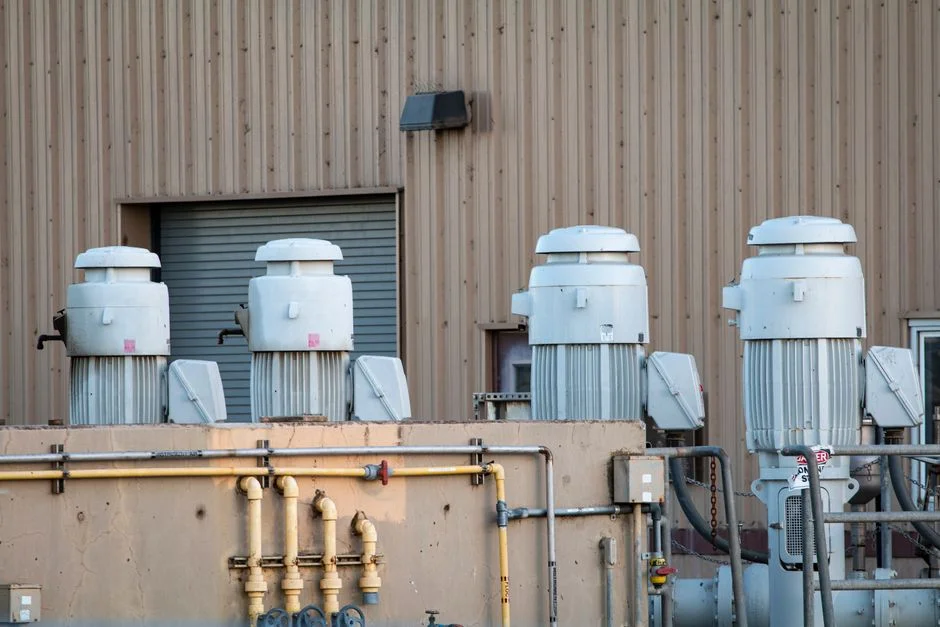
A Shymkent treatment train is a sequence of pretreatment steps whose job is to put the blowdown into a state the RO can actually accept, then recover the water with the right combination of membranes and, where justified, thermal concentration. Side-stream filtration at 1–5% of circulation flow, using self-cleaning 10–25 micron units, enables higher cycles of concentration and drops blowdown TSS to membrane-tolerable levels; CAPEX sits in the $50,000–$200,000 band for typical data-center installations (genesiswatertech.com). Ultrafiltration is the workhorse pretreatment ahead of RO/NF, with 0.01–0.1 micron PVDF membranes at 10–30 psi and 90–95% recovery, removing suspended solids, bacteria, and high-MW organics while passing dissolved salts (genesiswatertech.com). Reverse osmosis is the core recovery step: 150–400 psi, 95–99% salt rejection, permeate at 10–50 mg/L TDS, with 50–85% recovery on blowdown limited by scaling chemistry (genesiswatertech.com). Nanofiltration is the right choice when hardness is the binding limit and full demineralization is unnecessary: 75–150 psi, 70–85% recovery, permeate TDS around 30–50% of feed (genesiswatertech.com). High-silica Shymkent feed pushes designs toward RO rather than NF, and if the facility wants to exceed 80% overall recovery, chemistry-aware architectures — controlled precipitation of sparingly soluble salts in a fluidized-bed reactor plus dynamic RO operation that alternates production with high-velocity flushing — reach roughly 95% recovery with permeate silica around 1 mg/L, versus 75–80% for conventional BWRO (ide-tech.com). Mechanical vapor compression on the RO concentrate is the practical bridge to partial ZLD: 95–98% recovery, distillate below 10 mg/L TDS, CAPEX $1–3 million for 10,000–30,000 GPD, 15–25 kWh per 1,000 gal of distillate (genesiswatertech.com). Full ZLD, combining RO + MVC + crystallizer, hits 95–99% overall recovery at $3–8 million CAPEX and $5–$15 per 1,000 gal OPEX, and is reserved for sites where discharge is genuinely unavailable (genesiswatertech.com). A practical Shymkent reference train reads: self-cleaning side-stream filter → HydropureWater hollow-fiber UF system → antiscalant-dosed RO via a HydropureWater industrial RO system at 50–75% local recovery → MVC on the RO concentrate for any project committing to >85% overall recovery. The same block view, in table form for procurement and design review:
| Stage | Function | Operating envelope | Shymkent role |
|---|---|---|---|
| Self-cleaning side-stream filter (10–25 µm) | Cuts suspended solids, enables higher cycles | 1–5% of circulation flow; $50,000–$200,000 CAPEX | Always included; protects downstream membranes |
| UF (0.01–0.1 µm PVDF) | Removes TSS, bacteria, high-MW organics | 10–30 psi, 90–95% recovery | RO/NF pretreatment baseline |
| NF (when hardness is the binding limit) | Partial softening, sulfate removal | 75–150 psi, 70–85% recovery, permeate 30–50% of feed TDS | Optional, not preferred for high-silica feed |
| RO (brackish, antiscalant-dosed) | Core recovery; 95–99% salt rejection | 150–400 psi, 50–85% recovery, permeate 10–50 mg/L TDS | Main reuse step; permeate returned as tower makeup |
| Chemistry-aware RO + fluidized-bed salt precipitation (high-recovery variant) | Pushes overall recovery to ~95% | ~1 mg/L silica in permeate; permeate suitable for high-COC tower | For hyperscale builds that must minimize freshwater draw |
| MVC on RO concentrate | Bridge to partial ZLD | 95–98% recovery, distillate <10 mg/L TDS, 15–25 kWh/1,000 gal | Only when discharge fees or basin rules force it |
| Full ZLD (RO + MVC + crystallizer) | No liquid discharge | 95–99% recovery; $3–8 million CAPEX; $5–$15/1,000 gal OPEX | Reserved for sites with no discharge path |
Matching the Train to Shymkent Site Conditions
The technology inventory above is only useful if the engineer can map it to the specific Shymkent site condition in front of them, so the choice is best framed as a small set of decision branches. If makeup is treated municipal water and discharge to the Sayram/Badam catchment is unrestricted, side-stream filtration plus UF plus RO for makeup reuse is the cost-optimized baseline, with 60–85% recovery realistic on blowdown (genesiswatertech.com). If discharge fees or local TDS caps limit what can be sent to drain, add MVC to the RO concentrate to shrink liquid waste to a small brine volume, accepting the $1–3 million MVC CAPEX band for 10,000–30,000 GPD (genesiswatertech.com). If makeup must shift to treated municipal wastewater or reclaimed industrial water to free potable supply for the city, tighten pretreatment to <10 microns, expect feed TDS of 600–1,200 mg/L, and target cooling-tower makeup at 500–1,500 mg/L TDS (genesiswatertech.com). If the site sits in a Kazakhstan industrial zone with a nearby process wastewater partner, the same UF+RO architecture can blend external reclaimed water with internal blowdown permeate, the same configuration that let one Texas hyperscaler cut municipal water use by 35% on 2.5 million gal/month of blowdown (genesiswatertech.com). If hyperscale AI workloads push facility power into the 100 MW class, on the order of 2 million L/day per IDE Tech framing, a high-recovery chemistry-aware train becomes economically unavoidable rather than optional (ide-tech.com). The same decision logic, condensed for the engineer presenting to procurement:
| Site condition | Recommended train | Recovery target | Cost band |
|---|---|---|---|
| Treated municipal makeup, unrestricted Sayram/Badam discharge | Side-stream filter + UF + RO | 60–85% on blowdown | RO skid $250,000–$500,000 installed |
| Discharge-fee or local TDS cap binding | Add MVC to RO concentrate | >85% overall | MVC $1–3 million for 10,000–30,000 GPD |
| Makeup shifting to treated wastewater | Tighten pretreatment to <10 µm, UF + RO | 60–85% on blowdown | Same RO band, plus pretreatment scope |
| Industrial-zone partner with process wastewater | UF + RO, blend external reclaim with blowdown permeate | 35% municipal-water reduction (Texas reference) | Add blending and equalization |
| 100 MW class AI workload | Chemistry-aware RO + fluidized-bed salt precipitation + MVC | ~95% overall; permeate silica ~1 mg/L | Upper end of $3–8 million ZLD-equivalent |
Compliance, Permitting and Reuse in Kazakhstan
Kazakhstan's water-use and discharge framework, anchored in the Ecological Code and the "Rules for water use and protection," imposes concentration and quality limits on industrial discharge that an engineer cannot ignore, even if the exact basin limit is not yet published for the receiving segment of the Sayram/Badam system. The safer design target is to treat blowdown to a TDS below 1,500 mg/L, the cap already cited for some water-stressed jurisdictions, because a permit reviewer will read a sub-1,500 mg/L design as inherently compliant, while a 4,000–6,000 mg/L design requires a site-specific argument (genesiswatertech.com). Indirect water must be argued in the same environmental statement, because Kazakhstan's grid is dominated by gas and coal, both water-using thermal generation; the Ceres analysis cited by Sprenger reported 78% of surveyed-state electricity coming from water-using thermal plants and 66% of that generation in medium-high to extremely high water-stress basins, the same disclosure logic that a Shymkent ESIA should mirror (cnr.ncsu.edu). Permeate at 10–50 mg/L TDS from RO is suitable for direct return to the cooling tower as high-quality makeup; for landscape or washdown reuse, the engineer should request the site-specific Kazakhstan reuse guidance from the local environmental authority before sizing the blend (genesiswatertech.com). Chemical compatibility matters at the permit stage as well: a non-phosphate, low-toxicity cooling-water program (tablet biocide plus scale inhibitor) keeps the blowdown compatible with downstream membranes and with any future reuse permit, where legacy chromate or high-phosphate chemistry would not (genesiswatertech.com). The discharge-fee economics are real: at $5–$15 per 1,000 gal avoided discharge fees, a Shymkent facility that treats 2.5 million gal/month of blowdown captures meaningful opex savings even before water-cost benefits are counted (genesiswatertech.com). For broader Kazakhstan delivery and assembly context, the Kazakhstan STP price and CAPEX benchmark for 2026 is a useful cross-check on the import-duty and site-assembly line items that US reference projects tend to omit.
Budgeting the Shymkent Blowdown System
Procurement and finance have to see the same numbers the engineer designed to, and Shymkent's import-duty and site-assembly reality has to be visible in the budget rather than buried in a contingency. Reference bands from the research: a 50,000 GPD RO skid at $250,000–$500,000 installed and $1.50–$3.00 per 1,000 gal OPEX; MVC at $1–3 million for 10,000–30,000 GPD; full ZLD at $3–8 million and $5–$15 per 1,000 gal (genesiswatertech.com). A 50,000 GPD RO producing 15,000–25,000 GPD of concentrate typically needs a parallel MVC sized at 10,000–20,000 GPD if the project commits to >85% overall recovery, which is the realistic Shymkent sizing band where partial ZLD pays back via avoided discharge and lower freshwater pumping (genesiswatertech.com, ide-tech.com). Side-stream filtration at $50,000–$200,000 is small relative to the membrane train but decisive for membrane life (genesiswatertech.com). Antiscalant and cleaning-chemical OPEX scales with feed silica and hardness, so Shymkent's harder feed sits in the higher half of the $1.50–$3.00/1,000 gal band, and HydropureWater antiscalant and biocide dosing skid sizing should be checked against the upper end of that range. Permitting, import duties on skidded RO/UF equipment, and on-site assembly should be added as a separate 15–25% line to the equipment CAPEX band when budgeting for Kazakhstan delivery, because these costs are not visible in US-based reference projects. Energy is the line item that has to be reconciled with the data-center's PUE and any on-site solar or PPA strategy: at 15–25 kWh per 1,000 gal of MVC distillate, a 15,000 GPD MVC train adds roughly 10,000–18,000 kWh/day. A budget view for procurement review:
| Line item | Reference band | Shymkent adjustment |
|---|---|---|
| 50,000 GPD RO skid, installed | $250,000–$500,000 | +15–25% for import duty and on-site assembly |
| RO OPEX | $1.50–$3.00 per 1,000 gal | Use upper half for high-silica, high-hardness feed |
| Self-cleaning side-stream filter | $50,000–$200,000 | Add multi-media pre-filter if makeup shifts to treated wastewater |
| MVC (10,000–30,000 GPD) | $1–3 million CAPEX; 15–25 kWh/1,000 gal distillate | Only justified for >85% overall recovery or discharge-fee binding |
| Full ZLD (RO + MVC + crystallizer) | $3–8 million CAPEX; $5–$15/1,000 gal OPEX | Reserved for sites with no discharge path |
| Antiscalant / cleaning chemistry | Inside $1.50–$3.00/1,000 gal RO OPEX | Size dosing skid to upper-half feed envelope |
| Membrane replacement reserve | Part of RO OPEX | Source HydropureWater RO/UF membrane elements with Kazakhstan logistics built into the spares plan |
Frequently Asked Questions
How do cycles of concentration change blowdown volume on a Shymkent cooling tower?
At roughly 4 cycles of concentration, about 25–30% of makeup water is lost to blowdown, so a facility using 10 million gal/month discharges 2.5–3 million gal/month. Pushing to 6–8 cycles shrinks that fraction but raises TDS, silica, and scaling risk, and silica is usually the first foulant to break a conventional RO above 6 cycles (genesiswatertech.com).
Should a Shymkent data center use RO or NF on its blowdown?
NF runs at 75–150 psi, 70–85% recovery, and permeate TDS around 30–50% of feed, which is attractive when hardness is the binding limit. High-silica Shymkent feed pushes the design toward RO, which delivers 95–99% salt rejection, permeate at 10–50 mg/L TDS, and 50–85% recovery on blowdown, at the cost of higher pressure (150–400 psi) and tighter antiscalant control (genesiswatertech.com).
What does a 50,000 GPD blowdown RO realistically cost in Kazakhstan?
The reference band is $250,000–$500,000 installed with OPEX of $1.50–$3.00 per 1,000 gal treated. For Kazakhstan delivery, the engineer should add a 15–25% line for import duty, skidded-equipment logistics, and on-site assembly, which is not visible in US reference projects, and then size antiscalant and membrane spares to the upper half of the OPEX band for high-silica, high-hardness feed (genesiswatertech.com).
When does it make economic sense to add MVC or full ZLD in Shymkent?
MVC sits at $1–3 million CAPEX for 10,000–30,000 GPD with distillate below 10 mg/L TDS, and full ZLD at $3–8 million CAPEX and $5–$15 per 1,000 gal OPEX. Both pay back when discharge fees of $5–$15 per 1,000 gal are binding or when the receiving segment of the Sayram/Badam system rejects discharge altogether; otherwise a discharge-compliant RO in year 1 with provision for an MVC retrofit in year 2–3 is the defensible sequencing (genesiswatertech.com).
What should a Shymkent hyperscaler ask a shortlist of blowdown-treatment suppliers?
The shortlist should be asked for guaranteed membrane performance on a high-silica, high-hardness Shymkent feed simulation, a documented antiscalant program compatible with downstream membranes and any future reuse permit, integrated side-stream filtration sized to enable the target cycles of concentration, a permeate-blending strategy that ties the blowdown RO into the cooling-tower makeup header, and a Kazakhstan delivery plan with import-duty and on-site assembly costs broken out as a separate 15–25% line (genesiswatertech.com, ide-tech.com).