Why cooling blowdown, not server heat, defines a Hiroshima data center's wastewater problem
A data center in Hiroshima, Japan, in 2026 needs a cooling blowdown treatment train designed around the Seto Inland Sea's discharge sensitivity, the local circular-economy push for reclaimed water documented at the July 2026 Hiroshima University NERPS seminar, and water-stress economics that make high cycles of concentration (COC) financially rational. At 4 COC, 25–30% of makeup water exits as blowdown with TDS of 1,200–6,000 mg/L, suspended solids of 10–50 mg/L, and accumulated biocides, inhibitors, and corrosion byproducts (Genesis Water Tech, 2026).
The 2026 LCA by Cartagena Vaca et al. (2026) shows that reclaimed municipal wastewater runs at roughly 2× the GWP of freshwater, with treatment energy responsible for about 80% of the difference, but a fully decarbonized grid shrinks that gap to negligible while freshwater savings persist. Practically, the train combines side-stream filtration (1–5% of circulation flow), UF pretreatment, NF or RO for hardness/silica control, and optionally MVC for high recovery, sized against Hiroshima's climate-driven evaporation load and Japan's local discharge and reuse rules.
The engineering conversation around a Hiroshima facility almost always opens with IT load, but the wastewater problem is set by the cooling loop. A tower operating at 4 COC loses 25–30% of makeup water as blowdown (Genesis Water Tech, 2026), so a 10 MGD facility discharges 2.5–3 MGD before any process water, sanitary load, or humidification overflow is added. That volume, not the gallons circulating through servers, is what the local sewer or surface-water discharge permit must accept. The Seto Inland Sea's semi-enclosed hydrography makes blowdown salinity, temperature, and biocide residuals a design constraint that should be treated as binding, even when specific Japanese numeric effluent limits are not in front of the engineer at sketch stage. The July 2026 NERPS special lecture at Hiroshima University (Hartley, 2026) frames the issue explicitly as a circular-economy problem and names closed-loop cooling, wastewater reuse, and municipal–data-center co-location as the three operational strategies Japan will need to scale. The trade-off the rest of this article resolves is therefore binary in framing but quantitative in practice: treat for discharge, for makeup reuse, or for zero liquid discharge, with the 2026 Cartagena Vaca et al. LCA evidence shifting the answer as Japan's grid decarbonizes.
What actually comes out of the cooling tower: blowdown chemistry a 2026 design must handle
The contaminant envelope downstream membranes must handle is set by four concentrating mechanisms, and every Hiroshima design should be sized against the same envelope (Genesis Water Tech, 2026). Total dissolved solids (TDS) is the headline parameter: blowdown TDS lands at 4–8× makeup water, typically 1,200–6,000 mg/L depending on COC and source water, and it determines whether the train is sized around softening, partial desalination, or full RO. Scaling minerals — calcium, magnesium, silica, and alkalinity — concentrate proportionally and decide whether nanofiltration alone can lift cycles, or whether reverse osmosis is needed for silica control on a Hiroshima source with elevated silica. Treatment chemicals accumulate in the same stream: biocides, corrosion inhibitors, scale inhibitors, and dispersants all rise with COC, and legacy chromate or high-phosphate programs, where they exist in older Japanese sites, will complicate both reuse and discharge. Suspended solids sit at 10–50 mg/L even with basin filtration — corrosion products, biofilm fragments, and airborne particulates — and they set the fineness required ahead of any membrane.
Biological content rounds out the envelope: planktonic bacteria, algae, and biofilm organisms persist in any recovery loop and tie directly to disinfection choices downstream. These four envelopes overlap. Silica and hardness raise scaling risk at the same time that suspended solids and biofilm fragments raise fouling risk, so antiscalant selection and side-stream filtration cannot be designed independently. The practical implication for a Hiroshima engineer is that the contamination envelope, not the membrane spec sheet, is the input to feed the rest of the train.
| Parameter | Typical blowdown range | Source |
|---|---|---|
| TDS | 1,200–6,000 mg/L (4–8× makeup) | Genesis Water Tech, 2026 |
| Suspended solids | 10–50 mg/L post-basin | Genesis Water Tech, 2026 |
| Scaling minerals | Ca, Mg, silica, alkalinity proportional to COC | Genesis Water Tech, 2026 |
| Treatment chemicals | Biocides, inhibitors, dispersants concentrated with COC; legacy chromate/phosphate complicates reuse | Genesis Water Tech, 2026 |
| Biological content | Planktonic bacteria, algae, biofilm organisms | Genesis Water Tech, 2026 |
Cycles of concentration, Hiroshima climate, and the volume case for blowdown recovery
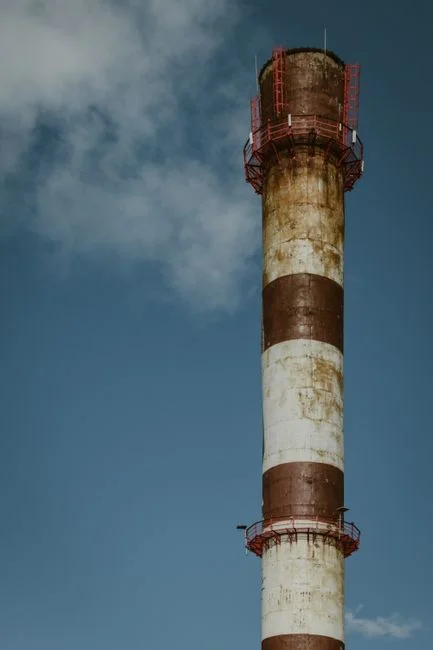
Cycles of concentration is the single dial that ties freshwater intake to discharge volume. Pushing a tower from 4 COC to 6 COC roughly halves blowdown, but the chemistry downstream gets harder and hotter, which is exactly why side-stream filtration exists as the enabling step (Genesis Water Tech, 2026). A 1–5% slip-stream at 10–25 μm, with capital in the $50,000–$200,000 range for typical data center installations, keeps suspended solids and biological loading manageable enough to let the cooling loop run at higher concentration without crashing heat-exchanger performance. Hiroshima's hot, humid summers raise the evaporation load on the cooling loop, which means makeup demand — and therefore blowdown volume — is structurally higher than at temperate sites, sharpening the financial case for pushing COC upward before the train even starts.
The economic case is not just about freshwater price. Direct discharge fees in water-stressed regions have been observed at $5–15 per thousand gallons, and some jurisdictions enforce TDS limits below 1,500 mg/L on blowdown discharge (Genesis Water Tech, 2026) — a signal that disposal cost and disposal permission, not just water cost, are the binding constraints. The 2026 LCA (Cartagena Vaca et al., 2026) confirms that higher COC materially reduces blowdown volume and chemical consumption, partly offsetting the energy penalty of advanced treatment trains. The implication is that the engineering work is not to pick a target COC first; it is to pick the discharge-and-fee regime and the cooling chemistry envelope, then size the train against the COC those constraints tolerate.
The 2026 reuse train: side-stream filtration, UF, NF, RO, MVC, and where ZLD earns its premium
Self-cleaning spiral side-stream filtration at 10–25 μm is the front of every modern train because it enables higher COC and drops blowdown suspended solids to levels downstream membranes can tolerate without rapid fouling (Genesis Water Tech, 2026). Ultrafiltration (0.01–0.1 μm pore size, 10–30 psi, 90–95% recovery) sits behind it as the standard pretreatment ahead of RO/NF, and as the standalone choice when only biological and particulate removal are required; a packaged ultrafiltration system for blowdown pretreatment typically runs at 10–30 psi with permeate backwash and chemical cleaning every 1–3 months. Reverse osmosis is the workhorse for full recovery: 95–99% dissolved solids removal, permeate at 10–50 mg/L TDS, 150–400 psi operating pressure, 50–85% recovery on blowdown, with installed cost of $250,000–$500,000 for a 50,000 GPD system (Genesis Water Tech, 2026); a packaged industrial RO system for cooling makeup reuse sized to a Hiroshima-scale facility is the unit that does the heavy lifting on silica and total hardness. Nanofiltration sits between UF and RO — lower pressure (75–150 psi), higher recovery (70–85%), permeate at roughly 30–50% of feed TDS — and is the right answer when hardness, not total TDS, is the binding limit on cycles of concentration. Mechanical vapor compression delivers 95–98% recovery from RO concentrate, with distillate below 10 mg/L TDS at 15–25 kWh per 1,000 US gallons, and capital of $1–3 million for 10,000–30,000 GPD (Genesis Water Tech, 2026); use it only when concentrate disposal is the real bottleneck.
Full zero liquid discharge combines RO + MVC + crystallizer for 95–99% overall recovery, with capital of $3–8 million and operating cost of $5–15 per thousand gallons (Genesis Water Tech, 2026); it is justified only when discharge is genuinely blocked and an alternative freshwater source is unavailable or costlier than the ZLD lifecycle. A common Hiroshima-scale configuration pairs side-stream filtration + UF + RO at 50–75% recovery with MVC polish on the concentrate, reaching 85–95% overall system recovery with minimal liquid discharge. The side-stream skid is most often built around a multi-media filter as side-stream pretreatment ahead of the membrane, with replacement RO and UF membrane elements on a planned change-out interval to protect recovery and pressure performance over the asset life.
| Process | Role in train | Operating envelope | Recovery | Capital (typical) | Source |
|---|---|---|---|---|---|
| Side-stream spiral filtration | Enables higher COC, protects downstream | 10–25 μm, 1–5% of circulation flow | Continuous blowdown reduction | $50,000–$200,000 | Genesis Water Tech, 2026 |
| Ultrafiltration (UF) | Pretreatment to RO/NF or standalone bio/SS removal | 0.01–0.1 μm, 10–30 psi | 90–95% | Train-dependent | Genesis Water Tech, 2026 |
| Nanofiltration (NF) | Hardness-limited cycles lift | 75–150 psi, permeate 30–50% of feed TDS | 70–85% | Train-dependent | Genesis Water Tech, 2026 |
| Reverse osmosis (RO) | Full silica and TDS removal for makeup reuse | 150–400 psi, permeate 10–50 mg/L TDS | 50–85% on blowdown | $250,000–$500,000 for 50,000 GPD | Genesis Water Tech, 2026 |
| Mechanical vapor compression (MVC) | Polishes RO concentrate, high recovery | 15–25 kWh/1,000 US gal distillate, <10 mg/L TDS distillate | 95–98% on concentrate | $1–3 million for 10,000–30,000 GPD | Genesis Water Tech, 2026 |
| ZLD (RO + MVC + crystallizer) | Eliminate liquid discharge | 20–30% brine to crystallizer | 95–99% overall | $3–8 million; OPEX $5–15/kgal | Genesis Water Tech, 2026 |
The 2026 LCA trade-off: energy, GWP, and what it means on Japan's grid
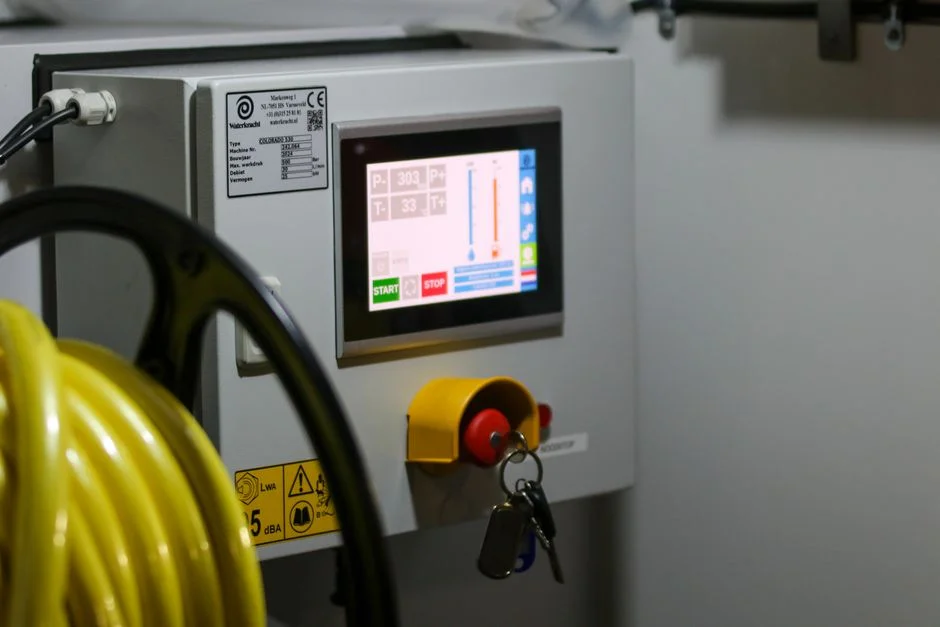
The academic LCA evidence converts directly into a decision frame for Hiroshima. A reclaimed-water cooling scenario runs at roughly 2× the GWP of a freshwater scenario, with treatment energy responsible for about 80% of the difference (Cartagena Vaca et al., 2026). The UF+RO configuration pushes wastewater energy use to over 5× freshwater, but is balanced by higher COC that reduces blowdown volume and chemical consumption (Cartagena Vaca et al., 2026). The pivotal finding for a facility commissioned today is that under a fully decarbonized grid the GWP penalty of reuse becomes negligible while freshwater savings persist, meaning a system operated through 2050 will spend the majority of its life in a regime where reuse wins on both axes (Cartagena Vaca et al., 2026). The indirect water penalty from upstream electricity and chemicals in a reuse train is about 0.93 L/m³ — less than 0.1% of the direct freshwater displacement benefit, so the net case for reuse is robust (Cartagena Vaca et al., 2026).
For Hiroshima specifically, on Japan's relatively low-carbon grid, the energy-side argument against reuse weakens, and the freshwater-displacement argument strengthens, which is consistent with the circular-economy framing in the July 2026 NERPS seminar (Hartley, 2026). The LCA is also a useful tool against the lazy "reuse is always greener" claim: it shows reuse is not a free option in 2026 grid conditions, and the energy argument is only decisive when the train is paired with COC discipline and chemistry that the membrane system can actually tolerate.
Engineering the Hiroshima train: a 2026 sizing and decision checklist
The first inputs to confirm before sizing are the same regardless of train choice: peak IT load, expected PUE, Hiroshima design wet-bulb, makeup water source (potable versus reclaimed), target COC, and target reuse end use — cooling makeup, landscape, or zero discharge. The reuse-versus-discharge decision rule is straightforward: if direct discharge fees, brine haul-off, or Seto Inland Sea limits make disposal expensive, reuse wins; if a low-cost sewer connection is available with relaxed TDS limits, the case softens, but the LCA still favors reuse on a multi-decade view (Cartagena Vaca et al., 2026; Genesis Water Tech, 2026). The NF-versus-RO decision rule turns on silica: high-silica Hiroshima source water typically benefits from RO's full silica removal, while hardness-limited waters may meet objectives with NF at lower pressure and energy. The ZLD decision rule is the hardest: only when discharge is genuinely blocked and alternative freshwater supply is unavailable or costlier than the train, because the $3–8 million capital and $5–15 per thousand gallons operating cost (Genesis Water Tech, 2026) must clear a real alternative. The chemistry cross-check is the one most often skipped: blowdown treatment and the existing cooling-water program must be designed together, because biocide, scale inhibitor, and corrosion inhibitor residuals carry through to the recovery loop, and a chemistry that is optimized for an open loop will often foul a membrane train (Genesis Water Tech, 2026).
For suppliers and sizing conversations, ask for documented performance on Hiroshima source water at the target COC, reference installations of comparable size, and a written guarantee on permeate TDS and recovery at design feed conditions. The chemical program should be specified through an automatic antiscalant and biocide dosing skid that ties dosing to actual conductivity and flow, not a fixed-rate pump, and any hardness-limited case should be cross-checked against an industrial water softener as a cheaper alternative or upstream guard. For a deeper treatment-train benchmark outside Japan, the comparable data center blowdown engineering guide for Meerut and the Callao data center blowdown engineering guide use the same decision framing, and the 2026 buyer's guide to industrial water reuse providers is a useful cross-check when shortlisting vendors.
Frequently asked questions
What budget should a Hiroshima data center plan for a cooling blowdown treatment train in 2026?
Published cost data centers on a 50,000 GPD RO skid at $250,000–$500,000 installed, side-stream spiral filtration at $50,000–$200,000, MVC polish at $1–3 million for 10,000–30,000 GPD, and full ZLD at $3–8 million with $5–15 per thousand gallons operating cost (Genesis Water Tech, 2026). Total spend depends on target recovery and whether MVC or ZLD is justified; request a sized offer against Hiroshima design wet-bulb and target COC before committing capital.
How should a Hiroshima buyer select a supplier for the blowdown reuse train?
Ask for documented performance on silica-bearing source water at the target COC, reference installations of comparable flow, and a written permeate TDS and recovery guarantee at design feed conditions; cross-check candidates against the 2026 buyer's guide to industrial water reuse providers and request a chemistry compatibility memo covering the existing cooling-water program.
Is blowdown reuse actually greener than freshwater cooling on Japan's grid?
The 2026 LCA finds reclaimed-water cooling runs at roughly 2× the GWP of freshwater today, with treatment energy about 80% of that gap, but the gap collapses under a fully decarbonized grid while freshwater savings persist over a multi-decade asset life (Cartagena Vaca et al., 2026).
What operating parameters decide between nanofiltration and reverse osmosis for a Hiroshima cooling loop?
Use NF when hardness, not silica or total TDS, is the binding constraint on cycles of concentration, and choose RO when silica removal is required or when permeate needs to feed a high-COC loop at 10–50 mg/L TDS; both decisions should be confirmed against the actual Hiroshima source water analysis (Genesis Water Tech, 2026).