Why 40 CFR Part 419 drives the DAF-or-clarifier decision in Cotton Valley
For a U.S. petroleum refinery, including operations in the Cotton Valley area of northern Louisiana, the choice between a dissolved air flotation (DAF) unit and a gravity clarifier is not a free engineering preference — it is anchored in 40 CFR Part 419, the federal effluent limitations guidelines (ELGs) that EPA Region 6 and the Louisiana Department of Environmental Quality (LDEQ) implement through delegated NPDES permits. According to the EPA's Detailed Study of the Petroleum Refining Category (September 2019, EPA 821-R-19-008), Part 419 currently regulates only biochemical oxygen demand (BOD5), total suspended solids (TSS), chemical oxygen demand (COD), oil and grease, phenolic compounds, ammonia, sulfide, and chromium (total and hexavalent) — Section 2.1 of the study lists exactly these parameters as the regulated pollutant set.
The regulation was first promulgated in 1974, re-promulgated for BAT in 1982 after court remand, and revised again in 1985 when EPA tightened BAT effluent limitations for phenol and chromium (EPA 2019, Section 2.1). The 2019 detailed study reviewed the industry for possible new limitations but did not mandate new numeric limits; any 2026 Cotton Valley upgrade is therefore still defended against the 1985-era BAT envelope plus the current LDEQ-issued permit values. Refineries sit under NAICS 32411 / SIC 2911, and Part 419 splits the industry into five subcategories — Topping, Cracking, Petrochemical, Lube, and Integrated (EPA 2019, Table 2-1) — so the applicable subpart depends on whether the plant is a simple topping refinery or a full integrated facility with petrochemical units. Federal pretreatment standards (PSES) cap oil and grease and ammonia at 100 mg/L for indirect discharges, with PSNS adding a 1 mg/L total chromium limit (EPA 2019, Section 2.1). The end-of-pipe train Part 419 assumes is equalization and storm diversion, oil and solids removal, biological treatment, and effluent polishing — and that train is where the DAF-vs-clarifier decision is actually made.
What Cotton Valley refinery wastewater actually contains
Refinery wastewater is not a generic "industrial wastewater" stream, and that is why generic DAF or clarifier marketing misleads buyers. The EPA 2019 detailed study catalogues the streams that converge on a refinery treatment plant in Section 4.2 and Table 4-5: desalter effluent, sour water stripper bottoms, API separator skimmings, spent caustic, tank farm draw, and once-through cooling water leaks. Each of these streams spikes a different Part 419 parameter, which is why the same clarifier that handles a food-processing load will fail on a refinery upset.
Sour water stripper bottoms carry sulfides and ammonia, catalytic cracker effluent contributes phenolic compounds, and cooling-tower corrosion inhibitors historically contributed hexavalent chromium — three of the regulated Part 419 parameters. Desalter effluent and tank farm draw carry the bulk oil and grease load, while spent caustic oxidizer effluent can carry residual sulfides and high pH. The EPA 2019 study reports influent pollutant concentrations in Table 5-2 and average effluent concentrations at 82 refineries with Discharge Monitoring Report (DMR) data in Table 5-3, and these influent characteristics are what determine whether a downstream clarifier can carry the load or whether a DAF is required to catch emulsified oil and fine TSS. Cotton Valley refineries that also handle shale-gas condensate streams see additional cross-flows of emulsified oil that defeat plain settling; the same DAF-or-clarifier logic that applies to a Little Rock petroleum bulk terminal — covered in the DAF-or-clarifier guide for petroleum bulk terminals in Little Rock — applies to a Cotton Valley refinery, but the regulated parameter list is heavier and the streams are more diverse.
Gravity clarifier vs DAF: how each one actually separates refinery streams
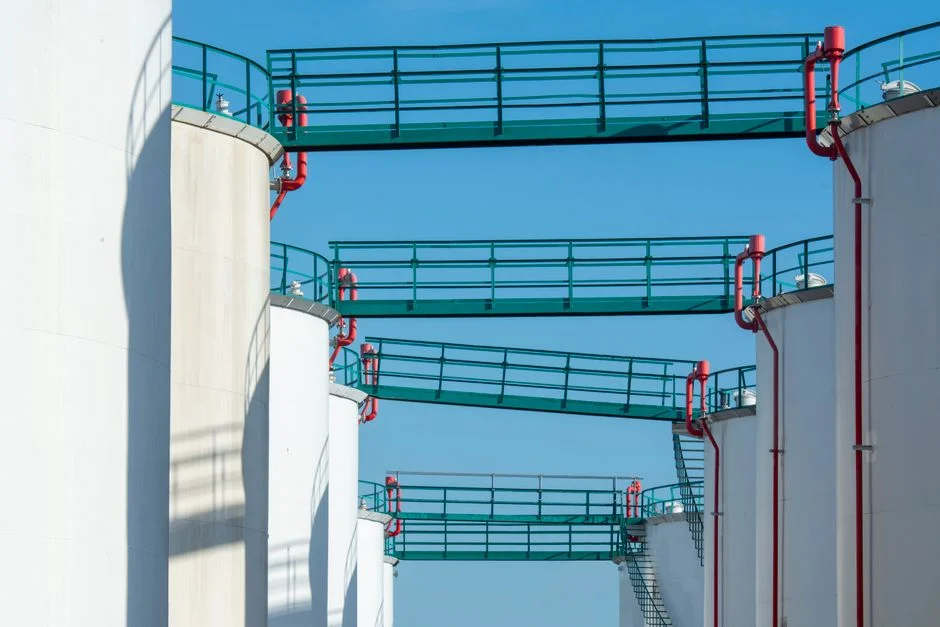
A gravity clarifier separates by quiescent settling under Stokes' law: free oil rises, settleable solids fall, and clarified water exits through a peripheral launder. Its strengths are simplicity, low chemical demand for its core duty, and low operating cost on streams that already contain free oil and large settleable solids. Its weaknesses are a low surface loading rate (a large footprint), hydraulic residence time measured in hours, and collapse under emulsified oil or fine TSS loads. A high-efficiency lamella clarifier shrinks the footprint with inclined plates but does not change the fundamental mechanism — emulsified oil still does not settle.
A dissolved air flotation (DAF) clarifier separates by attaching 30–50 micron microbubbles to chemically conditioned floc and floating it to the surface, where a paddle skimmer removes the float (Clearwater/SigmaDAF, 2026-04-27). The DAF requires upstream coagulation and flocculation — typically a rapid mix of coagulant, a flocculator (serpentine floc tubes or chemical mix tanks), and a PLC-controlled coagulant and flocculant dosing system — to enlarge flocs so the bubbles can lift them. Once conditioned, the hydraulic residence time in a DAF is minutes, not hours, and the unit removes emulsified oil and fine TSS that a plain clarifier cannot. A DAF also has a clear failure mode: heavy settleable grit that falls below the bubble-contact zone will not float, so grit and sand should be removed upstream (typically in the API separator or a grit chamber) before the DAF. A plain clarifier, conversely, fails when the oil is emulsified, the TSS is colloidal, or the flow surges.
Side-by-side: DAF vs gravity clarifier against each Part 419 parameter
The single most useful artifact for a 2026 Cotton Valley justification memo is a parameter-by-parameter comparison anchored to the Part 419 pollutant set, not to generic "treatment efficiency" claims from a vendor brochure. The table below uses qualitative ratings — D (poor), M (marginal), G (good), VG (very good) — for a well-designed gravity clarifier and a well-designed DAF on each of the eight regulated parameters (EPA 2019, Section 2.1), plus practical operating columns that a refinery environmental engineer needs to weigh.
| Parameter (Part 419) | Gravity clarifier (well-designed) | DAF (well-designed, with coagulation/flocculation) | Footprint / HRT | Chemical demand | Sensitivity to flow / oil surges | Drives PSES/PSNS limit? |
|---|---|---|---|---|---|---|
| Oil and grease | G on free oil, D on emulsified | VG on emulsified and free | Clarifier: large, hours. DAF: compact, minutes. | Clarifier: low. DAF: coagulant + flocculant. | Clarifier: high. DAF: moderate. | Yes — 100 mg/L PSES oil and grease. |
| TSS | G on settleable, M on colloidal | VG on colloidal and fine | Clarifier: large. DAF: compact. | Clarifier: none typically. DAF: polymer. | Clarifier: high. DAF: moderate. | Production-based mass limit. |
| BOD5 | M (mostly carries through) | M (mostly carries through) | Either: requires downstream biological step. | Either: limited. | Either: limited. | Production-based mass limit. |
| COD | M | M | Same as BOD5. | Same as BOD5. | Same as BOD5. | Production-based mass limit. |
| Phenolic compounds | D (no removal mechanism) | D-M (limited without chemical oxidation) | Either: handle in biological step. | Either: not the primary control. | Either: limited. | Yes — 1985 BAT revision tightened this. |
| Ammonia | D (no removal mechanism) | D (no removal mechanism) | Handle in biological step (nitrification). | Either: not the primary control. | Either: limited. | Yes — 100 mg/L PSES ammonia as N. |
| Sulfide | M (if stripped upstream) | M (if stripped upstream) | Either: rely on sour water stripper in-plant. | Either: limited. | Either: limited. | Production-based mass limit. |
| Total / hexavalent chromium | D (no removal mechanism) | D (no removal mechanism; coagulant can co-precipitate some metals) | Handle in precipitation/ion exchange step. | Either: chromium is a separate control step. | Either: limited. | Yes — 1 mg/L PSNS total chromium. |
The table shows the decision the EPA 2019 study's pollutant-of-interest list (Table 5-1) implies: the gravity clarifier or DAF is the right tool for oil and grease, TSS, and the gross solids load, but neither technology is the right tool for ammonia, phenolics, sulfide, or chromium on its own. Those four parameters are owned by the sour water stripper (in-plant) and the biological step (end-of-pipe), and the chromium limit is owned by a separate precipitation/filtration step. This is why the binary "DAF or clarifier" question is incomplete — the real question is which one sits in the slot between the API separator and the biological step, and which one (typically a polishing DAF or multimedia filter) sits after the biological step.
When a Cotton Valley refinery should still pick a clarifier in 2026
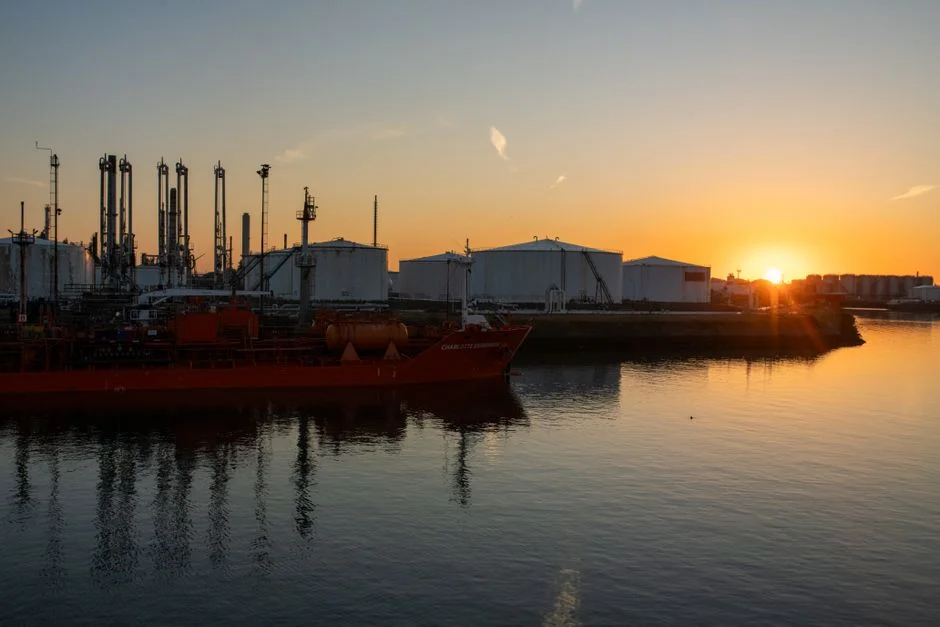
A gravity clarifier is the right call in 2026 when the streams it sees are predictable and the downstream train can absorb residual emulsified load. Scenarios that match this profile: very high hydraulic flow with low and stable oil and TSS, an existing large API separator with significant downstream equalization, an aerated lagoon or activated-sludge basin with enough residence time to absorb emulsified carryover, and a tight capital budget with operators already skilled in clarifier sludge pumping. The EPA 2019 detailed study (Section 2.1) still lists "oil and solids removal (API separator or baffle plate separator)" as the baseline BPT/BAT end-of-pipe step, so a plain clarifier in that role is regulatory-acceptable when designed and operated to meet the production-based mass limits.
The honest risk is that clarifier performance collapses under the specific refinery conditions Cotton Valley plants see: hydraulic shock from a desalter upset, sludge-blanket carryover during a coker or fluid catalytic cracker (FCC) turnaround, and emulsified oil spikes that arrive in minutes rather than hours. If the downstream biological step cannot absorb that risk — for example, if it is already operating near its nitrification capacity — the clarifier is the wrong tool. The article's 2026 buyer's guide to industrial wastewater solutions providers is a useful cross-reference for sizing that downstream risk.
When a 2026 Cotton Valley refinery should pick DAF instead
A DAF is the right call when the refinery's load profile matches what a DAF is designed to handle: emulsified oil, fine TSS, and frequent hydraulic or oil surges. Specific conditions include a refinery that runs tight crude slates with more emulsified oil, frequent desalter upsets that release emulsified load, coker or FCC effluent that carries catalytic fines and emulsified hydrocarbons, or a plant that is space-constrained and cannot host a larger clarifier — DAF hydraulic residence time is measured in minutes, against hours for a clarifier (Clearwater/SigmaDAF, 2026-04-27). A DAF is also the right polishing step before discharge to meet LDEQ and EPA Region 6 limits, or before reuse as cooling-tower makeup where oil and TSS carryover will foul downstream equipment.
A second DAF case is consolidation: a Cotton Valley plant that combines multiple Part 419 subcategory streams — Topping, Cracking, Petrochemical per EPA 2019 Table 2-1 — into a single treatment train needs one robust oil-removal step before the biological stage, and a well-designed industrial DAF system for refinery duty with chemical conditioning fits that role better than a clarifier, because it tolerates a wider influent envelope. The DAF literature notes that standard construction is 304SS with 316SS, polypropylene, and other materials on request for refinery corrosion and hydrocarbon service (Clearwater/SigmaDAF, 2026-04-27), which matters for procurement.
The hybrid train the EPA study already documents
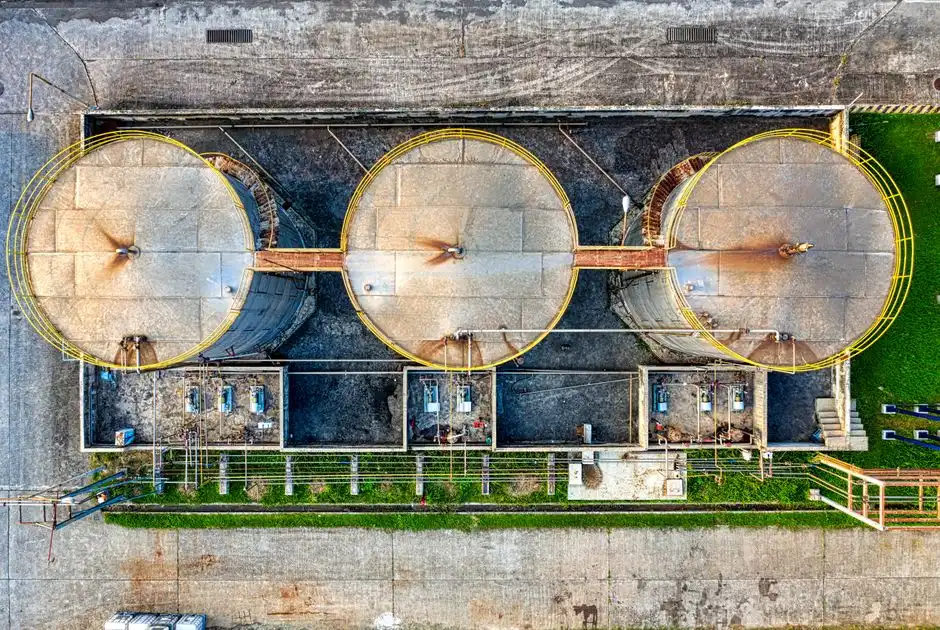
The EPA 2019 detailed study (Section 2.1) documents the end-of-pipe train that the regulation assumes: equalization and storm water diversion, oil and solids removal (API separator or baffle plate separator), carbonaceous waste removal using biological treatment, and effluent polishing following biological treatment. A 2026 Cotton Valley upgrade can keep the existing API separator, replace or supplement downstream gravity clarification with a DAF, keep the biological step (activated sludge, aerated lagoon, or trickling filter), and add either a polishing DAF or a multimedia polishing filter ahead of NPDES discharge. Each component "owns" a Part 419 parameter: the API separator and DAF own oil and grease and gross TSS; the biological step owns BOD5, COD, ammonia, and phenolics; the multimedia filter or polishing DAF owns residual TSS before discharge; the sour water stripper (in-plant) owns sulfide and ammonia load reduction upstream of biological treatment.
The 2019 study (Section 5.5) examined new and improved technologies — microfiltration, adsorption media for selenium, tertiary filtration for mercury — but did not yet mandate them. A DAF-plus-clarifier hybrid train therefore remains a defensible BAT-equivalent choice in 2026, with the caveat that any chromium or mercury reduction step may need to be added separately if the current LDEQ permit tightens on those metals. A sludge dewatering filter press downstream of the DAF or clarifier handles the float/sludge cake, and the PLC-controlled coagulant and flocculant dosing system upstream of the DAF closes the conditioning loop.
Cotton Valley-specific factors a 2026 buyer should weigh
Cotton Valley sits in a north-Louisiana region with active shale-gas and condensate operations, and that has direct consequences for refinery influent. Condensate and produced-water cross-flows can push emulsified oil loads that defeat plain clarifiers, so any 2026 sizing should treat the emulsion envelope as a design condition, not an upset. Louisiana rainfall and hurricane-season storm events are exactly the "storm water diversion" step the EPA 2019 study calls out (Section 2.1); design must include adequate equalization to ride out surges, and a small clarifier with limited equalization margin is exposed in a storm event.
LDEQ administers delegated NPDES permits under 40 CFR Part 419, and the regulated parameters in the current permit drive the actual sizing targets. A 2026 buyer should request the latest permit's oil-and-grease, TSS, ammonia, sulfide, phenolic, and chromium limits before sizing either technology — the supplied research does not include the specific numeric Louisiana permit values, so the buyer must pull those directly from LDEQ. Federal pretreatment standards (PSES) cap oil and grease and ammonia at 100 mg/L for indirect discharges, and PSNS adds 1 mg/L total chromium (EPA 2019, Section 2.1), but the facility-specific NPDES permit values for a Cotton Valley refinery may differ.
2026 procurement checklist before you sign the DAF or clarifier PO
Before signing a purchase order for either a DAF or a clarifier, a Cotton Valley refinery environmental engineer should run a defensible technical and commercial check. The checklist below is anchored to the EPA 2019 detailed study (Sections 2.1 and 5) and to the DAF equipment literature (Clearwater/SigmaDAF, 2026-04-27).
- Run a 7-day influent characterization at the API-separator outlet. Cover at minimum oil and grease, TSS, sulfides, ammonia, phenolic compounds, and total/hexavalent chromium — the regulated Part 419 set from EPA 2019 Section 2.1. A pilot without this data is not defensible.
- Require guaranteed oil-and-grease and TSS removals tied to chemical conditioning and air-to-solids ratio, not to nominal flow rate alone. Vendor guarantees that quote a percent removal at a single design point are not procurement-grade.
- Specify materials of construction suitable to refinery duty. Standard DAF construction is 304SS; 316SS, polypropylene, and higher alloys are available for hydrocarbon and chloride service (Clearwater/SigmaDAF, 2026-04-27). Confirm compliance with NFPA/ATEX zoning near solvent service.
- Verify controls integration with the existing DCS/PLC, redundancy of air-saturation pumps, and ease of sludge removal into the downstream sludge dewatering filter press train. A DAF that cannot hand off float to the dewatering step creates a bottleneck.
- Confirm the proposed train keeps the refinery inside its current Part 419 permit envelope and LDEQ antidegradation review. The supplied research does not include the specific permit values; the buyer must obtain these from LDEQ before procurement.
An industrial DAF system for refinery duty sized against this checklist, paired with the PLC-controlled chemical dosing and downstream sludge dewatering, is the most defensible 2026 procurement path for a Cotton Valley refinery with emulsified or variable load.
Frequently Asked Questions
What is the realistic budget range for a DAF system sized for a Cotton Valley refinery in 2026?
The supplied research does not include current DAF or clarifier pricing for refinery duty. Request a budgetary quote with the 7-day influent characterization (oil and grease, TSS, sulfides, ammonia, phenolics, total/hexavalent chromium), the design flow in gallons per minute, the target oil-and-grease and TSS guarantees, and the materials of construction (304SS, 316SS, or polypropylene per Clearwater/SigmaDAF 2026-04-27). Compare at least two quotes on the same hydraulic and removal basis; a low nominal price that does not include chemical dosing, sludge dewatering, or controls integration is not a like-for-like comparison.
How do I pick a DAF or clarifier supplier that will pass an LDEQ and EPA Region 6 audit?
Choose a supplier that can document refinery-specific experience, can quote oil-and-grease and TSS removals against the Part 419 parameter list, can supply 316SS or higher alloy construction (Clearwater/SigmaDAF 2026-04-27), and can provide controls integration with the existing DCS/PLC. Ask for at least two operating U.S. refinery references under 40 CFR Part 419 and request the commissioning report from at least one of those sites. A supplier who cannot produce refinery references and Part 419-aligned performance data is not a defensible choice for an LDEQ-delegated NPDES permit.
Where in the EPA-documented refinery wastewater train does a DAF actually fit?
Per the EPA 2019 detailed study (Section 2.1), the end-of-pipe train is equalization and storm diversion, oil and solids removal (API separator or baffle plate separator), biological treatment, and effluent polishing. A DAF fits in two slots: as the oil-and-solids-removal step after the API separator when emulsified oil is present, and as the polishing step after biological treatment ahead of NPDES discharge. A plain clarifier typically fits only the first slot and only when the load is free oil and settleable solids.
Can a Cotton Valley refinery keep its existing API separator and still justify a DAF upgrade?
Yes. The EPA 2019 detailed study (Section 2.1) still lists the API separator as the baseline BPT/BAT oil-and-solids-removal step, and many 2026 Cotton Valley upgrades keep the API separator and add a DAF immediately downstream to catch the emulsified oil and fine TSS that the API separator passes through. The DAF then feeds the existing biological step, and a polishing DAF or multimedia filter handles residual TSS before discharge. This hybrid preserves the existing civil footprint and the existing NPDES permit envelope, provided the LDEQ permit values are confirmed before sizing.