What an Effluent Treatment Plant in Algiers Must Actually Achieve in 2026
An effluent treatment plant in Algiers is engineered to take the typical municipal-industrial influent documented in the Hamaidi-Chergui study — COD around 219 mg/L, BOD5 about 60 mg/L, suspended solids near 184 mg/L, and ammonia near 18.5 mg/L — and discharge effluent compatible with WHO-aligned limits used by the Office National Sanitation, which adopted activated sludge as the national baseline in 2001. A 2026 ETP scope combines pre-treatment, biological treatment (MBBR, SBR, MBR or UASB depending on load), tertiary polishing (DAF or filtration) and disinfection. For sites targeting reuse, membrane polishing such as nanofiltration is increasingly used to meet reuse criteria, while constructed wetlands are being studied as a low-energy tertiary step.
The Hamaidi-Chergui monitoring study on the Algiers wastewater treatment plant is the most concrete 2026 design anchor available to a local engineer, because it reports paired influent and effluent concentrations measured on a real operating plant rather than textbook values. The untreated wastewater entering the Algiers plant averaged COD 219.3 ± 19.9 mg/L, BOD5 59.91 ± 6.94 mg/L, suspended matter 183.6 ± 30.1 mg/L, ammonia 18.55 ± 3.99 mg/L, nitrate 48.58 ± 6.10 mg/L and turbidity 71.74 ± 15.68 NTU, with activated sludge — adopted by ONA in 2001 as the standard biological technology for domestic wastewater in Algeria — delivering paired effluent values of COD 31.2 ± 1.0 mg/L, BOD5 3.11 ± 0.66 mg/L, suspended matter 14.7 ± 3.6 mg/L, ammonia 2.90 ± 2.65 mg/L, nitrate 2.64 ± 0.64 mg/L and turbidity 3.93 ± 0.76 NTU (Hamaidi-Chergui et al., HERO/EPA, 3rd International Conference on Water Resources and Wetlands). The same study reports an 85.4% COD removal and a 94.7% BOD5 removal on that baseline — useful as the reference benchmark any alternative technology train has to beat or match.
That same study exposes a design gap that a 2026 reuse-oriented client cannot ignore. Total phosphorus removal stopped at 46.9% and orthophosphate removal at only 21.3% on the Algiers activated-sludge train — so the secondary stage on its own will not deliver irrigation or cooling-tower reuse quality, and a dedicated tertiary barrier has to be priced into the scope. The takeaway for a capex author: any supplier that quotes a 2026 ETP as "secondary only, with the same removal profile as the Algiers reference plant" has not read the brief.
| Parameter | Algiers influent (mean ± SD) | Algiers effluent (mean ± SD) | Reported removal |
|---|---|---|---|
| COD | 219.3 ± 19.9 mg/L | 31.2 ± 1.0 mg/L | 85.4% |
| BOD5 | 59.91 ± 6.94 mg/L | 3.11 ± 0.66 mg/L | 94.7% |
| Suspended matter | 183.6 ± 30.1 mg/L | 14.7 ± 3.6 mg/L | 92.9% |
| Ammonia (NH4+) | 18.55 ± 3.99 mg/L | 2.90 ± 2.65 mg/L | 99.8% (reported) |
| Nitrate (NO3-) | 48.58 ± 6.10 mg/L | 2.64 ± 0.64 mg/L | 94.1% |
| Turbidity | 71.74 ± 15.68 NTU | 3.93 ± 0.76 NTU | 91.8% |
| Total phosphorus | — | — | 46.9% |
| Orthophosphate | — | — | 21.3% |
For a deeper view of the local design envelope — including the 2026 sizing logic for primary, secondary and tertiary stages — see the Algiers domestic sewage treatment guide.
Matching the ETP Process Train to the Wastewater You Actually Have
Technology selection for a 2026 ETP in Algiers should be driven by three influent parameters the buyer can actually measure: COD and BOD5 (the Hamaidi-Chergui Algiers influent averaged 219.3 mg/L COD and 59.91 mg/L BOD5), the ammonia load (18.55 mg/L NH4+ on the same study), and the share of suspended versus soluble pollution (suspended matter 183.6 mg/L, turbidity 71.74 NTU). Once those three numbers are known, the biological train follows logically.
Conventional activated sludge remains the ONA baseline technology in Algeria, adopted nationally in 2001, and is the safe default for medium-strength domestic-industrial blends at sites where footprint is not a binding constraint and reuse is not on the table (Hamaidi-Chergui et al., HERO/EPA). For a site with shift-driven flows, an MBBR — a moving-bed biofilm reactor in which biomass grows on free-floating plastic media — is more tolerant of hydraulic and load variation than a conventional aeration tank, which is why MBBR packages are widely deployed in food, textile and dairy plants in the Algiers industrial belt. Where space in central Algiers is tight, or where the treated water has to meet a reuse specification, an MBR membrane bioreactor system couples activated sludge with a submerged ultrafiltration membrane; the membranes retain biomass and most suspended solids, so the clarifier and most of the tertiary stage collapse into one step, and the supernatant is already close to reuse quality for non-potable applications. For high-COD streams (brewery, distillery, pulp and paper, heavy food processing), an Upflow Anaerobic Sludge Blanket (UASB) is economically attractive because it recovers energy as biogas while removing the bulk of the organic load, but it must be paired with a downstream aerobic polishing stage to meet the suspended-solids and ammonia targets measured at the Algiers reference plant. A DAF pre-treatment system is the standard unit for fats, oils and grease (FOG), colour and colloidal loads, and in Algerian plant layouts it is most often positioned after equalisation and before the biological stage to protect downstream biology from shock loads.
| Technology | Best-fit influent profile | Typical industrial sectors in Algeria | Key trade-off |
|---|---|---|---|
| Conventional activated sludge (ONA baseline, since 2001) | Medium COD/BOD5, moderate ammonia | Municipal, food, light manufacturing | Default choice; weak on phosphorus (46.9% TP, 21.3% OP in the Algiers study) |
| MBBR | Variable hydraulic and load profile | Food, dairy, textile, shift-driven plants | Footprint-friendly, tolerant of shock loads; biofilm control requires operator skill |
| SBR | Batch-friendly flows, smaller sites | Pharma, chemicals, hospitality, decentralised industrial parks | One-tank sequencing simplifies civils; cycle tuning adds SCADA complexity |
| MBR (activated sludge + UF membrane) | Reuse-bound, space-constrained | Central Algiers, hospitals, electronics, reuse to cooling | Higher membrane replacement OPEX; near-reuse filtrate; sludge yield drops vs CAS |
| UASB (anaerobic) | High COD, warm wastewater | Brewery, distillery, pulp and paper, heavy food | Energy-positive on COD; needs downstream aerobic polishing for NH4+ and TSS targets |
| DAF (pre- or post-treatment) | FOG, colour, colloidal load | Edible oil, dairy, slaughterhouse, textiles | Protects downstream biology; chemical conditioning adds sludge and OPEX |
Tertiary Polishing and Reuse: Where 2026 Projects Differ
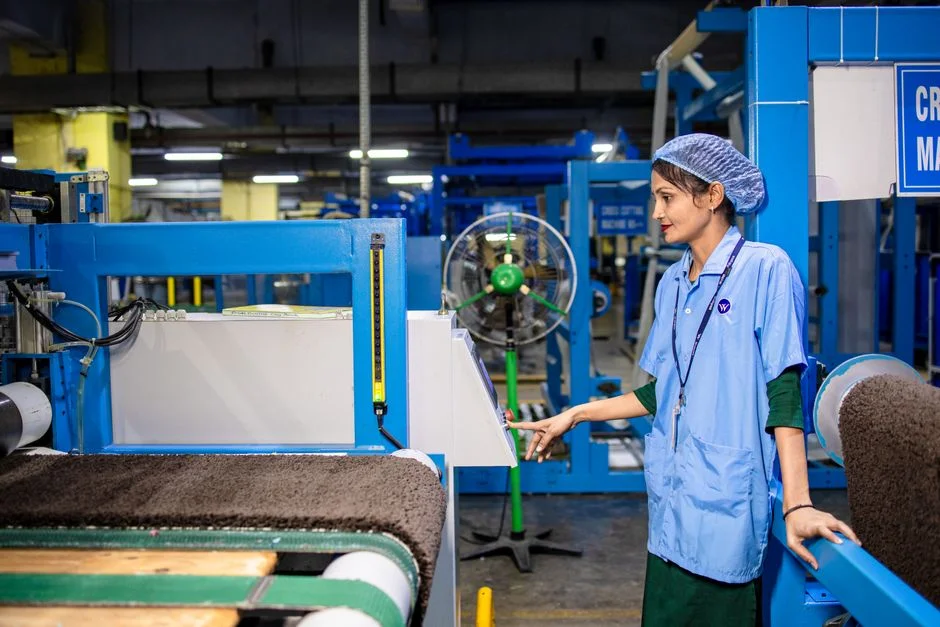
An ETP that stops at secondary biological treatment will not produce reuse-grade water in 2026, and the Algiers data explains why: the activated-sludge effluent still carries COD near 31 mg/L, suspended matter near 15 mg/L, turbidity near 4 NTU, and — most damaging for irrigation or cooling-tower make-up — a phosphorus removal that did not exceed 46.9% total / 21.3% orthophosphate on the reference plant (Hamaidi-Chergui et al., HERO/EPA). For an Algerian site that needs to push effluent to agricultural or (in)direct potable reuse quality, a tertiary barrier is non-negotiable.
Two peer-reviewed polishing routes are directly relevant. Schrader's PhD thesis at the University of Twente positions direct nanofiltration as a route to polish WWTP effluent to EU Water Framework Directive standards and to produce an effluent quality suitable for agricultural or (in)direct potable reuse — a logic that maps onto the same quality targets a 2026 Algiers client will be asked to meet for irrigation or process-water make-up (Schrader, Direct nanofiltration of wastewater treatment plant effluent, University of Twente, doi:10.3990/1.9789036523325). At the other end of the cost spectrum, Lei's Wageningen University PhD thesis (23 September 2022) demonstrates constructed wetlands as a low-energy tertiary step for WWTP effluent, particularly relevant for sites with land available around Algiers, Blida or the Mitidja plain, and especially for residual micropollutants that biology alone does not remove (Lei, Removal of micropollutants from wastewater treatment plant effluent by constructed wetlands, Wageningen University, doi:10.18174/575408). The right polishing choice depends on the discharge or reuse destination: irrigation, cooling-tower make-up, boiler feed and process water each demand different final-quality thresholds, and the supplier must be told which one applies before the tertiary train is locked in.
In practice, a 2026 reuse-oriented train on a typical Algiers secondary effluent usually combines an UF polishing system ahead of nanofiltration, followed by a UV disinfection unit (or chlorine dioxide) for pathogen control, and that combination is the most defensible answer to the question "what does reuse take?".
The 2026 Buyer's Checklist: How to Evaluate an ETP Supplier in Algiers
A 2026 ETP procurement in Algiers should be run as a scored evaluation, not a price shoot-out. Five criteria, applied identically to every bidder, will surface the difference between a process integrator and an equipment reseller, and will protect the buyer against the most common causes of failure within 18 months of handover.
- Process engineering depth. The supplier must produce a process flow diagram, mass balance, hydraulic profile and P&ID sized against the Hamaidi-Chergui influent envelope (COD 219.3 mg/L, BOD5 59.91 mg/L, NH4+ 18.55 mg/L, SS 183.6 mg/L) — not a generic catalogue with the client's name pasted in. Request the design calculations as a deliverable, not as marketing collateral.
- Local Algerian reference projects and after-sales coverage. A 2026 ETP that ships from overseas without a service partner in Algiers, Oran or Constantine is a high operational risk. Ask for two reference sites in Algeria you can visit, and a written response-time commitment for the first 24 months.
- PLC/SCADA architecture with remote telemetry. Modern MBBR, SBR and MBR packages are sold with PLC and SCADA as standard, and ONA reporting increasingly expects remote telemetry rather than a clipboard — confirm the architecture, the tag list, and who owns the source code at handover.
- Compliance documentation and performance guarantee. The bid must include ONA-compatible discharge report templates, HSE manuals, an operator training plan, and a 12-month performance guarantee linked to the contracted influent envelope — not to a generic "design basis" with no numbers.
- Spare-parts and consumables plan. Membranes, chemicals, diffusers and filter media run out fast; a 24-month spare-parts schedule with pricing visibility is a frequent differentiator between bidders and a frequent cause of ETP failure when it is missing. An automatic chemical dosing system and a rotary mechanical bar screen are typical long-lead consumables; ask the bidder to price them on the BOM.
| Criterion | What to ask the bidder | Acceptable evidence | Red flag |
|---|---|---|---|
| Process design | Show PFD, mass balance, hydraulic profile against the Hamaidi-Chergui envelope | Calculations stamped by a chartered engineer | Catalogue cut-sheets only |
| Local references | Two visitable Algerian sites in the last 5 years | Site visit, contactable operator | Only overseas references |
| Automation | PLC/SCADA tag list, source-code ownership, remote telemetry | Functional design spec, demo login | "SCADA-ready" with no spec |
| Compliance & guarantee | ONA template, HSE manual, 12-month performance guarantee | Draft documents attached to the bid | Generic warranty only |
| Spares & consumables | 24-month spares schedule, membrane and chemical pricing | Priced BOM with part numbers | "To be confirmed at order" |
Cost Drivers, Lead Time and the Realistic 2026 Budget Envelope
The capital cost of a 2026 industrial ETP in Algiers is driven by parameters the buyer controls, not by a fixed market rate. The first driver is influent load: the Hamaidi-Chergui envelope of 219.3 mg/L COD, 59.91 mg/L BOD5 and 18.55 mg/L NH4+ is the design baseline; halving or doubling the load halves or roughly doubles the biological tankage. The second driver is the reuse target — secondary-only discharge is materially cheaper than reuse-grade, because the tertiary barrier (typically UF plus a disinfection step such as a UV disinfection unit) and any downstream nanofiltration add both capex and membrane-replacement OPEX. The third driver is the biological choice: UASB saves aeration energy on high-COD streams, MBR adds membrane modules and air-scour blowers, and conventional activated sludge is the cheapest biology but the worst on phosphorus (46.9% TP, 21.3% OP in the Algiers reference). Tankage material (civil concrete versus packaged steel) and automation scope (PLC/SCADA, remote telemetry, chemical dosing packages) account for the rest of the swing.
The line items most often under-budgeted in a 2026 Algerian ETP are operator training, a 24-month spare-parts provisioning, and the SCADA/telemetry layer required for ONA reporting — none of which appear on a skid quote. Lead-time risk is concentrated in pumps, blowers, membrane modules and PLC components, so any proposal without a binding delivery schedule should be downgraded at the scoring stage. The single most useful procurement discipline is to require every bidder to submit a CAPEX/OPEX split at proposal stage rather than a single lump-sum figure; that is the only way to compare ETP bids on a like-for-like basis, and it surfaces the bidders who are quietly omitting membrane replacement or chemical dosing OPEX. Sludge handling is a separate cost line that frequently slips in late: a plate and frame filter press paired with a high-efficiency sedimentation tank is a defensible baseline, but it must be priced from day one. For a fuller picture of supplier selection and lifecycle cost across industrial wastewater management, the 2026 buyer's guide to industrial wastewater management providers walks through the same logic for adjacent process trains.
Frequently Asked Questions
What influent and effluent numbers should a 2026 ETP in Algiers be sized for?
Size against the Hamaidi-Chergui Algiers field study: influent COD 219.3 ± 19.9 mg/L, BOD5 59.91 ± 6.94 mg/L, suspended matter 183.6 ± 30.1 mg/L, ammonia 18.55 ± 3.99 mg/L, nitrate 48.58 ± 6.10 mg/L, turbidity 71.74 ± 15.68 NTU, with paired effluent targets of COD 31.2 mg/L, BOD5 3.11 mg/L, suspended matter 14.7 mg/L and ammonia 2.90 mg/L on an activated-sludge train (Hamaidi-Chergui et al., HERO/EPA). Request site-specific composite sampling for at least one week before the design is frozen, because the Hamaidi-Chergui envelope is a reference, not a substitute for your own data.
Which biological technology fits which Algerian industrial sector, and when is MBR the right choice?
Conventional activated sludge — the ONA baseline since 2001 — is the default for municipal and medium-strength industrial blends; MBBR suits shift-driven food, dairy and textile plants; SBR suits smaller sites and decentralised industrial parks; UASB is the energy-positive option for high-COD brewery, distillery, pulp and food plants but always needs downstream aerobic polishing to hit the ammonia and suspended-solids targets measured in Algiers. MBR becomes the right choice the moment the treated water has to meet a reuse specification or the site footprint cannot accommodate a clarifier and tertiary stage, because the submerged UF membrane collapses several steps into one and the filtrate is already near-reuse quality.
How should a 2026 buyer score competing ETP suppliers in Algiers, and what documents must be on the table before signing?
Score every bidder on the same five criteria: process engineering depth (PFD, mass balance, hydraulic profile against the Hamaidi-Chergui envelope), local Algerian references and after-sales coverage, PLC/SCADA architecture with remote telemetry, ONA-compatible compliance documentation with a 12-month performance guarantee, and a 24-month spare-parts and consumables schedule with pricing. Before signing, the table must hold the process design calculations, draft ONA discharge report templates, the HSE manual, the operator training plan, the spare-parts BOM with part numbers, and a written delivery schedule — anything marked "to be confirmed" is a red flag.
What drives the realistic 2026 cost of an industrial ETP in Algiers, and is reuse to irrigation or cooling feasible?
The cost drivers the buyer can actually interrogate are influent load (use the Hamaidi-Chergui envelope as the starting point), reuse target, biological technology choice, tankage material and automation scope; the line items most often under-budgeted are operator training, the first 24 months of spares, the SCADA/telemetry layer, and sludge dewatering. Reuse to irrigation or cooling is technically feasible at typical Algiers secondary effluent quality only with a tertiary barrier in place, because the reference plant leaves roughly 31 mg/L COD, 15 mg/L suspended matter and weak phosphorus removal (46.9% TP, 21.3% OP). Nanofiltration is the documented polishing route for agricultural or potable reuse (Schrader, University of Twente), and constructed wetlands are a low-energy tertiary option for sites with land available (Lei, Wageningen University, 2022) — request both options as priced alternates in the bid rather than choosing one upfront.
Related Equipment
- UV disinfection unit — specifications, capacity range, and technical data