
Why Chelyabinsk Data Centers Need a Dedicated Blowdown Strategy
Evaporative cooling turns a 100 MW site into a continuous water user, with the IDE Tech analysis sizing a 100 MW facility at up to 2 million liters of water per day, comparable to the daily use of thousands of households (S3, 2026), while Valicor's hyperscale benchmark puts a typical evaporative site at 400,000-550,000 gallons per day (S4, 2024). Roughly 80% of that makeup leaves as evaporation and the remaining 20% leaves as cooling-tower blowdown (CTBD) that the operator must discharge (S4, 2024). At 4 cycles of concentration, a typical cooling tower loses 25-30% of makeup water to blowdown; for a facility using 10 million gallons monthly, that translates to 2.5-3 million gallons of water discharged or wasted (S2).
In Chelyabinsk, the same design choice operates against a unique environmental envelope. The site sits inland on the Techa/Miass watershed, a basin with a long-standing radiation-monitoring culture anchored by the Ural Research Center for Radiation Medicine of the FMBA of Russia in Chelyabinsk (S1, 2022). Documentation for any reuse or discharge program must mirror the rigor of operator-grade radiation safety reporting. Winter basin flows are tight and dilution is poor, so any untreated blowdown pushes TDS, hardness, silica, and biocide residuals into a small receiving volume. This necessitates sizing the blowdown stream—which is concentrated, chemistry-loaded, and subject to permitting—as the primary engineering target.
CTBD Quality: What a Chelyabinsk Operator Is Actually Treating
Engineering begins by applying a current Techa/Miass water analysis to the standard parameters used for continental-inland sites, as blowdown quality is a direct function of makeup water and chosen cycles of concentration. The reference table below summarizes what a CTBD stream carries when makeup is a low-to-medium TDS surface or municipal source and cycles of concentration are in the 4-6 range. Anything outside these ranges requires site-specific inputs rather than generalized assumptions.
| Parameter | Typical CTBD range | Engineering implication |
|---|---|---|
| Total Dissolved Solids (TDS) | 1,200-6,000 mg/L (4-8x makeup) (S2) | Sets osmotic pressure and recovery ceiling for RO |
| Suspended Solids | 10-50 mg/L, corrosion products, biofilm, dust (S2) | Defines side-stream and UF pre-filtration sizing |
| Hardness (Ca, Mg) and alkalinity | Concentrated with cycles of concentration (S2) | Drives antiscalant dose and NF vs. RO choice |
| Silica (SiO2) | Concentrates with cycles, site-specific (S2) | Limits BWRO recovery above 75-80% without pretreatment (S3) |
| Treatment chemistry residuals | Biocides, corrosion/scale inhibitors, dispersants; legacy chromate and high-phosphate programs are problematic (S2) | Drives biocide program redesign for any reuse plan |
| Biological content | Planktonic bacteria, algae, biofilm-forming organisms (S2) | Requires UF barrier and oxidizing or non-oxidizing biocide program |
| Target reuse TDS (cooling-tower makeup) | 10-50 mg/L permeate (S2) | Achievable with BWRO at 50-85% recovery |
Winter makeup drawn from the Techa/Miass basin tends to carry lower suspended solids but higher dissolved organics and color, while summer makeup can carry higher silica and hardness. The exact Techa/Miass profile must be confirmed via current water analysis before locking in any recovery target.
Core Treatment Train: Side-Stream Filtration, UF, and Reverse Osmosis
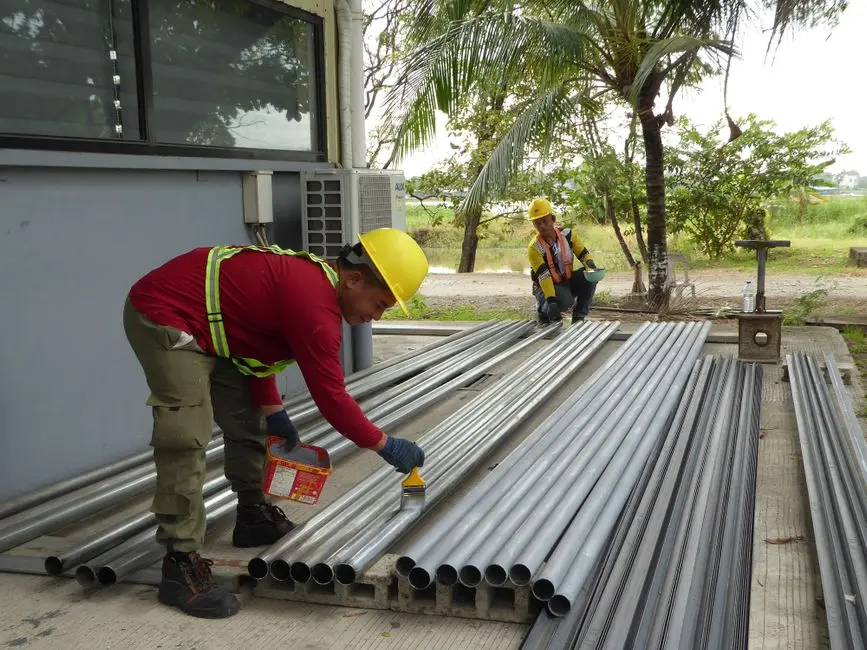
The engineered unit operations consist of side-stream filtration, ultrafiltration, and brackish-water reverse osmosis, with nanofiltration as a branch when hardness is the limiting factor.
Side-stream filtration treats 1-5% of circulation flow through 10-25 micron self-cleaning spiral filters, removing suspended solids before they reach the basin; capital costs range from $50,000-$200,000 for a typical data center installation (S2). This unit prevents downstream membranes from being overwhelmed by TSS. Pair it with a multi-media filter for RO pretreatment when makeup water fluctuates between surface and municipal sources.
Ultrafiltration acts as both a TSS/bioguard and a standalone reuse barrier. A packaged ultrafiltration skid with 0.01-0.1 micron PVDF membranes runs at 10-30 psi, achieves 90-95% recovery, and requires chemical cleaning every 1-3 months (S2). Consumables like RO and UF membrane elements and pressure vessels should be specified together to align replacement cycles.
Reverse osmosis serves as the workhorse for mineral removal. An industrial RO system with 95% recovery and PLC control removes 95-99% of dissolved solids, producing a 10-50 mg/L TDS permeate for cooling-tower makeup (S2). Operating pressure lands in the 150-400 psi band, antiscalant injection is mandatory, and a 50,000 GPD system typically costs $250,000-$500,000 installed, with $1.50-$3.00 per thousand gallons in operating costs (S2). For CTBD, recovery is bounded at 50-85% by the scaling potential of the concentrate (S2).
Nanofiltration is an alternative for specific scaling challenges. NF runs at 75-150 psi, achieves 70-85% recovery, and produces a permeate at roughly 30-50% of feed TDS (S2). If the basin discharge limit or cooling-tower makeup spec is binding on total TDS, specify RO; if the limit is binding on hardness and chlorides are tolerable, specify NF to avoid over-paying for unnecessary rejection levels.
Pushing Recovery Past 80%: Antiscalant Programs, MVC, and ZLD
Conventional BWRO on CTBD is limited to 75-80% recovery before scaling becomes unmanageable (S3).
Advanced antiscalant programs and periodic cleaning can push RO recovery higher, though exact performance must be validated against site-specific silica, calcium, and sulfate profiles (S2, S3). High-recovery designs may precipitate silica, CaCO3, and CaSO4 as compact pellets in a fluidized bed after deactivating scaling inhibitors, then utilize a dynamic RO stage that cycles between production and high-velocity flushes (S3, IDE MAXH2O logic). This approach pushes recovery into the 85-95% band.
Mechanical vapor compression (MVC) manages concentrate when reuse targets exceed RO capabilities. MVC systems reach 95-98% recovery, produce distillate below 10 mg/L TDS, consume 15-25 kWh per 1,000 US gallons, and require a $1-3 million capital investment for 10,000-30,000 GPD systems (S2). Full ZLD stacks RO, MVC, and a crystallizer to reach 95-99% water recovery, costing $3-8 million at scale with $5-15 per thousand gallons operating (S2). ZLD is typically justified in water-scarce regions or jurisdictions with TDS limits below 1,500 mg/L. A PLC-controlled antiscalant and biocide dosing skid and a high-efficiency sedimentation tank provide the foundation for precipitation-and-clarify stages ahead of high-recovery trains.
Chelyabinsk Winterization: Operating Limits by Unit Operation
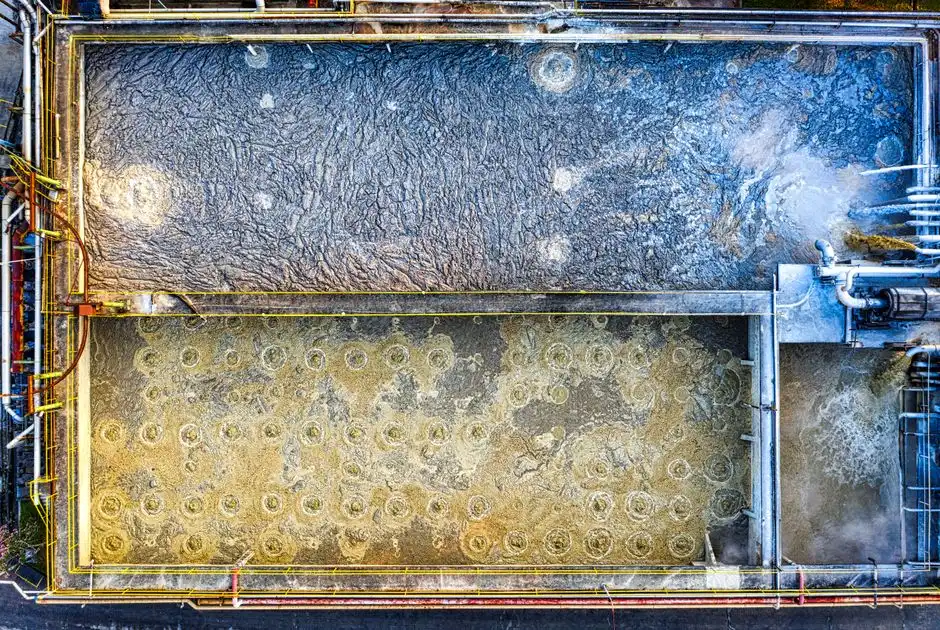
Winterization is a critical design constraint, as the Techa/Miass basin tightens and outdoor equipment must withstand a -30°C climate. The table below maps unit operations to their Chelyabinsk operating limits.
| Unit operation | Chelyabinsk winter limit | Design response |
|---|---|---|
| Outdoor evaporation ponds (ZLD polish) | Not viable; surface freezes and solar output is negligible | Specify thermal ZLD (MVC or brine concentrator) or seasonal brine storage |
| Buried or above-grade CTBD and RO concentrate piping | Freeze risk across the full winter envelope | Heat-trace and insulate all concentrate and CTBD lines |
| Side-stream filtration and UF skids | Tolerate cold indoor operation | Specify indoor skid mounting; maintain backwash water above 5-10°C |
| Cooling-tower biocide program | Reduced microbial activity in winter | Step down oxidizing biocide; an on-site chlorine dioxide generator allows precise seasonal dosing |
| Basin discharge permit | Winter dilution is lowest | Prioritize reuse to offset discharge constraints |
Biological control in winter requires specific measures: a UV sterilizer ahead of the RO feed reduces planktonic loading without adding oxidizer residuals that complicate downstream MVC or ZLD processes.
Cost and Recovery by Flow Band: A CAPEX/OPEX Frame for Procurement
Procurement must be based on flow bands, as the treatment train shifts significantly from edge to hyperscale sites. Before finalizing any numbers, engineers must obtain a current Techa/Miass analysis and a draft discharge permit.
| Site band | CTBD flow (GPD) | Treatment train | Reuse / recovery | Cost reference (S2 unless noted) |
|---|---|---|---|---|
| Small / edge (≤500 kW) | ~10,000-30,000 | Side-stream filtration + UF only | 60-80% reuse as cooling-tower makeup | Capital driven by UF skid, chemicals, and indoor installation |
| Mid-size enterprise / colocation (1-10 MW) | ~30,000-100,000 | Add BWRO at 70-75% recovery | 60-85% reuse (S2) | 50,000 GPD RO system: $250,000-500,000 installed; $1.50-3.00/1,000 gal operating (S2) |
| Hyperscale / AI training (≥50 MW) | Hundreds of thousands | Full high-recovery train: NF/RO + MVC polish | 85-95% overall with MVC; 95-99% with ZLD | Full ZLD: $3-8 million capital; $5-15/1,000 gal operating (S2) |
Direct discharge fees in water-stressed regions now exceed $5-15 per thousand gallons (S2), meaning reused blowdown provides tangible opex savings. For a Chelyabinsk site, these figures must be re-anchored against local basin tariffs and specific permit requirements.
Frequently Asked Questions
What does a Chelyabinsk data center CTBD treatment train actually cost?
Costs scale with flow band. A mid-size 50,000 GPD RO system runs $250,000-$500,000 installed, with $1.50-$3.00 per thousand gallons in operating costs (S2). A full ZLD stack at hyperscale flow lands in the $3-8 million capital band with $5-15 per thousand gallons operating (S2). Influent quality and local permit limits are the primary variables influencing these costs.
How do I choose between RO, NF, and a ZLD polish for a Chelyabinsk site?
Match the unit operation to the binding limit: specify RO when the basin or cooling-tower makeup spec is binding on total TDS, specify NF when hardness is the primary concern and chlorides are tolerable, and add an MVC or full ZLD polish only when reuse targets exceed the 75-80% BWRO ceiling or when the jurisdiction effectively prohibits untreated discharge (
Frequently Asked Questions
What is the best treatment train for cooling tower blowdown reuse at a Chelyabinsk data center in 2026?
The optimal treatment train involves initial pretreatment via multi-media filtration and ultrafiltration (UF) to remove suspended solids, followed by anti-scalant dosing to manage high silica levels. The core process utilizes high-rejection reverse osmosis (RO) membranes capable of operating at 75-85% recovery, with the concentrate directed to a mechanical vapor recompression (MVR) evaporator to achieve zero liquid discharge (ZLD).
For facilities prioritizing water reuse, a secondary polishing step using electrodeionization (EDI) or ion exchange is recommended to bring conductivity below 10 µS/cm, allowing the permeate to be cycled back into the cooling tower makeup loop, effectively reducing raw water intake by up to 90%.
How much does a data center cooling blowdown RO and ZLD system cost to install and operate in Russia?
In the 2026 Russian market, capital expenditure (CAPEX) for a modular ZLD system typically ranges from $1,500 to $2,500 per cubic meter of daily treatment capacity, depending on the complexity of the brine concentration technology. Operational expenditure (OPEX) generally falls between $2.50 and $4.50 per cubic meter of treated water, heavily influenced by local electricity tariffs for MVR units and the cost of specialized anti-scalant chemicals.
These estimates are subject to fluctuations in logistics costs for imported high-pressure membranes and the availability of local fabrication for stainless steel pressure vessels and evaporator components.
Can a Chelyabinsk data center run a zero liquid discharge system through the winter, and what unit operations need to be indoor?
Yes, ZLD systems can operate continuously in Chelyabinsk despite sub-zero winter temperatures, provided the system is housed within a climate-controlled enclosure maintained above 10°C to prevent freezing and ensure chemical stability. All liquid-containing vessels, pumps, and instrumentation must be located indoors.
Unit operations that must be strictly indoor include the RO skid, the evaporator unit, chemical storage tanks, and the sludge dewatering equipment. Outdoor components are limited to pre-settling tanks, which must be equipped with heat tracing and heavy-duty insulation to maintain influent temperatures above the crystallization point of dissolved salts.
What influent water quality parameters should a Chelyabinsk engineer test before specifying a CTBD reverse osmosis system?
Engineers must analyze the blowdown for total dissolved solids (TDS), which typically range from 1,500 to 4,000 mg/L in recirculating systems, and specific ion concentrations including calcium, magnesium, and silica. Silica levels, often exceeding 150 mg/L in concentrated blowdown, are the primary limiting factor for RO recovery rates.
Additionally, testing for total alkalinity and sulfate levels is critical for calculating the Langelier Saturation Index (LSI) or Stiff-Davis Stability Index (SDSI). Failure to accurately characterize organic carbon and heavy metal concentrations can lead to rapid membrane fouling and premature failure of the RO elements.
How do I choose between nanofiltration and reverse osmosis for a data center blowdown reuse project when hardness is the binding limit?
Nanofiltration (NF) is the preferred choice when the primary objective is selective removal of divalent ions (hardness) while allowing a portion of monovalent ions to pass through, which reduces osmotic pressure and lowers energy consumption. If the hardness-to-TDS ratio is high, NF effectively prevents scaling without requiring the extreme pressures needed for RO.
Conversely, reverse osmosis is required when the goal is maximum TDS reduction to meet strict makeup water quality standards for high-cycle-of-concentration cooling. Choose RO if the target effluent conductivity is below 50 µS/cm; select NF if the objective is simply to mitigate scaling risks while maintaining a higher permeate flux and lower energy footprint.