Why Yeast Wastewater Is a DAF Problem, Not a Settling Problem
Residual yeast cells, yeast extract residues, and oils and fats carried in by CIP wash water have low specific gravity and stay suspended long after a clarifier has finished its work; in food and beverage streams, dissolved air flotation outperforms traditional settling clarification on these floatable and emulsified contaminants (Seven Seas Water, 2025). DAF uses 30–50 µm micro-bubbles that attach to flocculated particles and lift them to the surface, the same mechanism that makes DAF effective on emulsified FOG and protein streams (Clearwater Industries, 2025).
The bubble blanket does not exclude heavier material; DAF units account for both floated and settled sludge, so a small fraction of heavier solids is removed by a bottom scraper even when the design target is floatable material (Clearwater Industries, 2025). For a yeast plant, this matters because spent fermentation broth, centrifuge or vacuum-filter permeate, and CIP rinse water all carry a mix of light yeast floc and heavier protein and grain-derived solids; a settling tank leaves most of it in the overflow.
Gravity clarifiers also have a footprint penalty in a 2026 plant that is space-constrained and needs a small hydraulic footprint per cubic metre treated. DAF achieves high solids loading in a shallow, compact tank because the residence time is governed by bubble rise velocity rather than sludge settling velocity. The CAPEX case is therefore "DAF versus a settling clarifier followed by a polishing step that cannot reliably remove fine yeast cells." When the downstream target is a UASB or MBR, that fine-cell carryover causes biomass washout, membrane fouling, and the digester foaming that operators often report.
What 2025–2026 Research Actually Says About DAF + Yeast
Published work on DAF and yeast has evolved from using yeast as an additive to positioning DAF ahead of yeast-based biological trains. Xen et al. (2025) introduced yeast-assisted DAF (YADAF), in which catalase from inexpensive yeast plus H2O2 generates O2 bubbles inside a DAF-style flotation cell, achieving 94.35% TSS removal in 15 minutes (Water Environment Research 97(4):e70069, 2025-04). When YADAF was placed ahead of a UV/H2O2/TiO2 AOP, the combined train delivered 93.75% COD, 83.23% CBOD5, and 94.35% TSS removals — 41.15%, 56.59%, and 2867% better, respectively, than the AOP step alone on the same feed (Xen et al., 2025).
For the train question, the TecnoLógicas 2026 review cites Zhang's "Advanced treatment of oilfield wastewater by a combination of DAF, yeast bioreactor, UASB, and BAF processes" as a documented industrial configuration, with DAF sitting ahead of the yeast-based biological polishing train. The same review notes that the large quantities of DAF sludge produced are a viable substrate for biogas production, turning the float cake into a resource-recovery stream rather than a disposal cost (TecnoLógicas, 2026). For a 2026 CAPEX case, the YADAF result gives a defensible removal number for management, and the Zhang precedent provides a process-flow schematic for placing the DAF relative to a UASB or BAF. Engineers building a similar case for a yeast plant can utilize the configuration of DAF → biology, with DAF protecting the biomass from TSS, FOG, and pH shocks. For an adjacent industry context, the 2026 DAF system for beverage wastewater 2026 guide walks through the same flotation mechanisms on brewery and distillery streams.
Characterize the Yeast Effluent Before You Size Anything
A 2026 DAF CAPEX case that quotes a generic 90% removal is not defensible to a CFO or regulator. The starting point is a one-week sampling campaign that covers the worst credible blend the DAF will see. The minimum input list the vendor or in-house team needs is:
- Streams to sample. Spent fermentation broth after cell separation, centrifuge or vacuum-filter permeate, and CIP wash water — each has a different TSS, BOD, COD, FOG, total nitrogen, and pH profile, and the DAF must be sized for the worst credible blend rather than the daily average.
- Parameters to measure. TSS, BOD5, COD, FOG, total nitrogen, temperature, and pH on a 24-hour composite. Peak hourly flow must be recorded, not just daily average, because DAF hydraulic loading is set by peak.
- Clean-water availability. DAF requires a clean-water source for initial fill and for the recirculation loop to protect the recirculation pump and air saturation system (Clearwater Industries, 2025). Confirm that treated effluent or final rinse water can be reused for this without starving the saturator.
- Downstream target. Define the discharge or reuse end-point — sewer discharge BOD limits, surface discharge consent, or pre-RO feed — so that DAF removal targets are set per parameter rather than as a flat 90% figure.
Without these four inputs, the sizing exercise is guesswork, and any vendor quotation that does not ask for them should be treated as preliminary. The same sampling also feeds the jar-test programme described in the next section, so the campaign serves both design and chemistry at the same time.
Coagulation and Flocculation Chemistry for Yeast Streams
Coagulants, flocculants, pH adjusters, and polymers are routinely dosed upstream of a DAF to condition the wastewater, and acids and bases correct pH before the clarifier (Clearwater Industries, 2025). Flocculation tubes give 15–45 seconds of flash mixing with dosing points for coagulant, pH adjustment, and polymer; mix tanks with impeller agitators give longer contact time for slower chemistries (Clearwater Industries, 2025). The chemistry for a yeast stream is unforgiving because residual sugars and soluble proteins compete with yeast cells for coagulant, and the required dose changes with the fermentation stage.
Jar testing is the only reliable way to select coagulant type, dose, pH window, and flocculant dose for a given yeast effluent; never copy a dose from a generic food-and-beverage datasheet without verifying it on the actual stream. A properly tuned DAF sludge is typically thicker and easier to dewater than a settling-tank sludge, which reduces downstream handling (Clearwater Industries, 2025). For a plant that is standardising chemical injection across DAF, equalisation, and a future biology skid, an automatic chemical dosing skid keeps the dose setpoints adjustable as seasonal feedstock changes the influent matrix.
Placing the DAF in the Process Train
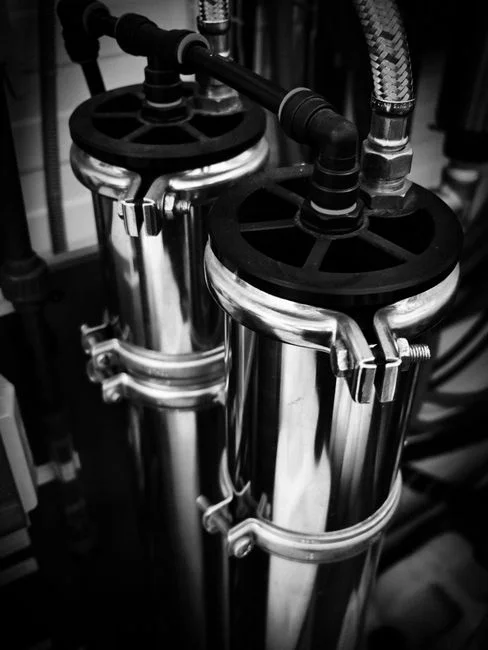
The placement question is a binary one in 2026 practice. DAF as the primary clarifier ahead of biology is the documented configuration in Zhang's DAF + yeast bioreactor + UASB + BAF train cited by TecnoLógicas (2026); it protects downstream biomass from TSS and FOG shocks and provides the UASB with a more uniform feed. DAF as a polishing step after biology is appropriate when the upstream reactor (an MBR or UASB) already strips BOD and the remaining task is removing floatable solids and residual FOG — a common brewery and distillery configuration, which the 2026 DAF system for distillery wastewater 2026 guide covers in detail.
Where residual sugars are still high, route the DAF float to anaerobic digestion; TecnoLógicas (2026) notes that DAF sludge is a viable biogas substrate, so the float cake becomes a feedstock rather than a disposal line. The DAF-then-biology placement also strips TSS and FOG before they reach a UASB, which directly reduces the foaming and biomass washout events that operators already log. For a detailed comparison of model selection and integration options, the 2026 best DAF unit engineering decision framework covers the trade-offs at equipment level.
Sizing a DAF for Yeast Wastewater in 2026
A defensible 2026 sizing procedure uses research-supported inputs and acknowledges variables the engineer must obtain. The procedure is:
- Match peak hourly flow to a standard model range. The published HydropureWater DAF system (4–300 m³/h) covers 13 standard models; select a model with margin for future production growth rather than sizing to today's peak.
- Set hydraulic loading and air-to-solids ratio from the vendor's process guarantee. Verify by on-site pilot or rental unit where flow is variable; do not extrapolate a generic food-and-beverage loading rate to a yeast plant without confirmation.
- Specify micro-bubble generation in the 30–50 µm range (Clearwater Industries, 2025) and confirm the unit can run a polymer flocculant without fouling the saturator.
- Confirm clean-water availability for initial fill and recirculation — DAF systems must start on clean water, not raw wastewater, to protect the recirculation pump and air saturation system (Clearwater Industries, 2025).
- Plan sludge handling in parallel. A plate and frame filter press or a lamella clarifier sized for the expected dry-solids yield from a conditioned DAF sludge removes the dewatering bottleneck from the critical path.
The following table summarises the inputs the engineer must produce or request, mapped to the research source that supports each one. Cells without a defensible source are left as inputs to obtain.
| Design input | Value or method | Source / status |
|---|---|---|
| Standard DAF model flow band | 4–300 m³/h across 13 standard models | HydropureWater DAF product catalog (internal) |
| Micro-bubble size | 30–50 µm | Clearwater Industries, 2025 |
| Hydraulic loading / air-to-solids ratio | Set from vendor process guarantee; verify on-site | Input to obtain from vendor and pilot |
| Clean-water demand at startup | Required for initial fill and recirculation | Clearwater Industries, 2025 |
| YADAF TSS removal benchmark | 94.35% in 15 min (slaughterhouse analogue) | Xen et al., Water Environment Research 97(4):e70069, 2025-04 |
| YADAF + AOP combined removals | COD 93.75%, CBOD5 83.23%, TSS 94.35% | Xen et al., 2025 |
| Documented DAF → yeast bio → UASB → BAF train | Industrial configuration, oilfield wastewater | Zhang, cited by TecnoLógicas, 2026 |
| DAF sludge biogas potential | Viable substrate for clean-energy recovery | TecnoLógicas, 2026 |
For a CAPEX submission, every cell labelled "input to obtain" is a line item the engineer must close out before signing a purchase order. The DAF maintenance checklist should also be requested with the quotation, as it determines the OPEX that offsets the CAPEX in the financial model.
Frequently Asked Questions
What budget range should we plan for a 2026 DAF system on yeast wastewater?
DAF cost depends on flow, materials of construction, coagulant dosing scope, and the sludge-dewatering line. The actionable check is to request a written budget band from at least two suppliers that includes the DAF vessel, the chemical dosing skid, and the sludge handling train
Frequently Asked Questions
What removal rates can a DAF realistically achieve on yeast wastewater in 2026?
In 2026, a properly optimized Dissolved Air Flotation (DAF) system treating yeast wastewater typically achieves Total Suspended Solids (TSS) removal rates between 85% and 95%. When integrated with advanced chemical conditioning, Chemical Oxygen Demand (COD) reduction generally ranges from 60% to 80%, depending on the ratio of soluble versus particulate organic matter in the effluent.
To reach these targets, the system must maintain a bubble size distribution of 30 to 50 microns and a consistent air-to-solids (A/S) ratio of 0.02 to 0.05 ml air/mg solids. Performance is highly dependent on the stability of the yeast cell density and the efficiency of the upstream pH neutralization process.
Should a DAF be placed before or after the yeast bioreactor in a brewery or distillery?
A DAF system should always be placed after the yeast bioreactor or fermentation process as a pretreatment step before secondary biological treatment or discharge. Placing it before the bioreactor would prematurely remove the biomass required for the fermentation process itself.
The DAF is specifically sized to handle the "spent" yeast and wash water effluent. By removing the high-strength yeast solids prior to the aerobic or anaerobic biological reactor, the DAF reduces the organic loading rate on the secondary system by up to 70%, significantly lowering energy consumption for aeration and preventing sludge bulking.
What coagulant and polymer doses are used ahead of a DAF on yeast effluent?
Coagulant dosing for yeast effluent typically ranges from 150 to 400 mg/L, depending on the initial turbidity and protein concentration. Inorganic coagulants like Ferric Chloride or Aluminum Sulfate are standard, though polyaluminum chloride (PAC) is increasingly preferred in 2026 for its performance across wider pH fluctuations.
Flocculant (polymer) dosing is significantly lower, usually ranging from 2 to 10 mg/L of a high-molecular-weight anionic polyacrylamide. Precise dosing is controlled via automated jar testing or real-time streaming current monitors to ensure that the yeast cells—which carry a net negative charge—are effectively bridged into floatable flocs without overdosing, which can lead to increased sludge volume.
How much does a DAF system for a small yeast plant cost in 2026, and what drives the price?
For a small-scale yeast plant (processing 50–150 cubic meters per day), a complete DAF skid typically costs between $85,000 and $160,000 USD in 2026. This base price includes the flotation tank, saturation system, sludge scraper, and control panel, but excludes civil works, chemical storage, and sludge dewatering equipment.
The primary price drivers include the material of construction (316L stainless steel is the industry standard for corrosion resistance in yeast applications), the level of instrumentation for automated chemical dosing, and the integration of plate pack clarifiers which increase the effective surface area without increasing the physical footprint.
How do I pick a DAF supplier for a yeast plant — what questions should I ask before signing a PO?
When evaluating suppliers, you must request proof of performance on high-protein, high-solids effluent similar to your specific yeast strain. Ask for a pilot study report or references from plants with similar flow rates and COD profiles to ensure the supplier understands the rheology of yeast sludge.
Before signing a purchase order, ask these technical questions: What is the guaranteed air-to-solids ratio at the maximum design flow? Can you provide a detailed mass balance showing the expected sludge solids concentration (targeting 3–5%)? Does the control system include automated air-saturation pressure feedback? Finally, ask for the expected maintenance interval for the saturation pump and the availability of local field service support to minimize downtime.