What a Manama Factory Is Actually Treating
Most of the industrial wastewater in the Manama / Sitra corridor comes from five categories of plant, and each one pushes a different pollutant to the front of the queue. Refineries, tank farms and marine / shipyard operations discharge high FOG (fats, oils and grease) and tightly emulsified oil that gravity separators cannot lift (Source S1, quora.com, 2026-07). Aluminium and metals plants generate high TSS, fluoride and dissolved metals. Food and beverage plants run high BOD / COD with seasonal TSS surges. Across all of these profiles, dissolved air flotation is the established workhorse for removing oil and suspended solids in industrial ETPs (Source S2, made-in-china.com product page).
Before any sizing decision, a Manama buyer must obtain two pieces of information: a 24-hour composite influent characterisation across at least one full production cycle (flow, TSS, FOG, BOD/COD, pH, temperature, salinity), and the current local discharge limits for their specific discharge route from the competent Bahraini authority. The research contains no Bahrain-specific numeric limits; do not accept a vendor's or consultant's "typical" Gulf number in their place.
Two practical questions decide the rest of the design. Is the dominant load FOG and emulsified oil, or is it BOD/COD? And is the discharge target a municipal sewer (TDS, COD and BOD limits typically apply) or reuse (which usually forces an extra polishing step such as UF or RO downstream of the ETP)? These two answers map directly onto the technology choices in the next section.
The Three-Stage ETP Structure and Where DAF Fits
An industrial ETP is conventionally organised into three levels (Source S1, quora.com, 2026-07): primary, which uses physical and chemical methods such as screening, grit removal, pH control and flocculation to settle out suspended solids; secondary, which uses biological reactors (aerobic or anaerobic) and / or physico-chemical flotation to remove the remaining organics; and tertiary, where chlorine and alum polish out residual inorganics and microorganisms before the effluent is released.
DAF is a physico-chemical flotation step, not a biological one. The standard arrangement takes a side-stream of clarified effluent, pressurises it and saturates it with air in a dedicated drum, then releases it back into the main flotation tank at atmospheric pressure. The sudden pressure drop forces the dissolved air out of solution as a cloud of micro-bubbles, reported in the 10–100 micron diameter range (Source S1, quora.com, 2026-07). Those bubbles attach to suspended solids and to fine oil droplets, lowering their effective specific gravity and lifting them to the surface, where a mechanical skimmer scrapes the float into a sludge holding tank.
In a refinery-style effluent train, DAF sits as a secondary clarifier between the API oil/water separator and the biological reactors to act as a protective barrier. Crude desalting and catalytic cracking generate tight oil-in-water emulsions and ultrafine solids; if those pass through to the biology, the oil coats the biomass in a suffocating film and destroys the colony (Source S1, quora.com, 2026-07). For non-petroleum Manama factories (aluminium, food, marine), DAF is selected for TSS and FOG removal ahead of biological or membrane polishing. A standalone DAF unit for a small factory is described in more detail on the HydropureWater DAF system for industrial wastewater product page.
DAF vs Lamella Clarifier vs Biological MBBR/MBR for a Manama Factory
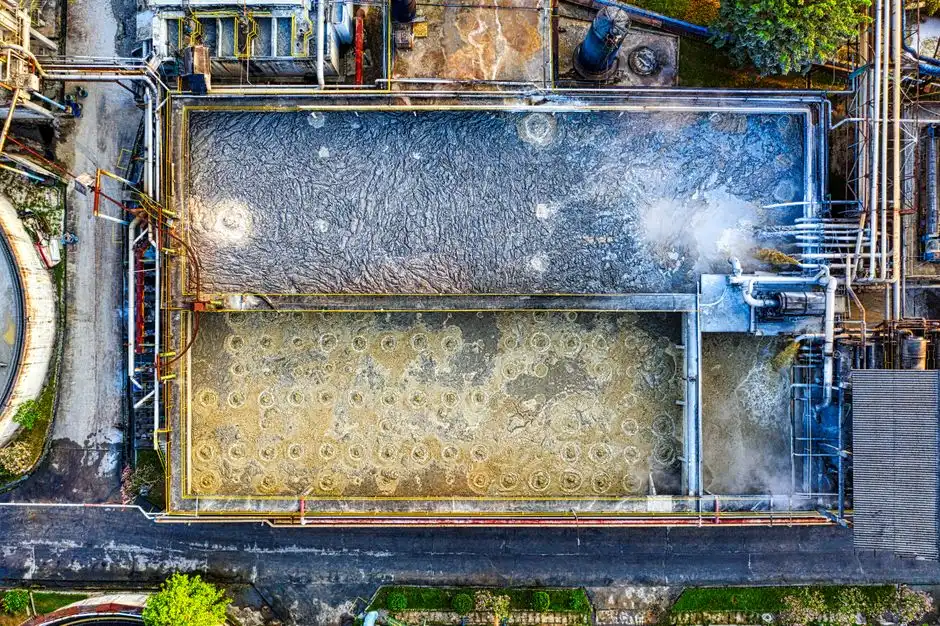
Secondary-separator selection is the single decision that drives the rest of the ETP cost, so it should be made before any RFQ goes out. DAF is physico-chemical, lifts emulsified oil and fine colloids that gravity cannot, and is the right choice when FOG is the dominant load or when the next stage is a sensitive biological or membrane reactor. A lamella clarifier (inclined-plate sedimentation) is purely physical, has lower CAPEX and OPEX than DAF, but it only handles settleable solids; request the colloidal fraction and oil content of the influent before defaulting to it. Biological MBBR or MBR is needed when BOD/COD is the dominant load and the factory is targeting reuse-quality effluent, and it normally sits downstream of DAF or a clarifier (Source S1, quora.com, 2026-07).
The table below is a planning comparison. CAPEX bands are qualitative and must be confirmed with vendors against the buyer's specific flow and load; capacity figures are the unit-size range that the technologies are commonly built in, and the buyer should request vendor data for their own design flow before committing.
| Technology | Target pollutant | Footprint | CAPEX band | Typical unit capacity | Best-fit Manama industry |
|---|---|---|---|---|---|
| DAF (dissolved air flotation) | FOG, emulsified oil, fine TSS, colloids | Small to medium | Medium to high | Verify with vendor against design m³/h | Refineries, tank farms, marine / shipyard, food (FOG-rich lines) |
| Lamella clarifier (inclined-plate) | Settleable TSS only | Small | Low | Verify with vendor against design m³/h | Aluminium / metals (low-FOG streams), pre-sediment for food lines |
| Biological MBBR | Dissolved BOD / COD | Medium to large | Medium | Verify with vendor against design m³/h | Food and beverage, general organic load |
| MBR (membrane bioreactor) | BOD / COD plus suspended solids, reuse-quality polish | Medium | High | Verify with vendor against design m³/h | Reuse-targeting food plants, electronics / pharma support |
If the influent is dominantly FOG and emulsified oil, the answer is DAF first, then biology. If the influent is mostly settleable TSS with no oil, a lamella unit is the cheaper route, and the engineering context for that choice is covered in the DAF or clarifier for petroleum bulk wastewater guide. If the target is reuse, an MBR downstream of a DAF or clarifier is the standard stack, and the HydropureWater MBR system for reuse-quality effluent is the natural pairing. Lamella units themselves are described on the HydropureWater lamella clarifier for high-TSS wastewater page.
Key DAF Specification Parameters a Buyer in Manama Must Set
Vague DAF marketing claims produce vague bids. The buyer must lock down the following inputs before requesting quotes, because every value below flows directly into the saturated-air flow, the recycle ratio and the tank area: design flow in m³/h (average and peak), influent TSS in mg/L, FOG in mg/L, pH range, operating temperature, and salinity. These are sizing inputs the buyer must obtain from their own sampling; the research does not contain Bahrain-specific influent data.
From those inputs, the buyer's RFQ should call out hydraulic retention time, surface loading rate, air-to-solids ratio and a bubble-size target anchored to the 10–100 micron band reported in Source S1 (quora.com, 2026-07). Materials of construction for a coastal / industrial atmosphere are typically epoxy-coated carbon steel for the tank, with 304 or 316 stainless for the skimmer, wetted fasteners and any parts exposed to chloride. Skid-mounted or containerised packaging should be requested to reduce on-site civil works, and the downstream sludge-handling path must be specified in the same package, because DAF float is a thickened sludge that has to be dewatered, typically on a HydropureWater plate and frame filter press, with polymer make-up handled by an HydropureWater automatic chemical dosing system. For the broader DAF spec and cost framework, the best DAF unit engineering specs and cost framework article is a useful internal reference.
| Parameter | What to specify in the RFQ | Source / note |
|---|---|---|
| Design flow (m³/h, average and peak) | From buyer's own flow survey, not assumed | Buyer input |
| Influent TSS, FOG, pH, temperature, salinity | From 24-h composite sampling across a full production cycle | Buyer input |
| Bubble-size target | 10–100 µm band | Source S1, quora.com, 2026-07 |
| Air-to-solids ratio, HRT, surface loading rate | Set against vendor proposal; tied to FAT data | Vendor input |
| Tank / skimmer material | Epoxy-coated CS tank, 304/316 SS wetted parts (verify) | Buyer to confirm with EPC |
| Sludge downstream | Filter press sizing and chemical dosing in same RFQ | Engineering practice |
Local Compliance, Climate, and Site Considerations in Bahrain
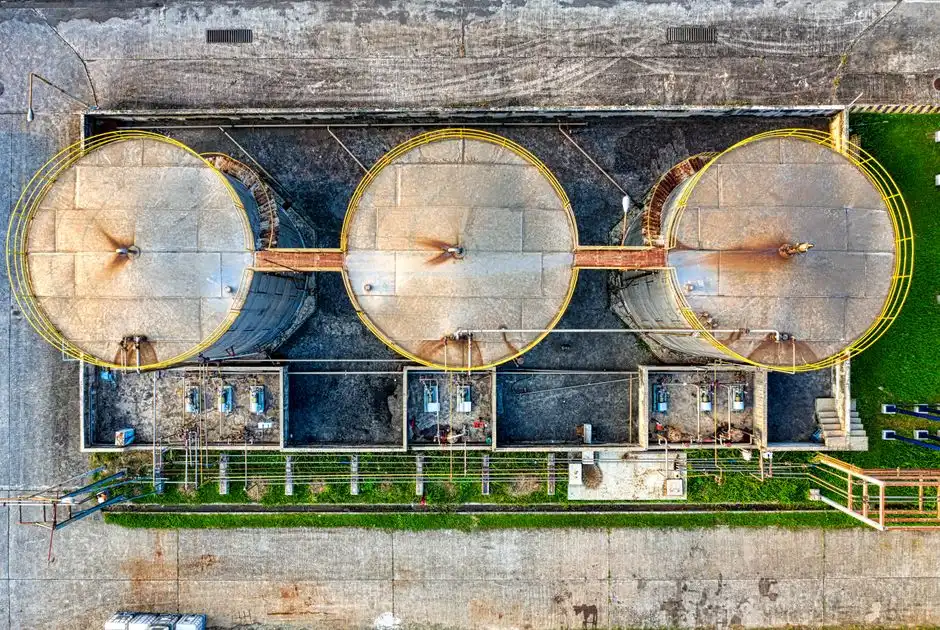
Manama's climate changes several design choices that a temperate-zone DAF catalogue will not mention. High ambient temperatures raise biological reaction rates but reduce dissolved-oxygen saturation, so any aeration design downstream of the DAF must be sized on the local summer temperature rather than a standard 20 °C assumption. Coastal exposure means salt-laden air and possible saline process streams, which is why the wetted-parts material spec above matters; the buyer should ask their EPC or a local materials engineer to set a corrosion allowance.
Two more items must be confirmed directly by the buyer before the RFQ is issued. First, the current industrial discharge limits from the competent Bahraini authority for the route the factory will actually use (sewer, sea outfall, or reuse), because the research contains no Bahrain numeric limits and any "typical Gulf" number a vendor offers should be treated as a placeholder. Second, whether the plant is targeting sewer discharge or reuse: reuse usually forces an additional polishing step such as ultrafiltration downstream of the ETP, and the HydropureWater UF water treatment system is the standard pairing for that scope. For a regional benchmark on how Gulf neighbours structure these decisions, the DAF system in Qatar cost and compliance guide is a useful cross-reference.
Supplier Shortlist Checklist for a Manama Factory
Procurement can run this checklist in a week if the engineering inputs above are already locked. Require documented GCC industrial-project experience and reference plants in Bahrain or Saudi Arabia, and ask for operating data (flow, inlet / outlet TSS, inlet / outlet FOG) from those references rather than marketing claims. Require factory acceptance test (FAT) data on hydraulic performance, TSS and FOG removal, and bubble-size distribution, and tie a defined portion of payment to site acceptance test (SAT) results measured on the buyer's own wastewater. Require after-sales support in writing: local or regional service, a published spare-parts lead time, and remote-monitoring capability on the control panel. Require a complete skid scope — DAF, chemical dosing, sludge handling — so the buyer is not integrating packages from multiple suppliers. The cost of an ETP / DAF system is driven by flow, load, material spec and scope, and a defensible budget figure can only be built once the supplier is bidding on a fixed specification.
Frequently Asked Questions
DAF or lamella clarifier — which one does a Manama factory actually need?
Pick DAF when the dominant load is FOG
Frequently Asked Questions
What size DAF system does a medium-sized factory in Manama typically need?
For a medium-sized industrial facility in Manama, a Dissolved Air Flotation (DAF) system is typically sized based on hydraulic loading rates ranging from 5 to 25 cubic meters per hour (m³/h). The specific sizing depends on the total suspended solids (TSS) load and the required hydraulic retention time, which usually falls between 30 and 60 minutes for effective micro-bubble attachment.
How do I choose between a DAF system and a lamella clarifier for an industrial plant in Bahrain?
Choose a DAF system when the wastewater contains low-density contaminants, oils, greases, or light particles that are prone to floatation, as DAF units can achieve 80-95% removal efficiency for these substances. Conversely, select a lamella clarifier if the primary objective is the sedimentation of heavy inorganic solids or dense sludge, as lamella settlers utilize inclined plates to increase the effective settling area within a compact 10-20% of the footprint required by conventional clarifiers.
What Bahraini discharge limits apply to industrial wastewater from a factory in Manama?
Industrial wastewater discharged into the public sewerage network in Bahrain must comply with the standards set by the Ministry of Works, typically requiring a Biological Oxygen Demand (BOD5) below 500 mg/L, Total Suspended Solids (TSS) below 500 mg/L, and Oil and Grease (O&G) levels below 100 mg/L. Factories must also ensure the pH remains between 6.0 and 9.5 and that heavy metal concentrations adhere strictly to the specific industrial effluent limits outlined in the Bahraini Environmental Law.
What should I check when selecting a DAF or ETP supplier for a Bahrain project?
Ensure the supplier provides equipment constructed from corrosion-resistant materials, such as 316L stainless steel or high-grade epoxy-coated carbon steel, to withstand the high humidity and salinity common in the Manama climate. Verify that the supplier offers local after-sales support, carries essential spare parts for air saturation pumps and skimmer assemblies, and demonstrates prior experience with local regulatory compliance and permitting through the Supreme Council for Environment (SCE).
Is a DAF system enough on its own, or do I need a full ETP with biological treatment?
A DAF system is generally considered a primary pretreatment step and is rarely sufficient on its own to meet stringent environmental discharge standards if the wastewater has high dissolved organic loads. If the Chemical Oxygen Demand (COD) or BOD levels exceed the discharge limits after physical-chemical separation, you must integrate a secondary biological treatment stage, such as a Membrane Bioreactor (MBR) or Moving Bed Biofilm Reactor (MBBR), to effectively break down dissolved pollutants.