Why Algeria's 2026 sanitation picture forces on-site treatment for resorts
Algeria discharges an estimated 1.2 BCM of wastewater per year, but as of 2011 the country operated only 134 treatment plants with a combined capacity of 700 MCM/yr, leaving roughly 200 MCM/yr of untreated or low-quality effluent to enter rivers, wadis and coastal aquifers (Fanack Water Quality, citing Sattar and Demmak, 2014). The sewerage network itself has expanded sharply, from 21,000 km in 1995 to 41,000 km in 2011, and connects about 86% of the population to a sewer (90% urban, 82% rural), with a stated target of 54,000 km by 2020 (Fanack Water Quality, citing Xinhua, 2011 and WASHwatch, 2019).
Connection, however, is not treatment. The National Agency of Water Resources documents significant pollution in the Tafna, Macta, Cheliff, Soummam and Seybous basins, and Fanack's review explicitly notes that outdated wastewater treatment plants are not equipped to handle heavy metals and pesticides, that coastal aquifers in Mitidja and Bas Sebaou suffer seawater intrusion, and that salinity in the southern Complex Terminal aquifer reaches up to 9 g/l. A resort cannot rely on downstream municipal infrastructure to absorb a non-compliant discharge: the on-site plant is the barrier between the property and a stressed receiving environment.
How hotel and resort wastewater differs from domestic sewage
Resort effluent layers several high-strength streams on top of standard domestic sewage: kitchen and F&B grease, laundry surfactants, pool backwash, and periodic conference or wedding peaks. The design consequence is wider swings in both hydraulic and organic load than a residential catchment, plus a persistent FOG fraction that will defeat a purely domestic biological train. Two Algerian specifics sharpen the problem. First, the Fanack assessment flags that national treatment infrastructure is poorly equipped for heavy metals and pesticides, which is a direct concern when a resort plans to irrigate grounds with treated effluent and uses fertilisers or pool chemicals on those same grounds. Second, coastal resorts draw on or discharge into aquifers already affected by seawater intrusion in Mitidja and Bas Sebaou, so influent TDS can sit above the range assumed by conventional domestic kinetics. The 2018 cholera outbreak across six coastal provinces, linked by the European Centre for Disease Prevention and Control to leaky sanitation, is a public-health data point any resort compliance argument must answer, because irrigation reuse or sea outfall both touch the same exposure pathway.
Treatment train options for a 2026 Algerian resort
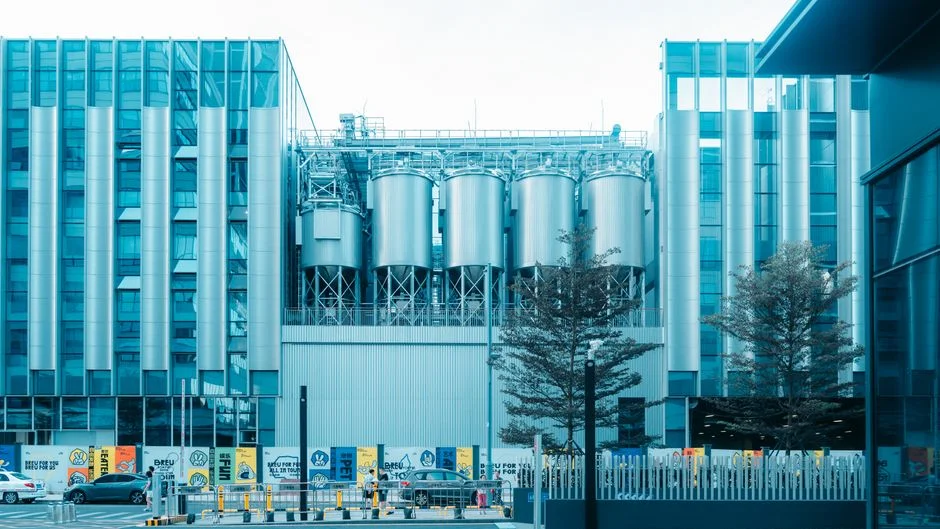
The realistic trains for an Algerian resort in 2026 all share the same headworks: a rotary mechanical bar screen to remove rags, plastics and food debris — exactly the loadings Fanack identifies as a national weak point — followed by grit removal and a flow-balancing tank that absorbs occupancy peaks before the biological stage. Designers select from the following options based on footprint and reuse intent:
- Packaged biological, no reuse: an underground package sewage treatment plant using A/O (anoxic/aerobic) for resorts with a limited footprint and no reuse requirement. Buried installation keeps the visual and noise impact off the guest experience and suits sites with tight setbacks.
- Packaged biological with reuse: an MBR membrane bioreactor system where irrigation reuse is planned or plot space is constrained. MBR effluent is low in suspended solids and supports UV or chlorine dioxide disinfection downstream.
- FOG and suspended-solids polishing: a dissolved air flotation unit ahead of the biological stage, or as a polish step after it, where kitchens and laundries are concentrated and FOG spikes are routine.
- Disinfection: a chlorine dioxide generator when a residual is needed in a long reuse loop for landscape irrigation, and UV where the discharge goes to a sensitive coastal receiving water and chemical by-products must be avoided.
- Sludge handling: a plate and frame filter press to drop sludge volume before off-site disposal, important at resorts with limited on-site storage and no guaranteed daily sludge collection.
| Train | Best fit for resort profile | Key trade-off in Algerian context |
|---|---|---|
| Underground A/O package, no reuse | Small footprint, no irrigation plan, sea outfall or wadi discharge | Effluent quality tied to membrane-free settling; less robust against FOG spikes |
| MBR package with reuse | Coastal resort, irrigation reuse, tight plot | Higher operating cost for membrane cleaning; supply chain for membranes inside Algeria must be confirmed |
| DAF + biological + UV/ClO₂ | Large F&B load, conference peaks, laundries on site | More equipment to maintain; benefits from PLC automation and local after-sales support |
Sizing checklist: inputs the engineer must request from the resort operator
A design that misses any of the inputs below will fail in commissioning. The first set is occupancy-driven: peak rooms occupied, F&B covers per day, staff on duty at peak, and any conference or banqueting capacity. These numbers, combined with litres-per-guest and litres-per-cover, give design flow in m³/day and the peaking factor that sets the balancing tank. The second set is site-driven: the receiving environment (wadi, sea outfall, irrigation reuse), the salinity and TDS of the incoming water supply, and the available footprint with any burial constraints. The third set is operational: target effluent quality tied to the receiving water body or to a reuse specification, available power and operator skill level, and the desired level of PLC automation. The inputs a buyer should always request from any vendor are influent BOD/COD, TSS, FOG, peak factor, influent TDS, and the worst-case single-day load — without these, neither an underground package sewage treatment plant nor an MBR membrane bioreactor system can be sized accurately.
| Input to collect | Why it matters for 2026 design | What the buyer must obtain |
|---|---|---|
| Peak occupancy and seasonal profile | Sets hydraulic and organic peaking factor | Rooms × % occupancy at peak, F&B covers, staff count |
| Daily water use per guest / per cover | Derives design flow in m³/day | Operator utility data or resort benchmark |
| Receiving environment | Drives discharge target and disinfection choice | Discharge permit parameters from the Agence de Bassin |
| Influent salinity / TDS | Coastal sites can exceed domestic design assumptions | Source-water analysis, especially in Mitidja, Bas Sebaou, Oran, Jijel |
| Footprint and burial constraints | Determines packaged underground vs above-grade skid | Site plan with setbacks, utilities, vehicle access |
2026 compliance and procurement framework for Algerian resorts
Approval runs through the local Agence de Bassin Hydrographique and the commune, with discharge quality tied to the receiving water body — the National Agency of Water Resources has documented pollution loads in the Tafna, Macta, Cheliff, Soummam and Seybous basins, so a permit in any of those catchments will be written against an already-stressed system (Fanack Water Quality). Discharge parameters to control, given the national weak points identified by Fanack, are BOD/COD, suspended solids, FOG, residual chlorine where chlorine is used, and pathogen indicators where irrigation reuse is planned, addressing the coastal cholera-risk history. On the procurement side, evaluation should cover PLC automation level, containerised or buried installation, sludge handling, and after-sales support inside Algeria rather than equipment price alone; an automatic chemical dosing system and a confirmed spare-parts pipeline through the water treatment parts, valves and media supply chain reduce commissioning risk. Reuse design is increasingly attractive: a treated-effluent loop for landscape irrigation offsets potable demand and turns the 200 MCM/yr national reuse gap into a commercial argument rather than a compliance cost.
Frequently Asked Questions
What is a realistic 2026 budget range for a packaged resort STP in Algeria?
The research supplied does not give a current capital cost for a packaged resort STP, so any specific dinar or euro figure would be speculative. A buyer should request a priced bill of quantities broken down by tankage, blowers or aeration, membranes (if MBR), disinfection, sludge dewatering, and instrumentation, with a separate line for installation, commissioning, and one year of after-sales support inside Algeria.
How do I choose between a local fabricator and an imported packaged STP supplier?
Use a written evaluation that scores each supplier on five evidence-based items: documented after-sales coverage inside Algeria, confirmed membrane and spare-parts supply chain, PLC automation level with remote diagnostics, reference installations in a comparable coastal or saline-influenced site, and a lead time stated in weeks rather than months. A lower equipment price loses to a supplier who cannot keep the plant running through a high-season failure.
What reuse design is realistic for a coastal Algerian resort?
Treated effluent is well suited to landscape irrigation on the resort's own grounds, provided the biological stage (typically MBR) is followed by disinfection and a documented pathogen-indicator monitoring plan. The reuse loop directly addresses the 200 MCM/yr national untreated-discharge figure, and it removes the resort from the most sensitive discharge pathway — a wadi or coastal aquifer that Fanack's review identifies as already polluted or saline-stressed.
Which single design decision most affects compliance risk?
Matching the disinfection stage to the receiving water. UV avoids chemical by-products in sensitive coastal waters but leaves no residual for a long reuse loop; chlorine dioxide carries a residual but requires an automatic chemical dosing system to keep dosing accurate. The choice is set by the discharge permit from the Agence de Bassin, not by the cheapest available generator.