The El Dorado Regulatory Stack: 40 CFR Part 436, the EID NPDES Permit, and Local Limits
The federal floor for any mining or metals discharger in the El Dorado County sewer service area is the Mineral Mining and Processing Effluent Guidelines and Standards at 40 CFR Part 436, which EPA promulgated in 1975 and amended in 1976, 1977, 1978, and 1979, and which covers wastewater discharges from mine drainage, mineral processing operations, and stormwater runoff before being incorporated into NPDES permits (EPA, 2026-02).
On top of that floor sits the California layer, expressed through El Dorado Irrigation District's WDRs and NPDES permits: Deer Creek WWTP operates under NPDES CA0078062 with WDRs Orders R5-2002-0210 and R5-2002-0211, and El Dorado Hills WWTP operates under NPDES CA0078671 with WDRs Order 5-01-135 (EPA PPE, 2003). The EID local-limit framework then runs under the national pretreatment program at 40 CFR 403, using locally derived limits to prevent pass-through, interference, and sludge contamination, with pollutants of concern defined as those carrying a greater than 1% statistical chance of causing a violation of the WDRs or the Federal sludge limits (EPA PPE, 2003).
Before an El Dorado operator assumes a federal numeric limit exists, they must check the reserved-subpart list, because a reserved subpart means no current federal numeric effluent limits and the work falls to EID's local limits. The reserved subparts to screen against are Dimension Stone (A), Lightweight Aggregates (H), Mica and Sericite (I), Trona (P), Rock Salt (Q), Mineral Pigments (T), Lithium (U), Fire Clay (AA), Attapulgite and Montmorillonite (AB), Kyanite (AC), Shale and Common Clay (AD), Aplite (AE), Kaolin (AG), Ball Clay (AH), Feldspar (AI), Talc/Steatite/Soapstone/Pyrophyllite (AJ), and Garnet (AK) (EPA, 2026-02). The Deer Creek WDRs themselves carry narrative prohibitions, effluent limits, receiving water limitations, monitoring requirements, pretreatment program provisions, and sludge disposal requirements, so the operator reads all three layers together rather than picking one (EPA PPE, 2003).
| Layer | Authority | Document | What it sets |
|---|---|---|---|
| Federal floor | U.S. EPA | 40 CFR Part 436 | Numeric effluent limits for active mineral subparts; reserved for the subparts listed above (EPA, 2026-02) |
| State permit | RWQCB / State Water Board | WDRs Orders R5-2002-0210, R5-2002-0211, 5-01-135 | Narrative prohibitions, effluent limits, receiving water limits, monitoring, sludge disposal (EPA PPE, 2003) |
| NPDES permit | RWQCB acting for EPA | CA0078062 (Deer Creek); CA0078671 (El Dorado Hills) | Operating envelope for each receiving plant (EPA PPE, 2003) |
| Local limits and national prohibitions | EID pretreatment program | 40 CFR 403 | Pollutant-specific local limits, categorical standards (e.g., 40 CFR 414D for Rippey Corp), national prohibitions (EPA PPE, 2003) |
What the EID Receiving Plants Can and Cannot Absorb
EID's sewer service area runs from the Sacramento County line to Placerville, with a combined dry-weather design capacity of 6.1 mgd and an average load of 4.9 mgd; Deer Creek WWTP averages 2.94 mgd with a calculated peak of 4.45 mgd, and El Dorado Hills WWTP averages 1.94 mgd with a calculated peak of 2.92 mgd (EPA PPE, 2003). The El Dorado Hills plant is a nitrifying activated-sludge facility with a 5.0 mgd secondary clarifier train, followed by a 1.0 mgd media filter that produces tertiary-grade wastewater for Deer Creek discharge after chlorination and dechlorination, and a minimum 0.5 mgd of reclaim water is sent to Carson Creek (EPA PPE, 2003). Both plants must hold limits for conventional pollutants, metals, toxic organics, pH, residual chlorine, and biotoxicity, so an industrial discharger sizes its equalization basin against the receiving plant's peak envelope, not its average (EPA PPE, 2003).
The tightest operating constraint is summer ammonia: the sliding-scale monthly-average and sample-maximum limits bottom out at 2.37 and 13.3 mg/l at Deer Creek and 2.21 and 9.64 mg/l at El Dorado Hills, against which both plants hold average and 99th-percentile peak ammonia concentrations below 1 mg/l year-round (EPA PPE, 2003). The chronic risk an El Dorado mine is implicitly tied into is nitrate: every sample at El Dorado Hills and all but one at Deer Creek exceeded the 10 mg/l standard, with averages of 17.1 and 24.2 mg/l and 99th-percentile peaks of 27.5 and 34.7 mg/l respectively, and there is a residual under-2% chance of exceeding the lindane limits (EPA PPE, 2003). The implication for a new industrial connection is that the discharger should pick a discharge window that does not push the receiving plant's ammonia or nitrate envelope, and should design the equalization basin around the calculated peak rather than the daily average.
Characterize the Mine Stream Before Talking to a Treatment Supplier
Acid mine drainage is the most prevalent mining water quality problem, and it shows up wherever sulfide minerals are disturbed. When pyrite or pyrrhotite in waste rock and tailings is exposed to oxygen and water, oxidation reactions produce sulfuric acid that leaches iron, manganese, copper, zinc, arsenic, and cadmium at concentrations that exceed regulatory limits (AMPAC USA, 2025-09). The El Dorado operator should not treat the mine as a single stream: process water from flotation, heap leaching, cyanide gold extraction, or chlorination typically carries high TDS and may include cyanide, ammonia, or chloramines; tailings pond effluent carries fine solids, processing chemicals, and leached metals; and dewatering discharge is geology-dependent, ranging from relatively clean to heavily metal-loaded (AMPAC USA, 2025-09).
The consequence is that pH correction and metals precipitation handle the bulk of the loading, but if salts persist the train must end in a membrane polish step rather than stop at clarification (AMPAC USA, 2025-09). The other trap to avoid is the "one stream fits all" assumption: a copper operation, a gold operation, and a dimension-stone quarry produce fundamentally different wastewaters and cannot share a default treatment train, and because flows and chemistries vary significantly between operations, suppliers develop customized systems matched to specific needs rather than publishing one-size-fits-all flow ranges (LiqTech, 2025-08). The operator's first job is therefore to assemble influent and effluent data stream by stream, and to keep that characterization in front of the supplier rather than letting the supplier set the basis of design from a default package.
The Defensible Unit-Operation Sequence for an El Dorado Mining Discharge
The defensible sequence in 2026 has six steps, in the order the literature supports, and each step ties to a specific unit operation. Start with pH correction to raise pH so dissolved metals precipitate as hydroxides and gypsum drops out — a typical anchor is a lime raise to pH greater than 10 before thickening (PMC review, 2024-02). Step 2 is coagulation to aggregate suspended solids and fine metal particles into settleable or floatable flocs, matching the coagulant and flocculant to the floc density that drives the next separation step (Genesis Water Technologies). Step 3 is solids separation: DAF for buoyant floc or where the influent carries oils and floating fines, lamella clarifier where sludge volume and footprint are the binding constraints (Genesis Water Technologies, 2025-11).
Step 4 is multi-media filtration, with the basis of design framed as the target SDI after the filter, not the inlet turbidity figure, so the downstream membranes are actually protected. Step 5 is ultrafiltration to remove fine colloids and condition the RO feed. Step 6 is reverse osmosis, rated at greater than 99% rejection of dissolved metals and salts, with 50–70% recovery on AMD feed and 70–85% recovery as the RO stage of a ZLD train (AMPAC USA, 2025-09). The whole sequence is held together by a PLC/HMI layer with continuous pH, flow, and conductivity tied to POTW self-monitoring records, because the operator has to defend the discharge to EID on the same data the supplier sees (LiqTech, 2025-08). A defensible reference train of this shape for a Pacific-region mining discharge is laid out in the HydropureWater Tenino mining pretreatment reference.
| Step | Unit operation | Basis of design | Parameter anchor |
|---|---|---|---|
| 1 | pH correction (lime raise) | Precipitate metals as hydroxides; drop gypsum | pH greater than 10 before thickening (PMC review, 2024-02) |
| 2 | Coagulation / flocculation | Aggregate fines into flocs that the next step can remove | Match coagulant and flocculant to floc density (Genesis Water Technologies) |
| 3 | DAF or lamella | Buoyant floc or oils → DAF; heavy floc, footprint-constrained → lamella | Air-to-solids ratio and polymer compatibility (DAF); plate spacing and underflow solids (lamella) (Genesis Water Technologies, 2025-11) |
| 4 | Multi-media filter | Protect downstream membranes | Specify target SDI after the filter, not inlet turbidity |
| 5 | Ultrafiltration | Condition RO feed, remove fine colloids | Membrane material, flux, backwash cycle |
| 6 | Reverse osmosis | Reject dissolved metals and salts; support reuse | Greater than 99% rejection; 50–70% recovery on AMD feed; 70–85% as the RO stage of a ZLD train (AMPAC USA, 2025-09) |
DAF or Lamella — Pick the Clarifier by Floc Behavior, Not by Supplier Stock
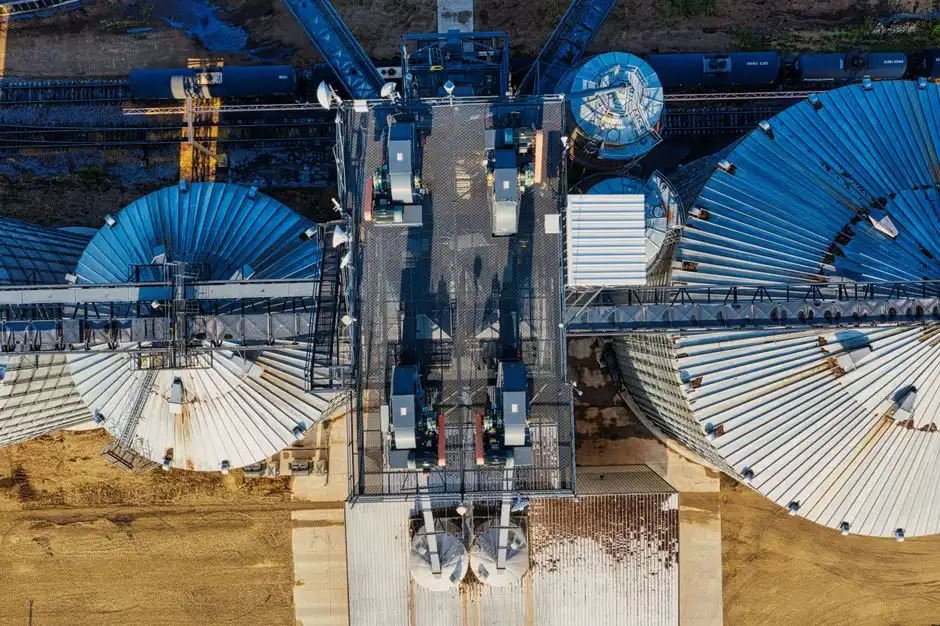
DAF wins when the floc is buoyant or when the influent carries oils and floating fines — the air-to-solids ratio and polymer compatibility become the design drivers, and the unit is forgiving of upset swings in oil loading. Lamella wins when the floc is heavy, sludge volume and footprint are the binding constraints, and there is no oil loading — plate spacing and underflow solids drive the design, and the unit compacts well into a small building footprint. For metal-hydroxide sludge from a mining train, both can work, but the published comparison argues the choice should be made on floc density and footprint rather than price alone, and the same logic applies to other metals-fabrication trains as detailed in the DAF vs clarifier selection guide for metals wastewater.
The choice also has to reflect the permit the operator discharges under. EID industrial users like Rippey Corp, for example, are issued permits that apply the federal standards for thermoplastic resins manufacturing at 40 CFR 414D, the re-determined local limits, and the applicable national prohibitions (EPA PPE, 2003), and the clarifier upstream of the membrane polish has to be matched to that chemistry and that permit, not to the supplier's stock list. The operator should also confirm that the chosen clarifier slots cleanly into a packaged DAF system for mining wastewater solids separation with the rest of the train, and that the cake it produces can be dewatered by the downstream filter press at the cycle time the permit allows.
| Decision input | Choose DAF | Choose lamella |
|---|---|---|
| Floc density | Buoyant; floats without forced aeration assistance | Heavy; settles readily under gravity |
| Influent oils and floating fines | Present — DAF handles oils and floatables | Absent — lamella is not designed for oil loading |
| Footprint and sludge volume constraint | Less binding — DAF produces a thinner float | Binding — lamella compacts a heavy sludge into a smaller volume |
| Design drivers | Air-to-solids ratio, polymer compatibility | Plate spacing, underflow solids |
RO Polish, Reuse Economics, and the Freshwater-Intake Lever
Reverse osmosis and SWRO systems reject more than 99% of dissolved metals and salts, which enables mining operations to reuse water on-site for mineral processing or dust suppression rather than drawing more from local sources (AMPAC USA, 2025-09). For mines in water-stressed catchments, RO-enabled reuse can reduce freshwater consumption by 40–60% compared to once-through operations, which is the lever that monetizes the compliance investment (AMPAC USA, 2025-09). Where zero-liquid discharge applies, RO handles the bulk water recovery at 70–85% before the more energy-intensive thermal stages handle the remaining concentrate, and the operator should request a recovery curve, not a nameplate figure (AMPAC USA, 2025-09).
The same RO polish that hits the reuse target is what hits the EID local limits on dissolved metals and salts, so the sizing logic is "reuse as much as economics allow, then polish the rest to sewer quality." The packaged unit an El Dorado operator typically asks a supplier to quote is an industrial RO system for mining wastewater downstream of a multi-media filter for RO pretreatment, with the recovery curve tied to the AMD feed concentration rather than to a clean-water nameplate.
What to Put in a Supplier RFQ So the Quotes Are Comparable
The artifact the searcher actually needs is a defensible basis of design, so the comparison between supplier quotes is between equivalent scopes. The required inputs are peak and average flow in m³/h (peak drives equalization volume and pump selection, not just average), influent pH and metal profile from a representative sampling round, the EID discharge limits for metals, pH, and TSS, and the desired recovery percentage if reuse is in scope. The supplied research does not publish price points for a complete pretreatment train, so a buyer has to request a quotation against their own basis of design rather than rely on a published range (AMPAC USA, 2025-09).
The quotation should confirm that the proposed scope ties the chemistry dosing, the PLC/HMI controls, and the membrane skid into a single integrated control system, and the supplier should have installed the same unit operations — DAF or lamella, multi-media filter, UF, RO, and sludge dewatering — at flows in the same order of magnitude as the El Dorado site (LiqTech, 2025-08). Specific confirmations: RO rejection greater than 99% on dissolved metals and salts, 50–70% recovery on AMD feed, 70–85% recovery as the RO stage of a ZLD train (AMPAC USA, 2025-09); a PLC-controlled automatic chemical dosing system for lime and flocculant with HMI integration; and a filter press for mining sludge dewatering sized to the cake volume from chemical precipitation. The required deliverables are a recovery curve rather than a nameplate figure for the RO stage, an SDI target after the multi-media filter rather than an inlet turbidity figure, and self-monitoring records compatible with EID's POTW self-monitoring format.
| RFQ input | What the operator supplies | What the supplier confirms |
|---|---|---|
| Flows | Peak and average m³/h (peak drives equalization and pumps) | Equalization volume sized to peak; pump selection against peak (LiqTech, 2025-08) |
| Influent chemistry | pH and metal profile from a representative sampling round | Dosing setpoints tied to the supplied profile |
| Discharge envelope | EID local limits for metals, pH, TSS | Design margin against the supplied limits |
| Recovery target | Desired reuse percentage if reuse is in scope | Recovery curve, not nameplate, for the RO stage (AMPAC USA, 2025-09) |
| Controls integration | Need for one HMI across chemistry, filtration, and membranes | Single integrated PLC/HMI control system (LiqTech, 2025-08) |
| Sludge handling | Cake volume expectation from chemical precipitation | Filter press sized to that cake volume with stated cycle time |
Frequently Asked Questions
What is the realistic cost envelope for a six-step mining pretreatment train in the El Dorado area?
The supplied research does not publish price points for a complete mining pretreatment train, so a buyer has to request a quotation against their own basis of design rather than rely on a published range (AMPAC USA, 2025-09). The actionable check is to put peak and average m³/h, influent pH and metal profile, EID discharge limits, and the desired recovery percentage in front of each supplier, and require the quote to itemize the chemistry dosing, PLC/HMI controls, membrane skid, and filter press separately so the comparison is between equivalent scopes.
How do I screen a supplier for an El Dorado mining pretreatment project?
Confirm that the proposed scope ties chemistry dosing, PLC/HMI controls, and the membrane skid into a single integrated control system, and check that the supplier has installed the same unit operations — DAF or lamella, multi-media filter, UF, RO, and sludge dewatering — at flows in the same order of magnitude as the El Dorado site (LiqTech, 2025-08). The actionable check is to ask for at least one reference installation in the same order of magnitude on a similar influent chemistry, and to require a recovery curve rather than a nameplate figure for the RO stage (AMPAC USA, 2025-09).
How should the equalization basin and discharge window be sized against EID's receiving plants?
EID's combined dry-weather design is 6.1 mgd at 4.9 mgd average load, with Deer Creek averaging 2.94 mgd and peaking at 4.45 mgd and El Dorado Hills averaging 1.94 mgd and peaking at 2.92 mgd (EPA PPE, 2003). The actionable sizing check is to design the equalization basin against the calculated peak rather than the daily average, and to pick a discharge window that does not push the receiving plant's summer ammonia envelope of 2.37/13.3 mg/l at Deer Creek and 2.21/9.64 mg/l at El Dorado Hills (EPA PPE, 2003).
What compliance risk should an El Dorado mine plan for around nitrate?
Both EID receiving plants chronically exceed the 10 mg/l nitrate standard — every sample at El Dorado Hills and all but one at Deer Creek — with averages of 17.1 and 24.2 mg/l and 99th-percentile peaks of 27.5 and 34.7 mg/l (EPA PPE, 2003). The actionable compliance check is to make sure the industrial user's self-monitoring records are compatible with EID's POTW self-monitoring format and to confirm with the local authority whether a nitrate-loading allocation is part of the industrial user permit before the equalization basin is sized.