What Yakima Mining and Metals Plants Need From a Wastewater Separator in 2026
A Yakima, Washington mining or metals-fabricating plant in 2026 requires a specialized industrial separator rather than a generic model. The site sits in a high-desert basin where winter air temperatures regularly drop to or below freezing, and aggregate washing, light metals finishing, and coolant overflows converge on the same yard drain. Any wastewater not discharged to the municipal sewer must meet Washington State Department of Ecology industrial stormwater and reuse expectations. Cold winters slow biological kinetics and freeze exposed equipment, pushing the selection toward enclosed, insulated, or buried packages rather than open steel tanks. The separator sits after coarse screening and pH conditioning and before sludge dewatering, matching the standard industrial train described by Kemco, where coarse filtration removes grit, pH is corrected, the clarifier floats or settles the target solids, and a filter press dewaters the residue (Kemco Systems, 2026).
For metals-bearing streams, both flotation and high-rate sedimentation are accepted options. The EPA 832-R-12-011 emerging technologies register lists Actiflo, DensaDeg, and ballasted or lamella clarifiers as "Adaptive Use" physical/chemical processes, confirming that gravity-based high-rate separators are an established alternative to dissolved air flotation for industrial duties (U.S. EPA, 2013). The Yakima-specific question is which technology matches the dominant solid type, hydraulic envelope, and downstream dewatering step on this site.
DAF and Clarifier: How Each Separator Actually Works
A dissolved air flotation (DAF) clarifier works by pressurizing a side stream of clarified water with air, then releasing that air at atmospheric pressure inside a flotation tank. The released gas forms 30–50 micron microbubbles that attach to chemically conditioned floc and float the solids to the surface, where paddle skimmers scrape the float off. Heavier settleables drop to a bottom collection zone and are removed by an auger (Clearwater Industries / SigmaDAF, 2026-04-27). A standard HydropureWater DAF system (4–300 m³/h, 13 models) packages the saturator, flotation cell, and control panel into a single skid for flows at or below that envelope, with modular expansion above it.
A gravity or lamella clarifier uses inclined plates or tubes to shorten the effective settling distance, allowing dense particles to drop out at a higher surface loading rate than a conventional basin. The EPA 832-R-12-011 register identifies DensaDeg and ballasted/lamella variants as Adaptive Use processes for high-rate clarification, and these designs are routinely applied to mineral slurries and metal-finishing streams (U.S. EPA, 2013). A HydropureWater high-efficiency lamella clarifier operates on the same inclined-plate principle, with the plate pack sized to the target surface loading rate.
Both technologies require chemical conditioning to function effectively. Clearwater/SigmaDAF states that DAF must be paired with proper coagulation and flocculation, typically delivered by serpentine floc tubes or chemical mix tanks supplied with the unit (Clearwater Industries / SigmaDAF, 2026-04-27). Kemco's industrial DAF train assumes coagulant and flocculant injection upstream of the cell and confirms that sludge skimmed from a DAF is sent to a filter press (Kemco Systems, 2026). The same is true for a lamella clarifier: without pH correction and flocculant dosing, neither separator will hit its rated removal.
Side-by-Side Comparison: DAF vs Clarifier for Yakima Mining and Metals Streams
The comparison for a Yakima buyer involves a parameter matrix rather than a single superior technology. The table below scores the two technologies against the criteria a process engineer weighs during a 2026 capex review. Every value, scope, and source date is taken from the cited research; where the research does not supply a number, the row is left as a qualitative principle and flagged as a buyer input.
| Parameter | Dissolved Air Flotation (DAF) | Lamella / Ballasted Clarifier | Source |
|---|---|---|---|
| Dominant solid type | Oils, FOG, emulsions, light metal hydroxide floc | Dense mineral tailings, scale, grit | Clearwater/SigmaDAF, 2026-04-27; U.S. EPA, 2013 |
| Mechanism | 30–50 µm microbubbles attach to floc, float to surface, paddle skimmer removal; bottom auger handles heavier settleables | Inclined plates or tubes shorten settling distance; ballasted variants add microsand for high-rate duty | Clearwater/SigmaDAF, 2026-04-27; U.S. EPA, 2013 |
| Hydraulic envelope (vendor-stated) | COMPACT DAF single skid up to 66 GPM; modular two-skid above 66 GPM; FPAC for small-to-medium flow with very high solids, FPHF for high flow with mixed cross/countercurrent flow | Project-specific sizing; DensaDeg and ballasted/lamella listed as Adaptive Use high-rate processes in EPA register | Clearwater/SigmaDAF, 2026-04-27; U.S. EPA, 2013 |
| Footprint | Compact skid, small floor area; factory-integrated controls | Lamella packs reduce basin area vs conventional clarifier; exact footprint project-specific | Clearwater/SigmaDAF, 2026-04-27; U.S. EPA, 2013 |
| Material of construction | Standard 304SS, with 316SS or polypropylene available for corrosive or chloride-bearing streams | Project-specific; common in carbon steel with rubber lining, 304SS, or FRP for mining duty | Clearwater/SigmaDAF, 2026-04-27 |
| Cold-climate suitability | Enclosed package suits Yakima winters; cover and insulation are routine | Open basins need enclosure or burial in freezing conditions; covered lamella packages are available | Engineering judgment, not stated in cited research |
| Upstream chemistry required | Coagulation/flocculation mandatory; serpentine floc tubes or mix tanks typical | Coagulation/flocculation typical; pH correction mandatory for metals streams | Clearwater/SigmaDAF, 2026-04-27; Kemco Systems, 2026 |
| Sludge handling consequence | Float plus bottom underflow; both streams normally routed to a filter press | Settled underflow; normally routed to a filter press or thickener | Kemco Systems, 2026 |
| Lamella surface loading rate (m/h) | Not applicable | Surface loading is a buyer input; the EPA register does not quote a numeric range for mining duty. Treat any quoted m/h figure as project-specific and request it from the supplier. | Buyer input |
The dominant solid type serves as the primary differentiator for engineers reviewing this data. A Yakima metals-fab plant whose wastewater carries cutting oils, coolants, and light metal hydroxide floc will see DAF outperform a clarifier on removal per unit footprint, whereas an aggregate washing or mineral processing plant handling silica, iron oxide scale, and dense tailings will find a lamella or ballasted clarifier more efficient.
2026 Selection Framework: When to Choose DAF, When to Choose Clarifier
The selection rule for a 2026 Yakima project depends on influent characterization. Choose a DAF when the stream carries oils, FOG, emulsions, or light metal hydroxide floc, or when the plant needs to drop TSS in a small enclosed footprint that survives a Yakima winter. The Clearwater/SigmaDAF FPAC and COMPACT DAF models are designed for small-to-medium flow rates with very high TSS and FOG, with the COMPACT skid integrating chemical conditioning, sensors, and PLC control (Clearwater Industries / SigmaDAF, 2026-04-27). A HydropureWater DAF system (4–300 m³/h, 13 models) covers the same envelope for plants requiring a packaged unit.
Choose a lamella or ballasted clarifier when the dominant solid is dense mineral tailings, scale, or grit, and when high hydraulic loading matters more than footprint. The EPA 832-R-12-011 register lists Actiflo, DensaDeg, and ballasted/lamella clarifiers as Adaptive Use processes for high-rate physical/chemical duty, which matches the requirements for a Yakima aggregate or mineral processing plant (U.S. EPA, 2013). A HydropureWater high-efficiency lamella clarifier fits this duty, with plate geometry and surface loading sized to the project's solids.
Choose a hybrid train—DAF primary with a lamella polish, or lamella primary with a DAF polish—when both light floc and heavy grit are present. This pattern is common in fabricated-metals plants that combine parts washing with grinding and coolant overflow, similar to the approach Ecologix applied at a 2024 Georgia poultry plant where a polishing tank was added to hit final water-quality targets (Ecologix Systems, 2025-08). For Yakima metals-fab plants, this polish step often determines compliance with Washington State industrial stormwater expectations.
Integrating the Separator With the Rest of the Yakima Treatment Train
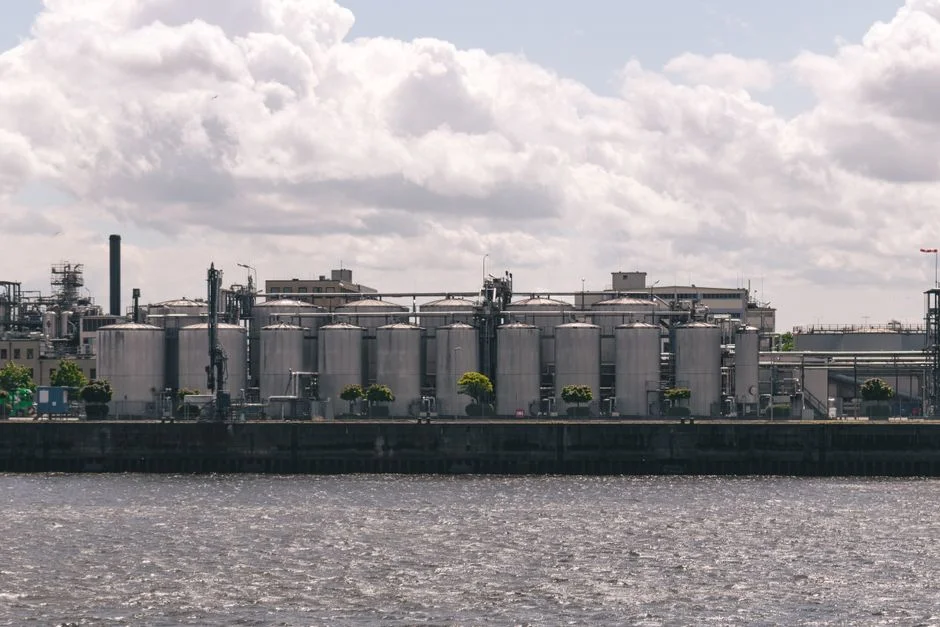
The separator functions as one link in a larger process chain. Kemco's standard industrial train runs coarse filtration, then pH control, then DAF, then filter press, which serves as the default model for a Yakima metals or mining plant (Kemco Systems, 2026). Coarse screening protects the downstream separator from rags, sand, and lint; pH correction is mandatory for any metals stream because metal hydroxide precipitation is pH-dependent; and the separator only delivers its rated solids removal if both upstream steps are operational.
Polymer dose and pH control determine whether a DAF or a lamella clarifier maintains its rated effluent quality, making a PLC-controlled chemical dosing skid a critical capex line item. A HydropureWater PLC-controlled chemical dosing skid pairs with either separator and mitigates the operator-error risks that compromise DAF performance in cold weather. Sludge from either separator is dewatered on a plate-and-frame filter press, which dictates hauling costs on the operating budget. A HydropureWater plate and frame filter press sized to the separator's solids loading is the standard endpoint, as the press area often determines whether a Yakima plant hits its target dry-cake tonnage per shift.
For a Yakima plant weighing DAF against a clarifier in 2026, the verifiable inputs to request from any supplier include: pilot or full-scale TSS and FOG removals on a stream of similar character; quoted footprint and hydraulic envelope at design flow and temperature; polymer and acid/caustic consumption; and a filter-press sizing that consumes the separator's float or underflow. A related 2026 reference for fabricated-metals DAF-vs-clarifier work is our 2026 fabricated-metals DAF-vs-clarifier guide for Canton, OH, and a metals-specific selection guide is in our 2026 Dubuque metals DAF-vs-clarifier selection guide. The DAF side of the train is covered in more depth in our 2026 DAF engineering guide for beverage plants.
Frequently Asked Questions
How much does a DAF or lamella clarifier cost for a Yakima mining or metals plant in 2026?
Capex for industrial DAF units and lamella clarifiers is project-specific, and the available research does not provide a 2026 price band. Request a budgetary quote tied to your design flow (m³/h), design TSS, design FOG, and target effluent TSS, and ask the supplier to break out the saturator, plate pack, controls, chemical dosing skid, and filter press as separate line items to enable a like-for-like comparison.
How do I choose a DAF or clarifier supplier for a
Frequently Asked Questions
For a Yakima mining or metals plant, when is a DAF the right choice over a clarifier in 2026?
A Dissolved Air Flotation (DAF) system is the superior choice when the wastewater contains emulsified oils, greases, or light-density particulate matter that settles at a rate slower than 0.5 meters per hour. In 2026 mining and metals applications, DAF units are preferred when the footprint is constrained, as they achieve hydraulic loading rates of 5–10 m/h compared to the 0.5–1.5 m/h typical of conventional circular clarifiers.
If your influent stream contains high concentrations of light metals or suspended solids with a specific gravity near 1.0, DAF ensures efficient separation without the need for excessive polymer dosages or massive settling basins. Conversely, if your waste stream is dominated by heavy, inorganic grit or dense metallic oxides, a high-rate clarifier remains the more energy-efficient mechanical solution.
What flowrate and TSS range does the HydropureWater DAF system (4–300 m³/h) actually cover, and how do I size it for my stream?
The HydropureWater DAF series covers hydraulic throughputs from 4 m³/h for pilot or small-batch metals processing up to 300 m³/h for full-scale facility streams. These systems are rated to handle influent Total Suspended Solids (TSS) concentrations between 50 mg/L and 5,000 mg/L, provided the solids are amenable to micro-bubble attachment.
To size the unit, calculate your peak hourly flow rate including a 20% safety factor for seasonal surges. You must perform a bench-scale jar test to determine the required air-to-solids (A/S) ratio, typically ranging from 0.01 to 0.05 ml of air per mg of solids, to ensure the DAF surface area is sufficient to prevent hydraulic overloading during peak production cycles.
What is the realistic capex split between a DAF or clarifier and the downstream filter press, sludge handling, and chemical dosing?
In a typical 2026 installation, the primary separation equipment (DAF or Clarifier) accounts for approximately 30% to 40% of the total capital expenditure. The remaining 60% to 70% is distributed across auxiliary systems: 25% for the filter press and sludge dewatering infrastructure, 20% for chemical dosing skids (coagulants, flocculants, and pH adjusters), and 15% for feed pumps, piping, and integrated control panels.
Budgeting for a DAF system generally requires a higher initial investment in air saturation pumps and pressure vessels compared to a gravity clarifier, but this is often offset by the reduced volume of the filter press required, as DAF sludge typically achieves higher solids concentrations (3–6%) than gravity-thickened sludge.
How do cold Yakima winters and seasonal flow swings change the DAF vs clarifier decision?
Yakima's sub-freezing winter temperatures significantly impact fluid viscosity and floc formation. DAF systems are more sensitive to temperature drops, as lower water temperatures alter air solubility; as water cools, air solubility increases, requiring the DAF saturation system to be recalibrated to prevent excessive micro-bubble formation that can disrupt the sludge blanket.
Clarifiers are generally more resilient to thermal shock but are susceptible to ice formation on surface weirs, which can stall scrapers. For seasonal flow swings, DAF units offer superior turndown capability and faster startup times, whereas clarifiers suffer from hydraulic instability during low-flow periods, leading to potential solids carryover if the rise rate drops below the minimum design velocity.
Which Washington State and federal discharge limits most often drive metals plants in Yakima to add a polishing step after the primary separator?
Washington State Department of Ecology (DOE) discharge permits, specifically those under the National Pollutant Discharge Elimination System (NPDES), often dictate strict limits on heavy metals such as Copper, Zinc, Lead, and Cadmium. When primary separation via DAF or clarifier fails to meet low-level numeric criteria—often set at parts-per-billion (ppb) concentrations—plants must implement tertiary polishing.
The most common polishing steps required to comply with these federal and state standards include multi-media filtration, ion exchange resins, or membrane filtration. These secondary systems are essential for removing the fine, non-settleable colloidal metals that pass through primary separation, ensuring compliance with Total Maximum Daily Load (TMDL) requirements for regional watersheds.