Why Brewery Wastewater Needs a DAF-First Treatment Train
Brewery effluent combines high soluble BOD and COD with suspended solids, FOG, and spent grain carry-over from a batch process. A biological-only train—anaerobic digester or aerobic basin—exposed to that raw stream will foam, lose settleability, and suffer biomass washout during peak CIP returns. The conventional countermeasure is a DAF-First train: dissolved air flotation placed after coagulation/flocculation and ahead of biology, so the biological reactors see a clarified substrate rather than emulsified FOG. According to Krofta's beverage industry application page, DAF units in brewery duty are integrated with biological treatment because the raw effluent's high soluble BOD/COD makes FOG and suspended solids removal a prerequisite for stable downstream biology (Krofta, beverage industry page).
That same logic is reinforced by academic work on a closely related stream. Ambiente e Agua (2024) evaluated coagulation/dissolved air flotation (C/DAF) as a primary treatment step for industrial effluent from a grain-processing multinational, using natural cationic coagulants synthesized from peanut shell, and confirmed the C/DAF combination as a credible front-end for high-strength grain-derived streams (Ambiente e Agua, 2024). DAF clarification in beverage duty is achieved in roughly 3–5 minutes, which is the operating window Krofta reports for its beverage-sector DAF systems (Krofta). The practical consequence is a small footprint, which matters for craft and microbrewery sites where building space is shared with packaging and cold storage. Treat the DAF not as a clarifier but as a load-shield for the biological stage. For a broader DAF selection framework, see the best DAF unit decision framework.
Brewery Effluent Profile: What DAF Must Handle
The engineer needs a measured brewery effluent profile—not a generic food-and-beverage assumption—before specifying a DAF. The minimum sample set is: daily and peak flow (m³/h), BOD₅ and COD concentrations, total suspended solids, FOG, pH, temperature (often 30–45 °C from CIP and brewhouse), and salt/sanitizer spikes from clean-in-place returns. CIP returns in particular carry caustic and acid that swing pH and temperature during the brew cycle, so a single composite sample is misleading. For a craft brewery, a 24-hour flow-weighted composite plus two grab samples covering the peak CIP window is the minimum basis for sizing a DAF.
One hard prerequisite the buyer should write into the spec is upstream screening. A brewery DAF is not a coarse screen—it cannot handle spent grain, hop particles, or bottle-label fragments. A rotary bar screen upstream of the brewery DAF (or a dedicated grain trap) should be specified as a non-negotiable pre-DAF step, otherwise the float layer becomes a mixed solids mat that defeats skimming. Where phosphate discharge limits apply, DAF can be configured as part of a chemical precipitation train, and Krofta reports DAF units in beverage duty being used for phosphate reduction alongside suspended solids removal (Krofta). The academic C/DAF study used grain-processing industrial effluent from a multinational in Uberlândia as its test matrix, which is the closest published analogue to a brewery's grain-derived effluent (Ambiente e Agua, 2024).
Where to Place DAF in the Brewery Treatment Train
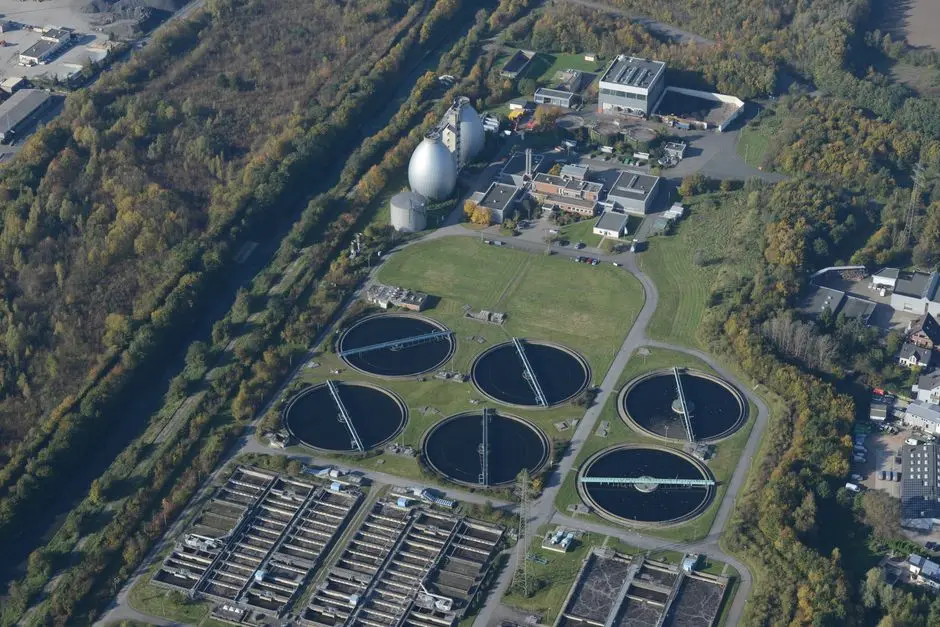
DAF placement is a process-engineering decision based on the brewery's discharge goal. Three positions are defensible, and each suits a different brewery duty cycle and discharge target.
| Placement | Function | Best fit for brewery | Risk if omitted |
|---|---|---|---|
| Primary DAF (pre-biology) | Strips FOG, TSS, colloids before anaerobic or aerobic reactor | High-strength craft/regional breweries with high FOG and TSS, biological stage downstream | Biomass fouling, foaming, poor sludge settleability (Krofta) |
| Intermediate DAF (between biology stages) | Clarifier downstream of a high-rate biological reactor, captures biomass carry-over | Breweries with a two-stage anaerobic + aerobic train that need solids control between stages | Solids carry-over into the polishing reactor, lost biomass (Krofta) |
| Polishing DAF (post-biology) | Final solids-reduction step after anaerobic + aerobic polishing, can support phosphate precipitation | Breweries discharging to municipal sewer with strict TSS/FOG limits, or to surface water with phosphate limits | Effluent fails final TSS, FOG, or phosphate limit (Krofta) |
If the brewery's discharge limit is set by a municipal sewer use ordinance with moderate TSS and FOG caps, a primary DAF ahead of a single aerobic stage is usually sufficient. If the receiving stream is a sensitive water body with low phosphate and low TSS limits, a polishing DAF after anaerobic + aerobic polishing is the right call. The intermediate DAF is justified only when a high-rate biological stage is throwing biomass and a downstream polishing stage cannot tolerate the solids load. Across these placements, the HydropureWater DAF system for brewery wastewater covers 4–300 m³/h across 13 standard models, so a single vendor can supply either a small primary DAF at a craft brewery or a polishing DAF at a regional brewery (HydropureWater DAF product page). For a head-to-head with oil-water separators in the same role, see the DAF vs oil-water separator comparison.
DAF Unit Specifications to Write Into a Brewery Spec
Specifying a DAF involves a parameter checklist that the buyer should provide to a vendor to ensure a comparable quotation. The list below details the requirements for a brewery DAF purchase order.
| Parameter | Specification to request | Why it matters for brewery duty |
|---|---|---|
| Design flow (m³/h) | Specify the brewery's peak CIP return, not the daily average | CIP returns concentrate FOG, TSS, and temperature in short windows (HydropureWater DAF product page, 4–300 m³/h range) |
| Micro-bubble generation | Micro-bubble flotation technology with controlled bubble size distribution | Standard across the 13 HydropureWater DAF models; supports the 3–5 minute clarification window reported for beverage duty (HydropureWater DAF product page; Krofta) |
| Air-to-solids ratio (A/S) | Request a calculated A/S value based on the brewery's measured FOG + TSS load | A/S is a critical input the supplier should size to the brewery's actual load, not assume |
| Recycle rate (%) | Request a recycle rate matched to the FOG and TSS load | Drives micro-bubble density and float stability; should be supplier-confirmed against the brewery profile |
| Automatic skimming / surface scraper | Standard automatic skimmer, corrosion-resistant | Floating FOG layers build quickly during a brew cycle; manual skimming is impractical (HydropureWater DAF product page) |
| Materials of construction | Confirm corrosion-resistant wetted parts (316L stainless or FRP with vinyl ester) | Breweries run caustic and acid CIP chemicals that attack carbon steel |
| Sludge handling interface | Confirm a downstream plate and frame filter press for DAF float sludge, not a drying bed | DAF float is high in FOG and protein; drying beds are slow, odorous, and footprint-heavy |
| Chemical dosing interface | Specify PLC-controlled coagulant and flocculant dosing for brewery DAF | Stable DAF performance requires consistent coagulant feed matched to influent swings |
The buyer should explicitly request a vendor-confirmed A/S and recycle rate against the brewery's measured FOG + TSS profile, because the research evidence does not supply a generic brewery A/S or recycle value. For the regulatory boundary the spec must hit, the 2026 industrial effluent discharge guidelines are the reference.
Coagulation, Chemistry, and Sludge Handling Around the DAF
DAF performance in brewery duty is set upstream of the flotation cell, in the coagulation/flocculation step. The C/DAF pairing is the established primary treatment architecture for high-strength grain-processing effluent, with the Ambiente e Agua (2024) study evaluating natural cationic hemicelluloses synthesized from peanut shell alongside commercial cationic tannin as viable coagulant options for the flotation stage (Ambiente e Agua, 2024). Plant-based coagulants are an active research option, not yet a default commercial specification; for a working brewery DAF today, the coagulant is still typically an inorganic salt or a synthetic polyelectrolyte.
Three integration points the spec must address. First, PLC-controlled coagulant and flocculant dosing for brewery DAF is required to keep flotation performance stable across the brew cycle. Second, DAF float sludge from brewery duty is high in FOG and protein; a plate and frame filter press for DAF float sludge is the right dewatering step because it handles the float's sticky, high-FOG character, controls odor, and keeps the dewatering footprint inside the plant rather than on a drying bed (HydropureWater plate and frame filter press product page). Third, where the brewery targets water reuse, place RO downstream of the DAF + biological train and use UF as the RO pre-protection step, because residual FOG and suspended solids from under-sized primary treatment will foul RO membranes rapidly.
Frequently Asked Questions
Where in a brewery wastewater treatment plant should a DAF be installed — before or after biology?
Both placements are defensible. A primary DAF ahead of anaerobic or aerobic biology is the conventional choice when the brewery's biological stage is sized for soluble BOD/COD removal and needs upstream FOG and TSS stripping (Krofta, beverage industry page). A polishing DAF after anaerobic + aerobic biology is the right call when the brewery must meet a tight final TSS, FOG, or phosphate limit (Krofta). Match placement to the discharge target: municipal sewer with moderate limits → primary DAF; surface water or nutrient-sensitive discharge → polishing DAF. The decision should be made against the brewery's measured effluent profile, not assumed from a generic food-and-beverage template.
What budget range should a brewery plan for a DAF system?
The research evidence does not supply a brewery-specific DAF price or a defined cost-per-m³ range. Instead, the buyer should request a quotation with these minimum inputs: design flow (m³/h) at the brewery's peak CIP return, measured FOG and TSS concentrations, target A/S and recycle rate, materials of construction, and the chemical dosing and sludge dewatering interfaces. A vendor that prices the DAF without requesting those inputs is not yet in possession of the data needed to quote a working brewery unit. Lead time, installation footprint, and dosing skid integration are the variables that most often move the total installed cost.
How should a craft brewery versus a regional brewery size a DAF?
Both are covered by the same equipment range, which spans 4–300 m³/h across 13 standard models (HydropureWater DAF product page). The sizing driver is peak CIP return flow, not the daily average: a craft brewery with a small brewhouse and intermittent CIP can sit at the lower end of the range, while a regional brewery with a continuous brewhouse and parallel packaging lines will land in the mid-to-upper end. The buyer should sample the brewery's peak hourly flow on a brew day and submit that as the design flow on the RFQ, with the average daily flow as supporting context.
What compliance risk should a brewery watch for when specifying a DAF?
The two highest-risk gaps are inadequate upstream screening and a DAF floated in isolation from the biological train. A DAF without a rotary bar screen or grain trap ahead of it will fail under brewery load, because spent grain and hop solids will disrupt the float layer and the skimmer. A DAF without a downstream