What St Joseph factories are actually discharging from these three lines
Pet food (SIC 204x) and sanitary-services wash water carry the same problematic fingerprint: high FOG, TSS, BOD/COD, and ammonia. According to a Water Tech Online overview of pet food manufacturing wastewater, the rendering, blending, baking, and equipment-cleaning steps "inevitably generate wastewater with high levels of contaminants" including TSS, BOD/COD, NH3-N, and FOG, and the article names a dissolved air flotation (DAF) system as the first physical separation step used to strip FOG, TSS, and non-soluble organics before biological polishing.
Agricultural-chemicals formulation (SIC 287x) — fertilizer blending, pesticide formulation, micronutrient mixing — produces a different stream. Solids here are typically settleable grit, suspended catalyst or mineral fines, and trace metals rather than emulsified FOG. Floatation targets buoyant or floc-bound particles; settleable, dense grit is the wrong target for a DAF unless you first create a chemical emulsion or floatable floc that microbubbles can lift.
Sanitary-services operations under SIC 4953/7389 — industrial laundry, uniform rental, septic receiving — generate high-temperature, high-pH, high-FOG, high-surfactant wash water. A Kemco treatment chain places coarse filtration, automatic pH adjustment, and a DAF ahead of sludge dewatering, a sequence that fits wash-water variability better than a passive basin.
Before any technology preference is set, identify your SIC code and your actual discharge path. Sanitary sewer to the City of St Joseph POTW, industrial stormwater, or a direct NPDES outfall each carry a different permit envelope, and the permit envelope — not the equipment catalog — sets the design basis.
Missouri and St Joseph compliance envelope in 2026
Industrial discharges to the City of St Joseph sanitary sewer are governed by a local pretreatment ordinance that mirrors 40 CFR Part 403. Where SIC 287x (ag chemicals) and SIC 204x (pet food) activities trigger a categorical standard under 40 CFR Parts 405–471, those numerical limits override local sewer thresholds. For sanitary-services and industrial-laundry discharges that are typically non-categorical, the local ordinance still applies, usually with numerical caps on pH, FOG, TSS, and BOD, and with surcharges on BOD/TSS that exceed local thresholds. Ammonia and total Kjeldahl nitrogen are increasingly enforced in Missouri pretreatment programs in 2026, so stream characterization should include NH3-N even where the categorical standard does not name it.
For 2026, expect tightening of ammonia and phosphorus limits across Missouri NPDES permits. The Xylem 2008 case data on a beverage plant running a DAF downstream of a high-rate anaerobic reactor recorded 84% ortho-P removal with effluent at 14 mg/L, which means a DAF-fed biological train has measurable headroom for phosphorus and gives operators a credible answer when limits tighten.
The practical action is short and unglamorous: pull the most recent two years of POTW discharge monitoring reports for your site before sizing anything. Capex decisions made on generic POTW language — rather than on the actual local limits, surcharges, and enforcement record — get reworked once the first compliance letter arrives.
For more on the 2026 limits, see the 2026 industrial effluent discharge guidelines.
How a DAF and a gravity clarifier actually work
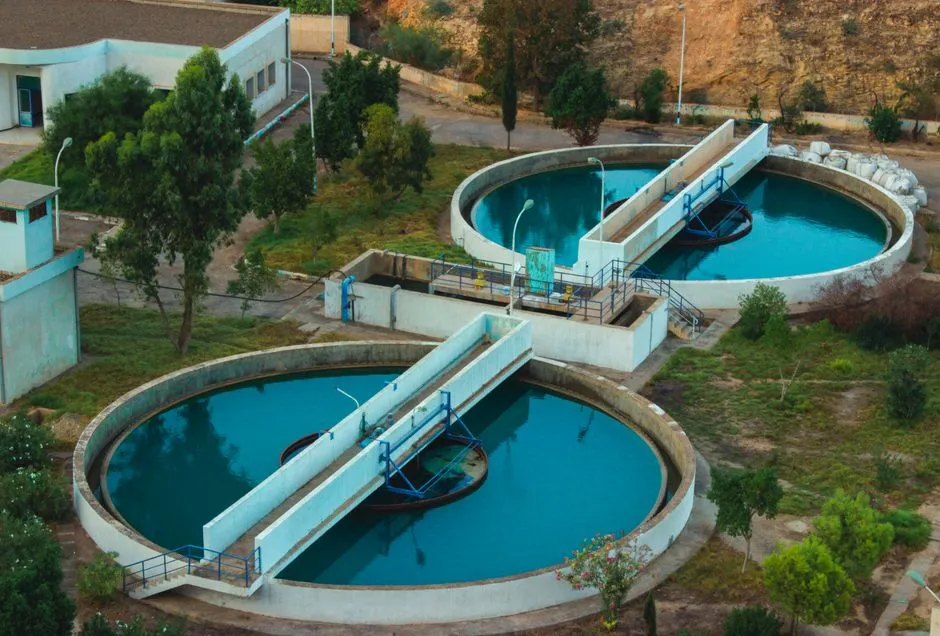
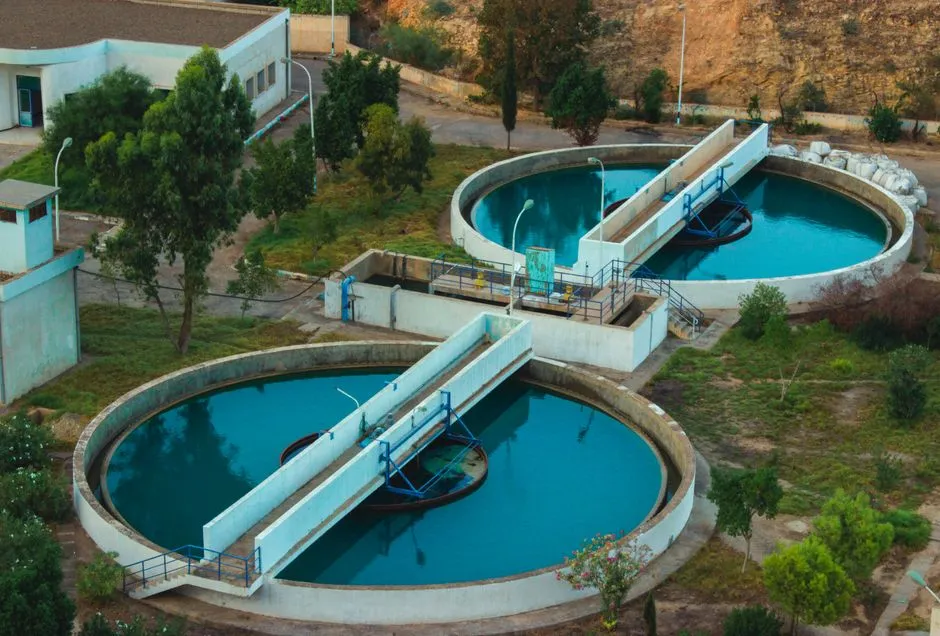
A dissolved air flotation (DAF) unit takes a saturated air-water stream, depressurizes it inside a flotation cell, and releases 30–50 micron microbubbles (per a Clearwater Industries DAF reference) that attach to FOG, TSS, and biological floc. The attached particles rise to a surface scum layer and are scraped off by a paddle or screw skimmer; a bottoms auger removes any settleable heavy fraction. Upstream coagulant and flocculant dosing — typically polyaluminum chloride, ferric chloride, or an emulsion polymer — is what makes the bubble-particle attachment efficient. Without that chemistry, a DAF is a pass-through tank.
A gravity clarifier relies on quiescent settling under gravity, with inclined plates (lamella geometry) added to multiply the effective settling area inside a small footprint. Particles must be denser than water and must not be buoyant or colloidal; the technology is at its best with settleable, non-buoyant solids such as mineral grit, metal hydroxide floc, and primary sludge.
Coupled biological/DAF systems use the DAF as the clarifier downstream of activated sludge, MBBR, or anaerobic reactors — the floated solids are the mixed-liquor suspended solids, not raw influent TSS. The Xylem 2008 coupled biological/DAF paper notes that DAF can handle TSS concentrations above 10,000 mg/L when sized for the solids loading, while a gravity clarifier struggles above a few thousand mg/L without a much larger footprint.
For a reference point on equipment, see the DAF units in our standard range.
DAF vs gravity clarifier vs lamella clarifier: the 2026 comparison
For a St Joseph engineer choosing between the three, the comparison below is the working reference. The numbers come from the Xylem 2008 coupled biological/DAF paper, which remains the most cited head-to-head source for DAF versus gravity clarification in food-and-beverage-style streams; where the Xylem paper does not cover a parameter, the table notes that an operator-side measurement is needed.
| Parameter | DAF | Gravity / Lamella Clarifier | Source |
|---|---|---|---|
| Footprint vs equivalent clarifier | 40–60% smaller | Reference (100%) | Xylem 2008 |
| Sludge solids content | 2–5% TS | 0.5–1.5% TS | Xylem 2008 |
| Sludge volume ratio (same load) | 1 (baseline) | ~4× to 10× larger | Xylem 2008 |
| Max influent TSS handled | >10,000 mg/L with proper sizing | Limited; large footprint needed above a few thousand mg/L | Xylem 2008 |
| Energy | Higher — high-pressure recycle pump and saturator | Lower — passive settling, no recycle | Xylem 2008 |
| Best target contaminant | FOG, emulsified oils, floatable floc, biological MLSS | Settleable grit, mineral fines, metal hydroxide sludge | Xylem 2008 |
| Removal on dairy activated-sludge effluent | 99% BOD, 99% TSS (BOD 1,990 → 27 mg/L; TSS 750 → 12 mg/L) | No equivalent case in Xylem 2008 — requires jar test on site | Xylem 2008, Case 1 |
| Removal on snack food activated-sludge effluent | 96% COD, 99% TSS; effluent 91 mg/L COD, 56 mg/L TSS vs 500/250 mg/L permit | No equivalent case in Xylem 2008 — requires jar test on site | Xylem 2008, Case 3 |
| Removal on anaerobic (UASB) effluent | 67% COD, 82% TSS, 84% ortho-P; effluent COD 365 mg/L, TSS 127 mg/L | No equivalent case in Xylem 2008 — requires jar test on site | Xylem 2008, Case 2 |
The Xylem 2008 paper flags the DAF energy penalty as the main drawback, with the high-pressure whitewater pump as the dominant kWh line. For FOG, TSS, and biosolids capture in tight footprints the DAF wins on every other axis. For settleable grit, trace metals, and low-FOG streams where OPEX and simplicity matter more than footprint, a passive gravity or lamella clarifier remains the correct first step. A lamella clarifier in our standard range covers the latter case.
Which St Joseph industry should pick which clarifier in 2026
The recommendation has to be made per industry because the wastewater fingerprints differ enough that the same technology wins in one and loses in another. The Xylem 2008 dairy and snack food case studies both cleared 96–99% removal on BOD, COD, and TSS, with the snack food plant producing effluent of 56 mg/L TSS and 91 mg/L COD against permit targets of 250 and 500 mg/L respectively. Those numbers are why DAF is the default for pet food and sanitary-services streams. Ag-chemical formulation is a different physics problem.
| Industry (SIC) | Stream character | Recommended primary clarifier | Rationale |
|---|---|---|---|
| Dog and cat food (SIC 204x) | High FOG, TSS, BOD/COD, NH3-N; variable diurnal load | DAF first, then biological (activated sludge or MBBR) | Matches the Xylem 2008 dairy and snack food removal profile; fits the Water Tech Online pet food treatment train |
| Sanitary services / industrial laundry (SIC 4953/7389) | High temperature, high pH, high FOG, surfactants, lint | Coarse screen → pH control → DAF → sludge dewatering | Matches the Kemco treatment chain for variable-pH, high-FOG wash water |
| Agricultural chemicals (SIC 287x) | Settleable grit, formulation solids, trace metals, minimal emulsified FOG | Lamella gravity clarifier first; add DAF only if floatable residue remains | Settleable, dense solids are the wrong target for microbubble flotation; passive settling is cheaper and simpler |
| Hybrid (any of the three) | Mixed floor drains and process water with grit plus FOG spikes | Lamella clarifier ahead of DAF to protect the DAF from grit overload | Sequencing reduces DAF maintenance and chemistry demand |
For a DAF-based treatment train, plan a paired chemical dosing skid sized for the actual coagulant and flocculant demand on the stream; the DAF is only as good as the upstream chemistry. For the ag-chemical path, the lamella clarifier handles the bulk settling, and a DAF is added only if emulsified FOG or floatable catalyst residue shows up in jar testing.
Sizing, footprint, and OPEX reality for a St Joseph plant
The Xylem 2008 snack food case study is a useful order-of-magnitude benchmark for mid-size St Joseph pet food lines: two 350 ft² DAF units installed for a future peak of 1.0 MGD, with the plant typically running a single unit at an average flow of 0.6 MGD and MLSS of 5,000 mg/L. That is a real industrial installation, not a vendor brochure number, and it produces effluent well inside a 250 mg/L TSS / 500 mg/L COD permit envelope.
Sludge handling is where the DAF economics become hard to argue with. With DAF sludge at 2–5% TS, a downstream plate-and-frame filter press reaches a transportable cake and cuts hauling cost; gravity clarifier sludge at 0.5–1.5% TS hauls as mostly water. For any St Joseph site where sludge disposal is a meaningful line in the OPEX budget, the 1/4 to 1/10 sludge-volume reduction reported in the Xylem 2008 paper is usually the single biggest financial argument for the DAF. Pair the DAF with a sludge dewatering filter press so the cake can be hauled as solid waste rather than liquid.
Chemical OPEX belongs in the model. DAF depends on coagulant and flocculant dosing — polyaluminum chloride, ferric chloride, or an emulsion polymer — and the dosing rate is stream-specific. A lamella clarifier typically needs less polymer because the physics is gravity, not surface attachment. Energy OPEX is the inverse trade: the DAF recycle pump and saturator are the largest recurring electrical line items and should be budgeted explicitly, not buried in "utilities."
St Joseph decision checklist for 2026
A one-page list a St Joseph engineer can hand to procurement or a consulting engineer:
- Characterize the stream. FOG, TSS, BOD, COD, NH3-N, metals, with diurnal and seasonal peaks. Without this, both DAF and clarifier choices are guesses.
- Confirm the discharge path. Sanitary sewer to St Joseph POTW, industrial stormwater, or direct NPDES — each has different limits and different surcharge structures.
- Apply the SIC code test. SIC 204x and most SIC 4953/7389 streams usually favor DAF; SIC 287x with heavy grit usually favors a lamella clarifier.
- Run a sludge math check. If sludge hauling is a large share of OPEX, the 1/4 to 1/10 sludge-volume reduction from a DAF (Xylem 2008) can swing the decision on its own.
- Pilot before you buy. A 30–90 day jar test or on-site pilot on a representative DAF unit is the cheapest insurance in 2026, especially for sanitary-services streams with high variability.
For background on the broader treatment-train choices, see the trusted wastewater treatment processes for industrial facilities in 2026. For a side-by-side in a related food-and-beverage market, see the DAF vs clarifier comparison for Saint Albans.
Frequently Asked Questions
What is the realistic 2026 cost difference between a DAF and a lamella clarifier for a St Joseph pet food or sanitary-services line?
Capex alone is the wrong number to lead with, because installed-cost comparisons depend heavily on site layout, foundation work, and the chemistry skid that the DAF requires. The Xylem 2008 paper states that "the installed cost of a DAF is typically less than a comparable gravity clarifier" once the footprint reduction is priced in, but it also flags the DAF as more energy-intensive and dependent on chemical dosing. Request a like-for-like budgetary quote from at least two suppliers covering equipment, install, structural, and the first-year chemical and energy cost — and ask each supplier to put numbers against the 2–5% TS DAF sludge and the 0.5–1.5% TS clarifier sludge so hauling is in the same units.
How do I pick a wastewater equipment supplier in St Joseph without buying the wrong unit?
Ask any supplier to commit in writing to a guaranteed effluent quality on a defined feed, with polymer and energy consumption stated per m³, and to provide at least one operating reference for a pet food, sanitary-services, or comparable high-FOG/TSS plant in the last three years. The Xylem 2008 case data on dairy (BOD 1,990 → 27 mg/L, TSS 750 → 12 mg/L) and snack food (COD 2,182 → 91 mg/L, TSS 452 → 56 mg/L) is the kind of operating reference a credible bidder should be able to match or exceed on a similar stream. Refuse any proposal that does not name the actual chemical dosing, the recycle pump duty, and the expected cake solids out of the dewatering press.
What influent numbers should a St Joseph plant measure before choosing between a DAF and a clarifier?
At minimum: FOG (or O&G), TSS, BOD5, COD, NH3-N, total phosphorus, pH, temperature, and a screening for the metals likely to appear in your SIC code (arsenic, copper, zinc, lead for ag chemicals; iron from formulation; copper and zinc from laundry wash water). The Xylem 2008 case studies show DAF performance scaling with influent load — the dairy case started at 1,990 mg/L BOD and 750 mg/L TSS — so a one-week composite that misses a peak will undersize either technology. Pull a year of diurnal data if the plant already has flow and load monitoring on its sewer connection.
Is a DAF still the right answer if the St Joseph site is on a tight 2026 NPDES permit with ammonia and phosphorus caps?
Yes, and the Xylem 2008 data is on your side. The beverage-plant case study on anaerobic effluent showed 84% ortho-P removal on a DAF polishing step, and the dairy and snack food cases both pushed effluent COD and TSS well below permit targets, which leaves margin for an upstream biological reactor to do ammonia and total nitrogen work. The sequence to verify with your engineer is DAF for FOG and TSS removal, biological reactor for BOD and ammonia, and a second DAF or chemical precipitation for phosphorus polishing — not a DAF as a stand-alone unit.