How Orange Transportation Equipment Wastewater Differs From Food or Refinery Streams
Transportation equipment manufacturing under NAICS 336 produces a wastewater profile that does not match the food or refinery streams most DAF vendors write about. A typical Orange, California plant discharging to the Orange County Sanitation District (OCSD) sewer sees a mix of water-based and oil-based cutting fluids, drawing and stamping lubricants, alkaline and acidic cleaning baths, phosphate and nitrite cooling-water bleed, paint booth detackifier overflow, and metal fines from machining and grinding. That mix is structurally different from the high-FOG, high-protein streams that drive DAF case studies in meat processing or the steady free-oil load in refinery desalter effluent.
The practical consequence is that the wastewater tends to run moderate-to-low in FOG on a daily average, high in TSS from metal fines, and highly variable in flow and composition. Dump-and-fill cleaning baths, shift-end rinses, and quarterly line changeovers produce slug loads that the primary clarifier has to ride through without carryover. Stormwater infiltration through loading docks and outdoor storage yards can also push TSS up between production cycles. A DAF chosen on a generic food-industry case study will underperform on metal fines; a lamella clarifier chosen for footprint will underperform on the occasional paint detackifier slug. The mismatch between vendor pitch and plant reality is the first reason a transportation equipment buyer in Orange should treat the equipment choice as a compliance decision rather than a catalogue pick.
DAF and Clarifier Mechanisms, Side by Side
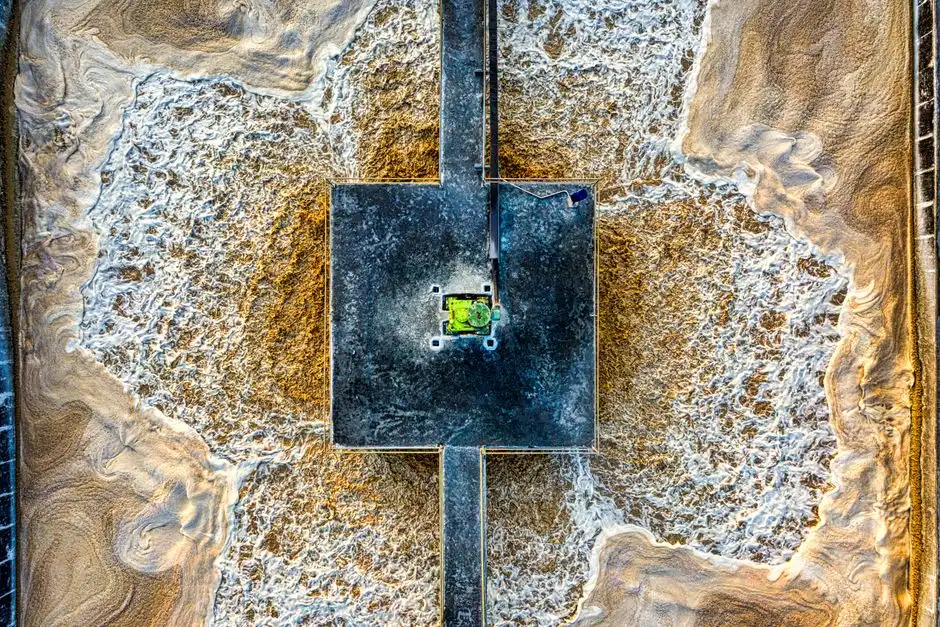
A dissolved air flotation (DAF) unit saturates a side stream of clarified water with pressurized air and then releases it into the flotation tank. Microbubbles in the 30–50 micron range form as the pressure drops, attach to flocculated particles, free and emulsified oil, and floating paint detack solids, and lift them to the surface where a skimmer removes the layer (Clearwater Industries, 2026-04-27; Clearfox, commercial DAF literature). The chemistry is straightforward: upstream pH adjustment, coagulant for charge neutralization, and a polymer flocculant dosed into 15–45 second serpentine flocculation tubes or impeller mix tanks, with jar testing used to set the dose (Clearwater Industries, 2026-04-27).
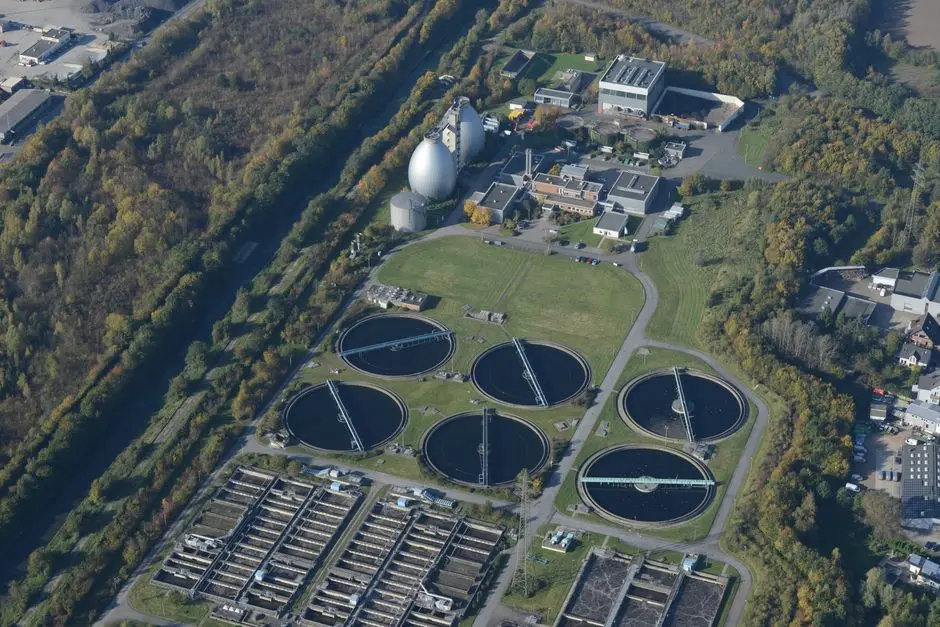
A conventional clarifier relies on gravity settling of heavier suspended solids in a rectangular or circular tank. A lamella (inclined-plate) clarifier adds a pack of parallel plates that shortens the effective settling distance and raises the surface loading rate into the 20–40 m/h range, which is what makes the lamella footprint so much smaller than a conventional clarifier. Because the mechanism is settling, lamella clarifiers handle settleables such as metal fines and sludged soaps well and handle floatables only as a secondary effect; a corrugated plate interceptor (CPI) or DAF polishing step is usually needed upstream or downstream to break emulsions and lift FOG.
The two technologies are therefore biased toward different fractions of the same wastewater. DAF is biased toward floatables and light suspended matter; lamella clarifiers are biased toward settleables. A HydropureWater DAF system sized for a 2026 Orange retrofit will therefore behave differently from a lamella clarifier on the same header, and that difference drives the decision matrix in the next sections.
| Parameter | DAF (dissolved air flotation) | Lamella / inclined-plate clarifier |
|---|---|---|
| Primary mechanism | Microbubbles (30–50 µm) attach to floc and float it | Gravity settling on inclined plates |
| Surface loading | Driven by hydraulic retention time, not a settling rate | 20–40 m/h across the plate pack |
| Best at removing | Free/emulsified oil, FOG, light paint detack solids, floated TSS | Metal fines, sludged soaps, settleable TSS |
| Worst at removing | Dissolved COD without FOG binding | Free oil and emulsified FOG without a CPI or DAF polish |
| Chemical conditioning | Coagulant + pH adjust + polymer flocculant; 15–45 s flash mix | Coagulant + polymer; longer mix residence typically needed |
| Sludge form | Pre-thickened float skimmed from surface | Settled underflow from hopper |
| Footprint | Compact for round vertical-flow designs; modular skids available | Smallest plan area per m³/h of any gravity settler |
Head-to-Head Comparison: DAF vs Clarifier for Orange Plants
The decision drivers an Orange plant engineer can actually measure on site are FOG, TSS, dissolved COD, footprint, chemical use, and sludge dryness. The table below scores each technology against those drivers for a 2026 transportation equipment profile; the prose that follows explains why each row reads the way it does.
| Decision driver | DAF (dissolved air flotation) | Lamella clarifier | Notes for Orange plants |
|---|---|---|---|
| FOG and free oil removal | Strong: microbubbles attach to oil droplets | Weak: needs prior CPI or plate coalescer | Most Orange plants do not run a CPI; DAF avoids that gap |
| TSS and metal fines | Handles fines only after flocculation into a buoyant floe | Strong on settleable fines at 20–40 m/h | Machining lines generate fines continuously; lamella wins on raw TSS |
| Dissolved COD (standalone) | Usually lower as a standalone step where organics are dissolved and biodegradable rather than FOG-bound (Clearfox) | Negligible direct removal | Both need biological or membrane polishing downstream for dissolved COD |
| Footprint and modularity | Round vertical-flow units and skid DAFs ≤66 GPM (Clearwater/SigmaDAF Compact) are compact | Smallest plan area of any gravity settler | Both fit a tight Orange indoor retrofit; DAF skids ship pre-assembled |
| Chemical use | Up to 15% less chemical use than rectangular horizontal DAFs in round vertical-flow designs (Clearfox) | Can cut coagulant use by improving floc capture versus a conventional clarifier | Pair either with an automatic dosing skid to hold floc quality during swings |
| Sludge dryness | Up to 2× the dry solids of conventional DAF designs (Clearfox); float usually feeds a filter press directly | Wetter underflow; usually needs a thickener ahead of the press | DAF float often removes the need for a separate thickener, which lowers capex |
Two qualitative rows deserve a closer read. On dissolved COD, Clearfox's industry guidance is that DAF performs "usually lower as a standalone step because much of the COD is dissolved and biodegradable rather than floatable" when the organics are not FOG-bound, which is the typical case in a transportation equipment plant where the COD is split between soluble drawing compounds, alkaline cleaners, and lubricants. On sludge dryness, the 2× dry-solids figure from Clearfox applies to the ClearFox round vertical-flow DAF design with pre-thickened float; buyers should request jar-tested float solids from the specific vendor they are evaluating rather than assume the multiplier across all DAF geometries.
The chemical-use row is similarly design-specific. The Clearfox claim of up to 15% less chemical consumption is tied to the round vertical-flow geometry with no dead zones, and the same comparison against a rectangular horizontal DAF may not translate to a lamella comparison. The buyer should ask each shortlisted vendor for a chemical mass balance based on jar tests of their actual Orange wastewater, not rely on cross-vendor percentage claims.
Decision Matrix: Which Orange Factory Should Pick Which
Translate the table into a simple scoring rule for the plant in front of you. The rule is conservative on purpose, because the cost of mis-sizing a primary clarifier in 2026 is paid in OCSD surcharges and unplanned downtime, not in a one-line spec sheet.
- Pick a DAF as the primary when influent FOG is consistently above roughly 50 mg/L, when free oil is present in the header, when paint detackifier residues are routine, and when the plant already has a sludge press. The pre-thickened float reduces downstream dewatering load, and the surface skimming recovers quickly from a paint-shop dump.
- Pick a HydropureWater lamella clarifier as the primary when FOG is consistently below roughly 50 mg/L, when TSS is dominated by metal fines, when footprint is constrained by an indoor retrofit, and when the plant is willing to invest in a CPI or DAF polishing step only for the occasional oil slug.
- Pick a DAF followed by lamella polishing when the plant runs both machining lines (high fines) and a paint shop (high FOG and detack) on a shared header. The DAF strips floatables upstream, the lamella polishes residual TSS, and the two together ride through batch swings more cleanly than either alone.
- Add an equalization tank ahead of either unit when hydraulic loading is highly variable. Batch cleaning baths, line changeovers, and paint-shop dumps will otherwise push carryover into the discharge, regardless of which primary is chosen.
Pair the chosen primary with an automatic polymer and coagulant dosing skid sized by jar testing. Manual dose adjustment cannot hold floc quality across the swing from a machining shift to a paint-shop dump, and floc quality is what determines whether either technology hits its removal target on a given day.
2026 Compliance Lens: 40 CFR Part 467 and OCSD Local Limits
Transportation equipment cleaning operations are regulated under 40 CFR Part 467, with subparts that set categorical pretreatment standards for metals, oil and grease, TSS, and pH. Any Orange facility discharging to OCSD must meet those limits through OCSD's local control mechanism, including the FOG limit and surcharge thresholds that apply to industrial users. FOG is usually the single most expensive controllable parameter for an Orange plant, because OCSD surcharges stack on top of any categorical exceedance, which is why a DAF primary is often preferred even when a lamella clarifier would be hydraulically cheaper on a flow-only basis.
Spike control during line changeovers and paint-shop dumps is the operational event that usually decides the technology. A DAF recovers from a slug load faster than a clarifier because floatables are lifted to the surface and skimmed within minutes, whereas a clarifier has to ride out the buoyancy upset across multiple retention times. The cost of a single OCSD surcharge event in 2026 typically exceeds the difference in annual chemical spend between the two technologies, so the compliance-driven case for DAF is often stronger than the operating-cost case for lamella.
Neither DAF nor lamella is a dissolved-COD solution on its own. Both are usually followed by biological treatment — for example an MBR or MBBR — to hit residual COD/BOD before discharge. The primary clarifier choice therefore affects upstream capex and footprint, not whether downstream biology is needed. For the full rules and surcharge structure, see the Industrial Effluent Discharge Guidelines 2026: Rules, Limits & Compliance reference piece.
Sizing, Footprint, and Sludge Handling for a 2026 Retrofit
DAF sizing should match peak hourly flow after equalization, with hydraulic retention time set by the vendor's model range. The HydropureWater DAF system line covers 4–300 m³/h across 13 standard models and uses automatic skimming for the floated layer, which keeps operator intervention low between paint-shop dumps. Lamella sizing is driven by surface loading rate (20–40 m/h) and peak TSS, not by flow alone; the inclined-plate area and the underflow hopper geometry both have to be checked against the worst-case machining shift.
Sludge handling is where the two technologies diverge most clearly. DAF float with the Clearfox-style pre-thickening reaches up to 2× the dry solids of conventional designs and usually feeds a plate-and-frame filter press directly, often removing the need for a thickener. Clarifier underflow is wetter and typically needs a thickener or a long residence sludge tank ahead of the press, which adds footprint and capex. In a 2026 Orange retrofit where indoor floor space is the binding constraint, that downstream difference can flip the decision even when the upstream scores look even.
Automation ties the train together. An automatic polymer and coagulant dosing skid controlled by a PLC keeps floc quality stable when influent swings between machining and paint-shop flows, and it gives the operator an audit trail for OCSD reporting. Manual dosing cannot hold that swing without a dedicated operator, and a 2026 retrofit that omits automated dosing usually pays for it in the first surcharge event.
Frequently Asked Questions
How should an Orange plant decide between DAF and lamella clarifier on cost in 2026?
Frame the comparison as total installed cost plus five-year chemical and sludge-disposal spend, not as unit price. DAF carries higher unit cost for the tank and saturator but typically removes a separate thickener from the sludge train; lamella clarifiers are cheaper to install but wetter underflow usually forces a thickener ahead of the filter press. The right number to ask each shortlisted vendor for is a site-specific capex plus opex package based on jar tests of the actual Orange wastewater — without that, any quoted price is a placeholder.
What should we check when picking a DAF or clarifier supplier for a 2026 OCSD retrofit?
Confirm the supplier has documented 40 CFR Part 467 project experience in California, can provide a jar-test report on a representative Orange wastewater sample, and can supply a control narrative that an OCSD inspector can follow on a walkthrough. Ask for a written chemical mass balance, a sludge-solids projection at the design flow, and a PLC tag list tied to the dosing skid. Suppliers who cannot produce those three documents for the specific influent you have are not yet qualified for the 2026 retrofit.
Can a DAF or lamella clarifier hit OCSD discharge limits on its own?
No, not for a transportation equipment stream. Both technologies remove FOG and TSS well, but dissolved COD and refractory organics from drawing compounds, alkaline cleaners, and paint detackifier pass through both. OCSD compliance in 2026 still requires a biological or membrane polishing step downstream — usually an MBR or MBBR — and the primary clarifier choice affects upstream capex and footprint rather than whether biology is needed.
What is the single most common 2026 retrofit mistake when sizing either unit?
Sizing to average flow instead of peak hourly flow after equalization. Orange plants see batch swings from cleaning baths, line changeovers, and paint-shop dumps, and an undersized primary will carry floatables or settleables straight into the biological step during a slug, which then breaks the MBR and triggers an OCSD excursion. The correct input to give a vendor is a 24-hour composite flow profile, not a single daily average.