Why Vienna housing developments need a packaged STP in 2026
A packaged sewage treatment plant (STP) becomes the default answer in Vienna when a site cannot connect to the central sewer network or must pre-treat flow before discharge. Any Austrian housing project, packaged or not, sits inside the binding EU compliance frame set by the EU Urban Waste Water Directive 91/271/EEC, with the Austrian 1.AEVk outlet standard governing how treated effluent is released. The same Directive 91/271/EEC is the design basis already cited in HydropureWater's medical wastewater catalog, which makes it a useful cross-reference when sizing a residential unit to the same compliance frame.
Vienna's climate-adaptation programme reshapes the hydraulic envelope a downstream plant must handle. Seestadt, the social housing district being built on an old airfield with a large lake, demonstrates the sponge-city approach: sunken planters and permeable landscaping absorb stormwater in intense rainstorms so the sewer system can be much smaller (preventionweb.net, 2025-06-16). The implication is direct — a packaged STP for a Seestadt-style development should be sized against a controlled, attenuated hydraulic profile rather than a worst-case stormwater peak.
Stakeholder reality also pushes the choice toward packaged. Public housing companies balance affordable housing, energy-efficient stock and profit distribution to the municipality, and stakeholder integration efforts can be costly and time-consuming (ÖKK-Editions, Vienna). A plant that is automated, remotely monitored and low-touch fits that operating model, and the same Seestadt model mixes city-built and city-subsidised housing, so ownership and operation may sit with a public housing company rather than a private developer (preventionweb.net, 2025-06-16). For related packaged sizing logic, see the Brisbane housing and Yerevan housing buyer guides.
Sizing a packaged STP for a residential development: people, peaks and pollution load
Population equivalent (PE) is the primary axis for sizing a packaged residential plant, and suppliers in this market routinely cover small projects up to 50 people and larger projects up to 5,000 people (biocellwater.com). The first engineering step is to convert dwelling count and assumed occupancy into a design PE; from that, the supplier selects a base unit and checks it against peak hydraulic and pollutant loads. Modularity is useful here because modular systems can be installed on a phased basis as the development grows, which suits Vienna housing delivered in stages (biocellwater.com).
Residential flow is highly diurnal, so the plant must be designed for peak combined with low flow. Peak flow rate typically occurs in the mornings, late afternoon and evenings, with periods of low flow overnight (biocellwater.com). On the pollutant side, the concentration of ammonia and COD in residential wastewater can be quite high, often from increased use of disinfectants and cleaning products, plus houses without grease traps (biocellwater.com) — that load must be carried in the design without compromising effluent quality. If the development discharges into a sensitive catchment, the discharge may be licensed, requiring add-on modules such as phosphorus removal, disinfection, ammonia removal, and grease treatment (biocellwater.com). Austrian practitioners must also confirm current 1.AEVk and Wien Kanal requirements directly with the authority, as these are not quantified in the available research.
| Design input | What the buyer must determine | Why it matters for a packaged plant |
|---|---|---|
| Population equivalent (PE) | Number of residents and occupancy profile, by phase | Sets the base unit size; suppliers cover up to 50 to 5,000 people (biocellwater.com) |
| Peak hydraulic factor | Morning/evening peaks vs overnight low flow (biocellwater.com) | Defines the buffer volume the plant must hold without washout |
| Pollutant load (ammonia, COD) | Cleaning-product and disinfectant use; grease-trap coverage (biocellwater.com) | Drives biological stage sizing and pre-treatment requirements |
| Discharge route and effluent standard | Sensitive catchment, licensed discharge, or 1.AEVk / Wien Kanal path (1.AEVk and Wien Kanal requirements not quantified in research) | Determines whether add-on modules are mandatory (biocellwater.com) |
| Phasing | Build-out sequence and ability to add modules later | Modular systems can be installed on a phased basis (biocellwater.com) |
For a buried A/O contact-oxidation unit, the relevant buried A/O packaged sewage treatment plant (WSZ series) integrates anoxic/aerobic contact oxidation with sedimentation and disinfection in a single buried unit. For a higher-effluent-quality option, a containerized MBR packaged plant delivers near-reuse-quality effluent with sub-micron filtration.
Comparing the two dominant packaged configurations for Vienna housing
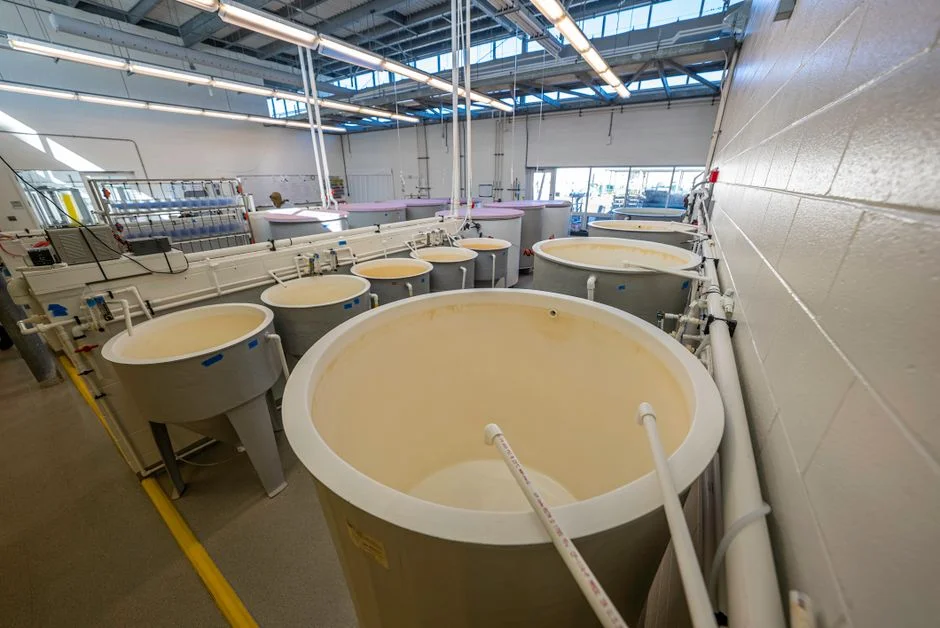
Two configurations dominate European residential shortlists. For below-ground solutions, suppliers typically offer an MBBR or SBR solution inside a concrete tank, which is extremely cost-effective but requires civil works (biocellwater.com). For above-ground solutions, suppliers typically offer a containerized solution, or 'plug and play' modules using fixed-bed biological reactor, MBBR and MBR, with process technology selected on a site-specific basis depending on effluent standard and budget (biocellwater.com). The choice in Vienna is rarely a global "best" — it is a four-dimensional trade-off.
The buried A/O option, exemplified by the buried A/O packaged sewage treatment plant (WSZ series), combines anoxic/aerobic biological contact oxidation with sedimentation and disinfection in a single buried unit, is fully automated, and handles 1–80 m³/h for residential communities. The MBR option, the containerized MBR packaged plant, delivers near-reuse-quality effluent with <1 μm filtration, a 60% smaller footprint than conventional systems, and is sized 10–2,000 m³/day. Where reuse or strict bathing-water-equivalent discharge is required, an MBR train can be finished with on-site chlorine dioxide disinfection (ClO₂ generator compliant with EU Drinking Water Directive 98/83/EC) or chemical-free UV disinfection (effective against chlorine-resistant Cryptosporidium and Giardia).
OPEX is a deciding factor for Vienna's public-housing owners. SBR-style cycling includes rest and settlement periods without electricity, which can outperform constant-aeration plants on energy (biocellwater.com) — a direct fit with energy-efficiency obligations typical of the stock (ÖKK-Editions, Vienna). Selection should weight all four sustainability dimensions — environment, society, economy and technology — per the GoldSET framework, not just CAPEX (Spectrum Research Repository, 2014).
| Decision dimension | Buried A/O contact oxidation (WSZ-style) | Containerized MBR |
|---|---|---|
| Footprint and visibility | Buried; landscaped, invisible (biocellwater.com) | Above-ground containers; compact — 60% smaller footprint than conventional systems (product catalog) |
| Civil works | Concrete tank and civil works required (biocellwater.com) | Plug-and-play modules; minimal civils (biocellwater.com) |
| Effluent quality | Standard biological + disinfection | Near-reuse quality, <1 μm filtration (product catalog) |
| Flow range | 1–80 m³/h (product catalog) | 10–2,000 m³/day (product catalog) |
| Energy profile | Compatible with SBR cycling that has rest and settlement periods without electricity (biocellwater.com) | Higher aeration + membrane energy; partly offset by compact design and possible reuse credit |
| Add-on path | Modular, phased growth (biocellwater.com) | Modular, phased growth (biocellwater.com); disinfection via ClO₂ or UV (product catalog) |
| Sustainability lens (GoldSET) | Strong on environment (buried, low visual impact) and economy (low CAPEX) | Strong on technology and society (reuse, monitoring); economy depends on membrane OPEX |
Sustainability, stakeholders and the EU compliance frame
The GoldSET framework structures the choice: a sustainability assessment for WWTP selection covers four dimensions — environment, society, economy and technology — with a weighing scheme across indicators, and the largest balanced square across the four apexes points to the most sustainable option (Spectrum Research Repository, 2014). Apply that lens to a Vienna housing STP and the environmental axis rewards buried units and low-energy SBR cycling; the social axis rewards low-noise, low-odour operation near dwellings; the economic axis rewards phased modularity; and the technology axis rewards remote monitoring and reuse-ready effluent.
Stakeholder integration is the political reality. Public housing companies face multiple demands — affordable housing, energy efficiency, profit distribution — and stakeholder integration efforts can be costly and time-consuming, so structured stakeholder analysis improves performance (ÖKK-Editions, Vienna). A defensible specification therefore documents who owns, operates and maintains the plant across the development's lifetime, not just who supplies it.
The compliance frame is the EU Urban Waste Water Directive 91/271/EEC, with the Austrian 1.AEVk standard setting the local outlet values. The Directive 91/271/EEC is also the design basis already cited in HydropureWater's medical wastewater catalog, which gives buyers a ready-made compliance reference point. Where a development sits upstream of a bathing or drinking-water abstraction, the long European precedent of wastewater surveillance — for example, enterovirus monitoring 1963–2019 in the Slovak Republic (Viruses) — is relevant context for any monitoring add-on. The cross-link to the 2026 industrial effluent discharge compliance guide and the domestic sewage treatment engineering guide for Morocco helps frame the same Directive 91/271/EEC logic in other jurisdictions.
Operations, monitoring and ownership on a Vienna housing site
Day-2 reality drives specification as much as day-1 hydraulics. Suppliers design residential packaged plants so that standard maintenance operations can continue without emptying the tanks and without the need to enter the tanks, with non-specialist operators able to carry out maintenance (biocellwater.com). All components have alarms, with SCADA continuous monitoring and GSM alarm dialout modules available so the owner/operator is alerted to any issue immediately (biocellwater.com) — important where the housing company is not on site 24/7. The WSZ-series buried A/O packaged plant is fully automated with no operator required, which fits housing-company ownership models (product catalog).
Energy and upgrade paths matter for OPEX predictability. SBR-style cycling avoids constant aeration, reducing electricity consumption and supporting the energy-efficiency targets of Vienna's social-housing stock (biocellwater.com; ÖKK-Editions, Vienna). Add-on modules — phosphorus removal, disinfection, ammonia removal, grease treatment — let a base plant be upgraded if the discharge license tightens (biocellwater.com). On the membrane side, the PVDF flat sheet MBR module uses 0.1 μm flat-sheet elements, 80–225 m² of active area per cassette, individually replaceable elements, and 10–20× lower energy than cross-flow designs, which keeps long-term OPEX predictable. Pre-treatment is typically specified with a rotary mechanical bar screen ahead of the biological stage, and PLC-controlled chemical dosing handles coagulant or phosphorus-precipitation feeds.
Procurement checklist before you specify a packaged STP in Vienna
Lock down population equivalent and phasing first, because modular systems can be installed on a phased basis as the development grows (biocellwater.com). Document site constraints — above-ground vs below-ground; available footprint; soil and groundwater; proximity to dwellings — since a site restriction may make an above-ground treatment plant more suitable than a below-ground solution (biocellwater.com). Confirm the local effluent standard and discharge route; Austrian projects must verify current 1.AEVk and Wien Kanal requirements with the authority, because these specific thresholds are not quantified in the research and should not be assumed.
Plan for monitoring: all components have alarms, with SCADA and GSM dialout available (biocellwater.com) — useful for housing-company stakeholder reporting (ÖKK-Editions, Vienna). Budget for the full sustainability frame — environment, society, economy, technology (Spectrum Research Repository, 2014) — not just CAPEX, and align with peers such as the packaged STP sizing for housing developments in Brisbane and the scalable digital twin providers for water and wastewater for operations-side technology choices.
Frequently Asked Questions
What size packaged STP do I need for a multi-family housing development in Vienna?
Size the unit by population equivalent (PE) first, then check it against peak hydraulic and pollutant loads. Suppliers in this market cover small projects up to 50 people and larger projects up to 5,000 people (biocellwater.com). The buyer must supply the developer with the dwelling count, assumed occupancy, phasing plan, and expected peak factor; a modular base unit can then be expanded on a phased basis as the development grows (biocellwater.com).
MBR or buried A/O contact oxidation — which fits a Vienna housing site?
Choose buried A/O where landscaped, space-rich sites and low CAPEX dominate, and choose containerized MBR where compact footprint, near-reuse effluent, or remote monitoring dominate (biocellwater.com). MBR also supports higher-grade disinfection via on-site chlorine dioxide disinfection or chemical-free UV disinfection. Apply the four-dimension GoldSET lens (environment, society, economy, technology) to avoid a CAPEX-only decision (Spectrum Research Repository, 2014).
What does a packaged STP cost in Austria?
No source in the available research quotes a price for an Austrian packaged STP. Rather than assume a range, request a quotation broken down by base unit, add-on modules (phosphorus removal, disinfection, ammonia removal, grease treatment — biocellwater.com), civil works, and a multi-year OPEX estimate that includes membrane replacement if MBR is selected.
How do I choose a supplier and what should I check before ordering?
Verify the supplier's reference plants on comparable residential duty, confirm EU Urban Waste Water Directive 91/271/EEC compliance and the local 1.AEVk / Wien Kanal discharge permit pathway, and check the monitoring package (SCADA plus GSM alarm dialout, biocellwater.com) and ownership documentation. Insist on a written plan for who operates and maintains the plant across the development's lifetime, because stakeholder integration efforts can be costly and time-consuming (ÖKK-Editions, Vienna).