Sydney Housing Developers: Connect to Sydney Water or Go Private?
For a Sydney housing development in 2026, the right packaged sewage treatment plant is selected by Equivalent Person (EP) load, site constraints, and whether the site can connect to a Sydney Water system. Sydney Water operates 24 wastewater systems across Sydney, the Illawarra and the Blue Mountains serving 5.6 million people, so where a connection is feasible the utility's network is usually the lowest-risk path. Where a connection is not available, NSW-licensed package plants in the 5 kL to 500 kL range are typical for 50–5,000 EP communities, with buried WSZ A/O units used for low-to-mid loads and packaged MBR units (submerged PVDF, <1 μm) preferred where higher effluent quality or reuse is required. NSW EPA environment protection licensing still applies above licence thresholds.
The decision moment usually arrives with a rezone or a Development Application. Two paths sit on the table: connect to Sydney Water's trunk network, or install a private packaged sewage treatment plant. The choice is rarely a question of price alone; it is a question of what is reachable inside the developer's delivery window, and what the regulator will sign off on.
Sydney Water's service footprint is large but not universal. The utility's 24 wastewater systems cover Greater Sydney, the Illawarra and the Blue Mountains, with 5.6 million people currently serviced (Sydney Water, 2025). Western Sydney is the most active growth front. Sydney Water is upgrading treatment plants at Rouse Hill, Riverstone, Quakers Hill, Liverpool and Glenfield, and the new $1.2 billion Badu Yarragul Water Resource Recovery Facility at Kemps Creek opens at 35 ML/day with planned doubling to 70 ML/day, unlocking 140,000+ Western Sydney connections and ultimately 280,000+ (NSW Government, 2025). Where a trunk is reachable and headworks capacity is committed, a Sydney Water connection is almost always the lowest-risk path for a residential subdivision because compliance, monitoring and reporting sit with the utility.
Where a site sits outside the serviced catchment or upstream of a future network upgrade, a private package plant becomes the practical answer. Private infrastructure is not a substitute for an NSW EPA environment protection licence; the licence application, council DA conditions, and a commissioning sign-off have to be sequenced in that order. For developers comparing the two paths, the Australian supplier market and similar regulatory environments in Queensland and Armenia are useful cross-checks; see the Brisbane housing development packaged sewage treatment plant guide and the Yerevan housing packaged sewage treatment plant buyer's guide for parallel decision logic.
Sizing a Packaged Plant by Equivalent Persons (EP) and Daily Flow
For Australian community systems, suppliers typically size hardware for 50–5,000 EP communities with treatment trains in the 5 kL to 500 kL range (True Water Australia, 2025). One reference technology base has accumulated 2,500+ government approvals over 17 years with a combined 5 ML/day treatment capacity, demonstrating the scale at which package plants operate as municipal-equivalent infrastructure (True Water Australia, 2025).
The sizing discipline starts with the council-approved dwelling yield, not with a model cut-sheet. Convert dwellings × nominal occupancy × an occupancy factor to give an EP count. Then derive an average daily flow (typically around 150–200 L/EP/day for residential, but the value should be confirmed with the council and the shortlisted supplier) and a peak factor (commonly 2.5× to 3× average for residential peaking) to check that the proposed model can handle the peak hydraulic load as well as the average organic load.
Buyers should ask any shortlisted supplier for proof-of-flow at their specific EP and hydraulic load, not a generic brochure. The table below maps the typical sizing band a Sydney residential developer will be working in; the supplier must re-check the model against the actual peak flow on every project.
| Community size (EP) | Indicative average daily flow | Typical hardware range | Use case |
|---|---|---|---|
| 50–200 EP | ~10–40 kL/day | 5–50 kL trains | Small subdivisions, rural-residential clusters |
| 200–1,000 EP | ~40–200 kL/day | 50–200 kL trains | Mid-density subdivisions |
| 1,000–5,000 EP | ~200 kL–1 ML/day | 200–500 kL trains, multi-train | Large estates, master-planned communities |
For a buried low-to-mid-load option, a buried WSZ A/O package sewage treatment plant covers the 50–1,000 EP band; for higher effluent quality or a smaller footprint at the upper end, a packaged MBR wastewater treatment system is the parallel choice.
WSZ A/O vs Packaged MBR: Which Technology Class for a Sydney Estate?
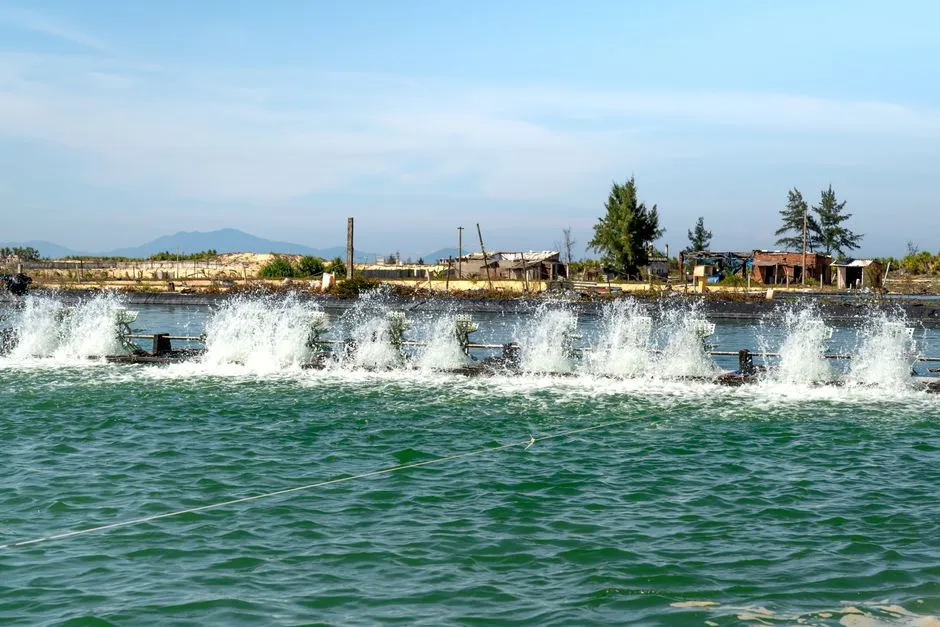
The two technology classes a Sydney developer will be choosing between are buried A/O (anoxic/aerobic biological contact oxidation) and packaged MBR (membrane bioreactor). The choice is driven by discharge route, reuse intent, and footprint.
WSZ underground A/O plants combine anoxic/aerobic biological contact oxidation, sedimentation and disinfection in a single buried unit, are fully automated with no on-site operator, and are rated for 1–80 m³/h for residential communities, hotels, hospitals and rural sites. Packaged MBR systems combine activated sludge with submerged PVDF membrane filtration, deliver near-reuse-quality effluent (<1 μm filtration) and need roughly 60% smaller footprint than conventional systems, with typical capacity from 10–2,000 m³/day. The same membrane-bioreactor approach is the basis of the new Badu Yarragul Water Resource Recovery Facility, which uses MBR plus reverse osmosis to produce exceptionally high-quality treated water at 35 ML/day (NSW Government, 2025).
The decision is not about which technology is newer. WSZ is usually the lower-capex choice when irrigation-quality effluent and a council- or Sydney-Water-approved land application area are available. MBR is the stronger fit when the discharge goes to a sensitive waterway, a sewer-mining interface with Sydney Water, or a recycled-water reuse scheme where near-potable quality is needed.
| Parameter | WSZ underground A/O | Packaged MBR |
|---|---|---|
| Process train | Anoxic + aerobic contact oxidation, sedimentation, disinfection | Activated sludge + submerged PVDF membrane (<1 μm) |
| Typical capacity | 1–80 m³/h (residential, hotel, hospital, rural) | 10–2,000 m³/day (residential to community) |
| Footprint | Buried, larger plan area | Around 60% smaller than conventional activated sludge |
| Operator requirement | Fully automated, no on-site operator | Automated with membrane-cleaning schedule |
| Effluent quality | Irrigation-grade, suitable for land application area | Near-reuse quality, suitable for reuse or sensitive discharge |
| Best fit | Land application, low-to-mid load, lower capex | Reuse, sensitive discharge, sewer-mining interface |
For deeper technical detail, the buried WSZ A/O package sewage treatment plant page covers process train and burial depth, the packaged MBR wastewater treatment system page covers skid and container options, and the submerged PVDF MBR flat-sheet membrane module page covers the membrane element itself.
NSW Approvals, EPA Licensing and Sydney Water Trade Waste
Regulatory gating decides whether a packaged plant is even deliverable, so the approvals path has to be mapped before a purchase order is signed. The NSW Environment Protection Authority sets performance standards for wastewater pipes and water resource recovery facilities, with environment protection licences that operators must monitor (Sydney Water, 2025). Any private plant discharging to land or water in NSW must meet the EPA licence conditions relevant to its scale.
Inlet screening and operator discipline matter as much as biology. Sydney Water currently spends up to $27M/year managing up to 20,000 wastewater blockages, with wet wipes, fats, oils, milk and food scraps the leading causes, which is a reminder that the package plant's screening, grit removal and operator training are not optional line items (Sydney Water, 2025). For a private plant, a comparable screening and chemical-dosing package (see the automatic chemical dosing system) plus a UV steriliser on the outlet covers the typical disinfection gate that EPA licence conditions expect.
Sewer mining, where a non-residential customer extracts wastewater from a Sydney Water system and treats it on-site with a small plant, is the only on-site treatment route Sydney Water explicitly enables (Sydney Water, 2025). Residential subdivisions installing private plants should budget for an NSW EPA licence application, council DA conditions, and a commissioning sign-off, in that order. Trade-waste pre-approval from Sydney Water is only relevant where the discharge enters a Sydney Water asset; for a fully private land-application discharge, the gate is the EPA licence and the council's consent.
From Western Sydney Mega-Project to a Single Off-Grid Home: What Scales
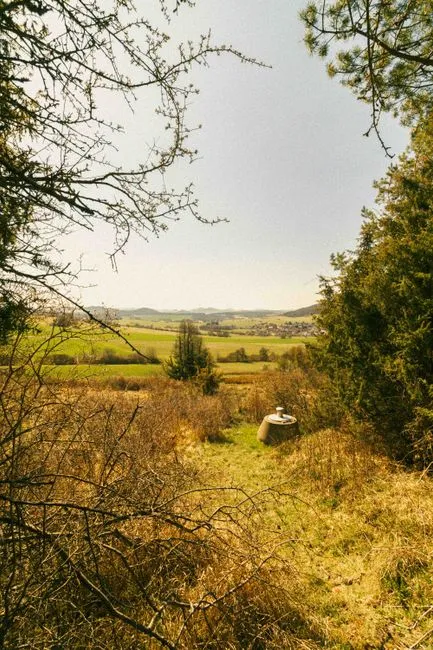
Two real Sydney data points bracket the scale range. At city scale, the Badu Yarragul Water Resource Recovery Facility at Kemps Creek is sized to support 140,000+ Western Sydney homes on opening at 35 ML/day, with planned doubling to 70 ML/day for 280,000+ connections (NSW Government, 2025). At household scale, an off-grid Sydney home's sewage system was installed for $11,000 as part of a $48,000 sustainability package, cutting combined energy and water running costs from $3,000 to $200 per year (Mobbs, 2024).
The same EP-to-flow logic links both cases. The supplier and process train change, but the sizing discipline does not. A developer looking at a 1,000 EP subdivision uses the same yield-to-flow conversion as the single off-grid homeowner, just with an extra zero on the flow rate. Cross-referencing the industrial effluent discharge guidelines 2026 helps frame the boundary between a private residential plant and a regulated industrial discharge.
Buyer's Checklist: Selecting a Packaged Sewage Treatment Plant in 2026
This five-step checklist turns the article's guidance into a procurement-ready action list for a Sydney developer or consultant.
- Confirm whether the site falls inside an existing Sydney Water serviced catchment or an announced upgrade area (Rouse Hill, Riverstone, Quakers Hill, Liverpool, Glenfield) before any plant quotation (NSW Government, 2025).
- Translate dwelling yield into EP, average flow and peak flow, and ask each shortlisted supplier for a model that handles the peak, not just the average.
- Match technology to discharge route: WSZ A/O for land application with a Sydney Water or council-approved irrigation area; MBR for sensitive discharge, reuse, or sewer-mining interfaces.
- Lock in EPA licence scope, council DA conditions and a Sydney Water trade-waste pre-approval before signing the purchase order, not after delivery.
- Require a written commissioning and operator-training plan, plus a 12-month spare-parts and consumables schedule, to avoid the kind of blockages that drive Sydney Water's $27M/year clearing budget (Sydney Water, 2025).
The capex/opex decision matrix below is a quick filter for a developer comparing the two main technology classes on a Sydney project.
| Decision factor | Favours WSZ A/O | Favours packaged MBR |
|---|---|---|
| Discharge route | Land application area, irrigation | Sensitive waterway, reuse, sewer mining |
| Footprint | Site has plan area, burial tolerated | Constrained site, ~60% smaller footprint needed |
| Capex profile | Lower upfront, buried civil works | Higher upfront, less civil work |
| Opex profile | No on-site operator, simple maintenance | Membrane cleaning and replacement schedule |
| Regulatory exposure | Lower if irrigation-quality is accepted | Lower for sensitive discharge or reuse obligations |
For model detail, the buried WSZ A/O package sewage treatment plant, the packaged MBR wastewater treatment system, and the RO and UF membrane filter elements pages are the starting points for a shortlist.
Frequently Asked Questions
What is a realistic 2026 capex range for a packaged sewage treatment plant on a Sydney housing development?
No public Sydney-specific 2026 capex benchmark for packaged plants was identified in the supplied research. Request itemised quotes from at least two NSW-licensed suppliers, broken down by EP rating, civil works, commissioning, and a 12-month spares and consumables schedule, so the comparison is on the same scope.
How do I choose a packaged plant supplier in NSW?
NSW licensing is the qualifying gate, not brand. Shortlist suppliers with multi-thousand-approval track records and ISO-certified treatment technologies, such as providers operating in the 50–5,000 EP band with 5 kL–500 kL hardware (True Water Australia, 2025), and verify each licence directly with the NSW EPA before quotation.
How do I size a packaged plant for a residential subdivision?
Use EP, not lot count. Convert the council-approved dwelling yield × nominal occupancy × occupancy factor to EP, derive average and peak daily flow, then check that the shortlisted supplier's model handles the peak, not just the average. The EP-to-flow table in the sizing section maps 50–5,000 EP onto the 5 kL–500 kL community band as a starting point.
How long does approval and delivery take for a private packaged plant in NSW?
The supplied research does not contain current Sydney lead-time data. Ask the shortlisted supplier in writing for build time, delivery window, and commissioning duration, and add at least one full construction season of buffer for the NSW EPA licence application, council DA conditions, and Sydney Water trade-waste pre-approval where applicable.