

The Three-Layer Compliance Stack EV/Auto Plants Must Clear
EV and auto plants near Brigham City, Utah must meet pretreatment limits on three stacked layers before any wastewater can be discharged to the city POTW: (1) federal categorical standards in 40 CFR Chapter I, Subchapter N, parts 405–471, which Brigham City Code §52.050 explicitly incorporates — most relevant for an auto plant are Part 433 (metal finishing) and Part 467 (aluminum forming), with battery plants also subject to additional metal and PFAS scrutiny; (2) Utah Administrative Code R317 state pretreatment standards, also incorporated by §52.050; and (3) site-specific local limits and individual wastewater discharge permit conditions issued by the Brigham City POTW manager under 40 CFR §403.5(c).
Local limits apply at the discharge point, are expressed as total metal unless stated otherwise, and cannot be met by dilution; the Brigham City Council has authorized an update of these local limits. Compliance is verified at a dedicated sampling manhole, with slug discharge control and flow equalization required for Significant Industrial Users.
Engineers who plan around a single number — the local limit printed in a permit — routinely fail the audit because the same sample is being measured against three overlapping rule sets. Brigham City Code §52.050 incorporates the federal categorical standards at 40 CFR Chapter I, Subchapter N, parts 405–471 and the Utah R317 state pretreatment standards, then layers locally developed limits on top under 40 CFR §403.5(c) (Source: S1 — Brigham City Code §52.050). The numeric local limit is the most restrictive ceiling of the three layers, but the design basis has to be built on the most restrictive and the most volatile of them — and the Brigham City Council has authorized an update to the local limits, meaning the numbers an engineer freeze into a P&ID today may shift in 2026 (Source: S2, citizenportal.ai; Source: S1).
The blending rule is the second trap. When a categorical stream (e.g., e-coat rinsewater under Part 433) is combined with a non-regulated stream (e.g., battery cooling blowdown), §52.050 requires the POTW manager to impose an alternate limit per 40 CFR §403.6(e) — the regulated pollutant's mass load is divided across the combined flow, so a stronger upstream concentration is needed to compensate (Source: S1). The anti-dilution clause is the third: §52.050 explicitly forbids increasing process water to meet a limit, and the POTW manager may impose mass limitations on top of concentration limits when dilution is suspected. The engineering answer to all three is the same — install real unit operations, not bigger pipes. Confirm the operating envelope against the city's wastewater treatment and testing program before locking in design capacity.
| Layer | Authority | How it is triggered | Where the number lives |
|---|---|---|---|
| 1 — Federal categorical | 40 CFR Chapter I, Subchapter N, parts 405–471 (incorporated by §52.050(A)) | By industrial subcategory (e.g., Part 433 metal finishing, Part 467 aluminum forming) | EPA effluent guidelines tables in the cited subpart |
| 2 — State pretreatment | Utah Administrative Code R317 (incorporated by §52.050) | Runs in parallel with federal categories; state may add parameters or tighten limits | R317-8 and related rules |
| 3 — Local limits & individual permit | 40 CFR §403.5(c); §52.050 local-limits section; individual wastewater discharge permit | Set by the Brigham City POTW manager at the discharge point; reported as total metal; mass limits may apply | Industrial Pretreatment Program Office development documents and the issued permit |
Which 40 CFR Category Covers Which EV/Auto Wastewater Stream
Each line on an EV or auto plant floor maps to a different federal subpart, and the mapping decides which pollutant families drive the sampling schedule and which unit operations the design has to include. Body-in-white stamping, e-coat, and phosphate coating rinsewaters typically fall under 40 CFR Part 433 (metal finishing) — the canonical target pollutant families are total metals (Zn, Ni, Cr, Pb, Cd, Cu), oil & grease, TSS, and pH; engineers must confirm the exact numeric limits against the current subpart text rather than rely on memory (Source: S1, Part 433 incorporated via §52.050).
Aluminum extrusion, drawing, and forging operations fall under 40 CFR Part 467 (aluminum forming), with oil & grease, TSS, metals, and pH as the typical regulated parameters. An EV program that produces aluminum substructures for battery enclosures must keep the Part 467 stream segregated from battery wastewater so the categorical limit is not contaminated by parameters the subpart was never designed to evaluate (Source: S1, Part 467 incorporated via §52.050).
Battery cell and pack assembly generate wastewater streams that are not always addressed by a single dedicated federal subpart. Lithium, cobalt, nickel, fluoride, glycol from thermal-management testing, and PFAS from separator coatings are typically controlled through a combination of 40 CFR §403 general and narrative standards, Utah R317, and the city's local limits and individual permit conditions — request the current local-limits development documents from the city's Industrial Pretreatment Program Office before finalizing the design basis (Source: S1). Assembly shop air-management condensate, paint shop overspray washwater, and parts-washer effluent are normally handled under site-specific permit conditions, with oil/water separation as the baseline unit operation (Source: S1).
| Plant stream | Likely 40 CFR subpart | Regulated pollutant families (confirm against current subpart) | Typical segregation need |
|---|---|---|---|
| Body-in-white stamping / e-coat / phosphate coating rinsewater | Part 433 — Metal Finishing | Total metals (Zn, Ni, Cr, Pb, Cd, Cu), oil & grease, TSS, pH | Keep segregated from non-regulated streams; apply alternate-limit math if blended (40 CFR §403.6(e)) |
| Aluminum extrusion, drawing, forging rinsewater | Part 467 — Aluminum Forming | Oil & grease, TSS, metals, pH | Keep segregated from battery streams; flow-equalize before biological step |
| Battery cell / pack assembly, electrolyte spills, thermal-mgmt glycol, separator PFAS | 40 CFR §403 general standards + R317 + local limits + individual permit | Lithium, cobalt, nickel, fluoride, glycol, PFAS (per permit) | No dedicated subpart — confirm with city's IPP Office before sizing treatment |
| Paint overspray washwater, parts-washer effluent, air-management condensate | Site-specific permit conditions | Oil & grease, TSS, VOCs/solvents (per permit) | Oil/water separation baseline; solvent handling under slug-control plan |
What the Brigham City POTW Itself Can and Cannot Absorb
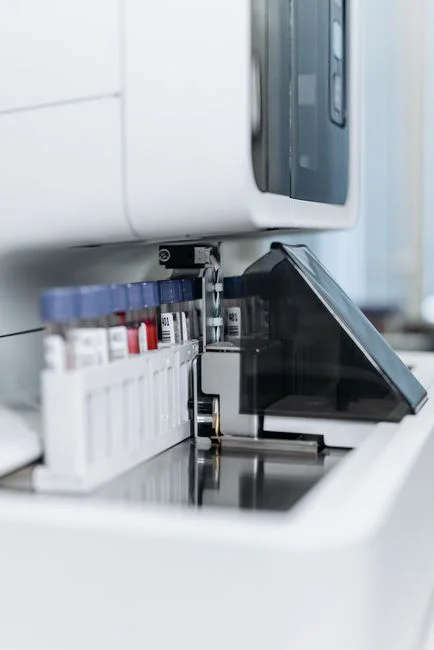
The receiving plant's design is the silent constraint behind every local limit, and the Brigham City WWTP is a conventional domestic-grade activated sludge facility. It is located at 1175 W. 675 N., Brigham City, UT 84302, and consists of an activated sludge treatment process with two aerated ditches, two clarifiers, and an aerated digester with a combined capacity of nearly 6 million gallons (Source: S3, bcutah.gov).
A 6 MGD activated sludge plant is sized for domestic and light commercial load; high-strength EV/auto streams — high COD, oil & grease, metals — would cause pass-through or interference if discharged without on-site equalization and pretreatment, and the city's ordinance defines pass-through and interference as grounds for the POTW manager to deny or condition new contributions (Source: S1 — pass-through and interference definitions; Source: S3 — plant description). The Brigham City Council has authorized seeking updated industrial pretreatment local limits for the wastewater plant, so the numeric values cited in a permit today may be revised in 2026 — engineering designs should leave headroom rather than pin to a single printed number (Source: S2).
Direct operational contacts, as published on the city's wastewater page, are: Public Works Office (435) 734-6615; Wastewater Manager Bryce Lofthouse (435) 226-1441; the Industrial Pretreatment Program Office is the source for the local-limits development documents referenced in §52.050 (Source: S3).
A Practical Treatment Train for EV/Auto Streams Discharging to Brigham City
A defensible, code-aware unit-operation sequence for an EV/auto discharger to the Brigham City POTW starts at headworks and ends at the sampling manhole, with sludge handling that satisfies the hauled-waste provisions of §52.050. Front-end screening is the first step: a rotary mechanical bar screen at headworks protects downstream biological and membrane equipment from rags, plastics, and shop debris, and is a baseline requirement for any industrial discharge to a municipal POTW consistent with §52.050 pretreatment facility provisions (Source: S1).
Oil and grease / FOG removal comes next. The ordinance explicitly contemplates grease, oil, and sand interceptors where the POTW manager requires them, and a DAF oil and grease removal system ahead of any biological step is the conventional unit operation for stamping, machining, and parts-washer streams (Source: S1). Flow and load equalization follows: §52.050 authorizes the POTW manager to require on-site storage and flow-control facilities and to issue permits solely for flow equalization, so a continuous equalization basin with pH and conductivity trim is the simplest way to keep diurnal stamping peaks from showing up as slug loads at the sampling manhole (Source: S1). For metal-bearing streams under Part 433 or Part 467, hydroxide precipitation controlled by a PLC-controlled chemical dosing system, followed by a lamella clarifier for metal precipitation, is the conventional train; the city's local limits are reported as total metal and can be supplemented by mass limits, so both concentration and mass loading must be designed for (Source: S1).
Where space allows, an MBR membrane bioreactor polishing stage ahead of the sewer connection gives a safety margin against periodic excursions and protects the receiving activated sludge plant from inhibitory loads; this aligns with §52.050's general duty to provide treatment at the User's expense (Source: S1). An ultrafiltration polishing stage ahead of the sampling manhole controls TSS spikes; UV or chlorine dioxide can be added for bacterial indicators if the individual permit requires it (confirm against the permit). For sludge, the ordinance contemplates hauled industrial waste controls and waste manifests, so a plate and frame filter press for sludge dewatering on site simplifies manifest and downstream disposal (Source: S1). For a peer comparison of DAF versus clarifier selection on metal-bearing streams, see the DAF vs clarifier decision guide; for adjacent regulatory context, the 2026 industrial effluent discharge guidelines piece and the pretreatment compliance playbook for chemical plants walk through parallel POTW regimes.
Permit Mechanics: BMR, Sampling Manhole, Slug Control, Inspections

Most compliance failures are paperwork and sampling failures, not equipment failures, and §52.050 spells out the administrative machinery that sits on top of the treatment train. No Significant Industrial User (SIU) shall discharge wastewater into the POTW without first completing a Baseline Monitoring Report (BMR) and, if required, obtaining an individual wastewater discharge permit from the POTW manager (Source: S1).
A dedicated sampling manhole is required; it must be located for ease of cleaning, sampling, and inspection by both the User and city personnel, and if it sits in a parking area, parking shall not be allowed on the sampling manhole — that manhole is the legal sampling point under §52.050 (Source: S1). For slug discharge control, the POTW manager will evaluate an SIU within the first year of SIU determination and every two years thereafter if no plan is required; the plan must cover discharge practices (including non-routine batch discharges), stored chemicals, immediate notification of the POTW manager, and procedures to prevent adverse impact — including storage-area inspection, material handling and transfer, loading/unloading, plant-site runoff, worker training, containment structures, toxic-organic pollutant measures, and emergency response (Source: S1).
The local-limits development documents are kept at the city's Industrial Pretreatment Program Office and can be reviewed on request, and §52.050 reserves the right of the city to establish more stringent standards or to set additional conditions on new or increased contributions to protect the POTW — request those documents before finalizing any design basis (Source: S1).
2026 Compliance Checklist Before You Discharge to the Brigham City POTW
- Identify every applicable 40 CFR subpart (likely 433, 467) plus any battery-specific or PFAS-related requirements; pull Utah R317 and the city's current local-limit values (Source: S1).
- Confirm a BMR is on file and an individual wastewater discharge permit is in hand before commissioning any new line (Source: S1).
- Install a dedicated sampling manhole upstream of the sewer connection, with no parking on it and easy POTW access (Source: S1).
- Equalize flow, separate oily streams, and design for both concentration and mass limits; do not rely on dilution (Source: S1).
- Document a slug discharge control plan covering storage, transfer, loading/unloading, plant-site runoff, worker training, and emergency response (Source: S1).
- Engage early with the Public Works Office (435) 734-6615 and Wastewater Manager Bryce Lofthouse (435) 226-1441 — Brigham City has signaled it is updating local limits, so design headroom is a 2026 risk-control move (Sources: S2, S3).
For a parallel view of how an EV gigafactory wastewater regime is structured under a different national rule set, the EV gigafactory wastewater requirements piece walks through lithium, cobalt, nickel, and PFAS handling at the EU compliance level — useful as a benchmarking reference even though the numeric limits differ.
Frequently Asked Questions
Which 40 CFR subpart applies to a body-in-white and e-coat line at a Brigham City EV/auto plant?
Body-in-white stamping, e-coat, and phosphate coating rinsewaters typically fall under 40 CFR Part 433 (metal finishing), and aluminum extrusion, drawing, or forging operations fall under 40 CFR Part 467 (aluminum forming); both are incorporated by Brigham City Code §52.050. Engineers must confirm the exact current subpart text and the city's current local-limit values, which are kept at the Industrial Pretreatment Program Office, before sizing the treatment train (Source: S1).
What is changing in 2026 that an engineer should price into a pretreatment design today?
The Brigham City Council has authorized the city to seek updated industrial pretreatment local limits for the wastewater plant, so the numeric values cited in a current permit may be revised in 2026 (Source: S2, citizenportal.ai). The defensible move is to design for headroom against both concentration and mass limits rather than pin capital cost to a single printed number, and to request the local-limits development documents from the IPP Office before freezing the basis of design (Source: S1).
What budget and lead-time dimensions should a buyer request from a treatment-system supplier for a Brigham City discharge?
Buyers should request a written confirmation that the proposed train can meet (a) the applicable 40 CFR subpart limits (likely Part 433 and Part 467), (b) the city's current local limits as documented by the IPP Office, and (c) both concentration and mass limits, since §52.050 authorizes the POTW manager to impose mass limits in addition to concentration limits (Source: S1). Because the Brigham City Council has authorized an update to the local limits, buyers should also request a clause allowing capacity or chemistry upgrades without re-purchasing the full skids — the research does not quote a price, so a written performance guarantee tied to the current subpart is the procurement instrument to require. Lead time should be sized against the §52.050 requirement that detailed plans be submitted to and accepted by the POTW manager before construction (Source: S1).
Who do I contact at Brigham City before I file a BMR or commission a new line?
The published operational contacts are the Public Works Office at (435) 734-6615 and Wastewater Manager Bryce Lofthouse at (435) 226-1441, both at the wastewater treatment facility, 1175 W. 675 N., Brigham City, UT 84302; the Industrial Pretreatment Program Office is the source for the local-limits development documents referenced in §52.050 (Source: S3, bcutah.gov). For compliance risk, §52.050 also lets the POTW manager deny new or increased contributions or set additional conditions, with state Division of Water Quality approval, so engagement before commissioning is a procedural requirement, not a courtesy (Source: S1).