What an Akutan Food & Bev Plant Is Actually Treating in 2026
An Akutan food and beverage plant in 2026 is most often a single dominant processor — a seafood operation handling a pollock, crab, or salmon run, a small dairy, a craft brewery, or a fish-meal/rendering line — fed by wash water, bloodwater, brine, and clean-in-place (CIP) effluent. The signature is a stream rich in free and emulsified FOG, high BOD/COD, suspended solids that swing from fine colloidal protein to paunch or scale, and salinity that changes hourly as fish and brine streams alternate.
Add the Alaska reality: winter ambient temperatures that push influent into the 4-7 °C range, a single species run that can double plant flow in eight weeks, a small operator pool that cannot babysit a complex chemistry panel, and barged-in specialty consumables that punish over-dosing. The implication for the primary clarifier is simple — it must handle light, oily, fluctuating loads with minimal hands-on operation, and that lens is what the rest of this guide applies.
DAF Clarifier: Mechanism, Models, and What It Actually Removes
A Dissolved Air Flotation (DAF) system separates on a bubble, not a fall. Clean water is pressurized and mixed with air; under pressure the air dissolves, and when the saturated stream is depressurized into the flotation cell, 30-50 µm micro-bubbles form and attach to flocculated particles, lifting FOG, oils, and light suspended solids to the surface, where a paddle skimmer scrapes the float into a collection trough. Per Clearwater Industries (clearwaterind.com, 2026-04-27), heavier solids settle in a bottom collection zone and are removed with an auger, so a DAF handles both floating and settleable fractions in one vessel. Clearwater also documents the start-up requirement: the unit must be filled with clean water before wastewater, otherwise dirty water is discharged for an extended period and the recirculation pump and air saturation system are at risk (clearwaterind.com, 2026-04-27).
Four documented 2026 model families cover most Akutan food and beverage flows per Clearwater Industries (clearwaterind.com, 2026-04-27):
| Model | Profile | Target load | Best fit in Akutan |
|---|---|---|---|
| FPAC | Low-profile, cross-flow, large free surface area | Small-to-medium flow, very high TSS/FOG | Seafood and rendering lines with concentrated float |
| FPBC | High-profile with lamella pack | Low-to-medium solids, low buoyancy particles | Beverage CIP and dairy wash with fines |
| FPHF | Cross-flow + counter-current | Large flow, medium-to-large solids | Seasonal surge flows during peak species run |
| COMPACT DAF | Pre-assembled skid, PLC, chemical conditioning | Single skid ≤66 GPM; modular two-skid above 66 GPM | Remote sites with small operator pool |
Standard build is 304SS with 316SS, polypropylene, and other materials available on request (clearwaterind.com, 2026-04-27). DAF performance is not free — it depends on upstream chemistry. Coagulant, pH adjustment, and polymer flocculant must be dosed and mixed before the wastewater enters the cell. Clearwater documents two mixing options: serpentine flocculation tubes giving a 15-45 second flash mix, or impeller mix tanks giving longer contact time when a chemistry step needs it (clearwaterind.com, 2026-04-27). On a remote Akutan line, the tube skid is usually the right answer because it has no moving parts in the mix train. The chemical side of that train is served by an automatic chemical dosing system sized to the DAF's design flow and the wastewater's alkalinity demand.
Conventional and Lamella Clarifiers: Where They Still Win in 2026
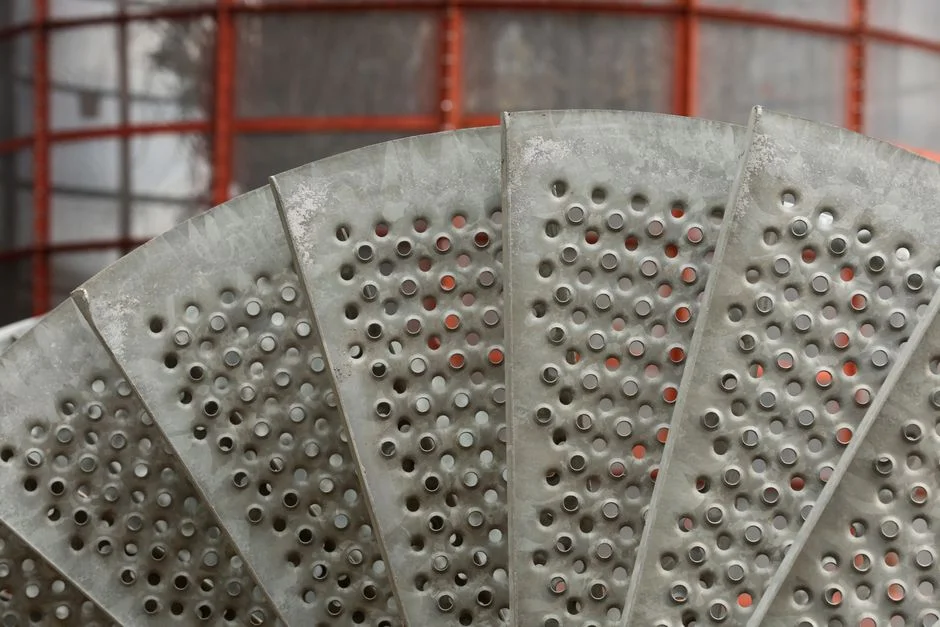
A conventional gravity clarifier is a quiescent tank where settleable solids fall to a sludge hopper under gravitational force, and the clarified water overflows a peripheral launder. It is robust and cheap to build in concrete, but footprint is the trade — a conventional clarifier only delivers high solids removal when it has a large surface area, which is exactly what a remote Akutan site rarely has. A lamella clarifier answers that footprint problem by stacking inclined plates inside the tank; the plates multiply the effective settling area, so the same job fits in a fraction of the volume. The high-efficiency lamella clarifier uses that plate pack to push surface loading rates into a range that lets a packaged unit replace a concrete basin.
Where this still wins in 2026 is a stream dominated by heavy, settleable suspended solids, low FOG, and a steady flow — a vegetable wash line, a brewery with low oil and good primary screening, a malt or grain handling effluent, or a pre-settled seafood line where the float has already been removed upstream. A lamella also tolerates less optimized chemistry than a DAF, which matters when an operator is dosing by hand. The honest limits: lamella and conventional clarifiers do not float free or emulsified oil, so any FOG has to be skimmed separately or pre-treated, and cold, viscous water slows settling — both factors argue against a lamella as the primary unit on a raw fish-processing stream.
DAF vs Clarifier: Side-by-Side for an Akutan Food & Bev Line
The comparison below is built from the Clearwater/SigmaDAF documentation (clearwaterind.com, 2026-04-27) for DAF mechanism, model families, and skid thresholds, and from the HydropureWater product catalog for lamella surface-loading and skid flow ranges. It is the table to take into the internal review.
| Decision axis | DAF (per Clearwater, 2026-04-27) | Conventional / Lamella Clarifier |
|---|---|---|
| Removal mechanism | 30-50 µm micro-bubbles float FOG and light TSS; auger removes settled fraction | Gravity settling; lamella plates multiply effective settling area |
| Target load | High FOG, variable TSS, light colloids (seafood, dairy, rendering, beverage CIP) | Heavy settleable TSS, low FOG, steady flow (brewery, veg wash, malt) |
| Flow range (skid) | ≤66 GPM single skid; modular two-skid above 66 GPM (COMPACT DAF) | Surface loading 20-40 m/h on a packaged lamella unit |
| Footprint for oily stream | High removal per m²; float is the product, not a problem | Poor — FOG must be skimmed off separately first |
| Chemistry demand | Tight — coagulant + pH + flocculant, 15-45 s flash mix in tubes or impeller tanks | Less sensitive — coagulant helps but bubble-particle contact is not the bottleneck |
| Cold-climate fit | Bubble-flotation is less viscosity-limited than settling; skid arrives factory-tested | Cold water raises viscosity and slows settling; concrete basins need on-site work |
| Operator pool | PLC-controlled, plug-and-play, suited to a small Akutan crew | More routine manual attention, especially on sludge draw |
| Sludge output | Thick float, easily dewatered (often with little further work per Clearwater, 2026-04-27) | Wetter underflow; usually needs a plate and frame filter press to reach haul-off cake |
| Materials | 304SS standard, 316SS / polypropylene optional (Clearwater, 2026-04-27) | Typically carbon steel with coating, FRP, or concrete; 316SS for chloride exposure |
Read across the table: if the row says "fish, dairy, rendering, oily," the DAF column wins; if the row says "brewery, vegetable wash, steady, low oil," the lamella column wins. The automatic chemical dosing system sits in front of either unit and must be specified in the same RFQ package so chemistry is not a commissioning afterthought.
Putting the Primary Clarifier Inside a 2026 Pretreatment Train
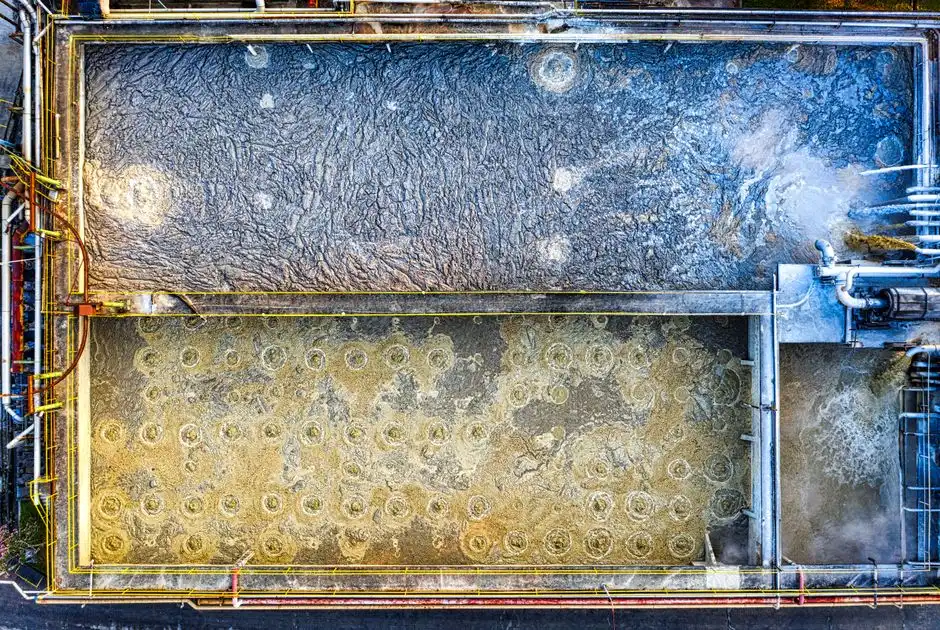
The clarifier is one step in a sequence, and the sequence is what determines whether the discharge limit is actually met in 2026. For a typical Akutan food and beverage line the train runs: a rotary mechanical bar screen for continuous fine screening to protect downstream pumps, then flow equalization to absorb the seasonal surge, then pH adjustment and coagulant dosing, then flocculation in tubes or mix tanks, then the DAF or lamella as the primary FOG/solids step, then biological or membrane polishing for residual BOD/COD, then disinfection, and finally a plate and frame filter press for sludge dewatering. The float from a DAF or the underflow from a lamella is the feed to that press, so press sizing has to be in the same conversation as clarifier sizing from day one. Chemistry — coagulant, polymer, pH correction — is the connective tissue across the train and is delivered by the automatic chemical dosing system with PLC-controlled injection matched to the chosen clarifier's chemistry window. Buyers who issue a single RFQ for screen + EQ + dosing + clarifier + press typically commission weeks sooner than buyers who piece the train together one PO at a time.
2026 Selection Checklist and RFQ Prompts for Akutan Buyers
Before issuing an RFQ, pull the data the supplier will demand: design flow and peak hourly flow (design for the species-run peak, not the annual average), influent FOG/TSS/BOD/COD with daily variability, pH range and minimum winter wastewater temperature, available footprint and headroom, target discharge or reuse limits, and the chemistry window you can actually support on site. Decide a DAF if the stream has significant free or emulsified FOG, light TSS, or wide seasonal swings — and ask for a pre-assembled COMPACT DAF skid with PLC to fit Akutan's remote, low-staffing reality (Clearwater, 2026-04-27). Decide a lamella if FOG is low, the load is mostly settleable particulates, and the site has both the footprint and the operator capacity for a packaged or concrete sedimentation unit. Specify materials (304SS baseline, 316SS for higher chloride or salinity exposure from fish-processing brine, polypropylene for chemical compatibility) and skid architecture (single ≤66 GPM or modular two-skid above 66 GPM) explicitly in the RFQ, and put chemical dosing and sludge dewatering in the same package rather than a later change order.
Frequently Asked Questions
What is the realistic 2026 price range for a DAF or lamella clarifier for a small Akutan food and beverage line?
The supplied research does not publish a 2026 price for either unit, so no number should be quoted into an RFQ. Request line-item pricing for the skid, the dosing system, the screen, and the filter press as separate rows, with freight to Akutan called out as its own line; barged-in freight to a remote Aleutian site is a real percentage of total cost and should not be buried inside an equipment line.
How do I choose between a DAF supplier and a lamella clarifier supplier for an Akutan seafood or beverage project?
Ask each supplier to provide a 2026 reference list of remote or cold-climate food and beverage installs, a start-up plan that accounts for a small local operator pool, and a confirmed ship-to-Akutan logistics plan including winter weather contingencies. Cross-check that the proposed skid architecture matches the documented 2026 thresholds (for example, single ≤66 GPM or modular two-skid above 66 GPM on a COMPACT DAF per Clearwater, 2026-04-27) and that the materials of construction are appropriate for the chloride and salinity profile of your influent.
Does a DAF remove enough BOD and TSS on its own, or is polishing always required in 2026?
Per Clearwater Industries (clearwaterind.com, 2026-04-27), DAF is documented for high removal of organic load, solids, and oils and fats, but it is positioned inside a treatment train, not as a stand-alone discharge solution for most food and beverage limits. Plan on biological or membrane polishing downstream if the discharge limit is below what primary clarification alone can deliver, and confirm the polishing step in the same RFQ.
What operating data should I collect on site before talking to a DAF or lamella supplier?
At minimum: design and peak hourly flow, FOG/TSS/BOD/COD with a daily profile across at least one full production cycle, pH range, minimum winter wastewater temperature, and the available footprint and headroom. The supplier cannot size a unit or a chemistry window without these, and a quote built on assumed values is one of the most common reasons a 2026 Akutan project comes in over budget or under-performs at commissioning.