Why Fairmont-Area Mining and Metals Plants Need a Pretreatment Strategy
The Fairmont Sanitary Sewer Board runs an Industrial Pretreatment Program under 40 CFR Part 403, which requires industries to remove oil and grease, zinc, silver, and other metals from waste streams before they enter the sanitary sewer (City of Fairmont, "Pretreatment," fairmontwv.gov). The program's mission is to protect the biological processes at the Wastewater Treatment Plant and to prevent pass-through events that would harm aquatic wildlife in the receiving stream. The Fairmont coordinator has legal authority—backed by EPA, the West Virginia Department of Environmental Protection (WV DEP), and City of Fairmont Ordinance—to enter any facility deemed necessary for inspection in the POTW receiving area. The City identifies the Pretreatment Program as one of the more proactive programs in West Virginia, with a consistent compliance record at the Wastewater Plant.
For a metal-ore mining, beneficiation, or smelting operation in Marion, Monongalia, or Harrison counties, compliance is mandatory and continuous. The local program frames monitoring as constant oversight of the waste stream rather than a one-time sampling exercise (City of Fairmont, fairmontwv.gov). Federal categorical standards and any locally stricter limits established by the Fairmont Sewer Board under 40 CFR Part 403 are both enforced. A 2026 industrial effluent discharge guidelines overview provides the necessary reference for any plant engineer mapping the regulatory stack before specifying equipment.
Which Federal Effluent Category Applies to Your Facility
Identifying the correct EPA effluent guideline is required before selecting equipment to ensure compliance with the appropriate limits. The Mineral Mining and Processing Effluent Guidelines (40 CFR Part 436) were promulgated in 1975 and amended through 1979; they cover wastewater from mine drainage, mineral processing operations, and stormwater runoff, and are incorporated into NPDES permits (EPA, "Mineral Mining and Processing Effluent Guidelines," epa.gov/eg). The Part 436 subparts include Dimension Stone (A), Lightweight Aggregates (H), Mica and Sericite (I), Trona (P), Rock Salt (Q), Mineral Pigments (T), Lithium (U), Fire Clay (AA), Attapulgite and Montmorillonite (AB), Kyanite (AC), Shale and Common Clay (AD), Aplite (AE), Kaolin (AG), Ball Clay (AH), Feldspar (AI), Talc/Steatite/Soapstone/Pyrophyllite (AJ), and Garnet (AK).
The Ore Mining and Dressing Effluent Guidelines (40 CFR Part 440) cover wastewater from ore mines and processing operations—dressing, milling, and beneficiation—and are incorporated into NPDES permits (EPA, "Ore Mining and Dressing Effluent Guidelines," epa.gov/eg). These activities are listed within NAICS code 2122, metal ore mining, though the EPA notes that the NAICS listing is a guide rather than a definition of coverage; precise applicability is set out in 40 CFR Part 440. Smelting is not covered by Part 440; it falls under the Iron and Steel Manufacturing Category (40 CFR Part 420, Subpart C) and the Nonferrous Metals Manufacturing Category (40 CFR Part 421). A facility that combines mining and downstream smelting will need to satisfy both ore-mining categorical limits and smelting categorical limits, layered with local Fairmont limits.
| Operation | 40 CFR Category | Promulgated / Amended | Typical NAICS |
|---|---|---|---|
| Mineral mining and processing (e.g., stone, clays, mica, garnet) | Part 436 | 1975; amended 1976, 1977, 1978, 1979 (EPA) | 2123, 21231 |
| Metal-ore mining, dressing, milling, beneficiation | Part 440 | 1975; amended 1978, 1979, 1982, 1988 (EPA) | 2122 (guide only) |
| Iron and steel smelting | Part 420, Subpart C | See 40 CFR Part 420 | 3311, 3312 |
| Nonferrous metals smelting | Part 421 | See 40 CFR Part 421 | 3314, 3313 |
What Fairmont's Sewer Board Specifically Looks For in Industrial Discharges
The Fairmont Sanitary Sewer Board cites 40 CFR Part 403 as the requirement for industries to pretreat waste entering the sanitary sewer to remove oil and grease, zinc, silver, and various other metals (City of Fairmont, fairmontwv.gov). Facilities must treat these discharges to meet local standards, as the program frames monitoring as constant oversight rather than periodic sampling. The program is coordinated with the WV DEP and EPA enforcement. The City identifies Billy Johnson as the program coordinator and the appropriate contact for any facility seeking to align its discharge with local limits.
Practical compliance involves managing oil and grease, zinc, and silver, along with additional parameters such as lead, copper, cadmium, and nickel. Because the coordinator has the legal authority to enter facilities for inspection, pretreatment equipment must include sample ports, chain-of-custody access, and a documented self-monitoring routine.
Matching Treatment Stages to Mining-Specific Water Quality Problems
The Society for Mining, Metallurgy & Exploration (SME) identifies two water-quality issues that dominate mining discharges and should drive pretreatment-train design (SME, "Mining and Water Quality," smenet.org). The first is acid rock drainage (ARD)—the reaction of water and oxygen with sulfide minerals such as pyrite and pyrrhotite—which produces acidic waters that mobilize toxic metals, sulfate, and other dissolved solids. The second is the physical transport of sediment, creating suspended solids; high suspended solids reduce on-site water reuse suitability and can raise temperatures and reduce dissolved oxygen in receiving waters. SME also flags chemicals historically used in ore processing—mercury and cyanide—as a third pollutant class that may require dedicated removal stages.
SME's control hierarchy recommends (1) limiting reactions between water and mine wastes, (2) managing the flow of impacted waters via leachate collection and diversion, and (3) treating impacted waters before discharge. These steps map directly onto a multi-stage pretreatment train. SME documents active treatment options—such as wastewater treatment plants with reverse osmosis, aeration, or clarification—alongside passive options like engineered wetlands. The DAF vs clarifier decision guide for mining wastewater serves as a reference when choosing between dissolved air flotation and a clarifier for suspended-solids polishing.
| Mining Water-Quality Issue (SME) | Source | Treatment Stage That Addresses It |
|---|---|---|
| Acid rock drainage (ARD) — sulfide oxidation mobilizing metals and sulfate | Pyrite, pyrrhotite reaction with water and O2 | pH adjustment + chemical precipitation; optional RO for sulfate |
| Suspended solids — sediment transport, eroded fines | Surface erosion, stored geologic materials | Equalization → DAF or clarifier → ultrafiltration polish |
| Process chemicals — mercury, cyanide (historic/artisanal sites) | Gold processing reagents | Dedicated removal stage (e.g., sulfide precipitation, chlorination, adsorption) |
| Flow variability — slug loads from storm events | Precipitation, mine dewatering | Equalization basin upstream of chemistry |
Designing a Pretreatment Train That the Fairmont Coordinator Will Accept
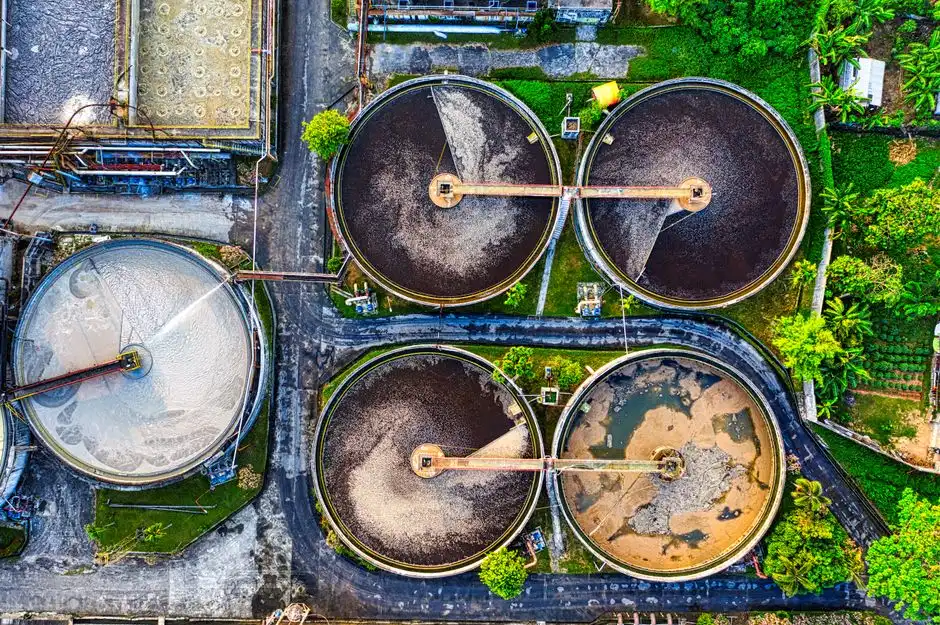
A defensible train for a Fairmont-area metal-ore or smelting discharge begins with equalization to stabilize flow and load, mirroring SME's flow-management step before treatment (SME, smenet.org). From equalization, flow moves to pH adjustment and chemical precipitation, which targets dissolved metals such as zinc, silver, lead, and copper; this process is typically dosed under PLC control using a PLC-controlled chemical dosing system for pH and precipitation.
Precipitated metal hydroxides and entrained suspended solids are removed by a dissolved air flotation system for metal-bearing wastewater, which serves as the clarification step and produces a float sludge requiring separate dewatering. A hollow-fiber ultrafiltration polishing stage provides a final barrier for suspended solids and colloids and protects downstream RO if the plant pursues water reuse. Documented chain-of-custody sampling at each stage—influent, post-precipitation, post-DAF, post-UF, and final discharge—is required to satisfy the coordinator's inspection authority.
What to Confirm with the Fairmont Coordinator Before Buying Equipment in 2026
Before specifying any system, the coordinator—Billy Johnson—must confirm the applicable federal category (Part 436, Part 440, Part 420 Subpart C, or Part 421) for the site; the Fairmont program enforces the categorical limits that apply, and a smelting line inside an ore-mining plant triggers Part 420/421 on top of Part 440 (EPA, epa.gov/eg; City of Fairmont, fairmontwv.gov). The plant should also request the current local numerical limits for zinc, silver, oil and grease, pH, and any other metals the Fairmont Sewer Board has added to the federal baseline, as 40 CFR Part 403 authorizes locally stricter numerical limits.
Sampling point requirements, self-monitoring frequency, and reporting format must be confirmed in writing. Closure and post-closure obligations should be discussed early, as SME notes that post-closure water treatment requirements can be significant and long-term. Finally, the plant should verify whether any discharge to the Fairmont sanitary sewer triggers industrial-user classification, which determines surcharge calculations. The 2026 industrial effluent discharge guidelines overview serves as a checklist for these discussions.
Frequently Asked Questions
Which 40 CFR part applies to a metal-ore mine that also has a small smelting line near Fairmont?
Metal-ore mining, dressing, milling, and beneficiation fall under 40 CFR Part 440, while smelting is covered by 40 CFR Part 420 Subpart C (iron and steel) or 40 CFR Part 421 (nonferrous metals) (EPA, "Ore Mining and Dressing Effluent Guidelines," epa.gov/eg). A combined facility must satisfy both the Part 440 ore-mining categorical limits and the Part 420/421 smelting limits, layered with local Fairmont limits. The Fairmont coordinator should confirm which subparts apply to each waste stream at the site.
What pollutants will the Fairmont coordinator flag first in an industrial discharge?
The Fairmont Sanitary Sewer Board explicitly names oil and grease, zinc, silver, and "a variety of other metals" as the parameters that 40 CFR Part 403 requires industries to pretreat (City of Fairmont, "Pretreatment," fairmontwv.gov). Current local numerical limits, including any parameters added to the federal baseline, must be requested from coordinator Billy Johnson.
What unit operations should a 2026 pretreatment train for a Fairmont-area mining discharge include?
A standard train includes equalization, pH adjustment and chemical precipitation, dissolved air flotation, and ultrafiltration, with optional RO if water reuse is pursued (SME, "Mining and Water Quality," smenet.org). The DAF stage targets both ARD-derived metal hydroxides and suspended solids, which are the two dominant water-quality issues from mining.
How much does a compliant pretreatment train cost, and how do I pick a supplier in 2026?
Costs depend on flow rate, influent concentrations, the specific categorical limits enforced by the Fairmont coordinator, and whether the plant is pursuing water reuse. Buyers should request a written quote that itemizes the equalization basin, PLC-controlled chemical dosing, DAF, UF, and any RO, and request references for metal-ore or smelting pretreatment installations with documented chain-of-custody sampling. Lead time, site acceptance testing support, and post-installation compliance documentation should be confirmed in writing before purchase.