
Why Niamey's Climate Rewrites the Data-Center Water Balance
Niamey's Sahelian climate compresses the cooling-tower water balance into a smaller envelope than in temperate deployments. Ambient temperatures remain high year-round, so the evaporative fraction of makeup water is large in absolute terms; the S5 figure that approximately 80% of evaporative-cooling makeup is lost to evaporation sets a higher baseline blowdown stream for any given IT load than a Reno, Madrid or Dublin site would see at the same rack density. At 4 cycles of concentration, blowdown equals 25–30% of makeup water and concentrates TDS to 1,200–6,000 mg/L (S1); pushing cycles higher to shrink that stream only intensifies the scaling risk on heat-exchanger and fill surfaces.
Source-water chemistry in the Niamey region trends toward high alkalinity and hardness from the Niger River and from local groundwater, so calcium carbonate and silica scaling both belong on the pretreatment basis of design rather than just one of them. Municipal sewer access for industrial discharge is limited in Niamey, so the operator should plan as if blowdown must be reused on-site, deep-well injected, or hauled—consistent with the S1 observation that water-stressed regions increasingly cap blowdown TDS below 1,500 mg/L and charge $5–$15 per thousand gallons for discharge. The combined effect of higher ambient temperature, higher source-water scaling potential, and constrained discharge means the same IT load in Niamey needs a larger, more robust treatment train than the global primer would suggest.
Two Wastewater Streams, Not One: Construction vs Operation
Niamey greenfield data centers generate two wastewater streams that the engineering basis of design must treat as separate but parallel: construction-phase fill-and-flush water from closed-loop piping, and operational cooling-tower blowdown. The S4 Loudoun Water and Cheyenne cases document that fill-and-flush water carries biocides, corrosion inhibitors and pipe-conditioning chemistry that municipal wastewater plants are not designed to receive; one US utility revoked a data-center discharge permit over fill-and-flush water that contained a bacterium traced to the construction site, and the same S4 account describes the utility-directed response as requiring the developer to haul fill-and-flush water off-site to an appropriate disposal facility rather than accept it at the treatment plant.
Operational cooling-tower blowdown is a continuous, lower-toxicity stream that still concentrates dissolved solids, scaling minerals, suspended solids at 10–50 mg/L, and biological content as the cycles of concentration climb (S1). These streams must appear on the same P&ID so that pretreatment, neutralization, equalization and disposal routing are designed in parallel. For a Niamey greenfield where municipal discharge is constrained, the practical disposition of fill-and-flush water is on-site neutralization followed by licensed-hauler removal; blowdown is sent to the on-site reuse train. The sizing of equalization tanks, neutralization skid space and hauler-truck access should be locked at the same design-review milestone as the RO feed-pump sizing. A broader treatment of data-center wastewater streams is given in the data-center wastewater management engineering guide.
Blowdown Chemistry the Pretreatment Must Handle
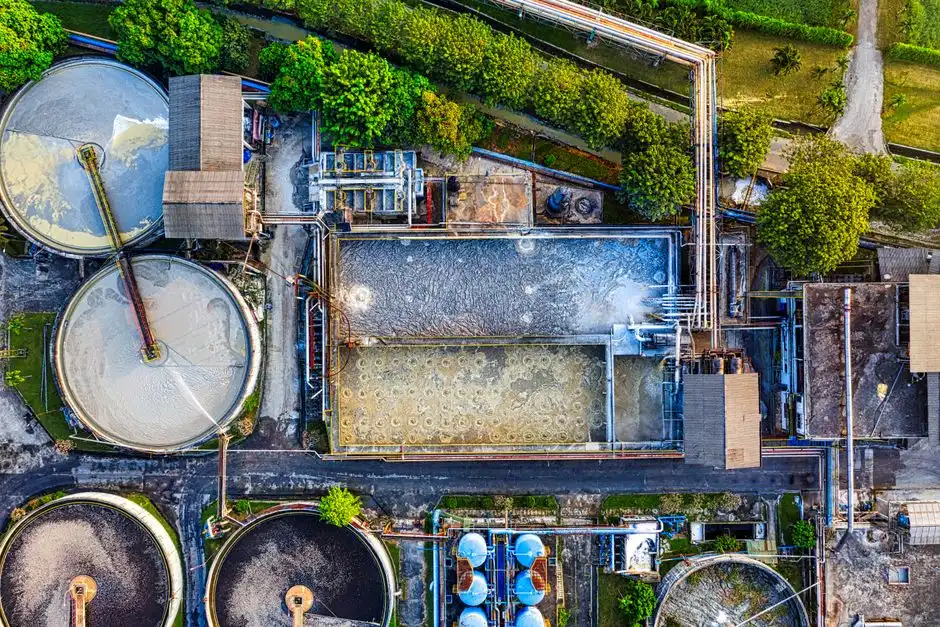
Every Niamey pretreatment datasheet starts with a parameter table pinned to the P&ID, derived from the blowdown characteristics documented in S1. The table below sets the influent envelope the engineer must hit before selecting unit operations.
| Parameter | Typical blowdown range | Niamey design implication |
|---|---|---|
| TDS | 1,200–6,000 mg/L, scaling with cycles of concentration | Drives RO recovery limit and antiscalant dose |
| Scaling minerals | Calcium, magnesium, silica, alkalinity concentrated from makeup | Both CaCO3 and silica scaling need evaluation |
| Treatment chemicals | Biocides, corrosion inhibitors, scale inhibitors, dispersants accumulate; legacy chromate or high-phosphate programs are problematic | Favors non-phosphate, membrane-compatible chemistry |
| Suspended solids | 10–50 mg/L from corrosion products, biofilm fragments, airborne particulates | Sets side-stream filter and UF feed spec |
| Biological content | Planktonic bacteria, algae, biofilm-forming organisms | Drives UF as biological barrier and biocide program |
The Niamey-specific overlay is that the combination of high ambient temperature and high-alkalinity source water biases the controlling risk toward silica and calcium carbonate scaling rather than biological fouling, so softening and antiscalant selection carry more weight than biocide selection in the pretreatment logic. A multi-media filter sized to drop suspended solids below the 10–15 µm RO feed limit is the standard first guard against membrane fouling.
The Baseline Reuse Train: Side-Stream Filtration → UF → RO
The baseline reuse train for a Niamey data center consists of three unit operations in series: side-stream filtration on the cooling-tower loop, ultrafiltration on the blowdown slipstream, and reverse osmosis to produce cooling-tower makeup-quality permeate. Side-stream filtration is sized at 1–5% of total circulation flow, runs at 10–25 µm, and installed cost ranges $50,000–$200,000 depending on flow; it protects heat exchangers and cuts blowdown TSS before the membrane stages (S1). Ultrafiltration is sized at 0.01–0.1 µm pore size, operates at 10–30 psi, achieves 90–95% recovery, and needs a chemical CIP every 1–3 months; it acts as RO pretreatment and as a standalone biological barrier. The ultrafiltration (UF) system is paired with an industrial RO system sized at 150–400 psi with 50–85% recovery and 95–99% dissolved-solid rejection, producing permeate at 10–50 mg/L TDS suitable for direct return to the cooling tower as high-quality makeup. RO and UF membrane elements with documented lifespans under blowdown service should be specified.
Antiscalant injection, preferably a low-phosphate, non-fouling formulation, and feed-water filtration below 10–15 µm are non-negotiable for RO survival on blowdown; an automatic antiscalant and biocide dosing skid is the standard delivery mechanism. A 50,000 GPD RO system treating blowdown carries an installed cost of $250,000–$500,000 and an OPEX of $1.50–$3.00 per thousand gallons treated, covering energy, chemicals, membrane replacement and maintenance (S1). This three-stage train supports 60–85% cooling-tower makeup reuse, which is the highest-value disposition per S1. The table below summarizes the parameter envelope to pin to the datasheet.
| Unit operation | Key spec | Operating range | Installed CAPEX band |
|---|---|---|---|
| Side-stream filtration | 1–5% of circulation flow, 10–25 µm | Continuous, self-cleaning | $50,000–$200,000 |
| Ultrafiltration | 0.01–0.1 µm, 10–30 psi, 90–95% recovery | CIP every 1–3 months | Sized to blowdown slipstream |
| Reverse osmosis | 150–400 psi, 50–85% recovery, permeate 10–50 mg/L TDS | Antiscalant + feed <10–15 µm | $250,000–$500,000 per 50,000 GPD |
| Antiscalant/biocide dosing | Low-phosphate, non-fouling | Continuous injection | Skid-mounted |
When to Add Concentration and ZLD Steps
The escalation rule for moving from the baseline train to concentration and ZLD in a Niamey context is driven by the cost of disposing of the RO concentrate. MVC evaporation delivers 95–98% recovery with distillate below 10 mg/L TDS at 15–25 kWh per 1,000 US gallons; CAPEX is $1–$3 million for a 10,000–30,000 GPD unit (S1). Full ZLD combining RO → MVC → crystallizer reaches 95–99% overall recovery but costs $3–$8 million in CAPEX and $5–$15 per thousand gallons in OPEX (S1). The decision rule is: specify side-stream + UF + RO first; add MVC only when the RO concentrate stream exceeds what can be deep-well injected or hauled at acceptable cost; specify ZLD only when local discharge is prohibited and the freshwater or trucking cost exceeds the $5–$15/kgal ZLD OPEX band.
In Niamey, grid reliability and energy cost dominate this calculation. MVC alone consumes 15–25 kWh per 1,000 US gallons of distillate (S1), so a power-availability study should precede any ZLD commitment. If the grid cannot deliver the firm kW the evaporator needs, the project either commits to behind-the-meter generation or stops at the baseline train and hauls concentrate. The table below sets the band the buyer is comparing against.
| Concentration step | Recovery | Energy use | CAPEX band | OPEX band |
|---|---|---|---|---|
| MVC evaporation | 95–98% | 15–25 kWh/1,000 US gal | $1–$3M (10,000–30,000 GPD) | Driven by electricity cost |
| Full ZLD (RO + MVC + crystallizer) | 95–99% | Sum of stages | $3–$8M | $5–$15/kgal |
| Partial concentration (RO + MVC only) | 85–95% | RO + MVC | Between baseline and ZLD | Brine hauled or deep-well |
Decision Matrix: Which Treatment Train Fits This Niamey Project
The matrix below maps site constraints to a treatment train. It synthesizes the S1 reuse, discharge and ZLD strategies with the S4 construction-phase requirements. A lamella clarifier belongs where TSS reduction ahead of media filtration is required; a chlorine dioxide generator belongs where biological control on the cooling loop is the binding constraint. Use the matrix to choose, then drill into the datasheet for each cell.
| Site constraint | Construction-phase handling | Operational train | Add MVC when… | Escalate to ZLD when… |
|---|---|---|---|---|
| Municipal sewer available, low discharge fee | Neutralize, characterize, seek utility approval | Side-stream + UF + RO, blowdown to sewer | Discharge cap or TDS limit binding | Discharge prohibited by permit |
| No municipal sewer, freshwater cost moderate | Neutralize + licensed hauler | Side-stream + UF + RO, concentrate hauled | Hauling cost exceeds MVC OPEX | Freshwater + hauling exceeds ZLD OPEX band |
| No municipal sewer, freshwater scarce, grid weak | Neutralize + hauler | Side-stream + UF + RO, maximize cycles | Behind-the-meter power available | Not economic without firm power; stop at RO + hauler |
| High silica in source water | Characterize fill-and-flush before utility approach | Softener or NF ahead of RO; reject at lower recovery | Brine volume still excessive | Only if discharge is fully prohibited |
Frequently Asked Questions
What cycles of concentration should a Niamey data-center cooling tower target?
S1 sets the baseline at 4 cycles, where blowdown equals 25–30% of makeup water and TDS reaches 1,200–6,000 mg/L. Pushing higher reduces blowdown volume but increases scaling risk; the design decision is site-specific and should be locked with a source-water analysis.
How much does a baseline blowdown reuse
Frequently Asked Questions
What CAPEX range should a Niamey data center budget for a blowdown RO system in 2026?
For a standard industrial-grade Reverse Osmosis (RO) system designed for cooling tower blowdown treatment in the Niamey region, budget between $180,000 and $320,000 USD. This range accounts for logistics, localized import duties for high-pressure membranes, and the integration of tropicalized electrical control panels capable of withstanding ambient temperatures exceeding 45°C.
Is zero liquid discharge (ZLD) economically justified for a data center in Niger given grid-power constraints?
ZLD is generally not economically justified for data centers in Niamey under current grid conditions. The high energy intensity of thermal evaporators or crystallizers—often requiring 30–50 kWh per cubic meter of treated water—imposes a prohibitive operational expenditure (OPEX) burden and requires significant redundant backup power capacity that exceeds the typical power usage effectiveness (PUE) targets for the region.
How should construction-phase fill-and-flush wastewater from a new Niamey data center be handled?
Construction-phase fill-and-flush water must be tested for high concentrations of suspended solids, pipe scale, and chemical passivating agents used in initial piping installation. This wastewater should be diverted to onsite settling tanks for sediment removal and pH neutralization before discharge, or hauled via vacuum tanker to a certified industrial wastewater treatment facility to prevent the contamination of local municipal drainage networks.
Which HydropureWater unit operations make up the baseline cooling-blowdown reuse train?
The baseline reuse train typically consists of a multi-stage process: an initial multimedia filtration (MMF) unit for particulate removal, followed by an ultrafiltration (UF) stage to manage colloidal silica. The core treatment is a high-recovery Reverse Osmosis (RO) system equipped with antiscalant dosing, followed by a final ultraviolet (UV) sterilization stage to prevent biological regrowth before the water is returned to the cooling tower basin.
What influent TDS and suspended-solids values should pretreatment be designed for in Niamey?
Pretreatment systems in Niamey should be designed to handle cooling tower blowdown with Total Dissolved Solids (TDS) ranging from 1,500 to 3,500 mg/L, depending on the cycles of concentration (CoC) employed. Suspended solids (TSS) pretreatment should be engineered for an influent load of 50 to 150 mg/L, as local atmospheric dust and sand ingress significantly elevate the particulate burden in open-loop cooling systems.