Why Douala data centers need a dedicated blowdown treatment train
A data center in Douala, Cameroon typically needs a treatment train sized for cooling-tower blowdown with TDS of 1,200-6,000 mg/L, suspended solids of 10-50 mg/L, and accumulated biocides, corrosion and scale inhibitors. The widely proven configuration is side-stream filtration followed by ultrafiltration (0.01-0.1 micron pore size) and reverse osmosis, which removes 95-99% of dissolved solids and yields permeate of 10-50 mg/L TDS that can be returned to the cooling tower as high-quality make-up. For Douala, where make-up water quality, humidity, grid reliability and discharge economics differ from temperate markets, the design must specify tropical-climate cycles of concentration, logistically available pretreatment chemistries, and a comparison between partial-recovery RO and full ZLD with mechanical vapor compression. Exact costs and recovery targets must be confirmed with the equipment supplier after site-specific water analysis.
Cooling towers operated at 4 cycles of concentration lose roughly 25-30% of make-up water to blowdown; for a facility using 10 million gallons per month, that translates into 2.5-3 million gallons discharged or wasted, per Genesis Water Tech's 2025 blowdown recovery guide. That ratio is the same in Douala as in Frankfurt, but the underlying variables are not. The Wouri and Mungo make-up sources carry seasonal turbidity swings, the Littoral basin's high ambient humidity compresses evaporative loss per kWh rejected, and the regional grid's outage frequency shifts how much of the day a membrane plant can actually run. The supply chain also matters: imported chemical stocks, replacement membrane lead times, and on-site storage of NaOCl or ClO2 are all constrained differently in Cameroon than in Western Europe or North America.
The chemistry inside the cooling loop is consistently elevated: blowdown TDS 1,200-6,000 mg/L, suspended solids 10-50 mg/L, plus accumulated biocides, corrosion and scale inhibitors, per the same 2025 Genesis Water Tech source. In Douala, cycles of concentration, antiscalant selection and discharge-fee assumptions must be locally validated rather than copied from temperate references. The supplied research does not contain Cameroon-specific compliance limits, Douala municipal discharge tariffs, or CEMAC effluent schedules; the buyer should request these from MINEPDED and the local utility before finalizing a design, and treat any temperate-zone number as a placeholder until the local values are confirmed.
Expected water balance and blowdown quality for a Douala site
Blowdown volume scales with cycles of concentration: pushing from 4 to 6 or higher cycles reduces blowdown volume but raises TDS and the scaling risk on every heat-exchanger surface, per the 2025 Genesis Water Tech blowdown guide. For a 1 MW IT load with a chilled-water delta-T of 5 °C and a typical Wuri make-up TDS near 150-300 mg/L, blowdown TDS will land in the 1,200-6,000 mg/L range stated by Genesis Water Tech. A facility pushing 6 cycles will sit at the upper end and must budget for stronger antiscalant and tighter cleaning intervals.
Scaling minerals — calcium, magnesium, silica and alkalinity — concentrate proportionally and drive antiscalant selection. Suspended solids come from corrosion products, biofilm fragments and airborne dust, typically 10-50 mg/L even with basin filtration. Planktonic bacteria, algae and biofilm-forming organisms must be addressed by any reuse system, since they will foul the first membrane they see. The figure below summarises the relationship between cycles of concentration, blowdown volume reduction, and the resulting blowdown quality that the equipment will actually see.
| Cycles of concentration | Approx. blowdown volume vs. make-up | Typical blowdown TDS range (mg/L) | Dominant operating risk |
|---|---|---|---|
| 3 | ~33% | ~600-1,800 | Discharge volume, biological fouling |
| 4 | ~25-30% | ~800-2,400 | Balanced baseline |
| 5 | ~20% | ~1,000-3,000 | Calcium carbonate scaling |
| 6+ | ~15% or less | ~1,200-6,000 | Silica, calcium sulfate, RO scaling |
These figures come from the 2025 Genesis Water Tech reference, not from a Douala site survey. The actual TDS band at a given cycle count is a function of make-up TDS, which the supplied research does not quantify for the Wouri or Mungo, so the engineer must obtain a wet-chemistry analysis of the planned make-up source before locking in any of the ranges above. The qualitative pattern, however, holds: more cycles means less blowdown volume but a more aggressive membrane feed.
Treatment objectives: reuse, compliant discharge, or ZLD
Before any equipment is selected, the end-use target must be fixed. Three strategies exist: cooling-tower make-up reuse, process-water reuse (irrigation, washdown) and compliant discharge, with ZLD as the most capital-intensive fourth option, per the 2025 Genesis Water Tech blowdown guide. Cooling-tower make-up reuse is normally the highest-value use, typically achieving 60-85% recovery. Process-water reuse accepts lower recovery but adds application-specific quality constraints such as biocide residuals on irrigation lines. Discharge compliance focuses on TDS, metals and biocide residuals, and some jurisdictions enforce TDS limits below 1,500 mg/L per the same source.
ZLD eliminates liquid waste but the $3-8 million CAPEX and $5-15 per 1,000 gal OPEX bands from the Genesis Water Tech 2025 source require a clear economic case. In Douala, that case is not just about water scarcity: it is about whether the local utility will accept a brine tanker, and what that contract will cost. A practical reuse path for a sub-100 m³/day edge/colo site in the Littoral is usually an RO train sized for cooling make-up, with a smaller brine line sent either to a compliant discharge point or to an authorised hauler, as detailed in the broader 2026 data center wastewater management guide. Douala-specific discharge fees were not present in the supplied research; the buyer should obtain the current Douala/CEMAC tariff before sizing the discharge path.
Core treatment train: side-stream filtration, UF, NF, RO and polishing
The standard data-center blowdown train stacks four unit operations. Side-stream filtration at 1-5% of circulation flow, with a 10-25 micron rating, is the first step; the 2025 Genesis Water Tech source gives a CAPEX range of $50,000-200,000 for typical data-center installations. A self-cleaning screen ahead of the basin or a sand/multi-media polish keeps the suspended-solids load in the 10-50 mg/L range and below, so the downstream membranes are not sandblasted.
Ultrafiltration (0.01-0.1 micron pore size) provides 90-95% recovery at 10-30 psi, removes suspended solids, bacteria and high-molecular-weight organics, and is the standard RO pretreatment. Reverse osmosis removes 95-99% of dissolved solids, delivering permeate of 10-50 mg/L TDS at recovery of 50-85% on blowdown duty. Nanofiltration is a lower-pressure option (75-150 psi) with 70-85% recovery and permeate TDS of 30-50% of feed, attractive when hardness rather than total TDS is the limiting factor. Pretreatment must deliver feed under 10-15 microns, pH adjustment and antiscalant injection to prevent silica and calcium-sulfate scaling. A 50,000 GPD RO blowdown system costs $250,000-500,000 installed with $1.50-3.00 per 1,000 gallons OPEX per the 2025 Genesis Water Tech reference. The unit-operation parameters relevant to a Douala RFQ are summarised below.
| Unit operation | Operating pressure | Typical recovery | Permeate / outlet quality | Reference CAPEX (US$) |
|---|---|---|---|---|
| Side-stream filtration (10-25 µm) | Gravity / low head | Continuous bleed, 1-5% of circulation | TSS reduced to <10 mg/L on blowdown | $50,000-200,000 |
| Ultrafiltration (0.01-0.1 µm) | 10-30 psi | 90-95% | SDI <3, TSS <1 mg/L, bacteria-free | Included in RO package |
| Reverse osmosis | 150-400 psi | 50-85% | 10-50 mg/L TDS permeate | $250,000-500,000 at 50,000 GPD |
| Nanofiltration | 75-150 psi | 70-85% | Permeate TDS 30-50% of feed | Lower than RO at same flow |
For a Douala RFQ, an UF pretreatment ahead of RO and an industrial RO system for blowdown reuse cover the bulk of the duty; a multi-media filter for side-stream duty addresses the basin polish. Membrane selection still depends on make-up water quality and treatment objectives, but the operating ranges above are directly supported by the Genesis Water Tech 2025 source.
When evaporation and ZLD make sense in the Douala context
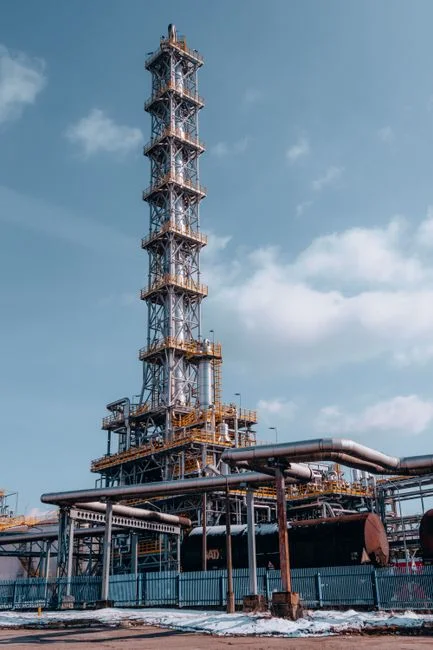
MVC and ZLD are escalation paths, not default choices. Mechanical vapor compression reaches 95-98% recovery with distillate below 10 mg/L TDS; the 2025 Genesis Water Tech source gives a CAPEX band of $1-3 million for 10,000-30,000 GPD systems and an energy intensity of 15-25 kWh per 1,000 gallons of distillate. A combined RO (50-75% recovery) plus MVC on concentrate achieves 85-95% overall system recovery, per the same source. Full ZLD reaches 95-99% recovery at $3-8 million CAPEX and $5-15 per 1,000 gal OPEX, and is justified only where liquid discharge is prohibited.
For most Douala edge/colo sites, the more defensible path is a partial-recovery RO that targets 75-85% system recovery and sends the residual brine to an approved hauler or to a small MVC unit sized for the concentrate rather than the full blowdown. The decision hinges on what discharge actually costs, and on whether the grid can supply the 15-25 kWh per 1,000 gallons that MVC needs without an oversized UPS behind it. Douala's high ambient humidity and outage-prone grid mean MVC OPEX should be modelled against the actual $/kWh the site will pay, including diesel-bridge periods, rather than temperate benchmarks; the supplied research does not include a Cameroon electricity figure. Where sanitary wastewater is part of the same site's permit, an MBR for sanitary wastewater at the same site can be sized in parallel and shared on a common sludge-handling line.
Integrating cooling-water chemistry with the recovery train
Chemistry compatibility is the difference between a working system and a fouled one. Biocides, corrosion inhibitors, scale inhibitors and dispersants concentrate in blowdown with cycles of concentration and can foul RO membranes, per the 2025 Genesis Water Tech source. Non-phosphate, low-toxicity programs — including tablet-based biocide/scale delivery — reduce membrane fouling and discharge-permit risk, per the same source. When RO permeate returns to the cooling tower, treatment chemistry can be tuned to the actual make-up quality, reducing total chemical consumption. Chromate and high-phosphate legacy chemistries should be flagged during the Douala site audit because they complicate both reuse and discharge.
For a Douala plant, the practical implication is that the chemical program and the membrane program must be specified together. Switching from oxidising biocides like chlorine to ClO2 or DBNPA, or moving to a non-phosphate scale inhibitor, is often the single biggest lever the engineer has to keep RO recovery in the 75-85% range rather than the 50-60% range. An antiscalant and biocide dosing skid sized for the actual blowdown flow, paired with a chlorine dioxide generator for the cooling loop, is the typical control package.
2026 cost and decision framework for a Douala installation
Discharge fees in water-stressed regions now exceed $5-15 per 1,000 gallons, and reuse avoids both the fee and the freshwater cost, per the 2025 Genesis Water Tech reference. The reference CAPEX bands in that source are: side-stream filtration $50,000-200,000; 50,000 GPD RO blowdown $250,000-500,000; MVC (10,000-30,000 GPD) $1-3 million; full ZLD $3-8 million. OPEX bands: RO blowdown $1.50-3.00 per 1,000 gal; ZLD $5-15 per 1,000 gal; MVC electricity 15-25 kWh per 1,000 gallons of distillate. All of these are U.S. benchmarks; Douala shipping, import duty and grid-stability premiums must be obtained from the equipment supplier.
The decision logic is straightforward. If the local utility will accept the blowdown at a known tariff and the freshwater supply is reliable, discharge after RO polishing is the cheapest path. If freshwater scarcity or discharge fees push the avoided cost above roughly $5 per 1,000 gallons, an RO-plus-reuse train pays for itself. ZLD only enters the conversation when liquid discharge is prohibited, or when the cost of brine disposal exceeds the OPEX delta. The figure below maps the same CAPEX/OPEX bands to a typical Douala decision.
| Train configuration | Reference CAPEX (US$) | Reference OPEX (US$/1,000 gal) | Decision trigger in Douala terms |
|---|---|---|---|
| Side-stream filtration + discharge | $50,000-200,000 | Discharge fee only | Permit available, water tariff <$3/1,000 gal |
| Side-stream + UF + RO + reuse | $300,000-700,000 | $1.50-3.00 | Freshwater scarcity or fee >$5/1,000 gal |
| RO + MVC on concentrate | $1.25-3.5 million | MVC electricity 15-25 kWh/1,000 gal + RO OPEX | Brine disposal cost high, partial ZLD viable |
| Full ZLD (RO + MVC + crystalliser) | $3-8 million | $5-15 | Liquid discharge prohibited |
The membrane and filter consumables should be sourced together with the skid: an RO/UF membrane and filter element stock sized for 12 months of operation, and a plate-frame filter press for sludge dewatering on the sanitary line. For cross-checking the tropical-Africa logistics story, a comparable West-Africa data-center blowdown guide for Abobo and an Indian-Ocean data-center blowdown guide for Antananarivo are useful regional benchmarks, but each site's water balance, grid tariff and discharge permit must be confirmed independently.
Frequently Asked Questions
Should a Douala data center default to ZLD or to RO with reuse?
RO with reuse is the default for cooling-tower make-up duty, typically at 60-85% recovery, with ZLD reserved for sites where liquid discharge is prohibited or brine disposal cost is prohibitive, per the 2025 Genesis Water Tech blowdown guide. The economic case for ZLD almost never closes on a sub-100 m³/day edge/colo site once Douala shipping, import duty and grid-stability premiums are added to the $3-8 million reference CAPEX.
What is the realistic CAPEX and OPEX for a blowdown treatment train in Douala?
The supplied 2025 Genesis Water Tech reference gives U.S. benchmark ranges: side-stream filtration $50,000-200,000, a 50,000 GPD RO blowdown system at $250,000-500,000 installed with $1.50-3.00 per 1,000 gal OPEX, MVC at $1-3 million CAPEX and 15-25 kWh per 1,000 gal, and full ZLD at $3-8 million CAPEX with $5-15 per 1,000 gal OPEX. These must be requoted with shipping, import duty and grid-stability premiums before procurement.
How do I size the RO recovery and the antiscalant dose for Douala's Wouri make-up?
Push cycles of concentration up first, then size RO to the resulting blowdown TDS, with the 4-8x multiplier and the 1,200-6,000 mg/L blowdown band from the 2025 Genesis Water Tech source as the starting point. The engineer must request a wet-chemistry analysis of the Wouri or Mungo make-up, including silica, calcium, magnesium and alkalinity, before locking in either the cycle target or the antiscalant dose.
What Cameroonian and CEMAC compliance limits do I need to confirm before finalising the design?
The supplied research does not contain Cameroonian discharge limits, Douala municipal tariffs, or CEMAC effluent schedules, so these must be requested directly from MINEPDED and the local utility before any discharge path is committed. Treat any temperate-zone TDS or metals limit cited in vendor literature as a placeholder until the local values are confirmed in writing.