Why Bardstown's Two POTWs Drive Auto Plant Compliance
Every pretreatment design decision on an EV or auto plant floor eventually answers to one of two City of Bardstown facilities. The Town Creek Treatment Plant, originally built in 1960 and expanded in 1980, treats 3 MGD and sits at 94 Gilkey Run Road under Chief Operator Eric Walker (City of Bardstown, S2). The Lower Beech Fork Treatment Plant, designed for 4 MGD, was built and started operation in 2002 at 3095 Sutherland Lane under Chief Operator Charlotte Lyvers (City of Bardstown, S2). Together they are the publicly owned treatment works — POTWs — that accept industrial discharges from any sewer customer inside the City service area.
Both plants operate a pretreatment program under EPA's framework, which grants them authority to set site-specific local limits at an industrial user's end-of-pipe (EPA NPDES, S4). Any new sewer customer must first complete a Utility Services Contract and, where new construction needs a tap, the appropriate Residential or Commercial Tap form filed through City Hall (City of Bardstown, S2). That tap-on process is also the entry point for a new Industrial User (IU) permit application — the engineer should treat the Utility Services Contract as the first deliverable on the compliance schedule.
The Federal Pretreatment Framework That Bardstown Enforces
The regulatory chain that the Bardstown POTWs enforce runs through Section 402(b) of the Clean Water Act, which authorizes states to administer NPDES programs provided those programs include adequate authority to ensure compliance with the Act's §307(b) pretreatment standards (EPA Local Limits Development Guidance, S1, published 25 Jun 2021). For an engineer sizing equipment, the chain matters because every local limit in the IU permit letter traces back to that delegation.
Four 40 CFR Part 403 definitions do the real work. An Industrial User is a source of indirect discharge to a POTW, per 40 CFR 403.3(j) (EPA NPDES, S4). Pass-through, defined at 40 CFR 403.3(p), is a discharge that exits the POTW into waters of the United States in quantities or concentrations that cause or increase a violation of the POTW's NPDES permit (EPA NPDES, S4). Interference, defined at 40 CFR 403.3(k), is a discharge that inhibits or disrupts the POTW, its treatment processes, its sludge processes, use, or disposal, and is therefore a cause of an NPDES or sludge permit violation (EPA NPDES, S4). EPA's framework also lists at 40 CFR 403.5(c) which POTWs must develop local limits, and EPA can enforce limits developed and approved under that section as pretreatment standards (EPA NPDES, S4).
EPA's Local Limits Development Guidance is the methodology POTWs follow to calculate Maximum Allowable Headworks Loadings (MAHLs) from pollutants of concern, then allocate allowable loadings back to industrial users as local limits (EPA Local Limits Development Guidance, S1, 25 Jun 2021). This methodology dictates the data the POTW must collect, the sampling frequencies for initial program development versus ongoing evaluation, the analytical methods, and the best management practices (BMPs) that complement numeric limits (S1).
Which EV and Auto Processes Generate the Load
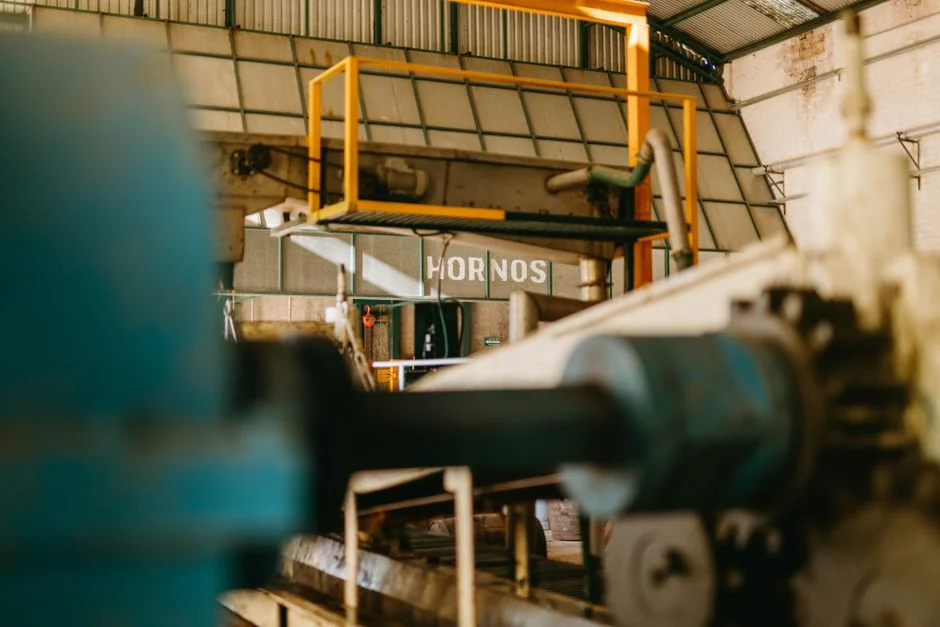
EV and auto plants generate a distinct waste-stream profile requiring specific pretreatment strategies. Stamping draws lubricant-rich wastewater; machining and CNC work produce coolant and fines; phosphate or zirconium-based pretreatment baths carry metals and fluorides into the rinse; e-coat and powder-coat lines shed paint solids, solvents, and surfactants; battery cell formation contributes electrolyte traces; and chiller and cooling-tower blowdown adds dissolved solids. Across these streams, the pollutants a Bardstown-style POTW will regulate are oil and grease, total suspended solids, pH excursions, zinc, nickel, copper, lead, fluoride, phosphate, and trace organics from paint.
Several of these processes trigger federal categorical standards that apply in parallel to any POTW local limit, including 40 CFR Part 413 (electroplating), Part 433 (metal finishing), Part 467 (aluminum forming), and Part 468 (copper forming). The local-limits work does not replace categorical work — it caps what the categorical standards do not already cover and protects the three pathways EPA explicitly names: liquid pass-through, sludge quality, and air emissions from the headworks (EPA Local Limits Development Guidance, S1; EPA NPDES, S4).
Public sources do not publish current Bardstown-specific numeric limits for metals, pH, oil and grease, BOD, TSS, or ammonia. Before specifying tankage, the engineer should request the current IU ordinance and limit letter directly from the City of Bardstown so the design is anchored to enforceable numbers, not assumptions.
The On-Site Pretreatment Train for an EV/Auto Plant
The on-site train for an EV/auto IU follows a consistent sequence. Equalization comes first: a surge and pH-buffering basin ahead of any chemical step, with PLC-controlled pH and conductivity instrumentation to flatten the diurnal swings from a two- or three-shift plant. A rotary bar screen at the headworks protects downstream equipment from stampings, rags, and packaging debris that routinely show up in plant floor drains; a rotary bar screen for headworks protection sized to peak flow is a low-cost insurance policy.
Next, oil/water separation: a corrugated-plate or skim tank ahead of flotation to drop free oil from stamping and machining waste before emulsified oil gets a chance to load downstream chemistry. Dissolved air flotation (DAF) follows — micro-bubble flotation that targets emulsified oil, grease, and TSS, paired with an automatic chemical dosing skid for coagulant and flocculant; for oil, grease, and TSS, a DAF unit for oil, grease and TSS removal is the workhorse. Hydroxide metals precipitation then lifts pH with caustic or lime to drop zinc, nickel, copper, and lead as metal hydroxides, with a lamella clarifier for metals and TSS polishing settling the precipitate in a high-rate inclined plate. Filtration and final pH trim — a multimedia polish step with acid dosing for final pH adjustment — closes the liquid train.
Sludge handling is the final unit operation and protects the POTW's third MAHL pathway. Thicken and dewater the clarifier underflow through a plate and frame filter press for clarifier underflow dewatering to cut hauling volume and keep hauled solids inside the POTW's sludge quality envelope. A typical sequence is summarized below.
| Step | Unit Operation | Target Pollutants | Key Control |
|---|---|---|---|
| 1 | Rotary bar screen | Rags, debris, large solids | Headworks protection |
| 2 | Equalization basin | Flow and pH surges | PLC pH and conductivity |
| 3 | Oil/water separator | Free oil and grease | Skim and plate coalescing |
| 4 | Dissolved air flotation | Emulsified oil, TSS, grease | Coagulant/flocculant dose |
| 5 | Hydroxide precipitation | Zinc, nickel, copper, lead | pH set point per metal |
| 6 | Lamella clarifier | Metal hydroxides, residual TSS | Surface loading rate |
| 7 | Multimedia filter and pH trim | Final TSS, pH to band | Acid dose, end-of-pipe probe |
| 8 | Filter press | Clarifier underflow solids | Cake dryness, haul mass |
Sampling, Reporting, and Common Sense Practices
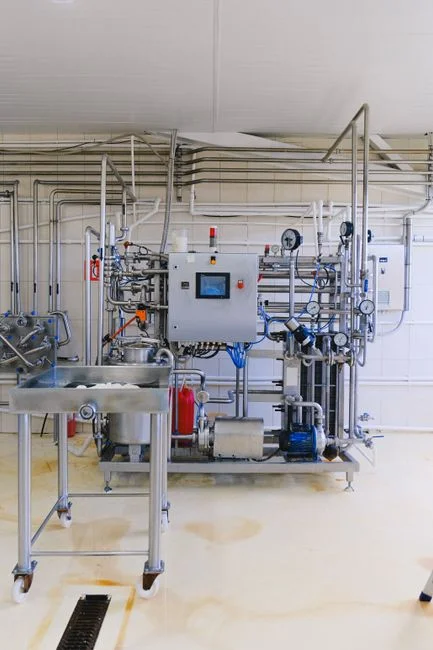
EPA's Local Limits Development Guidance lays out the data expectations the Bardstown POTW will mirror in an IU permit: sampling locations at the POTW, in the collection system, and at industrial users; sampling frequencies for initial program development versus ongoing evaluation; and analytical methods consistent with 40 CFR Part 136 (EPA Local Limits Development Guidance, S1). Limits are imposed at the IU's end-of-pipe — at the point of connection to the POTW's collection system — and may be numeric, narrative, or BMP-based (EPA NPDES, S4).
The standard IU deliverables are a baseline monitoring report, a 90-day compliance report, routine self-monitoring, a slug control plan, and BMPs for chemical storage and spill containment. Sampling is normally a 24-hour composite or grab schedule at the end-of-pipe monitoring manhole, with the IU retaining a chain-of-custody and analytical records the POTW can audit. EPA also calls for a Common Sense Assessment and BMPs on top of numeric limits — both are useful arguments when negotiating a limit that does not match the IU's actual waste-stream profile (S1).
2026 Watch-List: PFAS, Stricter Metals, and Reuse
PFAS, zinc, and nickel scrutiny continues to tighten across EPA pretreatment regions in 2026, even where Bardstown-specific numeric limits are not yet public. Water reuse from e-coat rinse and DAF subnatant back into washers is the single most effective way to reduce both sewer load and headworks loading — directly relevant to the MAHL framework (EPA Local Limits Development Guidance, S1). The practical action for an engineer specifying equipment in 2026 is to build the system with a reuse tap and a membrane polish step even if it is not required today, so the next limit letter does not trigger a redesign.
Frequently Asked Questions
What numeric local limits does the Bardstown POTW enforce for metals, oil and grease, pH, BOD, and TSS?
Public sources do not publish current Bardstown-specific numeric limits. Request the current IU ordinance and limit letter from the City of Bardstown before specifying tankage, and confirm the metals list, pH band, oil and grease cap, BOD/TSS caps, and ammonia cap against that document rather than a general industry range (City of Bardstown, S2; EPA NPDES, S4).
What budget line items drive on-site pretreatment cost for an EV or auto plant near Bardstown?
Quoted equipment costs are not in the public sources reviewed, so the engineer should request itemized proposals for equalization basin sizing, the DAF unit, the chemical dosing skid, the lamella clarifier, the multimedia filter, and the plate and frame filter press. The line items that move total cost are tankage volume, DAF hydraulic capacity, plate pack area on the clarifier, and cake-dryness targets on the press — each should be tied to the enforceable limits the POTW sets (EPA Local Limits Development Guidance, S1).
Which categorical standards should an EV or auto plant check before designing the train?
Stamping, machining, phosphate or zirconium pretreatment, e-coat, and metal forming operations typically trigger 40 CFR Part 413 (electroplating), Part 433 (metal finishing), Part 467 (aluminum forming), and Part 468 (copper forming). These categorical standards apply in parallel to POTW local limits, so the on-site train must meet the more restrictive of the two for any shared parameter (EPA NPDES, S4).
What deliverables does the Bardstown POTW expect from a new Industrial User?
Industrial users must provide a baseline monitoring report, a 90-day compliance report, a slug control plan, routine self-monitoring at the end-of-pipe monitoring manhole, and BMPs for chemical storage and spill containment. The Utility Services Contract and tap form filed through City Hall start the process, and the POTW applies the limits developed and approved under 40 CFR 403.5(c) at the IU's end-of-pipe (City of Bardstown, S2; EPA NPDES, S4; EPA Local Limits Development Guidance, S1).