Why SO2 and VOC Control Share a Single Tower
Industrial stacks that burn sulfur-containing fuel or roast sulfide ores almost always carry a secondary VOC load — fugitive solvent vapors, light hydrocarbons from process upsets, or formaldehyde and methanol from upstream reactors. A second dedicated device (thermal oxidizer, carbon adsorber, biofilter) doubles footprint, ducting, instrumentation, and stack-height pressure loss; therefore, operators specify one absorption vessel when the VOC fraction is water-soluble or reactive with the chosen sorbent.
The U.S. EPA Air Pollution Control Cost Manual (7th ed., Section 5 Chapter 1) confirms that wet and dry scrubbers control acid gases from combustion and industrial processes, and that wet scrubbers handle the widest range of acidic and soluble organic pollutants — SO2, HCl, HF, HBr, HCN, H2S, and water-soluble organics such as formaldehyde and methanol. The governing mechanism is gas absorption: the pollutant dissolves into or reacts with the aqueous droplet, the driving force being the soluble-gas concentration in the gas versus the solute concentration in the contacting liquid film (per EPA wet scrubber monitoring guidance). A single flue gas desulfurization scrubber sized for the SO2 duty becomes the natural host for a soluble-VOC load, while hydrophobic VOCs must be routed to a downstream oxidizer or adsorption stage.
Wet Scrubber Removal Efficiencies: What EPA and National Labs Actually Report
Wet scrubbers typically achieve 95–99% removal for most industrial applications, and new wet FGD systems can reach 99% SO2 removal and over 95% HCl removal, according to the EPA Air Pollution Control Cost Manual. The same source notes that packed-tower wet FGD may exceed 99% for some pollutant-solvent systems, that spray dry absorbers (SDA) typically run 85–95% with newer SDA designs up to 98%, and that dry sorbent injection (DSI) typically only achieves 50–70%. A separate EPA performance trend (2000–2019) shows the 12-month average SO2 emission rate for the top 50% of wet limestone FGD systems fell from 0.22 lb/MMBtu in 2000 to 0.04 lb/MMBtu in 2019; the top 50% of wet lime FGD fell from 0.23 to 0.07 lb/MMBtu over the same period.
For VOCs, Lawrence Livermore National Laboratory report UCRL-TR-202506 (Saito, 2004-02) reports that "typical" industrial single-pass performance of commonly used VOC gas scrubbers generally ranged from ~80 to 99% destruction and removal efficiency (DRE), with the overall VOC treatment technology range sitting at ~50–99% DRE depending on method. The 2023 iScience paper on a CoFe2O4/MoS2/PMS wet scrubber system (DOI 10.1016/j.isci.2023.108054) demonstrated deep VOC mineralization at ambient temperature with suppressed formation of toxic byproducts — a research-stage direction. The data an engineer copies into a specification is summarized below.
| Pollutant / Technology | Reported Removal Efficiency | Source |
|---|---|---|
| Wet scrubber, general industrial duty | 95–99% | EPA Cost Manual, 7th ed., §5 Ch.1 |
| New wet FGD, SO2 | up to 99% | EPA Cost Manual, 7th ed., §5 Ch.1 |
| New wet FGD, HCl | over 95% | EPA Cost Manual, 7th ed., §5 Ch.1 |
| Packed-tower wet FGD (some pollutant–solvent systems) | over 99% | EPA Cost Manual, 7th ed., §5 Ch.1 |
| Spray dry absorber (SDA) | 85–95% (newer designs up to 98%) | EPA Cost Manual, 7th ed., §5 Ch.1 |
| Dry sorbent injection (DSI) | 50–70% | EPA Cost Manual, 7th ed., §5 Ch.1 |
| VOC gas scrubber, single-pass industrial | ~80–99% DRE | LLNL UCRL-TR-202506 (Saito, 2004-02) |
| VOC treatment technology, overall range | ~50–99% DRE | LLNL UCRL-TR-202506 (Saito, 2004-02) |
| CoFe2O4/MoS2/PMS wet scrubber (research) | Deep mineralization at ambient temperature | iScience 2023, doi:10.1016/j.isci.2023.108054 |
Scrubber Design Types: Packed Tower, Spray Tower, Tray, and Venturi Compared
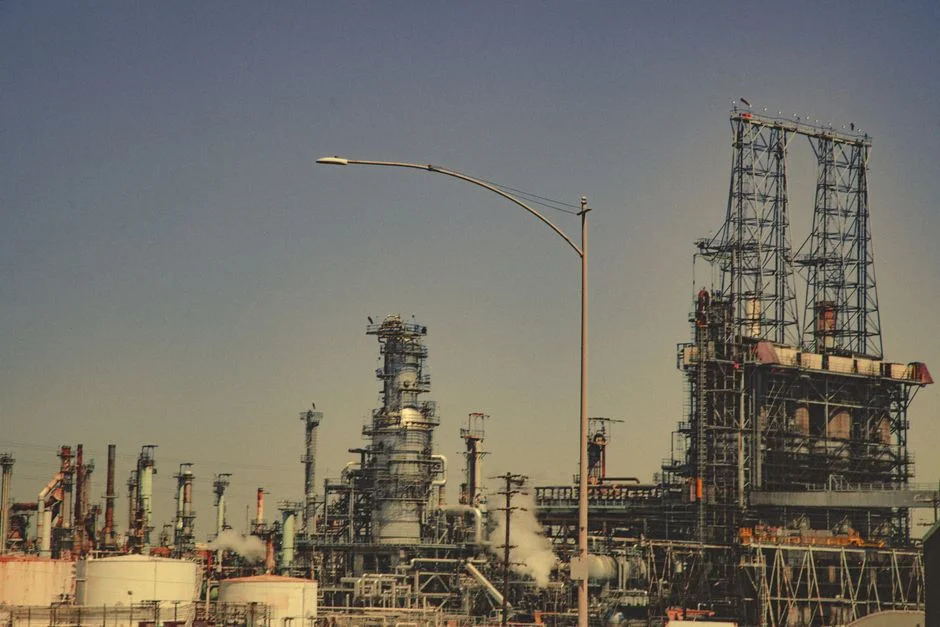
EPA's wet scrubber monitoring guidance groups spray tower, tray-type, and packed-bed scrubbers as low-energy gas-absorption designs, and explicitly separates the high-energy venturi scrubber, directing readers to Section 6 Chapter 2 for particulate venturi scrubbers. Packed-bed scrubbers spread the scrubbing liquid over packing material to maximize gas–liquid interfacial area; counter-current flow (liquid down, gas up) is the most common arrangement. The EPA Cost Manual notes packed towers achieve the highest removal efficiencies of any gas absorber, handle higher liquid rates, and have relatively lower water consumption — but are "infrequently used to control volatile organic compound (VOC) emissions in dilute concentrations." Spray towers atomize liquid through nozzles and pass the gas upward through the droplet field, making them the workhorse for large combustion streams where pressure drop must stay low. Tray-type scrubbers use perforated plates or bubble caps to create staged gas–liquid contact and are preferred when multi-stage equilibrium is needed to handle high inlet concentrations. Venturi scrubbers are high-energy devices intended for particulate capture, not gas absorption, and should not be specified for combined SO2+VOC duty without confirming the gas-absorption performance separately. Design choice is driven by four inlet parameters: SO2 concentration (typical wet FGD handles up to 2,000 ppm SO2 per the EPA Cost Manual), gas flow rate, target outlet concentration, and whether the VOC fraction is water-soluble enough to justify single-tower absorption. Engineers comparing geometry for combined duty should use the matrix below.
| Design Type | Gas–Liquid Contact Mechanism | Best Suited For | Key Limitation |
|---|---|---|---|
| Packed tower | Liquid film over packing, counter-current flow | High removal efficiency, lower water consumption, soluble VOCs and acid gases | Infrequently used for dilute VOC per EPA Cost Manual |
| Spray tower | Atomized droplets, gas flowing up through droplet field | Large flow rates, low pressure-drop service, bulk SO2 removal | Lower interfacial area per unit volume than packed |
| Tray-type | Staged contact on perforated plates or bubble caps | High inlet concentrations needing multi-stage equilibrium | Higher pressure drop, more mechanical complexity |
| Venturi | High-velocity gas–liquid shear in a throat | Particulate capture only | Not a gas-absorption device per EPA §6 Ch.2 |
Absorbent Selection: Water, Alkaline Slurry, Amines, and Oxidant-Enhanced Liquids
The hardware choice is only half the specification — the scrubbing liquid defines what the tower actually removes. EPA monitoring guidance states that water is the default absorbent, with "other chemicals … present in the water to react with the pollutant being absorbed to reduce the concentration." For SO2, the standard wet FGD absorbent is limestone or lime slurry; the EPA Cost Manual highlights that wet limestone FGD produces a saleable gypsum byproduct, which dry and SDA systems do not. For gases with low water solubility — hydrocarbons, hydrogen sulfide, and many VOCs — the same EPA source permits alternative absorbents such as dimethylaniline or amines, provided the absorbent has high solubility for the target gas and is relatively inexpensive. When the absorbent itself is consumed or loaded with pollutant, the EPA notes that "absorbent separation and scrubbing-liquid regeneration may be needed to help lower costs of the scrubbing liquid." Common operating problems that degrade both SO2 and VOC removal simultaneously, per EPA, include low gas or liquid flow, condensation of aerosols, poor liquid distribution, use of liquid with high pollutant concentration, scaling, and freezing of lines. A plant with a mixed SO2 + VOC stream should plan the absorbent swap or additive dosing in the same engineering review as the hardware selection; see also the practical pretreatment framing in this chemical plant pretreatment compliance guide.
Monitoring Parameters That Prove the Scrubber Is Performing
EPA identifies three primary wet scrubber performance indicators: pressure differential, liquid flow rate, and scrubber liquid outlet concentration. Secondary indicators are gas flow rate, neutralizing chemical feed rate, and scrubber outlet gas temperature. Parameters that may be monitored in place of outlet concentration include scrubber liquid pH, scrubber liquid specific gravity, and makeup/blowdown rates. For systems controlling gaseous streams with low particulate matter loadings, EPA states there is no advantage to monitoring scrubbing-liquid solids content. This parametric set lets the engineer write a Continuous Emission Monitoring Rule (CAM)-compliant data-acquisition list: differential pressure transmitters on each absorber stage, magnetic flow meters on scrubbing-liquid headers, pH and conductivity probes on the sump, RTDs on the outlet duct, and a feed-rate meter on the neutralizing chemical — the same instrumentation used in the wet vs dry scrubber comparison guide for any gas-absorption service.
Capital Cost Baseline and Compliance Targets
The EPA Cost Manual (citing 2018 EIA data) reports total installed cost for a wet FGD system with ≥90% removal ranging from $250,000 to $709 million, with an average of $114 million; SDA systems averaged $37 million (up to $340 million); CDS systems averaged $81 million (up to $400 million). These are power-plant-scale figures. Industrial SO2+VOC wet scrubber installations are typically smaller, but the cost drivers are identical: reagent consumption, vessel size, and gypsum or wastewater handling. A HydropureWater Flue Gas Desulfurization scrubber is designed for compliance with EPA NSPS, the EU Industrial Emissions Directive 2010/75/EU, and World Bank emission guidelines. Procurement should request vendor quotes broken out by reagent consumption, gypsum handling, and stack monitoring rather than a single turnkey number.
Frequently Asked Questions
How much does a wet scrubber cost for combined SO2 and VOC duty?
The EPA Cost Manual (2018 EIA data) gives power-plant wet FGD benchmarks of $250,000 to $709 million total installed cost, averaging $114 million for ≥90% SO2 removal, with SDA at $37 million average and CDS at $81 million average. Industrial-scale combined SO2+VOC scrubbers are smaller; request vendor quotes itemized by reagent consumption, vessel size, and gypsum or wastewater handling rather than relying on a single turnkey number.
How do I select a supplier for a combined SO2 and VOC wet scrubber?
Ask bidders for documented efficiency test data on both pollutant classes at your inlet conditions, evidence of compliance with EPA NSPS, EU Industrial Emissions Directive 2010/75/EU, and World Bank guidelines, and a parametric monitoring package aligned with EPA primary indicators (pressure differential, liquid flow, scrubber liquid outlet concentration). The supplier's equipment should be sized for your specific SO2 concentration (typical wet FGD handles up to 2,000 ppm) and water-solubility profile of the VOC stream.
Can one wet scrubber actually remove both SO2 and VOCs?
Yes, when the VOC fraction is water-soluble or reactive with the chosen sorbent. The EPA Cost Manual lists formaldehyde and methanol among organics removable in packed towers alongside SO2, HCl, HF and HBr. Hydrophobic VOCs require a downstream technology such as a thermal oxidizer, carbon adsorber, or biofilter (LLNL UCRL-TR-202506).
What inlet data do I need to specify a wet scrubber for combined duty?
The engineer must obtain SO2 concentration (typical wet FGD envelope is up to 2,000 ppm), gas flow rate, target outlet concentration for both SO2 and VOCs, VOC water-solubility and reactivity profile, and the wastewater or gypsum handling constraint. Without these, neither the absorbent nor the vessel size can be set, and the efficiency ranges from EPA (95–99% for general industrial wet scrubbers) and