
Why there is no single 'Matabeleland North discharge fee' in 2026
Zimbabwe does not publish a single line-item "industrial wastewater discharge fee" for Matabeleland North, and no source reviewed for this article — including the Environmental Management Agency (EMA), the Zimbabwe National Water Authority (ZINWA), and provincial notices — itemises a 2026 tariff for the seven districts. Industrial effluent in Zimbabwe is jointly administered: EMA sets discharge permits and the effluent quality standards (Statutory Instrument 6 of 2007 and its amendments), while ZINWA controls raw-water abstraction and the bulk of the volumetric billing that flows from a metered discharge (ZINWA effluent tariff schedules applied per district). The result is that an operator in Hwange, Lupane, Binga, Nkayi, Tsholotsho, Umguza or Bubi will receive at least two invoices and likely more, each with its own structure.
Matabeleland North's economy compounds the problem. Per the 2022 census summary on Wikipedia, the province has 827,645 residents spread across 75,025 km² (19.2% of Zimbabwe's land area), with agriculture employing 83% of workers, plus cattle ranching, tourism around Victoria Falls, and extraction of coal, gold, limestone, methane gas and timber. Those sectors do not share a single pollutant profile, so a flat provincial fee would be technically meaningless; instead each sector drives a different combination of permit type, volume, strength surcharge and audit frequency. International comparators confirm the structural pattern: East Bay Municipal Utility District's FY27 Schedule C (effective 7/1/2026, Authority Resolution 35493-26) breaks its industrial permit fees into a $3,652 Wastewater Discharge Permit, a $1,795 General Permit, a $1,425 Estimation Permit, and a $3,235 Limited Term Discharge Permit, while North Carolina DEQ's NPDES schedule (page last modified 03/11/2026) indexes every fee to the Consumer Price Index under G.S. 143B-279.19. The lesson is structural, not numerical: a defensible 2026 budget for Matabeleland North is built from components, not from a single headline figure.
The four line items every Matabeleland North operator should budget for
Every defensible Matabeleland North 2026 discharge budget contains four components. None of them is optional, and the relative weight of each depends on the industry sub-sector discussed in the next section.
| Line item | What it covers | Regulator | Reference for structure |
|---|---|---|---|
| 1. Effluent Discharge Permit fee | Annual fee to operate a discharge point; tiered by permit type (individual, general, estimation, limited term) | EMA (Zimbabwe); ZINWA for the abstraction linkage | EBMUD FY27 Schedule C, effective 7/1/2026 — $3,652 individual / $1,795 general / $1,425 estimation / $3,235 limited term |
| 2. Volume charge (ZINWA effluent tariff) | Per-cubic-metre fee on metered discharge, typically scaled with the ZINWA abstraction tariff for the district | ZINWA | NC DEQ scales annual fees by ≥1.0 MGD vs <1.0 MGD bands (page modified 03/11/2026) |
| 3. Strength / pollutant surcharge | Fee driven by COD, BOD, TSS, total N, total P, FOG, pH excursion, heavy metals; the most equipment-sensitive line item | EMA / ZINWA surcharge schedule | Fee structure mapped to influent strength bands in EBMUD Schedule C and NC DEQ NPDES framework |
| 4. Sampling, compliance-audit and laboratory fee | Scheduled and incident-driven sampling, plus compliance audits; indexation to a published escalator is standard | EMA-accredited laboratories | NC DEQ page modified 03/11/2026 indexes NPDES fees to CPI per G.S. 143B-279.19 |
Line item 1 is the permit fee EMA charges to authorise the discharge point. EBMUD's FY27 Schedule C (effective 7/1/2026) shows how tiered permit pricing works: a $3,652 Wastewater Discharge Permit for a significant industrial user, a $1,795 General Permit that groups similar discharges, a $1,425 Estimation Permit where at least 20% of metered water is not discharged to the sewer, and a $3,235 Limited Term Discharge Permit for temporary flows. Zimbabwe does not publish an equivalent four-tier table, but a Matabeleland North operator should request the same four categories from EMA and budget each against the closest EBMUD tier only as a structural placeholder.
Line item 2 is the volume charge applied per cubic metre of metered discharge. NC DEQ uses throughput bands — ≥1.0 MGD facilities are treated as Major Individual NPDES permits, those below 1.0 MGD as Minor — to scale annual fees (page modified 03/11/2026). The ZINWA effluent tariff for Matabeleland North applies the same logic to a per-m³ rate, and the exact 2026 rate is not in the sources reviewed; the buyer must request the district-specific schedule from ZINWA for the site (Hwange, Lupane, Binga, Nkayi, Tsholotsho, Umguza or Bubi).
Line item 3 is the strength surcharge, calculated from the measured mass of COD, BOD, suspended solids, oils and grease, total nitrogen, total phosphorus, pH excursion, and any heavy metals specific to the sector. This is the line item that responds most directly to pretreatment performance, and the only one where equipment selection moves the number in a predictable direction.
Line item 4 covers scheduled and incident-driven sampling, the laboratory analysis, and the compliance audit. NC DEQ's structure (page modified 03/11/2026) indexes these fees to the Consumer Price Index under G.S. 143B-279.19, with a four-year review cycle beginning 1 July 2025; a comparable Zimbabwe schedule should be confirmed with EMA for the current fiscal year, since audit frequency is one of the hidden drivers of total annual cost.
How Matabeleland North's industrial mix drives your fee

Industry mix is the missing link between the four-line-item framework and the operator's actual invoice, because the strength surcharge scales with pollutant mass while the audit fee scales with the variability of that mass. The 2022 census profile for Matabeleland North on Wikipedia names four sub-sectors that drive nearly every industrial discharge in the province.
Mining and coal processing in Hwange and the surrounding district generate high Total Dissolved Solids, sulphates, and trace metals; those parameters sit squarely inside the surcharge line item, and they trigger the most stringent sampling frequency. A coal-handling or gold-processing site in Hwange will not only pay the highest strength surcharge band but will also be billed for the largest number of compliance audits per year, because the regulator has to verify metal and sulphate excursions each quarter.
Abattoirs and cattle-ranching supply chains dominate the agricultural economy (83% of provincial employment per Wikipedia) and produce high-strength wastewater with BOD, nitrogen, FOG and pathogens well above typical municipal levels. The result is a higher tariff band, stricter BOD/COD sampling, and usually a dedicated FOG surcharge line. Operators in this sub-sector consistently find that the surcharge exceeds the volume charge within a few years of startup, which is why the pretreatment-CAPEX versus discharge-fee trade-off in the next section is most acute for abattoirs.
Tourism facilities around Victoria Falls are typically low-strength but highly seasonal, with peak discharge during the high-water visitor months. Their permit category often mirrors the EBMUD "General Permit" grouping ($1,795 in EBMUD's FY27 Schedule C, used here only as a structural comparator), and the audit frequency drops to one or two campaigns per year rather than quarterly — which materially changes the line item 4 cost.
Agro-processing and food-and-beverage plants around Lupane and the district centres are mixed-strength and the most common reason operators overspend on the strength surcharge when pretreatment is undersized. Their combined COD, TSS and FOG load pushes them into the same band as abattoirs during production campaigns, and seasonal canneries and breweries see the same seasonal swing as the tourism sector but with much higher peaks.
Pretreatment CAPEX vs discharge fee: the trade-off that actually decides the budget
The only line item the operator can move predictably is line item 3, the strength surcharge, because the surcharge scales with the mass of COD, BOD, suspended solids, FOG, total nitrogen and total phosphorus that the operator discharges. Every kilogram of COD removed at source is a kilogram that does not enter the surcharge calculation; every kilogram of TSS removed at source is a kilogram that does not attract a strength-band uplift. This is the equation that links equipment selection to annual billing, and it is the trade-off a Matabeleland North operator should actually evaluate.
Mechanical pre-filtration and screening are the first line of attack. A rotary mechanical bar screen for industrial headworks removes rags, fibres and large solids that would otherwise pass through to biological treatment, where they accumulate as excess sludge and inflate the suspended-solids portion of the strength surcharge. A 2026 mechanical screen selection guide walks through aperture sizing for the FOG, fibre and grit loads that come from food, beverage and abattoir clients in Lupane and Hwange.
DAF and lamella clarifiers target the colloidal and emulsified fraction. A DAF system for FOG and suspended-solids removal pulls FOG and fine suspended solids out of the stream before they reach biological treatment, which directly lowers the surcharge band for abattoir, dairy and food-and-beverage operators. For the heavy-metal side of the matrix, a regional heavy-metal discharge limit reference shows the kind of limit logic the operator should be designing against, and a food and beverage pretreatment compliance framework translates those limits into equipment trains.
MBR and packaged sewage treatment systems deliver near-reuse-quality effluent, which compresses the entire fee structure at once. An MBR membrane bioreactor for near-reuse effluent cuts residual COD and TSS to levels that drop the operator out of the higher surcharge bands, reduces the volume of waste sludge hauled off-site (a cost that often sits in line item 4), and lowers the audit-risk premium because the effluent is consistently below permit limits. The decision is not "buy equipment or pay a fee" but "how many years of fee savings will the equipment pay for itself against its CAPEX" — and that payback calculation is the procurement decision the rest of this article is built to support.
How to build your 2026 Matabeleland North discharge-fee budget in four steps
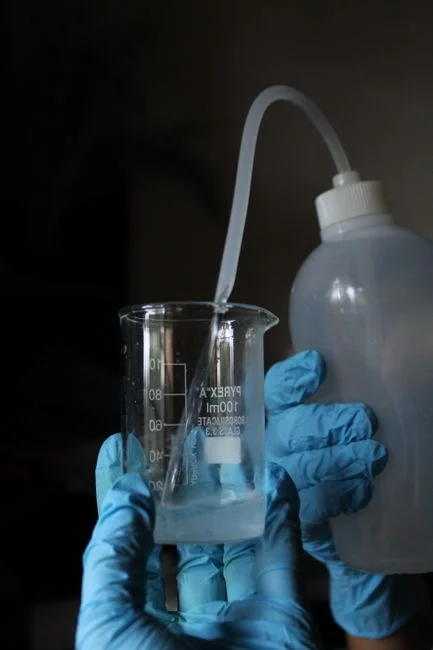
The framework below turns the four line items and the industrial-mix mapping into a defensible 2026 budget. It uses only inputs the operator can obtain from EMA, ZINWA and on-site measurement; no Zimbabwe fee figure is invented.
| Step | Action | Source of input | Output for the budget |
|---|---|---|---|
| 1. Request the published schedules | Ask EMA for the current effluent discharge permit fee schedule (including any tiered individual / general / estimation / limited term categories) and ZINWA for the per-m³ effluent tariff for the specific district (Lupane, Hwange, Binga, Nkayi, Tsholotsho, Umguza, Bubi) | EMA, ZINWA | Line items 1, 2 and 4 — permit fee, m³ rate, audit/sampling unit cost |
| 2. Measure or estimate the load | Composite-sample the influent for COD, BOD, TSS, FOG, total N, total P and pH; record average and peak daily flow in m³/d; add any sector-specific parameters (sulphates, heavy metals for mining; FOG and pathogens for abattoirs) | On-site sampling, accredited laboratory | Pollutant mass per day = concentration × flow, for each parameter |
| 3. Apply the schedules to the load | Multiply flow by the ZINWA m³ rate, multiply pollutant mass by the EMA strength surcharge rate for each parameter, add the annual permit fee and a conservative estimate of audit-driven sampling | EMA surcharge schedule, ZINWA tariff | Annual discharge-fee total |
| 4. Compare to pretreatment CAPEX | Price a screening + DAF + biological train (or an MBR if reuse is the goal) and compute the avoided surcharge per year; size the train so the lifecycle cost is minimised | Equipment vendor quotations | CAPEX-versus-fee payback in years |
The order matters. Step 1 must come before step 3, because the entire calculation depends on whether EMA uses tiered permit categories (as EBMUD does) and whether ZINWA's m³ rate varies by district or by customer class. Step 2 is the only step the operator fully controls; without a representative composite sample the strength surcharge will be guessed, and the guess almost always underestimates. Step 4 is the procurement decision: an MBR train that costs more in CAPEX than a screening + DAF train will be the right answer only if the avoided strength surcharge, sludge-haul cost and audit-risk premium, taken over the expected asset life, exceed the CAPEX premium.
Frequently Asked Questions
What is the actual 2026 industrial wastewater discharge fee in Matabeleland North?
No single published figure exists in the sources reviewed. The 2026 bill is the sum of four line items — an EMA effluent discharge permit fee, a ZINWA volume charge, a strength surcharge tied to COD/BOD/TSS/FOG/nutrients/pH/heavy metals, and a sampling-and-audit fee. To produce a defensible number, request the current EMA permit schedule and the ZINWA district tariff in writing, then apply them to your measured or estimated flow and pollutant load; do not rely on a quoted headline figure.
How much should I budget for the strength surcharge component?
Without an EMA-published surcharge rate, the surcharge cannot be quoted as a number. The budget input you must request is the per-kilogram or per-mg/L rate EMA applies to each parameter (COD, BOD, TSS, FOG, total N, total P, pH excursion, and sector-specific metals for mining clients). Once you have those rates, multiply them by the pollutant mass in kilograms per day from your composite sample to obtain the annual surcharge. The surcharge is the line item that responds most directly to pretreatment CAPEX, so it is the number the equipment-sizing decision should be benchmarked against.
How do I choose a pretreatment equipment supplier for a Matabeleland North site?
Choose a supplier who can quote the avoided-kilogram-per-year for each parameter (COD, BOD, TSS, FOG) on the proposed equipment train, not just the CAPEX. Request a written guarantee on the effluent quality the train will deliver at your measured peak flow, a list of Zimbabwe or SADC reference installations in the same sub-sector (mining, abattoir, agro-processing, tourism), the lead time for delivery to the site, and the local service footprint for membrane or mechanical spares. A supplier that can only quote a CAPEX number without a corresponding effluent-quality performance curve is not equipped to support the CAPEX-versus-fee trade-off this procurement decision depends on.
What is the compliance risk if my discharge exceeds the EMA limits?
Exceedance triggers the sampling-and-audit line item to escalate, because EMA can move a non-compliant site to increased monitoring frequency, require a special investigation, or revoke the discharge permit. The EBMUD Schedule C framework (effective 7/1/2026) treats permit reissuance as a paid event rather than an automatic renewal, and a comparable Zimbabwe enforcement pathway can put the operator into a re-permitting cycle that materially raises the annual cost. The compliance-risk input to request from EMA is the published enforcement and re-permitting pathway for the current fiscal year, plus any pending amendments to the effluent quality standards; both determine the size of the audit-risk premium the pretreatment train must be designed to avoid.
