
Why PFAS Treatment Is a 2026 Procurement Decision, Not a 2030 Problem
PFAS contamination is no longer a future compliance horizon. A U.S. surface-water study reported by Environment America Research & Policy Center in October 2026 found PFAS in 83% of river and lake tests, a data point that is already shaping how state regulators and industrial dischargers are writing the next round of NPDES permits. The ITRC PFAS Treatment Technologies document notes that, in the United States, regulatory standards for PFAS treatment are primarily driven by drinking water mitigation and focused on a small subset of PFAS, a scope that explicitly leaves the long tail of chemistries unregulated even though thousands of PFAS structures exist.
The practical consequence for an industrial buyer in 2026 is that the treatment train you specify this year will need to absorb tighter limits, more compounds, and more aggressive destruction requirements within the asset's service life. The rest of this article is a decision aid for that specification, not a technology showcase. It is built around the ITRC framework of field-implemented versus limited-application technologies, and it treats the destruction-versus-sequestration question as the first filter every vendor conversation should clear.
If you are scoping a pilot, sizing a full-scale train, or comparing vendor proposals right now, the U.S. report finding PFAS in 83% of river and lake tests is the regulatory backdrop buyers should anchor to in 2026.
The Seven Industrial PFAS Removal Methods Worth Comparing in 2026
Before any matrix or decision tree, the seven methods need a shared vocabulary. They fall into three families.
Separation methods: granular activated carbon (GAC), ion exchange (IX) resin, nanofiltration (NF), reverse osmosis (RO), and foam fractionation. These move PFAS from the aqueous phase onto a solid media, a membrane, or a foam phase without breaking the C–F bond.
Biological and bio-based methods: bioremediation, phytoremediation, vermiremediation, biodegradation, and bioadsorption. Karimi Douna and Yousefi (2023), in the Asian Pacific Journal of Environment and Cancer, describe these as one of the most cost-effective, eco-friendly, and simplest-to-operate options reviewed, while still acknowledging limitations and the need for combination treatment.
Destruction methods: thermal destruction of PFAS-laden sorbent and concentrate, including incineration and plasma routes. ITRC's treatment-technologies list references SERDP/ESTCP projects ER21-1185 (thermal decomposition of PFAS on GAC) and ER18-5015 (ion exchange paired with plasma destruction) as the active research portfolio.
These families are not equal in maturity. ITRC classifies technologies as field-implemented (demonstrated at intended scale, widely accepted) or limited-application (supported by a growing evidence base, but not yet a large body of consensus or peer-reviewed literature meeting field-implemented criteria). ITRC is explicit that field-implemented full-scale treatment of PFAS-impacted liquids or solids is currently limited to sequestration technologies that remove or bind PFAS but do not destroy them. Air stripping, soil vapor extraction, biosparging, biostimulation, and bioaugmentation are flagged as generally ineffective because PFAS resist volatilization and biodegradation.
How Each Method Actually Removes PFAS: Mechanisms at a Glance
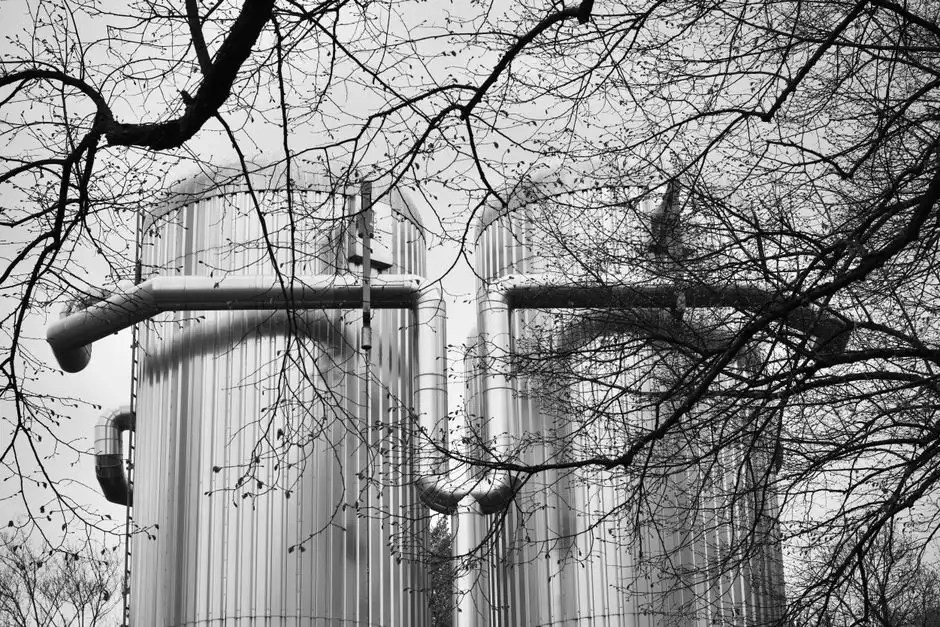
Each technology removes PFAS by a different physical or biological lever, and the lever determines what it will and will not catch in your influent.
GAC is a physical mass transfer process from the aqueous phase onto solid media, with no chemical degradation or transformation involved (ITRC). The carbon base matters: ITRC cites data showing bituminous coal-based GAC has been used for the majority of existing PFAS sorption systems and is more effective than lignite or coconut-shell alternatives for this duty.
Ion exchange combines adsorption and ion-exchange mechanisms, and is typically placed downstream of GAC in a series train to remove shorter-chain PFAS that pass through the carbon (ITRC). ITRC explicitly notes that GAC and IX can be used in series to optimize removal capacity and minimize O&M, with GAC ahead of IX to remove non-PFAS organics and longer-chain PFAS, and IX polishing the shorter chains.
Nanofiltration and reverse osmosis reject PFAS by size exclusion and solution-diffusion. ACS ES&T (2025) work on combining nanofiltration with adsorbents specifically targets the wastewater-effluent case where standalone NF can pass short-chain species.
Foam fractionation exploits the surface-active nature of PFAS: the compounds preferentially accumulate at the gas-liquid interface in cascade-generated foam. SSRN paper 5085094 (2025) documents continuous foam collection from wastewater-treatment-plant foam as a primary separation step.
Biological methods rely on bioaccumulation, enzymatic transformation, and rhizofiltration. Karimi Douna and Yousefi (2023) position these as low-cost and eco-friendly but flag that combinations with other techniques are more effective than any single biological route.
Thermal destruction applies high temperature to concentrated PFAS streams or spent sorbent. ITRC's caveat is that even thermal and chemical oxidation may not be completely effective, and multiple treatment technologies are typically needed to address a mixed PFAS stream.
Side-by-Side Comparison: GAC vs IX vs NF vs RO vs Foam vs Biological vs Thermal
This matrix is the artifact to carry into a vendor meeting. Each row is a separate technology, each column is a decision axis an engineer has to answer for.
| Method | Removal mechanism | Chain-length strength | Scale maturity (ITRC) | Waste form generated | Typical train position | Representative source |
|---|---|---|---|---|---|---|
| Granular activated carbon (GAC) | Physical sorption onto solid media; no chemical transformation | Strong on long-chain; weaker on short-chain | Field-implemented; 15+ years of use at 45+ military installations and several industrial/POTW sites | Spent carbon requiring reactivation or disposal | Front of train, often paired with polishing IX | ITRC Treatment Technologies (Section 12.2.1.1) |
| Ion exchange (IX) resin | Adsorption plus ion exchange | Stronger than GAC on shorter-chain PFAS when placed downstream | Field-implemented | Spent resin; brine regenerate stream | Polishing step downstream of GAC | ITRC Treatment Technologies |
| Nanofiltration (NF) | Size exclusion and solution-diffusion rejection | Broad-chain effective, but short-chain slip without combined treatment | Limited-application in PFAS-specific duty | Concentrate requiring downstream handling | Pre-concentration or final barrier | ACS ES&T (2025), DOI 10.1021/acs.est.5c17011 |
| Reverse osmosis (RO) | Size exclusion and solution-diffusion rejection | Broad-chain effective, including short-chain | Limited-application in PFAS-specific duty | Concentrate requiring downstream handling | Final barrier or pre-concentration to destruction | ITRC; ACS ES&T (2025) |
| Foam fractionation | Surface-active separation; PFAS concentrate at gas-liquid interface | Effective on foam-compatible PFAS structures; further research called for | Limited-application | Foam concentrate requiring downstream handling | Up-front on landfill leachate or WWTP foam streams | SSRN 5085094 (2025) |
| Biological methods (bioremediation, phytoremediation, vermiremediation, biodegradation, bioadsorption) | Bioaccumulation, enzymatic transformation, rhizofiltration | Variable; combination with other techniques recommended | Limited-application for PFAS liquids | Biomass and treated effluent; limited destruction confirmation | Often polishing or co-treatment; not standalone for high-concentration streams | Karimi Douna & Yousefi (2023), APJEC |
| Thermal destruction | High-temperature breakdown of PFAS in concentrate or spent sorbent | Effective on concentrate and spent media; not guaranteed complete on mixed streams | Limited-application; combination treatment often required | Stack gases, ash, condensate requiring further handling | End of train, after concentration or sorption | ITRC; SERDP ER21-1185, ER18-5015 |
Matching the Method to Your Wastewater Stream
Translating the matrix into a selection rule: start with the influent profile, then layer in the discharge limit and the destruction requirement.
Long-chain dominated influent, high flow, existing carbon contactors: GAC alone or GAC plus polishing IX is the lowest-risk 2026 choice. ITRC documents bituminous-coal-based GAC as the majority of existing PFAS sorption installations, with a track record of 15+ years across military, industrial, and POTW sites. This is the option you can defend in a permit review.
Short-chain or mixed-chain PFAS, drinking-water or finished-water polishing duty: Put IX downstream of GAC. ITRC is explicit that IX handles shorter-chain PFAS better when placed second in a series, and that the GAC front end also strips non-PFAS organics that would otherwise load the resin.
Landfill leachate or wastewater-treatment-plant foam: Foam fractionation is an emerging limited-application option per SSRN 5085094 (2025), but ITRC's landfill-leachate discussion calls for further research to develop and demonstrate cost-effective field-scale treatments before broad deployment. Treat foam as a pre-concentration step, not a complete solution.
Industrial wastewater that generates concentrate or spent sorbent: Pair thermal destruction with an up-front concentration step (RO or GAC), while recognizing ITRC's caveat that thermal and chemical oxidation may not be completely effective and that combination treatment may be needed. Plan for a destruction efficiency confirmation protocol at pilot scale, not just an effluent number.
Industrial streams where vendors push biology as a standalone: Ask for peer-reviewed PFAS-specific performance data, because Karimi Douna and Yousefi (2023) frame biological methods as cost-effective but with acknowledged limitations, and the same review recommends combinations over single-method deployment.
The Destruction vs Sequestration Question Every Buyer Should Ask First
The most common 2026 procurement mistake is buying a sorption system and assuming the PFAS are gone. ITRC states plainly that field-implemented full-scale treatment of PFAS-impacted liquids or solids is currently limited to sequestration technologies that remove or bind PFAS but do not destroy them.
GAC and IX are sequestration: the PFAS still exist, now concentrated on the media. The true environmental load is determined by what happens to the spent media — reactivation, landfill disposal, or downstream destruction. Foam fractionation produces a foam concentrate that still requires downstream handling, so buyers should price the full train, not just the front end. Biological methods reviewed by Karimi Douna and Yousefi (2023) are positioned as eco-friendly, but the same review acknowledges limitations and recommends combination techniques.
Thermal destruction on concentrate or spent sorbent is the most common route to actually break the C–F bond, and the SERDP project list (ER21-1185, ER21-1191, ER22-3415) reflects active research into thermal decomposition of PFAS-laden GAC and ion-exchange media. The honest answer in 2026 is that destruction is real for concentrated streams but not yet a guaranteed complete solution across mixed PFAS, and ITRC's combination-treatment guidance is the conservative position to write into a procurement spec.
Frequently Asked Questions
Which PFAS treatment method is the most cost-effective for an industrial buyer in 2026?
ITRC does not publish a generic cost figure, and the supplied research contains no per-cubic-meter pricing for any of the seven methods. The most defensible position in 2026 is to request vendor cost data on a normalized basis (capital plus five-year O&M per cubic meter treated) and to ask each bidder to separate the cost of sequestration from the cost of any downstream destruction step, because ITRC explicitly distinguishes between technologies that remove or bind PFAS and technologies that actually destroy them.
How should a buyer select a PFAS removal supplier or vendor for a 2026 pilot?
Use the ITRC field-implemented versus limited-application classification as the first filter. For any technology the vendor proposes, ask for the peer-reviewed PFAS-specific data, the demonstrated scale, and the waste form the vendor is taking responsibility for. For example, if the proposal is a GAC-plus-IX series, ITRC documents bituminous-coal-based GAC as the dominant existing media and defines the GAC-then-IX series as the consensus arrangement. If the proposal is foam fractionation, the SSRN 5085094 (2025) and ACS ES&T landfill-leachate pilot work shows the technology is still limited-application, and ITRC explicitly calls for further research before broad field deployment. A vendor that cannot anchor its claims to either ITRC or a named peer-reviewed source is not yet a 2026 procurement-grade option.
Can biological methods stand alone for PFAS removal from industrial wastewater?
The supplied research does not support a standalone biological answer for high-concentration industrial streams. Karimi Douna and Yousefi (2023) describe biological methods as cost-effective and eco-friendly, but the same review notes limitations and explicitly recommends combinations of techniques rather than single-method deployment. ITRC also flags that bioremediation approaches such as biosparging, biostimulation, and bioaugmentation are generally ineffective for PFAS because the compounds resist biodegradation.
What size or capacity should a 2026 PFAS pilot cover before scaling up?
None of the supplied sources publishes a generic pilot-sizing rule. The inputs a buyer must request from the vendor are the target influent flow, the target influent PFAS concentration and chain-length profile, the discharge limit, and the proposed waste-handling path for spent media or concentrate. Without those four numbers, no defensible pilot capacity can be specified; the ITRC framework provides the maturity classification, but the sizing is site-specific.
Related Equipment
- ZLD plant process, technologies & 2026 buyer's guide — specifications, capacity range, and technical data