

What a Containerized MBR Actually Is — and What It Replaces
A membrane bioreactor (MBR) combines activated-sludge biology with submerged ultrafiltration (UF) in a single tank, eliminating the separate secondary clarifier required by a conventional activated-sludge (CAS) plant. According to MENA-Water and the parallel HUBER description, the UF stage retains activated-sludge flocs and fine solids on a polymer membrane with pores in the 2–100 nm range; MENA-Water states this filtration reduces virus and bacteria by 99.9999%, a quality step that CAS cannot match without tertiary polishing.
"Containerized" means the entire plant — bioreactor, membrane cassette, blowers, pumps, and control panel — ships inside a standard 20' or 40' high-cube (HC) ISO container, per Pure Aqua's MBR-C specification. Pure Aqua's MBR-C is built around submerged hollow-fiber PVDF UF modules with a nominal 0.04 µm pore, fed through a 1.5 mm drum screen, with an operating temperature range of 20–30 °C and a 20 °C design point. MENA-Water indicates that factory pre-assembly enables plug-and-play site installation and that the membrane needs only one or two chemical cleanings per year, so routine membrane maintenance does not justify oversizing the membrane area.
Step 1 — Build the Flow Balance: Population, Per-Capita Load, and Peak Factor
Sizing an MBR plant requires six inputs: population (or bed count), per-capita wastewater production, peaking factor, influent BOD/COD load, required effluent quality, and minimum winter temperature. These parameters determine the design flow in m³/day, while the final three variables size the biological and membrane train and dictate whether the container can operate through a Bucharest winter.
For per-capita flow, the Pure Aqua MBR-C sizing table uses 50 US gallons per capita per day (gpd/capita) as the reference. Using the IDA Handbook 2019 conversion (1 m³ = 264.2 US gallons), 50 gpd/capita equals about 0.189 m³/capita/day, or roughly 190 L/capita/day. Romanian practice typically falls in the 130–200 L/capita/day range, so the per-capita figure used on a permit submission should be the one stated by the project designer of record, not a generic 190 L default. The population itself behaves very differently between a permanent residential block and a construction or seasonal camp, a distinction treated in Step 3.
Average daily flow is converted to design flow using a peak factor. For residential networks in Central Europe, the peak factor is typically 2.0–2.5× the average daily flow; this peak—not the average—sizes the inlet screen, equalization volume, transfer pumps, and the membrane train's hydraulic capacity. A unit-conversion check is necessary when suppliers quote in US gallons: 1 m³ = 264.2 US gallons and 1 MGD = 3,785 m³/day (IDA Handbook 2019), so a quoted 0.20 MGD plant is about 757 m³/day, not 200 m³/day.
| Input | Reference value | Source | What to confirm with the project |
|---|---|---|---|
| Per-capita flow | 50 gpd/capita ≈ 0.189 m³/c·d (≈190 L/c·d) | Pure Aqua MBR-C table; IDA Handbook 2019 conversion | Designer-of-record figure (130–200 L/c·d band in Romanian practice) |
| Population / beds | Project-specific | — | Residential: registered occupants; Camp: design bed count, plus seasonal swing |
| Peak factor (residential) | 2.0–2.5× average daily flow | Central European sewer-design norm | Confirm with Apa Nova or Ilfov authority for the connection point |
| Influent BOD load | Drives aeration tank sizing | Pure Aqua MBR-C reference data | Request measured BOD/COD/TKN from the designer |
| Effluent target | Romanian NTPA-002 limits | Romanian transposition of EU UWWTD 91/271/EEC | Confirm exact parameter list with the issuing authority |
| Minimum winter temperature | 20 °C design (Pure Aqua MBR-C) | Pure Aqua MBR-C specification | Confirm coldest-month sewer temperature at the site |
Step 2 — Map Flow Onto a Container: 20' HC vs 40' HC Capacity Bands
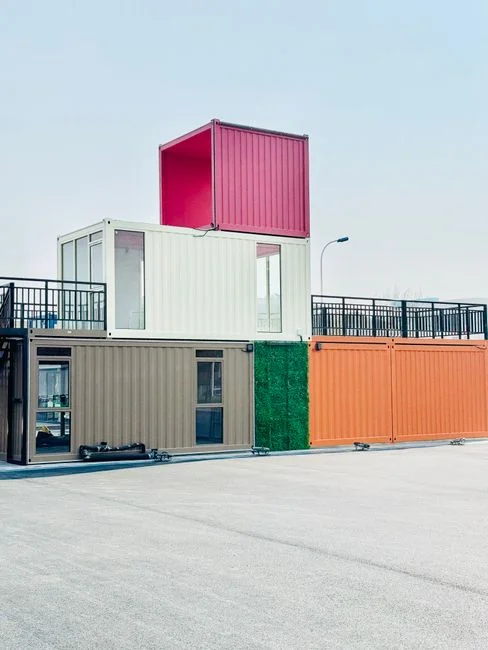
Design flow in m³/day determines the specific ISO container configuration required for the purchase order. MENA-Water states that a single 40-foot ISO container can filter up to 1,200 m³/day, and Pure Aqua's MBR-C is offered in both 20' HC and 40' HC formats. For small Bucharest projects—a residential block or a worker camp below 50 m³/day—the 20' HC is the typical default; above that, the 40' HC carries the load up to roughly 1,200 m³/day. When the calculated flow exceeds 1,200 m³/day, plan a multi-container battery rather than expecting a single unit to absorb the surplus; a containerized MBR system in this class is paralleled, not oversized.
Containerization also drives site logistics. Both 20' and 40' HC units are road-transportable into Bucharest on standard low-loaders, but the heavier 40' HC requires verified crane or forklift access at the pad, plus headroom for a Hiab lift. Membrane area and module count should be confirmed in writing, as the container box size does not guarantee that the supplier has packed enough membrane surface for the design flow. For flows near the upper end of the band, ask the supplier for the net membrane area (m²) and the design flux (L/m²·h) to verify the rating independently rather than trusting a nameplate figure. Step 1's flow number, not the container footprint, remains the binding constraint.
| Design flow (m³/day) | Typical container | Notes |
|---|---|---|
| Up to ~50 | 20' HC | Common default for small residential blocks and compact camps; confirm module count, not just box size |
| ~50 to ~1,200 | 40' HC | MENA-Water's stated 1,200 m³/day per 40' ISO container; verify net membrane area and flux |
| Above ~1,200 | Multiple 40' HC units in parallel | Plan a multi-container battery; ask supplier for skid interconnection details |
Step 3 — Residential vs. Camp: Different Loading, Different Sizing Logic
Residential blocks and construction camps require different sizing logic despite having similar headcounts and hydraulic loads. Residential blocks generate a fairly continuous 24-hour flow with predictable per-capita load and modest diurnal peaking, so a 2.0× peak factor is usually adequate and BOD/COD loads track the per-capita reference directly.
Construction, refugee, and seasonal-worker camps fluctuate significantly. Occupancy can swing from near zero in the off-season to 100% during peak phases, and on-site kitchen and shower blocks push BOD and FOG (fats, oils, grease) per capita above the residential 190 L/c·d figure. The peak-to-average ratio also exceeds residential norms because shift changes, meal times, and laundry blocks hit the plant at the same hour; equalization volume must be sized from the camp's actual shift pattern. If the camp has a kitchen, the front end typically needs a grease-removal step ahead of the MBR container; a pre-treatment DAF for high-FOG camps drops the FOG load to a level the bioreactor can absorb without fouling the membrane.
The decision point is straightforward: if the project involves food preparation, do not accept a quote for a bare MBR container—specify the upstream FOG stage or plan a maintenance cycle that assumes it. For guidance on the membrane-side choice, the MBR vs MBBR cost comparison article details how the suspended-growth vs. attached-growth decision plays out for camp-style variable loads.
Step 4 — Bucharest-Specific Compliance and Winter Design Checks
Discharge route and local environmental standards determine whether a containerized MBR is suitable for a Bucharest project. A project in Bucharest or Ilfov either connects to the Apa Nova sewer (centralized) or self-treats and discharges to a local receiver under a permit from the Ilfov county authority. The trigger is typically a combination of design flow, distance to the sewer, and site constraints; confirm with Apa Nova or the relevant Ilfov authority which route applies, as below the connection threshold, a containerized MBR with reuse-grade effluent is a practical option.
Effluent limits for self-treatment projects typically follow Romanian NTPA-002, which transposes the EU Urban Waste Water Treatment Directive (91/271/EEC). The MBR's UF stage — 0.04 µm PVDF per Pure Aqua's MBR-C — provides the headroom to meet BOD, COD, and TSS, but total nitrogen requires an anoxic zone upstream of the aeration tank for denitrification; ensure this zone remains in the supplier's scope.
Winter temperatures are a critical design factor. Pure Aqua rates the MBR-C for an operating range of 20–30 °C with a 20 °C design point; Bucharest sewer temperatures in January often sit at or below that band. As biological activity slows with temperature, the supplier must confirm that the rated nitrification rate is met at the expected winter sewer temperature, or that a heated/insulated enclosure is included. The permit submittal should cover: influent characterization, peak flow, BOD/COD/TSS/N influent against NTPA-002 limits, sludge handling, noise and odor, and the commissioning protocol. For an EU-frame compliance view, the EU-compliant wastewater treatment specifications guide shows the same NTPA-style envelope applied elsewhere in the Union.
Frequently Asked Questions
How much does a containerized MBR STP cost for a Bucharest residential block or camp?
No published price list exists for containerized MBR STPs in Romania, and Bucharest-specific CAPEX figures are not available in the cited sources. Request a written quotation that itemizes the 20' HC or 40' HC container, membrane area (m²), module count, anoxic zone, pre-screen, blower/pump redundancy, and any winterization package. Compare at least three suppliers on these specific line items before signing.
What should I check when selecting a containerized MBR supplier for a Bucharest permit?
Verify that the supplier can document net membrane area (m²), design flux (L/m²·h), and PVDF hollow-fiber specifications, rather than just container-size claims. Ensure the MBR is rated to deliver the NTPA-002 effluent envelope at the project's actual winter sewer temperature, with a written nitrification-rate statement. Finally, verify the scope includes the upstream drum screen (1.5 mm perforation), an anoxic zone for denitrification, standby pumps, and remote monitoring.
Does a residential block and a 200-bed camp need the same sized MBR container?
No. A 200-bed camp with an on-site kitchen typically generates higher BOD and FOG per capita than a 200-resident block, and the peak-to-average ratio is more severe due to synchronized shift changes and meal times. While hydraulic capacity may appear similar, equalization volume, the upstream FOG stage, and the biological load rating must be re-evaluated for a camp. If the camp includes food service, the front end requires a grease-removal step ahead of the MBR container.
Is a containerized MBR with submerged PVDF UF enough to meet Romanian NTPA-002 on its own?
The 0.04 µm PVDF UF stage delivers the solids and microbial removal required by NTPA-002, but total nitrogen is a separate biological process. Pure Aqua's MBR-C includes an anoxic zone for denitrification, which must remain