
Why a Food Plant Cannot Run Without Engineered Dust Extraction
Three failure modes follow a poorly designed dust system in any food or beverage plant: employee respiratory exposure, product contamination, and a combustible dust incident (Camfil, Food & Beverage Dust Extraction Systems). Handled ingredients span coarse grains, fine spices, additives, flour, starch, sugar, cocoa, and flavourings, each with a different dust characteristic that drives filter media and explosion-protection choices. When no legal exposure limit applies to a particular material, the operator must define, implement and measure its own written environmental safety plan, per the same Camfil guidance. Local HSE regulations vary, and the employer carries the duty to remain current and compliant to protect operators, product and the environment — a position that frames every downstream design choice.
Health exposure is a slow-failure mode that shows up on the occupational hygiene report; contamination is a fast-failure mode that shows up in the recall ledger; the combustible incident is the catastrophic mode that ends the operating licence. The three are not independent; capture geometry that protects operator breathing is the same geometry that keeps dust out of the product stream and out of the explosion envelope. For specifiers facing an internal procurement review, the consequence is that dust collection sits on the same risk register as a CIP skid or a metal detector, not on the facilities capex list.
Map Dust Sources to the Food Production Process
The dust-generating applications the manufacturer guidance explicitly lists are silo-venting, bulk handling, sack-tipping, weighing, mixing, blending, granulating, conveying, and packaging (Camfil). Each step releases a different dust characteristic at a different rate, and the same blanket "general ventilation" approach fails them all differently. The recommendation in the same source is to evaluate the properties of the processed material before specifying, because dust characteristic drives both filter media and explosion protection. Where data is incomplete at the time of specification, the source advises performing both a dust hazard analysis and a dust explosion / flammability test.
Walk the line with a clipboard before sizing anything. At each of the steps above, record the unit operation, the material, the release mechanism (fugitive from a transfer, displacement during a sack slit, entrainment from a conveyor boot), and whether the operation is batch or continuous. Use the step as the capture point rather than relying on general room ventilation; capture directly at the source through properly designed hoods is the primary design step called out in the source guidance. A sack-tipping station that looks minor at room level is often the dominant dust source on the line.
Capture-at-Source Design: Hood, Duct, Air Volume
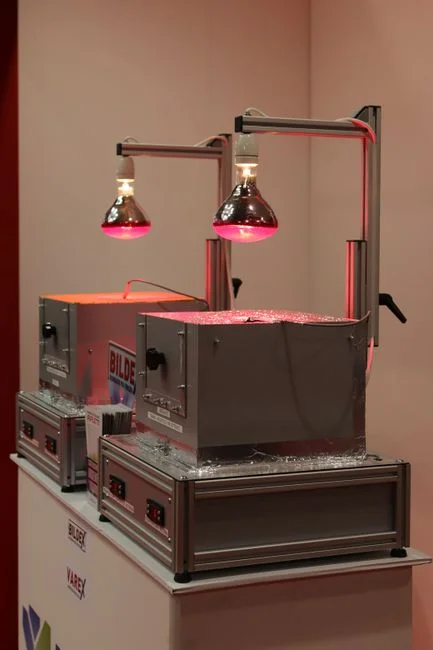
The architecture to design toward is hood → ductwork → dust collector with pulse-cleaned filter elements → hopper → fan → optional HEPA stage → return-to-production or exhaust (Camfil). Up front, the same source lists the inputs that must be quantified before any sizing is meaningful: capture point, type of dust, temperature, air volume, combustion or explosion risks, operating hours, and filter media. Skip any of these and the resulting collector will be either over-sized (capex waste) or under-sized (emission failure).
Capture velocity at the hood and transport velocity in the duct are functions of the bulk density and explosibility of the material; if those values are not available from the supplier, request them before sizing. As a qualitative rule from the same source, the capture solution should extract dust directly at the source rather than chase it through the workroom, and this single decision drives the rest of the system. A specification that lists "ambient" capture is not a specification; it is an invitation to redesign after the FAT.
Collector Selection: When to Use Pulse-Cleaned Filtration
Air filtration and dust extraction depend on concentration and the properties of the dust (Camfil). The rule of thumb in the same source is: if the concentration is at or above 0.05 mg/m³, a dust collection system with pulse-cleaned filter elements will probably be the best option to handle the process dust, providing a reasonable filter life. Below that threshold, an air-filtration-only approach can be defensible; above it, the dust loading will blind a passive filter fast enough to defeat the design.
Pulse-cleaned systems use a pulse of compressed air to clean the elements; the dust is then discharged downward into a hopper for contained removal (Camfil). Add a HEPA after-stage when product-protection or local ambient air quality requires it; cleaned air can then be returned to the production area. The same source flags filter media as one of the explicit selection inputs, so do not let the supplier substitute media silently; the bag finish (PTFE membrane, antistatic, food-grade) is part of the compliance story, not a cost option.
Fire, Explosion and Hygiene Protection
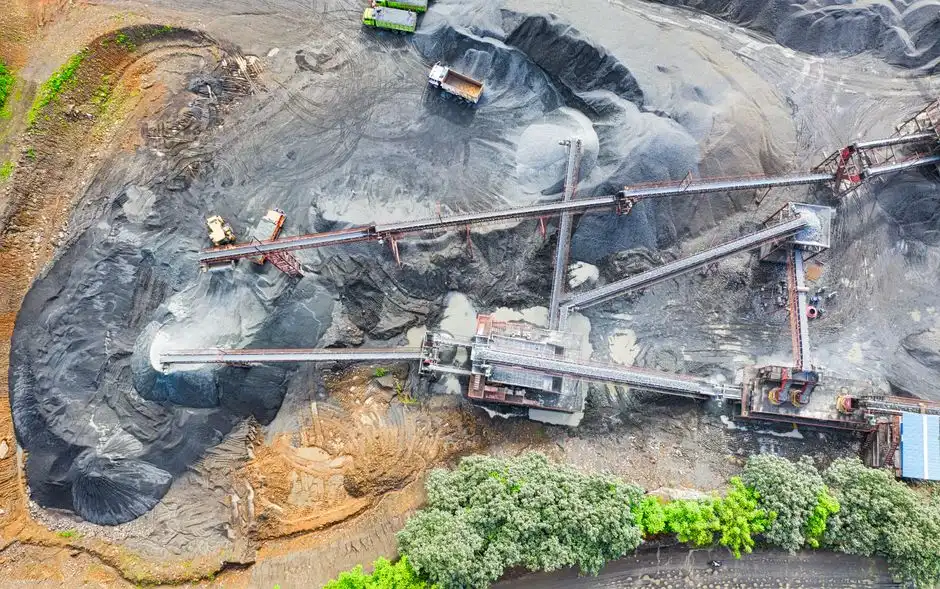
The ATEX directive requires the employer to carry out a risk assessment to determine the necessary fire and explosion protection measures for the dust collection system (Camfil). ATEX safety systems require regular inspection and service to function reliably, which is a compliance duty. The same source states that all dust collection systems should be inspected annually by a qualified service engineer, and that at least a basic level of training should be provided for all users so they understand the purpose of the explosion-protection systems, the remaining risks, when to renew the risk assessment after process changes, and what to do in an emergency.
Build the protection stack as separate legs: good basic design, explosion protection on the collector (relief, isolation, suppression as the dust hazard analysis dictates), capture-at-source geometry, and trained operators. Any one leg missing turns the others into paperwork. ATEX is the European framework, but the principle of a written risk assessment, periodic inspection, and trained operators is the same shape as OSHA's combustible-dust National Emphasis Program and NFPA 61 / NFPA 652 expectations; name the local citation in the spec, not the generic principle.
Specification Parameters to Put on the RFQ
Before requesting a quotation, the buyer must have the following inputs quantified. Each line below corresponds to a field the supplier needs to return with a value, not a range, so the specifier can defend the choice in audit.
| Parameter | What to put on the RFQ | Why it matters |
|---|---|---|
| Capture point | Unit operation and geometry (e.g. sack-tipping hood, weigh-scaler enclosure, conveyor boot) | Drives hood design and duct take-off |
| Dust type | Material name, bulk density, particle size, hygroscopic tendency | Drives filter media and cleaning method |
| Air stream temperature | Operating and maximum temperature (°C) | Drives filter media and fan / duct specification |
| Design air volume | m³/h per capture point, with margin | Drives collector sizing and fan power |
| Combustion / explosion risk | Material class, Kst if available, dust cloud explosibility from supplier SDS | Drives ATEX-rated protection on the collector |
| Operating hours | Hours per day and per year | Drives compressed-air pulse consumption and filter-life budget |
| Filter media | Finish, antistatic, food-grade certification, cleaning method (pulse-cleaned compressed air) | Drives emission performance and product safety |
| Final emission level | mg/m³ at the stack or in the return-air plenum | Defines HEPA after-stage requirement |
| Inspection / service plan | Annual inspection by a qualified service engineer per Camfil guidance | Compliance duty under ATEX |
Push back on any quotation that does not return a value against each row. A proposal that returns only model numbers and a price has not yet been sized to your line; it has been priced to a catalogue.
Decision Framework: Matching Dust Type to Collector Family

Use the dust characteristic, not the brand list, to pick the collector family. Stickier or hygroscopic powders — sugar, cocoa, some spice blends — generally point to a pulse-cleaned fabric filter with the right media, not a basic cartridge unit, because the cake has to be released cleanly on each pulse. Very fine, low-bulk-density flours and starches raise the combustible-dust risk class and almost always require ATEX-rated explosion protection on the collector. Aseptic or allergen-controlled lines usually require the optional HEPA after-stage so cleaned air can return to the room. Where the line runs a heavy, dry dust load, a HydropureWater pulse-jet baghouse dust collector sized against the table above is the right reference design; where the air stream carries acid or thermal-load gases, a HydropureWater FGD scrubber system can sit downstream of the filter for gas-phase polishing.
If the food plant also sends organic residue to a municipal WRRF for co-digestion, the EPA notes that co-digestion facilities discharge material to the beginning of the wastewater treatment system and recirculate through the digester (US EPA, Anaerobic Digestion Facilities Processing Food Waste in the U.S., 2020 & 2021). Keep dust-collection hoppers and floor wash-down segregated from the wastewater stream in the plant layout; material that enters the process drain ends up at the head of the treatment plant, not at the dust collector. For pretreatment-limit context, see How Food & Bev Plants Near Grannis, AR Meet 2026 Pretreatment Limits and How Food & Bev Plants Near Springfield, US Meet 2026 Pretreatment Limits.
Frequently Asked Questions
What budget range should a plant engineer plan for a food-grade dust collection system?
No public source provides a defensible price band for a complete food-grade dust collection system sized to a specific line, so the budget question must be answered against a real specification. Send the parameter table from the section above to two or three qualified suppliers and request itemised pricing per capture point plus collector, ductwork, fan, HEPA after-stage, and ATEX protection. A quote that is not itemised against those rows is not yet comparable.
How do I select a dust collector supplier that will pass an ATEX or NFPA audit?
Ask for evidence that the supplier has delivered a system on a comparable ATEX-classified dust in the last 24 months, that the explosion-protection package is documented as a complete leg (relief, isolation, suppression, or inerting as the dust hazard analysis dictates), and that annual inspection by a qualified service engineer is part of the contract, per Camfil's stated duty that "all dust collection systems should be inspected annually by a qualified service engineer." A supplier that cannot produce those three items is a documentation risk, regardless of equipment quality.
What capture velocity and transport velocity should I specify in the duct?
Camfil states that capture velocity at the hood and transport velocity in the duct are functions of the bulk density and explosibility of the material, and directs the buyer to obtain those values from the material supplier. A defensible specification lists the function (the velocities are derived from material properties) and the input data, rather than picking a single number that may not match the dust being conveyed.
When is a HEPA after-filter required on a food-line dust collector?
Camfil lists a HEPA after-stage as an option that is added when product-protection or local ambient air quality requires cleaned air to be returned to the production area. The decision rule is not "always" but "when the return-air path enters a food-contact zone, an allergen-controlled room, or a space governed by an ambient air quality limit"; in each of those cases the HEPA stage is what allows the cleaned air to be reclassified as room supply.