
Why Rural UAE Sites Cannot Rely on Municipal Sewers
Most UAE farms, labour camps, oil and gas field camps, and remote villa estates sit outside the municipal sewer network, so sewage is normally handled by road tanker — an arrangement that is coming under sustained pressure. The Dubai School of Government reported in 2011 that UAE per-capita water use is 550 L/person/day against a 250 L global average, with villas that have gardens reaching 1,700 L/person/day, and the Statistics Centre – Abu Dhabi recorded a 69.6% rise in wastewater fed into treatment plants between 2005 and 2011, reaching 1,356.05 MCM in 2011.
The Masdar Institute projected Abu Dhabi water demand would grow a further 43% between 2011 and 2016, yet treated wastewater still met under 10% of Abu Dhabi city's water demand in 2012, with desalinated water at 79% and groundwater at 12% (eco-business, 2014). With the UN classifying the UAE as water-stressed, regulators increasingly expect every major sewage source — including remote ones — to contribute reuse-grade effluent rather than rely on tanker haulage and discharge. The eco-business feature also describes the operational reality of truck dependence: "the long queues of sewage disposal trucks that we currently see along some of Dubai's roads" (Union Biotal, via eco-business, 2014). On top of that, wastewater-based epidemiology is now established in the UAE — a peer-reviewed paper documents the first confirmed detection of SARS-CoV-2 in untreated municipal and aircraft wastewater in Dubai (Food and Environmental Virology scoping review), signalling that oversight of any sewage stream, not just municipal catchments, is tightening.
What Counts as a Decentralized Rural Sewage Plant in the UAE
A decentralized wastewater system treats sewage from homes and businesses near the source where it is generated, rather than collecting and transporting it to a centralized plant; the US EPA framework defines a small community as 10,000 or fewer people with an average daily wastewater flow of less than 1 million gallons (~3,785 m³/day) and notes that decentralized systems can include individual septic systems, cluster systems, or advanced treatment packages (epa.gov). In the UAE, the practical supply line runs from 2 m³/day units sized for a four-to-six-person household up to 2,000 m³/day installations, with the largest documented UAE project consisting of four 500 m³/day blocks (Union Biotal/Biototal, via eco-business, 2014). Buried permanent installation, skid-mounted permanent installation, and trailer-mounted mobile deployment are the three operating models, and selection depends on site lease term, soil and groundwater table, and whether the effluent is destined for discharge or landscape irrigation. A buried A/O package unit such as a HydropureWater buried A/O package sewage treatment plant in the WSZ series combines anoxic/aerobic biological contact oxidation with sedimentation and disinfection in a single buried package, fully automated with no operator required, and is rated 1–80 m³/h for residential communities, hotels, hospitals, factories, and rural areas (HydropureWater WSZ catalog). The US analogy is direct: "Nearly one in four households in the United States depends on an individual septic system or small community cluster system to treat its wastewater" (epa.gov) — the same on-site logic is what now drives rural UAE procurement.
Process Options for Rural Sites: Package A/O, MBR, Reed Bed, Septic+Polishing
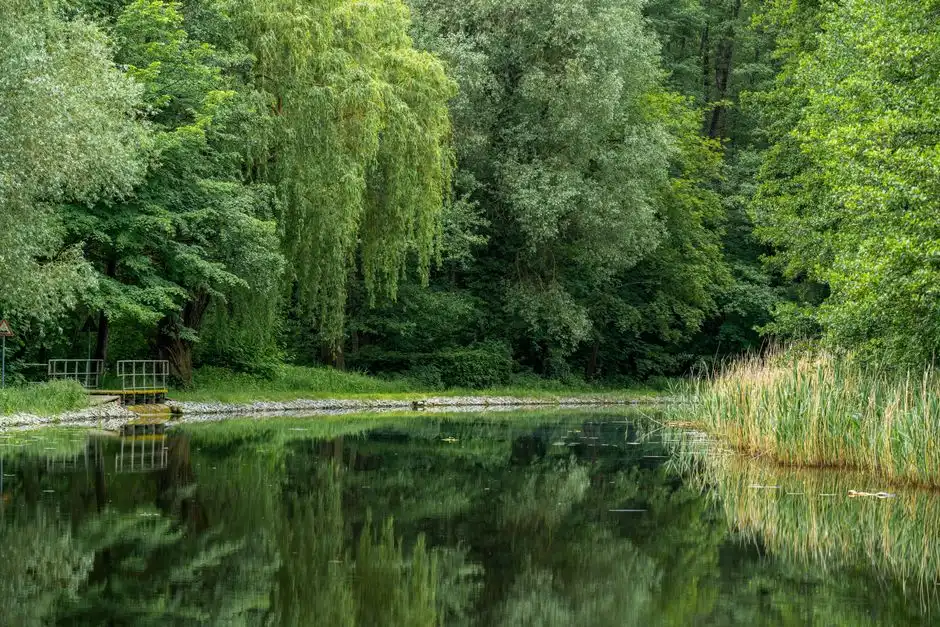
Four process families dominate rural UAE tenders, and they should be matched to site flow, reuse intent, land area, and energy budget rather than to whichever agent is local. A buried A/O package plant runs anoxic + aerobic contact oxidation + sedimentation + disinfection inside one unit at 1–80 m³/h, fully automated, and is suited to residential communities, hotels, hospitals, factories, and rural areas (HydropureWater WSZ catalog). A containerized membrane bioreactor (MBR) uses submerged PVDF membranes with sub-micron filtration to produce near-reuse effluent at roughly 60% smaller footprint than conventional activated sludge; the same supplier's containerized MBR with reuse-grade effluent targets sites where irrigation reuse is mandatory and land is constrained (HydropureWater MBR catalog). Reed beds are planted sand-and-gravel filters that use the oxygen transferred through wetland-plant root systems to biodegrade organics; the Waagner Biro Gulf reed-bed projects in Abu Dhabi are "all aiming to meet Abu Dhabi Sewage and Services Standards (ADSSC) and the first one has already achieved this," use locally produced media, and "use less energy" than conventional sludge trains that depend on decanting basins, press filters, centrifuges, and drying polymers (eco-business/Waagner Biro Gulf, 2014). Septic tank plus polishing remains the lowest-CAPEX route for flows under about 10 m³/day, but conventional processes "do not target" removal of micropollutants such as endocrine-disrupting compounds and pharmaceuticals, so a tertiary AOP or membrane polish is required to reach reuse grade (eco-business, 2014). On energy, conventional activated sludge and MBR are described in the same source as energy-intensive relative to reed beds and buried A/O packages; buyer note: a real CAPEX comparison requires a site-specific quote because containerization, civils, telemetry, and ADSSC commissioning can swing the installed cost materially.
| Process family | Typical flow band | Effluent quality vs ADSSC | Land take | Energy profile | Best-fit rural UAE use |
|---|---|---|---|---|---|
| Buried A/O package (WSZ-class) | 1–80 m³/h | Designed for ADSSC discharge; reuse with disinfection polish | Low — buried, landscaped over | Low–moderate (aeration) | Labour camps, villa compounds, hotels, hospitals, factories |
| Containerized MBR | ~10–500 m³/day per skid (project-dependent) | Near-reuse quality directly; meets strict irrigation | Very low — containerized | Higher (membranes + aeration) | Reuse-mandated sites with scarce land |
| Reed bed | Site-dependent, typically low m³/day per m² | Targets ADSSC; first Abu Dhabi bed already compliant | High — open basins | Low (no aeration blowers) | Land-rich sites prioritizing low OPEX |
| Septic + polishing | <10 m³/day typical | Limited without tertiary AOP/membrane; EDCs persist | Low | Low | Single small households; needs polish for reuse |
Sizing a Rural STP for a UAE Farm, Camp or Villa Compound
Size from people, not from a guessed flow number. The residential baseline is 550 L/cap/day and villa-with-garden use can reach 1,700 L/cap/day, so labour-camp and farm-worker housing sit at the residential baseline while villa compounds and resort staff housing trend higher (Dubai School of Government, via eco-business, 2014). Apply a hydraulic peak factor of 2.0–2.5× the daily average to size the pass-through, and a 1.2–1.5× factor on BOD loading to cover kitchen and laundry peaks. Worked example: a 100-person labour camp at 550 L/cap/day = 55 m³/day average, with peak ≈110–140 m³/day, which fits a single WSZ-class unit rated up to 80 m³/h (≈1,920 m³/day) with substantial buffer, or two parallel MBR skids sized to the average. Add a safety check on influent temperature — UAE ambient 25–45 °C is favourable for biological kinetics — and on grit and oil load if the site includes a kitchen, vehicle wash, or small workshop. A pre-treatment step such as a rotary mechanical bar screen upstream of the biological stage protects membranes and clarifiers from rag and grit carry-over, which is the most common cause of premature maintenance in rural UAE plants. Buyer note: where research does not provide a per-person loading number for a specific waste stream (e.g. an oil & gas camp versus a vegetable farm), request a quote based on a measured composite sample and a stated peak factor rather than accepting a generic sizing.
| Site type | Per-capita flow (L/cap/day) | Suggested peak factor (hydraulic) | BOD loading factor | Typical upstream protection |
|---|---|---|---|---|
| Labour camp (residential baseline) | 550 | 2.0–2.5 | 1.2–1.5 | Bar screen, grit chamber |
| Villa compound with gardens | Up to 1,700 | 2.0–2.5 | 1.2–1.5 | Bar screen, grease trap |
| Farm worker housing | 550 baseline | 2.0 | 1.2 | Bar screen; grit if vehicle wash present |
| Oil & gas field camp | Site-specific; request sample | 2.0–2.5 | 1.5+ (hydrocarbons) | Bar screen + DAF pre-treatment |
2026 Compliance: ADSSC, FED灌溉 Reuse, and Wastewater Surveillance

ADSSC Sewage and Services Standards remain the discharge benchmark that UAE rural projects are designed against — Waagner Biro Gulf confirms the Abu Dhabi reed-bed projects are "all aiming to meet Abu Dhabi Sewage and Services Standards (ADSSC) and the first one has already achieved this" (eco-business, 2014). Reuse for landscape or agricultural irrigation must satisfy federal reuse criteria administered through the relevant authority (FEDIA-equivalent oversight), with effluent required to be disinfected, low in E. coli, and within restricted BOD/TSS limits before it leaves the site. Because treated wastewater still meets under 10% of Abu Dhabi city's water demand (2012 baseline, eco-business, 2014), any rural site that produces reuse-grade effluent is directly contributing to national water security — a regulator-friendly argument when seeking a reuse permit. Wastewater-based epidemiology is now operational: the Food and Environmental Virology scoping review indexes a Dubai study reporting the first confirmed detection of SARS-CoV-2 in untreated municipal and aircraft wastewater, alongside 66 studies across 26 countries, with the percentage of SARS-CoV-2 positive samples ranging from 11.6 to 100% and concentrations up to 4.6 × 10⁸ genome copies/L (Food and Environmental Virology, 2021). The compliance read-across for 2026 is that any rural plant should plan for a sampling port and data logging from day one, and disinfection is non-negotiable — chemical-free UV disinfection and a chlorine dioxide generator are the two common terminal barriers. Buyer note: the research does not state a 2026 ADSSC numeric limit; request the current standard sheet from ADSSC and the federal reuse criteria before specifying BOD/TSS/E. coli targets.
Capital Cost, Payback and Operating Economics
The documented UAE benchmark, taken from Union Biotal/Biototal via eco-business (2014), is a 6–8 year payback for individuals on 2–10 m³/day package plants, and a 2–3 year payback for villa compounds and larger projects. Payback drivers are the avoided tanker disposal cost, avoided fines for non-compliant discharge, and the avoided-cost or revenue value of reused irrigation water that displaces desalinated supply — Dr Farrukh Ahmad of Masdar Institute notes that "recovering [usable non-potable] water from municipal wastewater will cost only a fraction of the costs for desalination" (eco-business, 2014). On OPEX, reed beds are cheaper to operate than conventional sludge trains because they avoid the polymers, decanting basins, press filters, and centrifuges that drive conventional sludge OPEX (eco-business/Waagner Biro Gulf, 2014). Buried A/O and MBR skid OPEX is dominated by power for aeration, blowers, and pumps, plus periodic membrane replacement; the HydropureWater MBR membrane bioreactor module is described in the supplier catalog as operating at 10–20× lower energy than external cross-flow designs. The research does not publish a CAPEX band in AED or USD, so any specific figure for a 50 m³/day or 200 m³/day plant must come from a site-specific quotation covering civils, containerization, telemetry, and ADSSC commissioning — that is the input a buyer should request rather than relying on a generic range. Buyer note: lifecycle cost analysis should be run over 10–15 years and include membrane replacement intervals, sludge handling, and the avoided tanker cost; the 2–3 year villa-compound payback is the headline number, but it is anchored in avoided disposal cost, not in equipment cost alone.
| Cost driver | Buried A/O package (WSZ-class) | Containerized MBR | Reed bed | Septic + polishing |
|---|---|---|---|---|
| CAPEX (relative) | Low–moderate | Moderate–high (membranes) | Low (civil basins) | Lowest |
| OPEX (relative) | Low–moderate (aeration power) | Higher (membranes + aeration) | Lowest (no blowers, no polymers) | Low (no reuse-grade polish) |
| Documented UAE payback (eco-business, 2014) | 2–3 yr (villa compound class) | 2–3 yr (villa compound class) | Site-specific — request quote | 6–8 yr (household 2–10 m³/day class) |
| Reuse-grade output | With disinfection polish | Direct, near-reuse | ADSSC-aimed; confirm with lab | Requires tertiary AOP/membrane |
| Sludge handling | Periodic desludge | Periodic desludge | Plant-aided dewatering, no polymers | Periodic pump-out |
How to Choose: A 2026 Decision Framework for Rural UAE
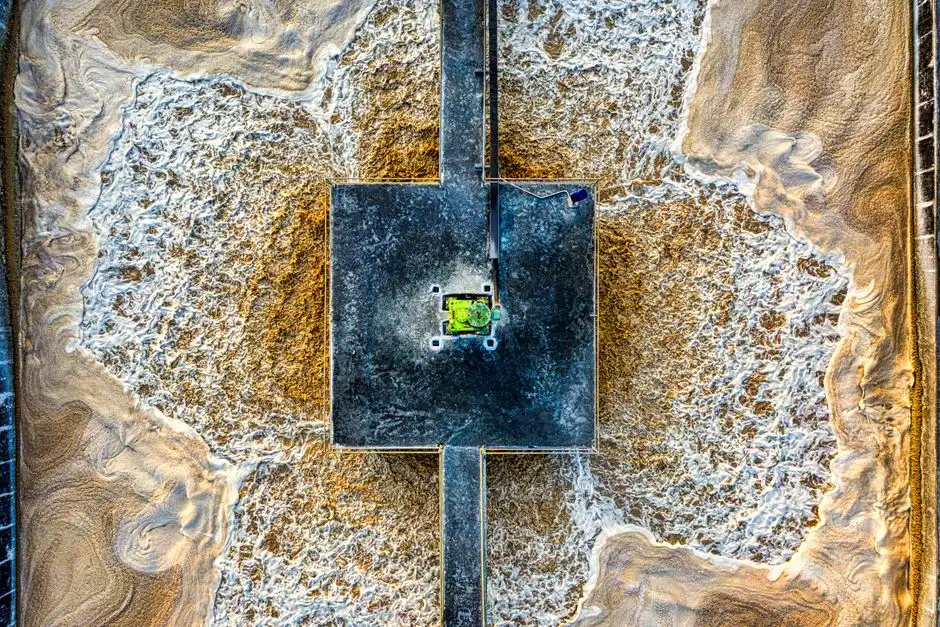
Use flow, reuse target, land, and waste type — not brand — as the decision inputs. If the design flow is below about 20 m³/day, there is no reuse mandate, and the budget is constrained, a septic tank with polishing or a small buried A/O package plant in the WSZ class is the rational choice. If the design flow is 20–200 m³/day, irrigation reuse is required, and land is scarce, a containerized MBR with reuse-grade effluent paired with UV or ClO₂ disinfection is the shortest path to compliance. If the design flow is above 200 m³/day, land is available, low OPEX is a priority, and the discharge target is ADSSC, a buried A/O package STP (WSZ-class) with reed-bed polishing combines the discharge compliance already demonstrated in Abu Dhabi (eco-business/Waagner Biro Gulf, 2014) with a small operational footprint. If the influent carries hydrocarbons, food oils, or heavy metals — typical of oil & gas field camps, workshops, and food-processing lines — add DAF pre-treatment for oil and grease upstream of the biological stage, and plan sludge handling around a plate-frame filter press to keep cake transportable. Every tender should require, as a minimum, ADSSC-aligned design, telemetry and data logging, a dedicated sampling port for wastewater surveillance, a documented O&M contract, and a quoted avoided-tanker saving so the CFO can see the payback in the same document as the CAPEX.
Frequently Asked Questions
What is the cheapest decentralized sewage treatment option for a remote UAE site under 10 m³/day?
A septic tank with a polishing stage is the lowest CAPEX option, and the documented UAE payback for 2–10 m³/day package plants is 6–8 years (Union Biotal/Biototal, via eco-business, 2014). For reuse-grade output, however, the buyer must add tertiary treatment because "conventional treatment processes, such as activated sludge treatment and membrane bioreactors, do not target" removal of endocrine-disrupting compounds and pharmaceuticals (eco-business, 2014).
How long does a package sewage treatment plant take to install at a rural UAE site, and what is the typical lead time?
The research does not publish a UAE installation lead time. The buyer should request, in writing, three inputs from the supplier: the engineering drawing turnaround, the container or skid fabrication period, and the ADSSC commissioning and sign-off window, because each of these drives the project programme and the avoided-tanker saving line in the payback model.
Can treated wastewater from a rural UAE STP legally be used for farm irrigation under 2026 rules?
Yes, provided the effluent satisfies ADSSC Sewage and Services Standards and the federal reuse criteria for the intended end use — the Abu Dhabi reed-bed projects are documented as "all aiming to meet Abu Dhabi Sewage and Services Standards (ADSSC)" with the first already compliant (eco-business/Waagner Biro Gulf, 2014). The buyer must request the current federal reuse criteria and confirm the disinfection barrier (UV, ClO₂, or AOP) is included in the design before committing to an irrigation reuse contract.
What is the realistic payback period for a villa-compound sewage treatment plant in the UAE?
For villa compounds and larger projects the documented UAE payback is 2–3 years; for individual 2–10 m³/day household plants it is 6–8 years (Union Biotal/Biototal, via eco-business, 2014). The payback rests on avoided tanker disposal cost, avoided fines, and the displaced cost of desalinated irrigation water — Dr Farrukh Ahmad of Masdar Institute states that "recovering [usable non-potable] water from municipal wastewater will cost only a fraction of the costs for desalination" (eco-business, 2014). The buyer should ask the supplier to model the avoided-tanker volume in m³/year and the displaced desalinated water value so the CFO sees the same numbers that anchor the published payback.