
Why Scrubber Efficiency Drops After Commissioning
A scrubber that passes its acceptance test can lose 10-30% of nameplate removal efficiency within months because the liquid side, rather than the gas side, becomes compromised. The clearest documented case is the "reverse phenomenon" reported by Park et al. in Clean Technology (2017), who observed that when chemical-industry scrubbers run on infrequently changed washwater, outlet odor concentration can exceed permit limits and even rise above inlet concentration, turning the air pollution control device into an odor source.
Three coupled mechanisms drive the decline. First, the scrubbing reaction consumes reagent and accumulates acidic or alkaline species, dissolved salts, and reaction byproducts in the liquid phase. Second, suspended solids and dissolved organic load build up in the recirculation loop, suppressing mass transfer at the gas-liquid interface. Third, because most chemical plants have no on-site wastewater treatment facility and consign spent washwater to off-site vendors, the economic penalty of frequent replacement prevents operators from refreshing the liquor on the cycle the chemistry requires. Park et al. (2017) reported over 50% washwater quality improvement, over 20% odor-removal improvement, and roughly 40% cost savings when a dedicated filtration-plus-adsorption cleaning loop was applied to two chemical-industry scrubbers, demonstrating that liquid-side management is a primary efficiency lever. This guide treats gas-side and liquid-side chemistry as one coupled system.
The Four Chemical Reaction Families Used in Industrial Scrubbers
Every high-efficiency scrubber chemistry falls into one of four families, and the primary design decision is matching the family to the pollutant. The selection table below summarizes the mapping; the prose that follows explains the trade-offs.
| Reaction family | Typical reagents | Target pollutants | Key process risk |
|---|---|---|---|
| Acid-base neutralization | NaOH, Ca(OH)₂, lime/limestone slurry | SO₂, HCl, H₂S, other acid gases | Reagent consumption; gypsum scaling in FGD service |
| Oxidation | NaClO, ClO₂, H₂O₂ | Reduced sulfur compounds, oxidizable VOCs, odorants | Oxidizer demand on materials of construction; byproduct management |
| Reduction | Na₂S₂O₃, Fe-EDTA | Cl₂, certain NOx streams | Risk of forming more hazardous byproducts if stoichiometry is wrong |
| Precipitation / chelation | NaOH, Na₂S, polyacrylamide flocculants | Dissolved metals (Pb, Zn, Cu, Ni) | Sludge handling; reagent selectivity for mixed-metal streams |
Acid-base neutralization serves as the primary method for most applications. Alkaline reagents such as NaOH or a lime/limestone slurry treat acidic gases (SO₂, HCl, H₂S) by converting them into dissolved salts; in flue-gas desulfurization, limestone wet scrubbing produces a reusable gypsum byproduct when properly staged, which is why this chemistry dominates coal- and oil-fired power and metal-smelting off-gas trains.
Oxidation scrubbing uses reagents such as NaClO and ClO₂ to push reduced sulfur compounds, oxidizable VOCs, and amine odorants into higher-oxidation-state products that are less volatile and less odorous. NaClO's role as an industrial oxidant is not limited to air-side scrubbing; Yi et al. (Elsevier, 2023) describe a NaClO chain-breakage step feeding a CuxO catalytic oxidation train for ultra-high-concentration PVA wastewater, proving that NaClO is a credible, scalable oxidant in chemical-industry service when the contactor and material of construction match the chemistry.
Reduction scrubbing is the narrowest family, applied to gases that are themselves oxidizers, such as Cl₂ or certain NOx streams. Reducing agents such as Na₂S₂O₃ or Fe-EDTA convert the gas into a more tractable species, but the reaction must be matched carefully to avoid forming a more hazardous byproduct, such as NO instead of the targeted N₂O/N₂.
Precipitation and chelation lock dissolved metals into a filterable solid. Hydroxide or sulfide precipitation followed by polyacrylamide flocculation is the established route for scrubber blowdown from secondary lead smelters, where wet scrubbers capture both particulate and vapor-phase metal. The downstream biological train can reach 99% pollutant reduction for COD, BOD₅, TSS, TN, and TP, as reported by Bugajski et al. in Processes (MDPI, 2025) for a sequencing batch reactor system; that figure serves as a useful benchmark for the performance a spent-liquor polishing train can deliver before discharge or reuse.
Packing Media, Spray Nozzles, and Gas-Liquid Contact
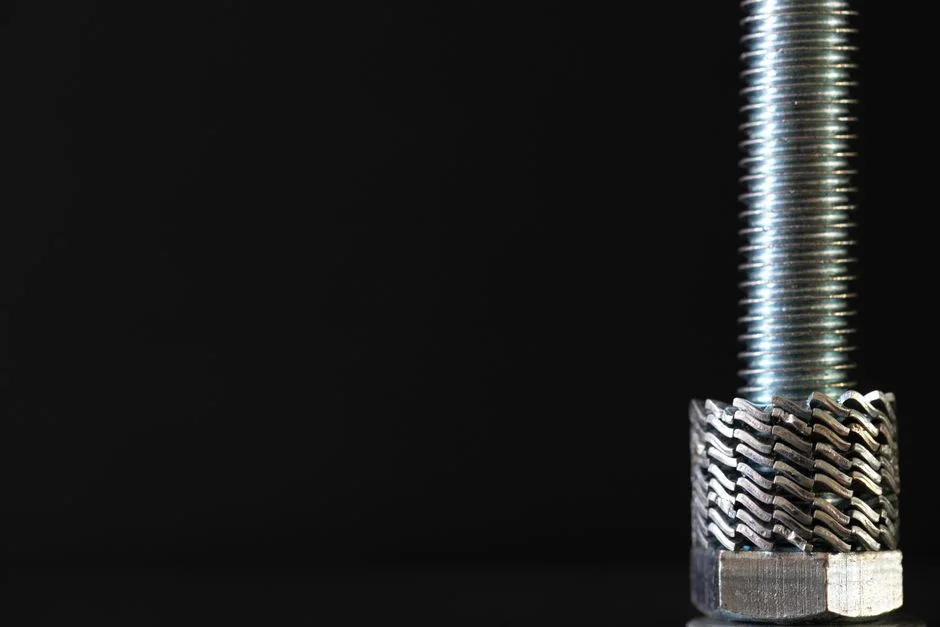
Two scrubbers running identical chemistry can post very different removal efficiencies if contact-area engineering inside the tower is underspecified. Packing media such as Tri-Packs and Pall Rings create a large wetted surface so the gas stream contacts the reagent over seconds rather than milliseconds, and mismatched media—such as the wrong size, wrong polymer, or fouling by carryover solids—is a common cause of poor mass transfer in field service. The Mach Engineering product literature (machengineering.com) describes Tri-Packs and Pall Rings as the standard random packing for chemical scrubber towers because they balance high surface area with low pressure drop and resist fouling.
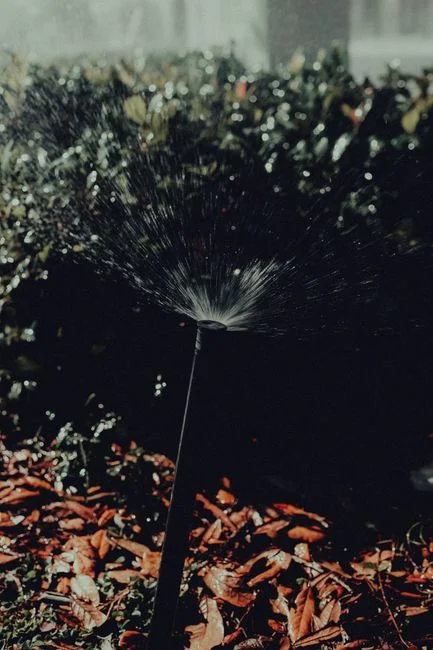
Spray nozzles positioned in the tower convert scrubbing solution into a fine mist that enlarges gas-liquid interfacial area, requiring specific nozzle patterns, droplet sizes, and spray pressures for the target gas flow. Below the packing, the two operating knobs that most often separate a nameplate-efficient scrubber from a struggling one are the liquid-to-gas ratio (L/G) and the residence time inside the packed bed. Park et al. (2017) confirmed the contactor is necessary but not sufficient: they improved an already-installed chemical-industry scrubber's performance without changing the packing, by cleaning the washwater loop, which means the gas-side contact design had been functional, but efficiency was lost downstream.
Materials of Construction: Matching the Liner to the Chemistry
The right vessel material survives the chosen chemistry at the operating temperature and oxidizer strength, yet this remains a common retrofit specification gap. The table below maps chemistry to material; the prose that follows explains the trade-offs.
| Material | Suitable service | Limit that drives the next step up |
|---|---|---|
| Stainless steel (304/316) | Alkaline, mildly acidic, reducing service; default for general chemical-plant scrubbers | Pitting and chloride SCC in hot, chloride-rich or strongly acidic streams |
| Nickel alloys (Hastelloy, Inconel) | Hot, strongly acidic, chloride-rich streams | Cost; only specified where SS would fail |
| FRP / polypropylene | Dilute acidic and neutral service at moderate temperatures | PP has well-known limits against concentrated HNO₃ and strong oxidizers; FRP resin selection matters |
| PVDF / PTFE-grade fluoropolymer | Hot, strong-oxidizer service: ClO₂, NaClO, HCl, HNO₃ | Cost; specified where PP and even FRP would degrade |
Stainless steel (commonly 304/316) is the default for general chemical-plant scrubbers per the Mach Engineering product literature (machengineering.com), suitable for many alkaline, mildly acidic, and reducing services. Nickel alloys (Hastelloy, Inconel) extend service into hot, strongly acidic, or chloride-rich streams where stainless steel would pit or stress-crack. FRP and polypropylene suit many dilute acidic and neutral services at moderate temperatures, but polypropylene has well-known temperature and oxidizer limits (concentrated HNO₃, strong oxidizers) that drive the next step up. PVDF and PTFE-grade fluoropolymers are specified for hot, strong-oxidizer service such as ClO₂, NaClO, HCl, and HNO₃, where PP and even FRP would degrade; this gap often surfaces in retrofit projects where a scrubber is converted from a neutralization service to an oxidation service without re-evaluating the liner.
The Washwater Loop: Closing the Chemistry Circle
The single biggest unlocked efficiency in most chemical-industry scrubbers is the washwater loop, and Park et al. (Clean Technology, 2017) provide clear field validation of this. They built a washwater cleaning system around filtration plus adsorption and applied it to two chemical-industry scrubbers; the result was over 50% washwater quality improvement, over 20% odor-removal improvement, and roughly 40% cost savings versus outsourcing washwater replacement. A separate study on cleaning wastewater from wet scrubbers in secondary lead smelters (Journal of Environmental Chemistry and Ecotoxicology, 2010) reported that cationic polyacrylamide is a standard tool for flocculation and solid-liquid separation of scrubber-loaded metals, the same physical separation principle used in a lamella clarifier.
In practice, the loop typically combines coarse screening, pH adjustment, and chemical dosing delivered by a PLC-controlled system, followed by a sedimentation or flotation stage to drop suspended solids—a lamella clarifier is the standard compact choice—and a final multi-media filter to strip dissolved species that drive odor and corrosion. Closing the loop cuts tanker-out volumes, lowers discharge-permit risk, and stabilizes gas-side chemistry because the reagent no longer competes with the buildup of dissolved byproducts. For plants routing spent liquor to a biological stage, a downstream disinfection step protects the biomass; for plants looking to optimize that polish stage, see this activated-carbon polish stage optimization guide, and for discharge-permit compliance on the spent liquor, this CPCB/SPCB discharge-permit compliance reference.
Matching Equipment to Scrubber Service: A 2026 Selection Matrix
Procurement focuses on the coupled train—vessel, chemistry, washwater train, and solids handling—rather than the scrubber unit alone. The matrix below maps scrubber service to the full equipment train, representing the scope a plant engineer should carry into vendor conversations.
| Scrubber service | Reagent family | Vessel material | Washwater train | Solids handling |
|---|---|---|---|---|
| SO₂-dominant FGD | Limestone slurry neutralization | Stainless steel or nickel alloy | G gypsum-handling loop, pH control | Gypsum dewatering (filter press) |
| Metal-loaded blowdown (e.g., secondary lead) | Hydroxide/sulfide precipitation + flocculation | FRP or PVDF | Lamella clarifier or DAF for solids drop | Plate-and-frame filter press |
| Odor control at chemical plants | NaClO or NaOH oxidation | FRP or PVDF | Filtration + adsorption loop (Park et al. architecture) | Spent liquor to biological plant or off-site |
| Mixed acid + odor | NaOH neutralization with NaClO polish | FRP / PVDF wetted parts | Dosing + lamella + multi-media polish | Filter press for any metal hydroxide sludge |
For SO₂-dominant FGD service, default to limestone slurry scrubbing, a stainless or alloy vessel, and a gypsum-handling dewatering stage, as exemplified by the FGD scrubber for SO₂ and particulate service, which produces reusable gypsum. For metal-loaded scrubber blowdown, such as in secondary lead production, default to hydroxide/sulfide precipitation, an FRP or PVDF vessel, a lamella clarifier or DAF for solids drop, and a plate-and-frame filter press for scrubber sludge dewatering, consistent with the polyacrylamide flocculation approach in the literature. For odor-control service at chemical plants, default to NaClO or NaOH oxidation, an FRP/PVDF vessel, and a dedicated washwater filtration + adsorption loop modeled on the Park et al. (2017) architecture; if the spent liquor is routed to a biological plant, plan a downstream disinfection stage and review the biological train's compatibility with the residual oxidizer.
Frequently Asked Questions
How much does a high-efficiency scrubber retrofit actually save on washwater disposal?
Park et al. (Clean Technology, 2017) reported roughly 40% cost savings versus outsourcing washwater replacement for two chemical-industry scrubbers fitted with a filtration-plus-adsorption cleaning loop, alongside over 50% washwater quality improvement and over 20% odor-removal improvement. For a buyer scoping a new build, request a site-specific disposal-cost line item (tanker-out volume × $/m³) and an assumed washwater replacement frequency to model the closed-loop operating cost against that baseline.
What should we check when selecting a scrubber and washwater equipment supplier?
Ask for chemistry-matched materials of construction in writing, including alloy grade or fluoropolymer type, and for a coupled scope that includes the washwater train and downstream dewatering, not just the tower. Confirm the supplier has documented references on the same reagent family (e.g., NaClO or
Frequently Asked Questions
What chemical reactions are used in high-efficiency industrial scrubbers, and how do I match the reagent to my gas stream?
High-efficiency scrubbers primarily utilize acid-base neutralization, oxidation-reduction (redox), and absorption reactions. For acidic gas streams like SO₂ or HCl, alkaline reagents such as NaOH (caustic soda) or Ca(OH)₂ (lime slurry) are standard, targeting a stoichiometric ratio typically between 1.05 and 1.10 to ensure complete neutralization. For VOCs or complex odors, oxidizing agents like NaClO or H₂O₂ are required to break down molecular bonds, with reagent selection determined by the oxidation potential required to reach the target emission limit.
To match the reagent, perform a mass balance based on the inlet molar flow rate of the contaminants. Reagent selection is dictated by the solubility of the target species in the scrubbing liquor and the desired reaction kinetics; for example, high-solubility gases like NH₃ favor water-based scrubbing with pH adjustment, whereas low-solubility species require chemical oxidants to shift the equilibrium and maximize removal efficiency.
Which packing media and spray-nozzle arrangement give the best gas-liquid contact in a packed-bed scrubber?
For maximum gas-liquid contact, structured packing with a high specific surface area, typically ranging from 200 to 500 m²/m³, is superior to random dumped packing. Structured packing reduces pressure drop by up to 30% while maintaining high mass transfer coefficients, which is critical for meeting 2026 emission standards. The material should be chosen based on chemical compatibility, with high-performance thermoplastics or 316L stainless steel being the industry standard for durability.
Spray-nozzle arrangement must ensure uniform liquid distribution across the entire bed cross-section, with a minimum overlap of 20% between spray patterns. Full-cone nozzles with a spray angle of 90 to 120 degrees are recommended to prevent dry spots and channeling, which can degrade removal efficiency by as much as 15%. Liquid-to-gas (L/G) ratios should be maintained within the 2.0 to 10.0 L/m³ range depending on the contaminant loading.
How much can a closed-loop scrubber washwater cleaning system actually save versus tanker-out disposal in 2026?
Implementing a closed-loop system can reduce operational expenditures related to waste disposal by 60% to 85% annually. By integrating membrane filtration or chemical precipitation to treat and recirculate washwater, facilities can minimize hazardous waste volumes, effectively eliminating the costs associated with tanker-out logistics, which have risen significantly due to 2026 regulatory compliance and transport surcharges.
The return on investment (ROI) for closed-loop systems is typically realized within 18 to 30 months. Savings are derived from reduced makeup water consumption, lower reagent requirements through liquor recovery, and the avoidance of escalating environmental disposal taxes applied to concentrated hazardous blowdown streams.
What materials of construction should I specify for a NaClO or ClO₂ oxidizing scrubber to avoid liner failure?
For oxidative environments involving NaClO or ClO₂, avoid standard carbon steel and low-grade plastics, which are prone to rapid oxidation and stress cracking. Instead, specify high-performance fluoropolymers such as PVDF (polyvinylidene fluoride) or PTFE (polytetrafluoroethylene) liners, which exhibit excellent resistance to aggressive oxidants up to 100°C. Alternatively, utilize FRP (fiber-reinforced plastic) with an engineered chemical-resistant resin barrier (e.g., vinyl ester or chlorendic anhydride-based resins) specifically formulated for halogenated service.
Ensure that all gaskets and seals are constructed from perfluoroelastomers (FFKM) to prevent the oxidative degradation common in standard EPDM or Viton seals. Regular inspections of the resin-rich interior layer are necessary to identify early-stage blistering or delamination, which are primary indicators of impending liner failure in high-oxidant applications.
How do I scope the full equipment train — scrubber, clarifier, dosing, filtration, and dewatering — for a metal-loaded scrubber blowdown, and what lead time should I plan for?
Scoping a metal-loaded blowdown train requires a bench-scale jar test to determine the optimal pH for precipitation, followed by sizing the clarifier based on a surface overflow rate of 0.2 to 0.5 m/h. The dosing system must be sized for precise titrant delivery, while the downstream filtration (typically multi-media or ultrafiltration) is sized for the anticipated TSS loading. Dewatering, typically via a filter press or centrifuge, should be sized based on the sludge volume index (SVI) to ensure the final cake reaches at least 30-40% solids content.
Given current global supply chain conditions for specialized corrosion-resistant components and control instrumentation, you should plan for a lead time of 32 to 48 weeks from final design approval to site delivery. Procurement of long-lead items, such as specialized dosing pumps and filtration membranes, should be prioritized during the initial phase of the engineering design to avoid project slippage.