Why a UASB Reactor Can Be Net-Energy-Positive
A UASB reactor's energy efficiency comes from decoupling hydraulic retention time (3–24 hours) from sludge retention time (32–45 days), allowing a dense granular sludge bed of 40–100 gTS/L to convert organic matter into biogas without external aeration. Because the system is anaerobic, it spends almost no electrical energy on oxygen supply, redirecting that input to influent pumping, effluent recirculation, and any heating needed to keep digestion inside the 30–38 °C mesophilic band. The "output" side of the balance is methane-rich biogas, recoverable as heat, power, or upgraded biomethane. That asymmetry — no aeration penalty, a recoverable methane stream, and a high-rate architecture — is what makes a UASB one of the few wastewater technologies that can be a net energy producer rather than a net consumer.
For an engineer evaluating procurement, the practical question is not "is a UASB anaerobic?" but "which design and operating choices move the energy balance from neutral to positive, and which quietly bleed it back to zero?" The rest of this article maps those choices to their energy consequences, drawing on the 2025 MDPI review of UASB reactor design and operation (Senadheera et al., 2025-02).
The Energy Architecture Inside the Reactor
Inside a UASB, three zones do the work, and each one is an energy control point. The sludge bed at the bottom concentrates 40–100 gTS/L of biomass (Senadheera et al., 2025-02); this density is what permits short hydraulic retention times while still achieving high organic removal. Above the bed sits the sludge blanket, with solids at 1–3% and slower settling velocities, where substrate removal continues but at a lower rate than in the bed. Substrate conversion in the blanket is non-trivial — it is one reason operators must avoid short-circuiting between inlet and outlet, which silently wastes the reactor's effective volume (Senadheera et al., 2025-02).
The third element is the three-phase separator at the top, the gas–solid–liquid interface that decides whether biomass stays in the reactor and whether biogas exits cleanly. A well-designed separator returns denser sludge to the digestion compartment and releases clarified effluent plus captured gas; a poorly designed one leaks both biomass (reducing conversion and methane yield) and methane (reducing the energy credit). The MDPI review names "efficient phase separation" as one of the four principles that govern UASB effectiveness, alongside upward flow, avoidance of short circuits, and sludge with strong settling and high methanogenic activity (Senadheera et al., 2025-02).
Granule quality ties the biology to the energy outcome. Granular sludge in the 1–5 mm diameter range settles well, tolerates higher upflow velocities, and — critically — outperforms flocculent sludge in stability and conversion efficiency (Senadheera et al., 2025-02). The methane yield per gram of biomass is higher in a well-granulated bed than in a flocculent one of the same mass, which is why commissioning practice focuses as much on granule development as on hydraulic start-up (see our UASB commissioning timeline and granule maturation guide). Finally, the reactor is naturally mixed by rising biogas bubbles and the upward liquid flow, which reduces the need for mechanical mixers and their continuous electrical draw — a direct energy saving embedded in the geometry.
Parameter Table: Design Choices and Their Energy Consequences
The table below translates the ranges in the MDPI review (Senadheera et al., 2025-02) into the language a procurement engineer needs. Each row pairs a design or operating parameter with the energy outcome it controls, and the final column is the line item a buyer can put into a specification request.
| Parameter | Typical range / value | Energy consequence | Specify this in procurement |
|---|---|---|---|
| Hydraulic retention time (HRT) | 3–24 h | Shorter HRT reduces reactor volume and footprint; below the design floor, washout and conversion loss increase. | HRT at design average and peak flow, with the corresponding upflow velocity. |
| Sludge retention time (SRT) | 32–45 days; sludge age typically >30 days | Longer SRT supports more complete methanogenesis and higher methane per kg COD removed. | Guaranteed SRT at design flow, including the worst-case operating temperature. |
| Sludge bed concentration | 40–100 gTS/L | Denser bed means more conversion per m³ and less pumping energy per kg COD treated. | Target bed density at steady state and the seeding plan that delivers it. |
| Sludge blanket solids | 1–3% | Higher blanket solids raise total conversion but risk effluent suspended solids and downstream polishing load. | Expected blanket solids at design load, and the separator design that holds them. |
| Granule diameter | 1–5 mm | Larger, denser granules raise methanogenic activity per gram of biomass and tolerate higher upflow. | Granule size distribution and specific methanogenic activity at start-up handover. |
| Operating temperature | 30–38 °C (mesophilic) | Inside the band, methanogenic kinetics are near-optimal; outside, conversion and methane yield drop sharply. | Design influent temperature range and the heating duty assumed in the energy balance. |
Temperature: The Biggest Energy Trade-off
Temperature is the single largest lever on UASB energy efficiency because it controls methanogenic kinetics, and methanogens are the slowest community to recover from a disturbance. The MDPI review places optimal mesophilic digestion and methanogenesis between 30 °C and 38 °C, with the 35 °C point used as the reference (Senadheera et al., 2025-02). Below that band, methanogenesis is 10–20 times lower than at 35 °C, and the system needs a longer SRT and a longer HRT to recover comparable conversion (Senadheera et al., 2025-02). That statement reframes the design choice: a colder influent does not simply slow the reactor, it cuts the biological rate by an order of magnitude.
The trade-off is between heating energy and reactor volume. Holding the reactor at 35 °C in a cold climate requires a heat input that the plant must supply; running psychrophilic eliminates that input but multiplies the volume of sludge and reactor needed to hit the same organic removal, and reduces methane yield per unit volume. Microbial groups respond to cooling differently. Hydrolytic and acidogenic bacteria tolerate lower temperatures; methanogens do not, and they are the bottleneck on conversion. Psychrophilic operation is feasible, but it usually requires granules that have been adapted to low temperatures rather than mesophilic seed, and the lower methane yield per m³ of reactor is the hidden cost (Senadheera et al., 2025-02).
For a food, brewery, distillery, or pulp and paper site, the decision is local: where the wastewater is already warm (distillery condensates, pulp hot process streams) the heating load is small; where the influent is cold, the buyer must weigh biogas offtake value against the kWh needed to keep the bed in the mesophilic band. Either path can work, but only if the trade-off is written into the specification rather than discovered at commissioning.
Mesophilic vs Low-Temperature Operation: Side-by-Side

The comparison below is drawn from the MDPI review (Senadheera et al., 2025-02). It is honest about the data the review does and does not provide: absolute kWh/m³, specific CAPEX per m³, and biogas yield per kg COD were not retrievable from the supplied research. Those values must be requested from the vendor or measured in a pilot; they are not assumed here.
| Dimension | Mesophilic (30–38 °C) | Low-temperature / psychrophilic |
|---|---|---|
| Methanogenic activity | Near-optimal; 35 °C is the reference point. | 10–20× lower than at 35 °C; methanogens are the limiting community. |
| HRT / SRT required for comparable conversion | Shorter HRT and SRT; smaller reactor volume for a given load. | Longer HRT and SRT required to recover comparable conversion; larger reactor volume. |
| Heating energy input | Heat input required to stay in the 30–38 °C band, sized to climate and influent temperature. | No reactor heating required. |
| Biogas / methane yield per m³ of reactor | Higher methane yield per m³ and per kg COD removed. | Lower methane yield per m³; the energy credit per unit reactor shrinks. |
| Seeding and start-up | Mesophilic granules are widely available; faster granule maturation at temperature. | Requires low-temperature-adapted granules; slower community adaptation. |
| Footprint and gas storage | Smaller footprint for a given load; smaller gas buffer needed for the same retention. | Larger footprint; larger gas storage if downstream utilization is to be smoothed. |
The takeaway for a feasibility meeting is that psychrophilic operation is not "free energy" — it transfers cost from the heating line to the civil and biological lines. The numbers that decide between the two paths are local energy cost, climate, and the value the plant assigns to recovered methane, and they are inputs a buyer must request from the supplier for the specific influent profile.
Where Energy Is Lost — and How Design Limits It
A "net-positive" UASB only stays net-positive if the loss mechanisms are designed out at procurement. Five are worth writing into the specification.
Dissolved methane in the effluent at low temperature. Methane is more soluble in cold water, so psychrophilic operation can lose a meaningful fraction of produced biogas to the liquid phase rather than the gas phase. The MDPI review flags "energy loss in biomethane" as an explicit concern in low-temperature operation and recommends design measures to address it (Senadheera et al., 2025-02). A degassing membrane or a downstream dissolved-gas stripper on the effluent line can recover this fraction, and the choice between them is a capital-versus-energy decision the buyer must evaluate against the local methane value.
Biomass washout from a poorly designed three-phase separator. A separator that fails to return denser sludge to the bed bleeds the active biomass inventory, lowering conversion and methane yield over time. Separator geometry, deflection angles, and the size of the sedimentation chamber are not aesthetic choices — they are energy choices, because the active biomass inventory sets the conversion rate per m³.
Short-circuiting between inlet and outlet. Even when the nominal HRT is high, an inlet–outlet flow path that bypasses the bed wastes the reactor's effective volume. The MDPI review lists "avoiding short circuits" as one of the four governing principles of UASB effectiveness (Senadheera et al., 2025-02). Internals such as influent diffusers and outlet weirs must be specified with this in mind.
Unmeasured and uncollected gas. Leaks at the dome, an oversized flare, or a gas line without metering turn methane into an invisible loss. Specify gas flow metering at the separator outlet and a flare with a capture-ready tie-in so the recovered gas can be routed to a boiler, CHP, or upgrading unit when one is added.
Influent toxicity. Substrate shifts can suppress methanogens and change the community. The MDPI review reports that high propylene glycol concentrations shift the community from Methanocarcina toward Methanoculleus, with associated loss of methanogenic efficiency (Senadheera et al., 2025-02). Pretreatment screening — for example, a DAF system for suspended solids and FOG removal upstream of the UASB — protects both the energy output and the downstream polishing train.
Biogas Utilization: Turning Reactor Output into Plant Energy
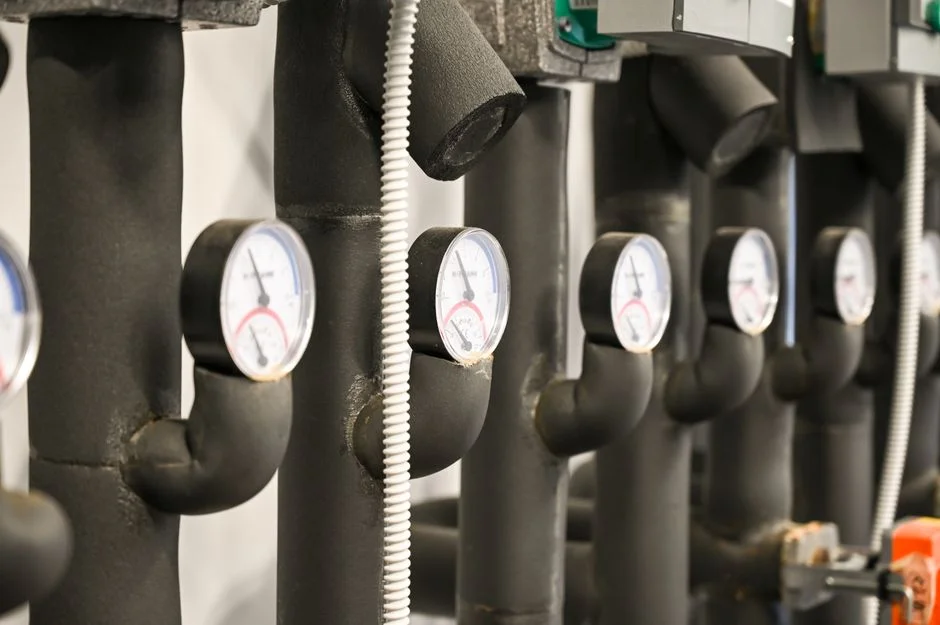
Recovered biogas from a well-operated UASB is typically 60–70% methane by volume, and the standard end-uses are boiler fuel for process heat, combined heat and power (CHP) for electricity and heat, or upgrading to biomethane for sale or grid injection. Specific methane yield per kg COD removed was not retrievable from the supplied research; treat any vendor number as site-specific and verify it against pilot or operating data for the same wastewater class.
Three operating levers, all already in the parameter table, move the methane number up. A denser sludge bed, a longer SRT, and warmer operation all raise the methane yield per kg COD (Senadheera et al., 2025-02). On the utilization side, the CHP exhaust and hot flue gas can be recycled to keep the reactor in the mesophilic band in cold climates, partially closing the energy loop and converting a parasitic heating load into a self-supplied one. Where a plant already burns natural gas or fuel oil for process heat, the displaced fuel is the first place the energy balance shows up; where electricity is imported at industrial tariffs, CHP is the more attractive route.
Effluent Polishing Without Wasting the Energy Gain
A UASB rarely meets direct discharge limits on its own; the MDPI review treats stable effluent quality as an ongoing challenge (Senadheera et al., 2025-02), and the plug-flow multimedia reactor study (Water Environment Research, 2025) explicitly addresses polishing of conventional UASB effluent. The risk for the energy balance is that the polishing stage quietly consumes the credit earned upstream. A conventional activated sludge polish would spend the aeration energy the UASB just avoided; that defeats the architecture.
Lower-energy polishing trains are available, and the choice among them depends on the residual organics, suspended solids, and nutrients in the UASB effluent. A MBR membrane bioreactor for UASB effluent polishing provides a high-quality water product with a smaller aeration footprint than conventional activated sludge; a multi-media filter for low-energy UASB effluent polishing removes residual suspended solids with minimal electrical input; constructed wetlands can take the final nutrient pass where land is available. Specific energy values for the polishing train were not retrievable from the supplied research and should be requested from vendors and pilots when sizing. The same caution applies to IFAS hybrid reactors for starch and food wastewater, which sit between a pure anaerobic front end and a polishing back end and shift the energy balance in a different direction.
Frequently Asked Questions
What energy gain can a UASB realistically deliver per cubic meter of wastewater treated?
The MDPI review (Senadheera et al., 2025-02) does not publish a single kWh/m³ figure; methane yield depends on COD load, temperature, SRT, and granule quality. A buyer should request site-specific projected methane yield in Nm³ CH₄ per kg COD removed, and an energy balance that includes the heating duty required to stay in the 30–38 °C mesophilic band and the electrical draw of pumping and recirculation.
Should we operate at 35 °C or accept a lower temperature to avoid heating costs?
The MDPI review reports that methanogenesis at sub-optimal temperatures is 10–20 times lower than at 35 °C, so psychrophilic operation is not free — it transfers cost from the heating line to a larger reactor volume and a lower methane yield per m³ (Senadheera et al., 2025-02). Compare local energy cost, climate, and the displaced-fuel value of recovered methane; request both mesophilic and psychrophilic designs from the vendor and have the energy balance shown for each.
How do we choose a UASB supplier without overpaying for performance we will not see?
Write the SRT, bed density, granule size distribution, and three-phase separator performance into the specification before the bid, and require guaranteed values at design flow rather than nameplate values. The MDPI review names "efficient phase separation" and sludge with strong settling and high methanogenic activity as governing principles (Senadheera et al., 2025-02), so the supplier's track record on granule development and separator geometry is at least as important as the reactor's quoted volume.
What delivery, lead time, and compliance risks should we plan for?
Granule maturation is a biological commissioning activity, not a delivery date; the MDPI review treats the start-up period as a gradual ramp of the feeding rate until the bed is established (Senadheera et al., 2025-02), and our commissioning timeline guide covers the sequencing. On compliance, dissolved methane in the effluent is a regulatory risk in cold operation (Senadheera et al., 2025-02); request the supplier's plan for dissolved-gas control and a gas-flow metering and flare tie-in so the methane credit is auditable rather than estimated.