
Why Tannery Wastewater Is a Special Case for Biological Treatment
Tannery effluent consists of blended discharge from beamhouse (soaking, unhairing, liming), chrome-tanning, and finishing operations, each contributing different contaminants to a biological plant. A real-tannery feed reported by Udayakumar et al. (2026, J Environ Manage 411:130211) carried an average COD of 2,550 mg/L, TSS of 1,080 mg/L, NH4+-N of 162 mg/L and TDS of 7,440 mg/L, which sits inside the 2,000–7,500 mg/L COD and 7,000+ mg/L TDS envelope that most published tannery MBR studies cluster around.
Beamhouse liquor adds sulfide and high ammonia; the tanning line adds Cr(III) and chloride salts; finishing adds dyes, surfactants and color. Conventional activated sludge struggles on two counts at this profile: nitrifiers are slow-growing and wash out under the hydraulic and toxic stress, and the high TDS shifts the osmotic balance of the floc, reducing settling and clarification capacity. That combination is the structural reason MBR is proposed for tanneries — the membrane physically retains the biomass regardless of settleability, and the bioreactor can be run at the high MLSS that nitrifiers need. The same upstream poisons, however, still reach the membrane. Cr(III) precipitates as hydroxide above pH 8 and fouls the surface; sulfide partitions to H2S at low pH and corrodes aeration hardware, and at high pH it deposits metal sulfides. An MBR-ready tannery feed must arrive at the membrane tank already stripped of sulfide and with chrome precipitated and settled, otherwise the membrane pays for upstream chemistry that should have been done in equalisation.
MBR Process Configuration Options for Tanneries
Submerged aerobic MBR with PVDF flat-sheet or hollow-fibre membranes serves as the default reference configuration for tannery duty because the membrane retains a biomass already acclimatised to chrome and salinity, and submerged operation keeps specific energy demand within the budget of a mid-sized tannery ETP. HydropureWater's DF-series flat-sheet PVDF membrane module (0.1 μm PVDF, 80–225 m² per cassette, 32–135 m³/day per cassette) is a concrete geometry a procurement engineer can score against, and the matching integrated submerged MBR system bundles the cassette, aeration box and clean-in-place loop. Anaerobic MBR variants (AnSMBR, AFMBR) recover biogas and reduce aeration energy, but per the Springer 2022 review of tannery MBR technologies they require a separate sulfide and chrome management step because anaerobic effluent can carry dissolved sulfide and Cr(III) that damage downstream equipment and membranes. The hybrid train most cited in the tannery literature stacks equalisation → Cr precipitation and sulfide stripping → anaerobic stage (UASB or AnMBR) → aerobic MBR → ozone or RO polish; research describes the role of each stage qualitatively, making the design a vendor-by-vendor choice rather than a fixed standard. Algal-MBR (AMBR) and self-forming dynamic membranes appear in 2025–2026 reviews but have not been demonstrated at tannery scale.
| Configuration | Strengths for tannery duty | Specific risks | Best-fit condition |
|---|---|---|---|
| Submerged aerobic MBR (PVDF flat-sheet / hollow-fibre) | High MLSS, biomass retention, robust to TDS shock, established CIP protocols | Sulfide and Cr fouling if upstream control is weak; aeration energy | Tanneries with limited footprint and no biogas use |
| Anaerobic MBR (AnSMBR, AFMBR) | Biogas recovery, low sludge yield, low aeration energy | Dissolved sulfide in permeate; Cr(III) carry-over; membrane fouling from SMPs | Large tanneries with on-site biogas use and a downstream polish step |
| Hybrid train: equalisation → Cr/sulfide removal → anaerobic → aerobic MBR → ozone/RO | Combines biogas benefit with stable polishing; handles peak loads | Most interfaces, longest vendor scope, highest CAPEX | High-strength tanneries with reuse or strict discharge limits |
| Algal-MBR / self-forming dynamic MBR | Emerging sustainability story, low material cost | Not yet demonstrated on real tannery effluent at scale | Pilot or R&D scope, not a procurement decision in 2026 |
Pilot Performance: What Real Tannery MBR Data Shows
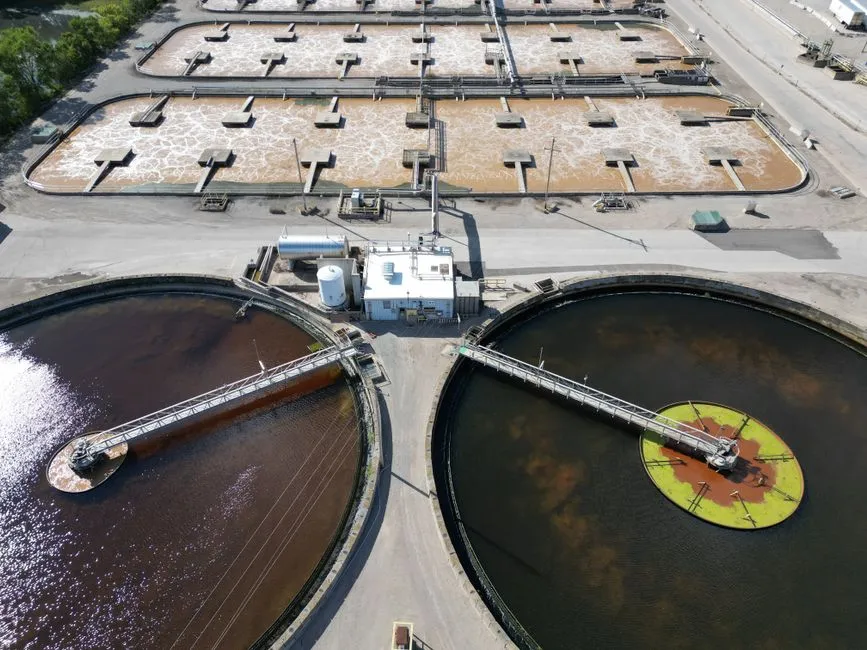
Udayakumar et al. (2026, J Environ Manage 411:130211) ran a lab-scale submerged MBR on real tannery wastewater from CSIR-CLRI; the biological stage cut COD from 2,550 to 856 mg/L, the membrane permeate averaged 640 mg/L COD (75% overall removal), and NH4+-N dropped from 162 mg/L to 141 mg/L during acclimation and reached 55 mg/L once nitrifiers were established. A 60-minute ozone polish on the MBR permeate then cut COD from 640 to 220 mg/L and removed the residual colour, justifying the budget for a tertiary step when discharge or reuse limits are tight. The Springer 2022 review of tannery MBR technologies reaches the same conclusion: anaerobic MBRs deliver high COD removal plus biogas, but a polish step is normally required for residual COD and color. The corncob-MBR paper does not run anaerobic mode, so no AnMBR numbers for tannery feed can be drawn from it. The engineering takeaway is that 75% overall removal is the membrane's job — getting a tannery discharge to compliance almost always needs a polish step on top.
Fouling, Cleaning and Membrane Material: The Real Operating Risk
Fouling on a tannery feed determines OPEX, not initial flux. In Udayakumar et al. (2026) the membrane flux fell steadily from 26.18 to 3.89 L/m²·h as MLSS rose from 8,000 to 12,000 mg/L, so an MLSS operating cap of roughly 10,000 mg/L is a reasonable design point for flat-sheet geometry on this feed. Membrane material matters chemically: after 0.5% NaOCl cleaning, flux recovery was 49.94% for the cellulose-acetate biopolymer membrane versus 74.98% for PVDF, and the authors flag that further surface modification or pretreatment is needed before biopolymer membranes are a drop-in for tannery duty. Air-scour design, relaxation cycles and a chemical CIP rotation (NaOCl for organic fouling, citric acid for inorganic scaling) are standard, and the geometry of the cassette determines whether the scour reaches the membrane evenly — the DF-series flat-sheet PVDF membrane module uses an integrated aeration box that delivers continuous scouring at low specific air demand, which is the geometry most aligned with the operating pattern in the 2026 study.
| Operating variable | Value in Udayakumar et al. 2026 | Design implication for a tannery MBR |
|---|---|---|
| MLSS range observed | 8,000–12,000 mg/L | Cap MLSS near 10,000 mg/L; expect flux decline above this |
| Flux range observed | 26.18 → 3.89 L/m²·h | Size membrane area from low-end flux; design for the worst case |
| FRR after 0.5% NaOCl — PVDF | 74.98% | PVDF remains the safer default membrane for tannery effluent |
| FRR after 0.5% NaOCl — cellulose acetate (corncob) | 49.94% | Biopolymer membranes need further surface modification before commercial use on tannery feed |
| Tertiary ozone polish (60 min) | 640 → 220 mg/L COD | Budget a polish step when discharge or reuse limits are tighter than the MBR alone can meet |
Sizing, Footprint and Energy: MBR vs Conventional Activated Sludge
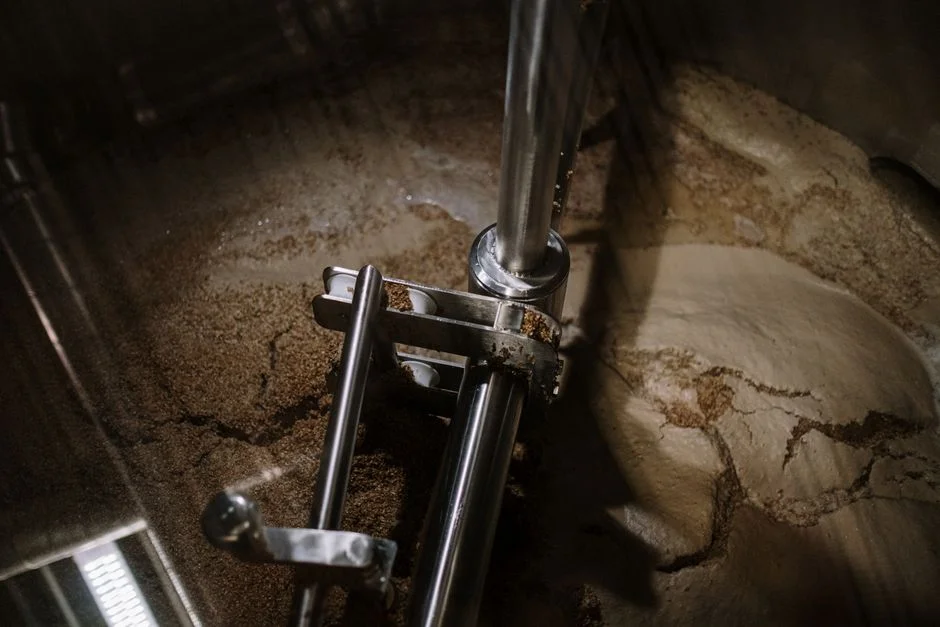
MBR runs at 8,000–12,000 mg/L MLSS in the 2026 study against 2,000–4,000 mg/L typical for CAS, so the aeration tank shrinks proportionally and the secondary clarifier is removed. The integrated submerged MBR system is positioned at roughly 60% smaller footprint than a conventional CAS train for flows in the 10–2,000 m³/day band, providing a clear comparison for management. On energy, submerged flat-sheet MBR with an integrated aeration box uses substantially less pumping energy than external cross-flow configurations because there is no recirculation loop at high pressure. Since the literature does not provide a tannery-specific kWh/m³ or $/m³ number, cost discussion should be deferred to the buyer's checklist and the reader should request those two figures directly from vendors rather than assume a range.
Buyer's Checklist: 6 Questions to Score a Tannery MBR Vendor
Use this checklist at the next vendor meeting; score each answer 0 (absent or wrong), 1 (qualitative only) or 2 (quantitative and supported by a reference on real tannery effluent).
| # | Question to put to the vendor | Benchmark or expected answer | Score (0/1/2) |
|---|---|---|---|
| 1 | What operating MLSS cap do you guarantee, and how is it controlled? | Cap near 10,000 mg/L with wasting strategy defined; flux decline curve shown | |
| 2 | What membrane material, pore size and geometry? | PVDF, 0.1 μm, flat-sheet or hollow-fibre with a published FRR on tannery feed | |
| 3 | What flux recovery after 0.5% NaOCl CIP? | ≥ 74.98% (Udayakumar et al. 2026 PVDF benchmark) | |
| 4 | What is the specific air demand (Nm³ air / m³ permeate) and is aeration integrated? | Integrated aeration box; specific air demand stated, not a vague "low" | |
| 5 | How is chrome and sulfide controlled upstream, and is the scope the MBR alone or the full equalisation → precipitation → MBR → polish train? | Defined Cr precipitation and sulfide stripping step; interface to MBR specified | |
| 6 | What discharge or reuse limit is the offered train designed to meet, and is the polish step (ozone, AOP, RO) included or quoted separately? | Specific limit named; polish step costed, not left as "to be confirmed" |
Frequently Asked Questions
How much does an MBR for tannery wastewater actually cost per m³ in 2026?
Research does not publish a current per-m³ CAPEX or OPEX for tannery MBR duty. Buyers should request two specific numbers from each vendor: installed CAPEX in $/m³/day of design flow, and OPEX in kWh/m³ and $/m³ treated, both referenced to a real-tannery feed profile. Use the HydropureWater MBR cost per m³ 2026 guide to structure the request, but treat any vendor number as proposal-specific until a reference plant on tannery feed is named.
How do I choose between an aerobic and an anaerobic MBR for a tannery?
Pick aerobic submerged MBR if footprint and operational simplicity dominate and biogas has no on-site use. Pick anaerobic MBR (AnSMBR or AFMBR) only if you can use the biogas, accept the extra sulfide and Cr(III) control the Springer 2022 review flags, and budget a polish step. A hybrid train — equalisation → Cr precipitation/sulfide stripping → anaerobic → aerobic MBR → ozone or RO — is the configuration most cited in research for high-strength tanneries, and is the safest default when discharge or reuse limits are tight.