Why Confectionery Wastewater Fits an MBR
An MBR couples a biological reactor with a membrane separation step — most commonly 0.1 µm PVDF hollow-fibre or flat-sheet modules — that retains biomass and produces a low-turbidity effluent suitable for reuse. The peer-reviewed 2021 ScienceDirect MBR review describes the technology as an integration of biological treatment with membrane filtration that delivers benefits over conventional activated sludge and is widely applied in both municipal and industrial duty.
Confectionery effluent is a high-strength stream dominated by sugars, starches and dairy ingredients, with a heavy fraction of fats, oils and grease (FOG) and intermittent cleaning-in-place (CIP) chemicals from batch washdowns. Temperature swings between hot CIP discharge and ambient flow are common, and production schedules create batch peaks rather than steady flow. The supplied research does not provide numeric COD/BOD ranges for confectionery streams, so the engineer must confirm these on site through composite sampling across at least two production campaigns before sizing.
Conventional activated sludge struggles on this profile because high organic loading rate (OLR) shocks trigger filamentous bulking and poor settling — the exact failure mode that MBR eliminates by decoupling biomass retention from clarifier hydraulics. The membrane holds the floc in the aeration tank regardless of sludge settleability, which is why the technology is well suited to high-strength food industry waste with variable loading. Pretreatment for FOG, starch and pH still determines whether the membrane survives, but the biological step is no longer the bottleneck.
Aerobic Submerged MBR vs Anaerobic MBR for Confectionery Streams
The two dominant MBR topologies for sugar and starch waste are aerobic submerged and anaerobic MBR (AnMBR), and the engineering choice between them is driven by OLR, energy balance and fouling tolerance. Aerobic submerged MBRs are well established in municipal and food-industry service: coarse-bubble aeration delivers oxygen and membrane scour simultaneously, the biology is robust to OLR swings, and the process is forgiving of operator error. The main constraint is aeration energy, which becomes the dominant operating cost at high mixed liquor suspended solids (MLSS).
Anaerobic MBRs recover energy as biogas and produce far less waste sludge, but the membrane sees a higher soluble microbial product (SMP) and colloid load because anaerobic biology generates more extracellular polymers per unit substrate removed. The only published long-term AnMBR study on confectionery wastewater — Balcıoğlu et al. (2021), cited in the Water Air & Soil Pollution 2025 review — operated at organic loading rates of 1.1–7.9 kg COD/(m³·d) under variable loading and quantified both COD removal and fouling behaviour, which is the strongest evidence available that AnMBR is feasible for candy and biscuit plant effluent.
For a high-strength sugar stream with consistent flow and on-site heat, anaerobic gives a better energy balance. For a mixed confectionery plant with batch discharge, FOG spikes and CIP swings, aerobic submerged is the lower-risk topology. The 2021 ScienceDirect MBR review frames the choice as an integration of biological kinetics with membrane operating window, which is the right frame for a procurement decision rather than a price comparison. Pretreatment for FOG and equalization are non-negotiable in either configuration.
| Parameter | Aerobic Submerged MBR | Anaerobic MBR (AnMBR) |
|---|---|---|
| Documented OLR envelope (confectionery) | Not specified in supplied research | 1.1–7.9 kg COD/(m³·d) (Balcıoğlu et al., 2021, cited in Water Air & Soil Pollution 2025 review) |
| Energy balance | Net energy consumer (aeration dominant) | Net energy producer (biogas) |
| Sludge yield | High | Low |
| Fouling character | Cake + biofilm, scoured by aeration | Higher SMP/colloid load on membrane |
| OLR swing tolerance | Robust | Sensitive to shock loads |
| Membrane scour | Coarse-bubble aeration in situ | Biogas sparging or external crossflow |
| Best fit for confectionery | Batch plants, FOG/CIP swings, mixed products | Steady high-COD streams, on-site heat demand |
An integrated MBR membrane bioreactor system with submerged PVDF modules is the typical aerobic configuration for food-industry duty, while anaerobic duty is usually specified as a custom-engineered package rather than a standard skid.
Design Parameters and Operating Envelope
The only firm numeric operating envelope in the supplied research for confectionery MBR is the AnMBR OLR of 1.1–7.9 kg COD/(m³·d) documented by Balcıoğlu et al. (2021). Everything else — HRT, SRT, MLSS, flux, TMP, aeration intensity — must be confirmed against vendor-specific flux curves and on-site pilot data, because the supplied research does not quote single-number targets for these parameters in confectionery duty. The table below separates what is peer-reviewed from what the engineer must obtain from the supplier.
| Parameter | What the research confirms | What must be site/vendor-specific |
|---|---|---|
| OLR (AnMBR, confectionery) | 1.1–7.9 kg COD/(m³·d) (Balcıoğlu et al., 2021) | — |
| HRT | Not specified for confectionery | Vendor design at target flux and OLR |
| SRT | Not specified for confectionery | Vendor design based on biology choice |
| MLSS | Not specified for confectionery | Vendor design; trade-off with viscosity/fouling |
| Sustainable flux | 20 L/(m²·h) achieved in aerobic granular MBR at 61 days (Water Air & Soil Pollution 2025 review) | Site pilot at design MLSS and temperature |
| TMP ceiling | < 4 kPa reported in long-term AnMBR for domestic wastewater (Water Air & Soil Pollution 2025 review) | Vendor CIP trigger for the supplied membrane |
| Temperature envelope | ScMBR pilot held COD 95.3%, NH4+-N 98.3%, TN 92.7% at stepwise 20→15→10 °C (Membranes, 2024) | Heat balance for the specific plant |
| Cleaning frequency | Not quantified for confectionery | Vendor CIP recipe + site pilot |
The 2025 review also reports that a submerged MBR with aerobic granular sludge ran 61 days at 20 L/(m²·h) with better fouling control than flocculent sludge, which is a relevant option for high-load sugar streams if the plant can accept the longer start-up period. Aerobic granular MBRs are not yet standard in confectionery service, so a pilot remains the right path. For cold effluent from a confectionery plant with seasonal discharge, the ScMBR data (Membranes, 2024) demonstrates that the membrane step stays stable down to 10 °C — biology is the cold-sensitive element, not the membrane. A PVDF flat sheet MBR membrane module in the DF series is the typical format for retrofit into existing aeration tanks in food plants.
Membrane Fouling: The Real OPEX Driver in Confectionery MBRs
Fouling — not biology — is what determines whether an MBR is economically viable for a confectionery plant, and carbohydrates plus proteins from sugar and starch streams are the dominant foulants in food-industry MBRs according to the Water Air & Soil Pollution 2025 review. Fouling is usually classified as cake layer, pore blocking, or biofilm, and the dominant mechanism in a given MBR depends on MLSS, aeration intensity, and the carbohydrate-to-protein ratio of the influent. Confectionery effluent sits in a high-carbohydrate, mid-protein regime, so cake formation on the membrane surface is expected to dominate once a stable biology is established.
The pilot ScMBR study (Membranes, 2024) provides a spatial finding that is directly useful for food-industry MBRs: in a six-layer ceramic module stack, the middle modules carried the highest total filtration resistance (cake-dominated) while the top and bottom modules were dominated by pore blocking. This means a single uniform cleaning protocol across the tank is suboptimal — the middle modules need cake-removal chemistry and physical relaxation, while the top and bottom modules need a backwash strategy that targets pore blocking. The mechanism was attributed to non-uniform aeration scour intensity across the module stack, confirmed by CFD in the same study.
Quantified mitigation tactics reported in the 2025 review include: vibrating MBR cut colloid and SMP cake layer by more than 62.7% relative to air-sparging; Fe/O3 dosing cut fouling by approximately 33%; SEF-MBR held a fouling rate of 0.58 kPa/d against 1.09 kPa/d for a control MBR; and a PRO/NF-MBR configuration showed a TMP rise of 0.16 kPa/day — roughly half that of a UF-MBR. The specific fouling rate for confectionery effluent is not quantified in the supplied research, so it must be measured on a site pilot rather than estimated. Pretreatment that reduces FOG and starch before the membrane is the cheapest mitigation available, because it cuts the foulant load rather than the fouling rate.
Pretreatment and Process Train Around the MBR
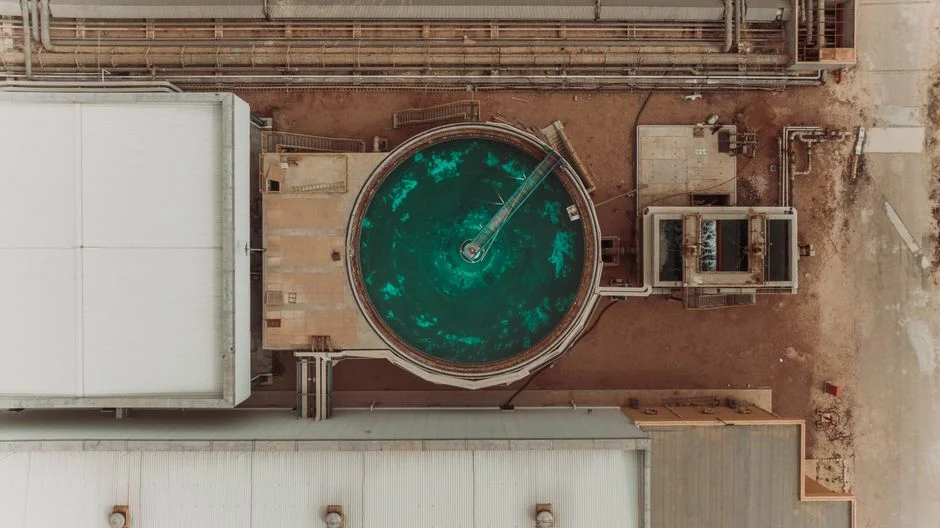
The MBR membrane only sees what passes through pretreatment, so the upstream train decides whether the project runs at 6-month or 6-week cleaning intervals. A coarse bar screen sized to peak flow removes packaging debris, fruit pieces, biscuit crumb and other gross solids that would otherwise accumulate on the membrane surface and damage fibres. An equalization tank with at least 12–24 hours of retention damps the batch peaks from candy enrobing lines, chocolate tempering washdowns and biscuit oven cleanup, which directly reduces fouling rate under shock load — equalization is a fouling-control device here, not just a hydraulic buffer.
FOG and starch removal is the next critical step. FOG coats the membrane and creates a hydrophobic cake that is hard to remove with standard CIP chemistry; starch hydrolysates generate high SMP load and feed biofilm growth. A DAF system for FOG and suspended solids removal upstream of the bioreactor is the typical configuration, and DAF performance under variable confectionery loading is covered in the DAF troubleshooting and optimization guide. An automatic chemical dosing system for pH and coagulant control maintains the pH window the downstream biology needs and supports coagulant dosing for FOG capture.
Temperature conditioning matters because the ScMBR pilot (Membranes, 2024) maintained stable COD and ammonia removal down to 10 °C, so unheated effluent is feasible for the membrane step — but the cold sensitivity sits in the biology, not the membrane, so psychrophilic or acclimated biomass is required for sub-15 °C streams. CIP neutralization must happen before the bioreactor to protect both the membrane and the biology from acid/alkali spikes.
Sizing, Pilot Testing, and Buying Checklist
The fastest way to a wrong MBR is to size from catalogue flux. The right sequence for a confectionery plant is: characterize the influent across at least two production campaigns, including weekday/weekend and product-changeover windows; run a 4–8 week on-site pilot at the expected OLR, starting from the 1.1–7.9 kg COD/(m³·d) envelope as a reference; measure sustainable flux, TMP rise and cleaning interval under real CIP and FOG spikes; and only then finalize membrane area and aeration sizing. The pilot is non-optional because the supplied research does not give a numeric fouling rate for confectionery effluent — the only honest number available is the OLR envelope above.
- Influent characterization: 24-hour composite sampling for COD/BOD, TSS, FOG, temperature and pH across at least two production campaigns covering CIP peaks.
- Pilot scope: 4–8 weeks, submerged module at expected MLSS, operating at the design OLR with on-site CIP chemical dosing.
- Measure: sustainable flux (L/m²·h), TMP rise rate (kPa/day), cleaning interval (days between CIP), and effluent TSS/COD after membrane.
- Vendor data request: guaranteed flux at design TMP, CIP chemistry and frequency, expected membrane lifespan in this specific effluent, and specific aeration demand (Nm³ air per m³ permeate).
- Compliance check: confirm local discharge or reuse limits with the regulator before final design — the supplied research does not provide a universal numeric standard.
Decide aerobic submerged vs anaerobic MBR on the engineering trade-off above, not on headline price. Anaerobic needs steady high-COD flow and on-site heat demand; aerobic submerged is the safer default for batch confectionery plants with FOG and CIP swings. Build the budget request around the items in the checklist — sustainable flux, CIP frequency, membrane life, aeration energy — and treat any vendor quote that does not list those four numbers as incomplete. For cost context, the MBR cost and selection guide covers the structure of an MBR capex/opex breakdown.
Frequently Asked Questions
What OLR has an AnMBR for confectionery wastewater actually been documented at?
Balcıoğlu et al. (2021), cited in the Water Air & Soil Pollution 2025 review, operated a long-term AnMBR on confectionery wastewater across 1.1–7.9 kg COD/(m³·d) and reported COD removal and membrane fouling under variable loading. This is the strongest available evidence for anaerobic feasibility on sugar/starch effluent.
How do I control membrane fouling in sugar and starch effluent?
Treat fouling as a spatial, not uniform, problem. The ScMBR pilot (Membranes, 2024) showed middle modules dominated by cake and top/bottom modules by pore blocking, so cleaning recipes and frequencies should be tuned per module position. Tactics reported in the 2025 review include vibrating MBR (cake cut over 62.7%), Fe/O3 dosing (~33% fouling reduction), and PRO/NF-MBR configuration (TMP rise 0.16 kPa/day, roughly half that of UF-MBR). The fouling rate for a specific confectionery effluent must still be measured on site.
Is aerobic submerged MBR or anaerobic MBR more appropriate for a confectionery plant?
For batch plants with FOG, CIP swings and product changeovers, aerobic submerged MBR is the lower-risk topology because aeration scours the membrane in situ and the biology tolerates OLR swings. For a steady high-COD stream with on-site heat demand, anaerobic MBR gives a better energy balance and lower sludge yield, with documented feasibility at 1.1–7.9 kg COD/(m³·d). Pretreatment and equalization are required in both cases.
What should I ask a vendor to build a defensible MBR budget for a confectionery plant?
The supplied research does not provide a universal numeric cost, so do not accept a single lump-sum quote. Require the vendor to quote guaranteed flux at design TMP, CIP chemistry and frequency, expected membrane life in this specific effluent, and specific aeration energy (Nm³ air per m³ permeate) for the proposed aerobic submerged or anaerobic MBR. Combine those four numbers with the pilot data above to compare bids on engineering terms rather than price-per-equipment.