What the Arab, AL sewer-discharge contract actually says in 2026
The regulatory floor a new EV/auto plant cannot negotiate away runs through a fixed citation chain: Clean Water Act §307(b) → EPA General Pretreatment Regulations at 40 CFR Part 403 → categorical standards at 40 CFR Part 432 (automotive manufacturing) and 40 CFR Parts 433 and 467 (metal finishing) → Arab-area POTW-adopted Technically-Based Local Limits (TBLLs) derived from EPA's Maximum Allowable Headworks Loading (MAHL) method (per EPA Local Limits Development Guidance, 2021-06). The MAHL method is the workhorse: the POTW calculates the maximum mass of each pollutant of concern that can pass the headworks without violating the receiving POTW's NPDES permit, state water-quality standards, or biosolids disposal criteria, then converts the result into a Maximum Allowable Industrial Loading (MAIL) per discharger (per EPA, 2021-06).
Two legal definitions sit on top of any control mechanism and apply whether or not a permit has issued. Pass-through (40 CFR §403.3(p)) is a discharge that exits the POTW into U.S. waters and, alone or with other sources, causes a violation of the POTW's NPDES permit. Interference (40 CFR §403.3(k)) is a discharge that alone or with other sources inhibits or disrupts the POTW, its treatment processes, or its sludge use/disposal and therefore is a cause of a POTW NPDES violation or a violation of sewage-sludge use or disposal requirements. These are the pivot points in any 2026 enforcement action.
Typical Arab-area POTW ceilings, anchored to 40 CFR Part 433 daily-maximum values used as the local floor across most Alabama POTWs, look like the table below. EV battery plants should also expect lithium, cobalt, nickel, and PFAS watch-list parameters on a quarterly monitoring schedule even where the parameter is not numerically limited.
| Parameter | Typical Arab-area daily maximum | Source |
|---|---|---|
| pH | 6.0–9.0 (range) | 40 CFR §403.5 |
| TSS | 250 mg/L | Local TBLL |
| O&G (HEM, Method 1664A) | 100 mg/L | 40 CFR Part 433 |
| Total Cr | 1.71 mg/L | 40 CFR Part 433 |
| Cr(VI) | 0.86 mg/L | 40 CFR Part 433 |
| Ni | 1.48 mg/L | 40 CFR Part 433 |
| Zn | 1.0 mg/L | 40 CFR Part 433 |
| Pb | 0.42 mg/L | 40 CFR Part 433 |
| COD | Site-specific, often <500 mg/L monthly avg | Local TBLL |
The pollutant mix an EV/auto plant actually puts in the sewer
The top-ranking pages in 2026 still anchor the train to refinery analogies and miss the cell-by-cell chemistry of an EV/auto plant. The wastewater stream a Marshall County POTW will actually receive is a blend of distinctly different sources, each with its own droplet size, solids profile, and slug signature.
Body-in-white stamping generates oily machining coolant, suspended tramp oils, and TSS. Free oil here behaves the same as refinery free oil (droplets ≥60–150 µm) and drops out in a primary separator. Paint shop wastewater is a different animal: DMEA solvent carrier, glycol ethers, diisocyanate residues from clear-coat and primer operations, suspended paint solids, and surfactant-stabilized emulsions. Paint overspray solids sit in the 5–25 µm range, well below the band a CPI catches, and they behave like a chemical emulsion. Metal-finishing (phosphate, nickel, and chrome lines) is the categorical trigger stream under 40 CFR Part 433/467 — the regulated wastewater that almost always sets the local ceiling. Battery cell fabrication adds black-mass residue, NMP carryover, fluoride, and low-pH rinse water. Assembly and trim are low-strength but high-volume and often carry the diisocyanate signature that survives into final rinse.
The DAF sizing math is the same one a petroleum terminal uses (droplet, bubble, hydraulic surface loading), but the chemistry dose profile differs because paint solids and metal-finishing floc behave differently from petroleum FOG. A slug-control plan for this site has to address at least three distinct sources: tank drops in the paint circulation loop, CIP rinse from metal-finishing, and battery formation-cycle wastewater, each with a different pollutant signature and a separate line in the SPCC.
The four parameters an Arab-area POTW will police first are pH excursions (driven by metal-finishing rinse and battery formation), O&G by HEM (Method 1664A) (driven by stamping coolant and paint overspray), total Cr (metal-finishing line), and Ni (metal-finishing plus battery cathode rinse). The MAHL allocation the POTW runs for those four almost always drives the daily flow ceiling.
The five-stage train that gets you to the sewer manhole
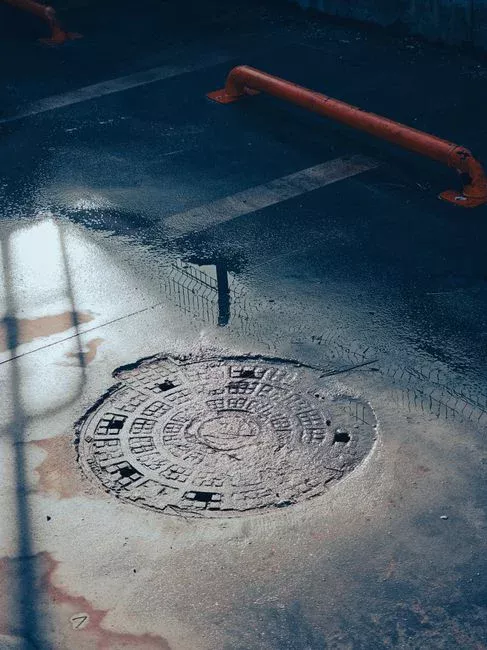
The equipment sequence an Arab-area engineer has to defend in 2026 is a five-stage train between the process sewer and the POTW manhole. The unit operations and their order are non-negotiable; the vendor and footprint can change.
Stage 1 — Source segregation. Segregated laterals for paint shop, metal finishing, and stamping reduce the volume hitting the train by 40–70% in field retrofits (HydropureWater field data, 2025–2026), and covered dump valves plus drip pans convert the rest of the design from "design problem" to "design choice."
Stage 2 — API separator or CPI. Free oil and settleable paint solids are removed by gravity. Expected O&G outlet sits in the 100–200 mg/L band (HydropureWater field data, 2026). Size the API for ≥30 minutes HRT at peak flow; CPI plate spacing typically falls in the 1–2 inch range with corrugation near 45°.
Stage 3 — DAF for emulsified oil and paint solids. Micro-bubbles generated at 60–90 psig strip 10–25 µm droplets, with ASR 0.02–0.06, HRT 15–30 minutes, and saturator recycle 20–50% of forward flow. Expected O&G outlet sits in the 15–30 mg/L band (HydropureWater field data, 2026). A standalone HydropureWater DAF system sized with 20–30% safety margin on hydraulic and air-to-solids loading is the standard fit for paint-shop wastewater. Chemistry is pH 6.5–7.5 with 50–200 mg/L coagulant fed via an automatic chemical dosing system to remove the manual error that drives most SNC events.
Stage 4 — Equalization and pH trim. An 8–24 hour HRT basin sized for batch discharge from metal-finishing CIP is the single most important control point for preventing interference events. Without it, a single spent-rinse slug from a metal-finishing line can crash the biology downstream and trip a 24-hour notification.
Stage 5 — MBR polishing. A 0.1 µm PVDF flat-sheet MBR membrane bioreactor system operating at 8,000–12,000 mg/L MLSS and producing <1 NTU turbidity drives COD <50 mg/L, holds residual Ni and Cr to the metal-finishing category limits, and pulls ammonia below typical local limits. MBR is the default for space-constrained EV/auto retrofits because it packages aeration basin, membrane cassette, and backflush/CIP into one skid, simplifying both the basis-of-design and the audit trail.
The flow is: segregated laterals → API/CPI → DAF → EQ basin → MBR → final pH/conductivity probe with sewer shutoff interlock → POTW manhole. The table below maps each pollutant to the stage that does the primary removal.
| Pollutant | Typical raw range | Primary removal stage | Final barrier |
|---|---|---|---|
| Free oil / tramp oil | 500–5,000 mg/L | API / CPI | DAF |
| Emulsified oil / paint solids | 100–500 mg/L | DAF (chemically conditioned) | DAF |
| TSS (overspray, metal fines) | 200–1,000 mg/L | DAF / EQ | MBR |
| Total Cr / Cr(VI) | 5–50 mg/L (rinse line) | Reduction + precipitation skid | MBR + quarterly compliance |
| Ni / Zn / Pb | 2–20 mg/L (rinse line) | Precipitation at pH 8.5–9.0 | MBR + quarterly compliance |
| COD (DMEA, glycol ethers) | 500–2,000 mg/L | Equalization + biological | MBR |
| pH excursions | 2–12 (battery rinse / metal-finishing) | EQ basin + online pH trim | Final pH probe + interlock |
| Fluoride (battery) | 10–100 mg/L | Ca precipitation | MBR + quarterly monitoring |
Chemistry, controls, and the pieces that fail in 2026
The dosing stack for paint-shop wastewater runs pH adjust to 6.5–7.5, coagulant (alum or PAC) 50–200 mg/L, and flocculant 1–5 mg/L ahead of the DAF. A HydropureWater automatic chemical dosing system is what prevents the manual dosing errors that drive most SNC events (HydropureWater field data, 2026) — under-dosing during a shift change lets emulsion slip through the DAF, and over-dosing wastes chemistry and gums the float.
For metal-finishing wastewater, the chemistry is different. Cr(VI) is reduced to Cr(III) with sodium metabisulfite at pH 2.0–3.0 with ORP controlled to 250–350 mV, then precipitated at pH 8.5–9.0 ahead of clarification. This stream should be cross-flowed to a dedicated treatment skid so a CIP slug does not overwhelm the rest of the train. Ni, Zn, and Pb precipitate as hydroxides in the same high-pH stage; fluoride from the battery stream precipitates with calcium.
Instrumentation is the audit defense. Online oil-in-water fluorescence probe on the DAF outlet with a 10–20 mg/L setpoint and alarm, pH and conductivity probes on the final effluent with interlock to the sewer shutoff valve, and a flow meter calibrated annually are the three items the control authority will look at first. DAF nozzle inspection runs quarterly; MBR membrane CIP follows the transmembrane-pressure trend (typically <0.3 bar at design flux); chemical pump calibration is monthly. A drifting TMP curve or a probe that has not been calibrated in 12 months is the failure mode the maintenance program prevents.
Self-monitoring, slug control, and the BMPs that prevent a 2026 SNC
The minimum monitoring cadence a 2026 Arab-area POTW will require: daily visual free-oil and paint-solids inspection at the outlet weir (logged, dated, initialed); weekly TSS grab; monthly HEM composite via EPA Method 1664A, 24-hour flow-proportional where the permit specifies; monthly metals composite for Cr, Ni, Zn, Pb; and quarterly BTEX plus battery-stream parameters (Li, Co, F−).
The slug-control plan has to be written, current, and trained out. It must define what counts as a slug from each source — paint tank drop, metal-finishing CIP, battery formation-cycle release — the containment action for each, the 24-hour notification to the POTW, and the corrective-action follow-up. Slug plans that exist on paper but were not followed are the most common root cause in consent decrees (HydropureWater field data, 2026), so the plan needs an annual tabletop exercise with operators and a written sign-off.
BMPs the Arab-area POTW pretreatment coordinator looks for: spill containment around chemical day tanks, drip pans under stamping coolant lines, covered and locked dump valves, segregated sewer laterals visible on the sewer map, and tagged sample points. This list eliminates roughly half of common audit findings (HydropureWater field data, 2025–2026). Cross-reference the smart pump monitoring for 2026 guide for the predictive-maintenance layer that catches a failing transfer pump before it floods the containment.
Significant Noncompliance triggers a 2026 design has to design around: a 1.5× single-day exceedance of any numerical limit, more than 5% exceedance days in a six-month window, or a report more than 30 days late. SNC triggers a Show Cause hearing, surcharges, and potential permit action. Compare the upstream and downstream DAF math against the DAF vs clarifier for EV/auto wastewater data set, and cross-check the categorical limits against the Auburn, AL EV/auto pretreatment guide for a peer site that already cleared review.
Frequently Asked Questions
What categorical standards apply to a new EV/auto plant near Arab, AL in 2026?
40 CFR Part 432 governs automotive manufacturing wastewater, 40 CFR Part 433 covers metal finishing, and 40 CFR Part 467 covers aluminum forming — the categorical floor that sets technology-based effluent limits. Most Alabama POTWs then layer locally adopted TBLLs on top, derived from the MAHL method (per EPA Local Limits Development Guidance, 2021-06). The implication: spec the train against whichever number is tighter for every parameter.
Do paint-shop DMEA and glycol ethers count toward the COD limit, and how are they removed?
Yes. DMEA and glycol ethers are the bulk of the COD load from the paint shop and are removed biologically in the MBR polishing stage, typically driving COD below 50 mg/L when MLSS sits at 8,000–12,000 mg/L on a 0.1 µm PVDF flat-sheet module. The implication: do not let metal-finishing CIP slug the MBR — equalize first, polish second.
What is the standard for oil and grease in a 2026 Arab-area POTW permit?
Most permits cite 100 mg/L daily maximum O&G, measured as Hexane Extractable Material (HEM) by EPA Method 1664A under 40 CFR §401.16. Stricter POTWs in water-reuse basins push the daily maximum toward 50 mg/L. The implication: the DAF stage in a HydropureWater DAF system sized with a 20–30% safety margin on ASR and hydraulic surface loading is what reliably hits the 15–30 mg/L outlet band that protects both numbers with margin.
How does a plant avoid a Significant Noncompliance finding in the 2026 audit cycle?
Trigger thresholds are: a 1.5× single-day exceedance of any numerical limit, more than 5% exceedance days in a six-month window, or a report more than 30 days late (per EPA NPP). A plant that runs the BMP list, files DMRs on the 15th, and keeps chain-of-custody for every composite sample will not see an SNC finding in 2026.