
What Counts as Professional Grit Removal vs an In-House Grit Tank
A professional sand and grit removal system is an engineered headworks package built around one of three configurations: a vortex grit chamber that uses centrifugal force to throw heavier particles out of the flow, an aerated grit chamber that uses a controlled air roll to keep organics in suspension while sand drops out, or a detritus tank paired with a grit pump and a screw classifier or hydrocyclone that washes and dewaters the underflow (per the Springer 2026 chapter Grit Removal and Sand Removal Equipment and the Smith & Loveless grit removal product page). Performance is anchored by 12 PISTA® Grit Removal System test reports showing 95% removal at all flows — that 95% figure is the working definition of "professional" in this market (Smith & Loveless, 2026).
An in-house grit tank, by contrast, is a quiescent settling zone — often a repurposed aeration or equalization basin — that relies on gravity alone to drop particles at low velocity. There is no classifier, no washing step, no automated solids handling, and no separation of organic from inert fines. Capture typically sits between 50% and 70% because fine sand, organics, and FOG stay in the same sludge layer and the heavier grit fraction is rarely extracted before the next pump-out.
There is also a third path the buyer should see on the map: outsourced mobile cleaning of the in-house tank using a vertical grit separator or a portable "Sand Dragon" system that extracts sand and grit from a live, in-service basin with zero plant shutdown (Settled Solids, 2026). It is a real option for sites that want to upgrade an existing tank without committing to full CapEx.
Why Grit Quietly Drives 2026 Wastewater Plant Costs
Grit causes abrasion of pumps, turbines, and valves, leading to costly repairs and downtime, and it accumulates in aeration basins, digesters, and clarifiers, displacing volume and lowering biological performance (Smith & Loveless, 2026). The damage is rarely visible on day one, which is why grit is the cost driver most plant managers underestimate in their 2026 budgets.
The downstream exposure shows up most clearly in MBR economics. Pretreatment quality is the strongest lever for protecting the 5–10 year membrane life assumed in most USA O&M models, and influent turbidity above about 500 NTU or FOG above roughly 200 mg/L will foul membranes quickly if left untreated (HydropureWater 2026 MBR cost, compliance, and ROI engineering guide). Hollow fiber replacement prices at $50–$100 per m², flat sheet at $80–$150 per m², and tubular at $200–$400 per m², with polymeric modules planned on 5–10 year life (HydropureWater, 2026).
The O&M hit is steady, not one-off. Membrane replacement contributes about $0.03–$0.08 per m³, and CIP chemicals (sodium hypochlorite and citric acid) add another $0.02–$0.05 per m³ (HydropureWater, 2026). Anything that shortens membrane life is multiplied across the full plant flow for the full 20-year asset window. On the permit side, USA secondary floors still sit at BOD5 and TSS 30 mg/L as a 30-day average under 40 CFR 133.102, with 85% minimum removal, so consistent downstream performance is a compliance issue as well as a maintenance one (40 CFR 133.102, 2026-09 eCFR).
2026 Capital and Operating Cost Ranges: Professional System vs In-House Tank

Using the same 200–1,000 m³/day industrial case-study band that anchors the HydropureWater 2026 MBR cost, compliance, and ROI engineering guide, the 2026 cost picture looks like this. An in-house grit tank is cheap to add if a basin already exists — typically $20,000–$80,000 for civil modifications, a submersible grit pump, and basic controls. OpEx is dominated by quarterly to annual pump-out, which runs $5,000–$20,000 per event plus operator labor (HydropureWater field data, 2026).
A turnkey professional system — vortex grit chamber, aerated grit chamber, or detritus tank with classifier — lands at $150,000–$400,000 for the same flow range, including the chamber, grit pump, screw classifier or washer, controls, and installation. OpEx is roughly $8,000–$25,000 per year for power, wear parts, and intermittent dewatering (HydropureWater field data, 2026). The capital ratio between professional and in-house typically runs 2–5× at the same flow, but the gap narrows quickly once avoided pump rebuilds, aeration-tank cleanouts, and premature membrane replacement are added to the in-house column.
For sizing context, the HydropureWater 2026 MBR guide quotes total plant CapEx of $1,200–$3,500 per m³/day of installed capacity. A well-specified grit stage usually lands at 3–8% of that installed cost, which is the budget share a 2026 buyer should anchor before vendor quotes arrive.
| Parameter (200–1,000 m³/d) | In-House Grit Tank | Professional Vortex / Aerated / Detritus System |
|---|---|---|
| 2026 turnkey CapEx | $20,000–$80,000 (existing basin modified) | $150,000–$400,000 (chamber + pump + classifier + controls + install) |
| Annual OpEx | $15,000–$60,000 (pump-out events + labor) | $8,000–$25,000 (power, wear parts, dewatering) |
| Capture at all flows | ~50–70% (gravity only) | ~95% (Smith & Loveless PISTA test reports) |
| Solids handling | Manual / periodic pump-out | Automated classifier with washed, dewatered discharge |
| % of total plant CapEx | ~1–3% | ~3–8% of the $1,200–$3,500/m³/d band |
Side-by-Side Comparison: Professional Grit Removal vs In-House Tank
The table below condenses the trade-offs onto a single page. It is built around the 95% capture benchmark from Smith & Loveless PISTA test reports, the 50–70% gravity-settling ceiling typical of an in-house tank, and the membrane-replacement and CIP numbers from the HydropureWater 2026 MBR guide.
| Dimension | In-House Grit Tank | Professional System (Vortex / Aerated / Detritus + Classifier) |
|---|---|---|
| Grit capture efficiency | ~50–70% typical, gravity settling only | ~95% at all flows (Smith & Loveless PISTA) |
| Footprint | Uses existing basin; minimal new civil | Compact engineered chamber; small additional footprint |
| Automation | Manual pump-out, periodic | Automated controls, continuous classifier discharge |
| Operator labor (h/month) | ~8–16 h for monitoring and pump-out coordination | ~2–4 h for routine checks |
| Impact on pump and membrane life | Higher abrasion load, premature rebuilds, 5-year end of hollow-fiber life typical | Stable membrane life at 7 years (hollow fiber) or 8–10 years (flat sheet) |
| 2026 CapEx (200–1,000 m³/d) | $20,000–$80,000 | $150,000–$400,000 |
| 2026 annual OpEx | $15,000–$60,000 | $8,000–$25,000 |
| Typical payback vs the alternative | Only wins on the smallest, lowest-grit sites | 3–7 years on MBR / RO / reuse plants |
| Best-fit plant | <200 m³/d, sewer discharge, low grit, no membrane step | Any plant feeding MBR, RO, or fine media filtration; >200 m³/d with measurable grit load |
When the In-House Tank Still Makes Sense in 2026
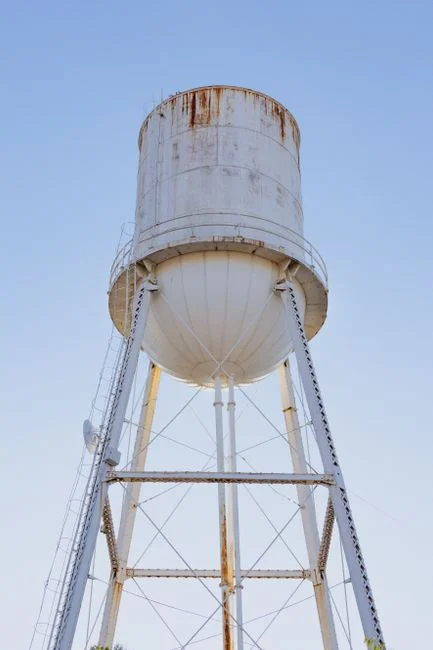
The in-house option is defensible when four conditions line up: small flow (under ~200 m³/day), genuinely low grit load, no membrane or reuse step downstream, and a willing operator team. Older CAS or MBBR plants discharging to a sewer with secondary BOD and TSS limits near 30 mg/L can usually run on a basic tank plus a coarse screen such as a rotary mechanical bar screen, provided pump rebuilds and the occasional clarifier cleanout are budgeted into the 20-year plan (per 40 CFR 133.102 secondary floor).
Outsourced mobile cleaning is the upgrade path that does not require a full CapEx commitment. A vertical grit separator or a Sand Dragon pulls sand and grit out of a live, in-service basin with no plant shutdown, which removes the most common objection to keeping an in-house tank (Settled Solids, 2026). If the site also pairs a DAF system ahead of the biological step, FOG load is controlled and the in-house tank can be matched to professional performance in practice — provided grit load stays under about 50 mg/L inert TSS and stormwater surge risk is low.
Worked ROI Example: 500 m³/day MBR Plant, 20-Year NPV
Base case: 500 m³/day industrial reuse plant, MBR scope, moderate grit load from stormwater and washwater ingress, 20-year asset window at a 5% discount rate. The avoided-cost figures draw on the HydropureWater 2026 MBR cost, compliance, and ROI engineering guide and the 2026 vendor pricing in the research above.
Option A — in-house grit tank. Added CapEx about $60,000. Grit fines drive hollow-fiber membranes to the 5-year low end of the 5–10 year life range instead of 7 years. Using $50–$100 per m² × membrane area from the MBR guide, premature replacement across the 20-year window adds roughly $60,000–$90,000 in extra CapEx, plus higher pump rebuilds and more frequent aeration-tank cleanouts. CIP frequency drifts from one event per 3–6 months to closer to one every 2–3 months, adding about $0.03–$0.05 per m³ of extra chemical and energy cost on the 500 m³/day flow (HydropureWater, 2026).
Option B — professional vortex grit system with classifier. Added CapEx about $220,000. Membrane life holds at 7 years, CIP stays at the design 3–6 month interval, and pump rebuilds drop back to a normal duty cycle. Annualized avoided cost — lower membrane CapEx, fewer pump rebuilds, fewer aeration-tank cleanouts, stable CIP — typically lands at $25,000–$60,000 per year versus the in-house case.
That delta delivers a simple payback on the $160,000 premium of roughly 3–6 years. Over 20 years at a 5% discount rate, the professional system wins by a six-figure sum on any plant that reuses water or feeds an MBR wastewater treatment system. The in-house option only stays ahead on a sewer-discharge CAS case where the avoided membrane CapEx and CIP cost are not in the trade-off. For sizing context, a 500 m³/day plant in the published 2026 band lands near $600,000 to $1.75 million installed, before site-specific civil works.
Decision Framework: How to Choose for Your 2026 Plant
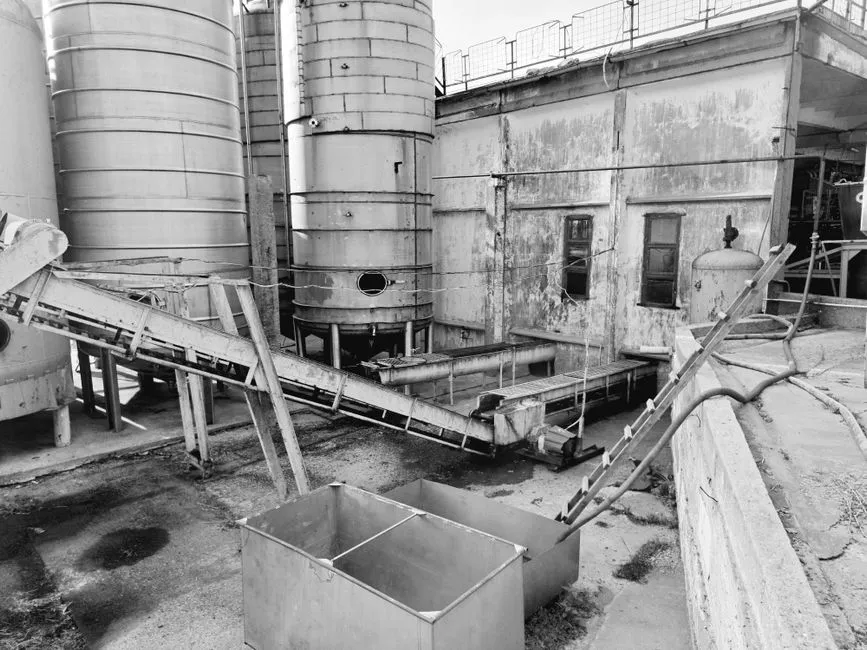
The decision collapses to four rules a buyer can take into a meeting:
- MBR, RO, or reuse scheme: buy professional grit removal up front, because membrane replacement alone ($50–$150 per m²) is the largest single avoidable cost in the train. The HydropureWater 2026 MBR cost, compliance, and ROI engineering guide treats pretreatment as the strongest lever on the 5–10 year membrane life.
- Under 200 m³/day, sewer discharge, low grit load: keep the in-house tank, but budget annual outsourced cleaning and a coarse screen for rags. A fine screen wastewater treatment guide walkthrough helps size the screen slot to the grit you actually have.
- Mid-size 200–1,000 m³/day and growing toward reuse: invest in a vortex or aerated grit chamber with a screw classifier; this is the lowest regret option in 2026 and lines up with the 3–8% of installed cost share typical of a well-sized headworks grit removal stage.
- Sizing rule: always size the grit stage against the same design max-day load used for the biological or membrane step, not the average day. A smart pump monitoring and predictive maintenance guide approach on the downstream pumps will surface any under-sizing at the grit stage fast, because grit abrasion shows up as rising vibration and bearing temperature before it shows up as visible damage.
Frequently Asked Questions
What is the real cost difference between professional grit removal and an in-house tank in 2026?
For a 200–1,000 m³/day plant, a turnkey professional vortex, aerated, or detritus system with classifier runs $150,000–$400,000 in 2026 CapEx, while an in-house tank retrofit of an existing basin runs $20,000–$80,000. The professional option typically pays back in 3–7 years on any plant feeding MBR, RO, or reuse, where avoided membrane replacement ($50–$150 per m²) and avoided CIP ($0.02–$0.05 per m³) dominate the savings (HydropureWater, 2026).
Does grit removal really extend MBR membrane life?
Yes. The HydropureWater 2026 MBR cost, compliance, and ROI engineering guide names pretreatment quality as the strongest lever for protecting the 5–10 year membrane life, and influent turbidity above 500 NTU or FOG above 200 mg/L will foul membranes quickly without it. With a 95% capture professional grit stage ahead of the membranes, hollow fiber is held near 7 years and flat sheet near 8–10 years rather than collapsing to the 5-year low end.
When is an in-house grit tank still acceptable?
Small flow under about 200 m³/day, low grit load (under roughly 50 mg/L inert TSS), no membrane or reuse step, and sewer discharge with secondary BOD/TSS near the 30 mg/L 30-day average floor of 40 CFR 133.102. If a coarse screen and a quarterly pump-out are in place and pump rebuilds are budgeted, the in-house tank can be a defensible choice.
Vortex vs aerated grit chamber — which is right for my plant?
A vortex grit chamber uses centrifugal force to throw heavier particles out of the flow and has the smaller footprint, which suits tight retrofits. An aerated grit chamber uses a controlled air roll to keep organics in suspension while sand drops out, gives better organic removal, and is more tolerant of flow swings, which suits combined sewer or stormwater-influenced headworks.
Can the in-house tank be upgraded later without replacing it?
Yes, through outsourced mobile grit removal using a vertical grit separator or a Sand Dragon that pulls sand and grit from a live, in-service basin with no plant shutdown, or through a retrofit classifier and grit pump on the existing tank (Settled Solids, 2026). This is a real stopgap for sewer-discharge sites, but it does not deliver the 95% capture and the membrane-life protection that an MBR or reuse plant needs over a 20-year asset window.