Why SBRs Are a Real Option for Pulp and Paper Effluent
Sequencing batch reactor technology removes 70–80% of COD and 55–60% of AOX from pulp and paper wastewater at an MLSS of approximately 2,100 mg/L, a 15-hour cycle, and pH near 7.5. Compared with MBR, an SBR cuts CAPEX by roughly 30–50% per m³/d, though residual colour and AOX require a downstream polishing step before reuse or direct discharge. This combination of modest cost, robust handling of variable strength, and a known polishing pathway keeps the SBR in the conversation for mill biological trains chasing compliance with SBR design for POME-style recalcitrant streams.
Pulp and paper effluent fluctuates with production campaigns. Bench-scale SBR work (Diva Enterprises / Coimbatore Institute of Technology, 2017) reported influent COD of 1,205 mg/L (low), 2,014 mg/L (medium), and 3,368 mg/L (high), with corresponding effluent COD of 222, 452, and 890 mg/L (S1). These streams carry chlorophenols, lignin derivatives, and adsorbable organic halides (AOX) that suppress biomass and slow acclimation. SBR timed-cycle operation handles these shock loads better than continuous-flow activated sludge because aeration and settling occur in the same vessel, eliminating recycles that chase hydraulic transients.
The cycle itself follows five distinct phases:
- Fill: raw or equalised influent enters the basin; mixed (anaerobic/anoxic) or aerated fill occurs depending on the target.
- React: aeration and substrate uptake dominate; the biomass metabolises COD and a portion of AOX.
- Settle: aeration stops, a sludge blanket forms, and supernatant clarifies.
- Decant: clarified effluent is drawn off the top by a floating decanter.
- Idle (optional): a short buffer for sludge wasting or phase transition before the next fill.
The headline performance envelope from the column-SBR optimisation study (Process Safety and Environmental Protection / ScienceDirect, 2024) is 73.2% COD removal and 57.6% AOX removal at pH 7.5, MLSS 2,100 mg/L, and a 15-hour cycle, with an SVI of 122.8 mL/g (S3). This data point anchors the design parameters in the next section.
Core Design Parameters for a Pulp and Paper SBR
The optimised pulp and paper SBR runs at an MLSS of 2,100 mg/L, pH 7.5, and a 15-hour cycle time, with Grau second-order and Stover–Kincannon kinetic models fitting both COD and AOX data at R² = 0.99 (S3). The table below scales that optimum into a defensible full-scale envelope; the centre of each range is the value to defend on a P&ID, while the edges represent the working window during commissioning.
| Parameter | Design range | Centre / optimum | Source |
|---|---|---|---|
| MLSS | 2,000–2,500 mg/L | 2,100 mg/L | S3 column-SBR optimum |
| F/M ratio | 0.10–0.20 kg BOD/kg MLSS·d | 0.15 | S1 aeration study, S3 kinetics |
| HRT (per basin) | 15–24 h | 18 h | S1 medium-strength run |
| Cycle time | 12–18 h | 15 h | S3 optimum |
| React-phase aeration | 4–6 h | 5 h | S1 fuzzy-logic optimum |
| DO setpoint (react) | 2–3 mg/L | 2.5 mg/L | Standard aerobic design |
| pH | 7.0–8.0 | 7.5 | S3 optimum |
| SVI target | <150 mL/g | 122.8 mL/g | S3 measured |
| Basin count | ≥2 in parallel | 2 | Redundancy / swing operation |
| Decant volume | 30–40% of working volume per cycle | ~33% | Standard SBR practice |
The F/M ratio for pulp streams sits at the low end of the activated-sludge envelope (0.10–0.15) because recalcitrant chlorophenols and high-molecular-weight lignin fragments require longer contact time with acclimated biomass. Pushing F/M above 0.20 in a pulp stream typically degrades AOX removal before it improves COD removal—a trade-off confirmed by column-SBR kinetics (S3).
Specify a minimum of two SBR basins in parallel to ensure one basin handles the active cycle while the other rests or desludges, providing 24-hour hydraulic availability. Documenting the high R² of the Grau and Stover–Kincannon fits provides a clean defence when regulators or EPC reviewers challenge F/M and HRT assumptions.
Pre- and Post-Treatment Around the SBR
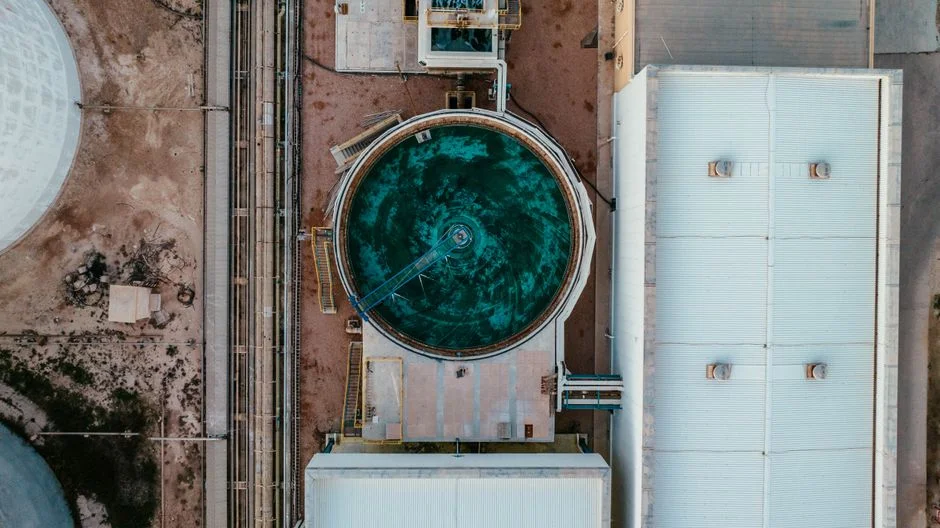
Bench-scale SBR systems leave roughly 25% of the influent COD and 40% of the AOX in the effluent, necessitating a comprehensive treatment train. A defensible pulp-mill treatment train consists of a rotary bar screen, equalisation, DAF, SBR, Fenton or ozone polishing, and optionally, MBR and RO for reuse.
Upstream, a GX series bar screen at 3–6 mm aperture removes fibre and rags before they blind the DAF or clog SBR diffusers. The DAF unit in the 4–300 m³/h range drops suspended solids, entrained pitch, and oils to protect biomass from toxicity spikes. Equalisation with 8–24 h HRT is critical because pulp streams can fluctuate by 3,000 mg/L COD in under 4 hours during a grade change; unbuffered swings will shock an SBR regardless of operational precision.
Downstream, residual colour and AOX require oxidation. Fenton polishing on SBR effluent is a well-documented path (S2) that typically drives colour below 100 Pt-Co and lifts COD removal to >90% across the train. A PLC-controlled chemical dosing skid for H₂O₂ and Fe²⁺ maintains the Fenton molar ratio within the recommended 3–5:1 band.
If the mill's goal is reuse, the DF series MBR module (0.1 µm PVDF flat-sheet) can be installed downstream of the SBR, dropping TSS below 5 mg/L and protecting downstream RO membranes from fouling. Using the MBR as a filtration polish rather than a biological reactor keeps operating costs under control.
SBR vs MBR vs Conventional Activated Sludge for Pulp and Paper
Pulp and paper biological treatment options involve trade-offs between CAPEX, footprint, effluent quality, and reuse-readiness. The table below provides a planning-level comparison for technology selection.
| Criterion | SBR | MBR | Conventional activated sludge |
|---|---|---|---|
| Relative CAPEX (per m³/d) | Medium (baseline) | ~1.5–2.0× SBR | ~0.7–0.8× SBR |
| Footprint | Large (batch basins) | ~40% of SBR | Similar to SBR |
| Effluent COD | 150–250 mg/L | <50 mg/L | 200–350 mg/L |
| Effluent TSS | 20–40 mg/L | <5 mg/L | 20–40 mg/L |
| AOX removal | 55–60% | 60–70% | 40–50% |
| Reuse suitability | Polishing + RO required | Often reuse-ready | Discharge only |
| Operator skill | Moderate (cycle PLC) | High (membrane care) | Low–moderate |
| Shock-load tolerance | Good (in-basin equalisation) | Good (membrane buffers) | Poor (continuous flow) |
If the mill targets reuse-quality effluent, an MBR eliminates tertiary costs and reduces reject volumes. If discharging to a sewer under a pretreatment agreement, the SBR provides the optimal balance of cost and compliance, supplemented by a Fenton step to close the AOX gap. The logic supporting SBR for amino acid fermentation wastewater—managing variable strength, recalcitrant organics, and downstream polishing—applies equally to pulp streams.
Worked SBR Sizing Example for a Mid-Size Pulp Mill
Assuming 500 m³/d of influent at COD 2,000 mg/L, MLSS 2,100 mg/L, 24-hour HRT, and two SBR basins operating in 12-hour alternating cycles, the total SBR working volume is 500 m³ per basin. Adding 20% freeboard for foam and decant swing results in 600 m³ per basin; with 2.5 m side-water depth, each basin requires 240 m² of footprint (a 16 m × 15 m concrete tank).
Air demand scales with BOD loading. At an F/M of 0.15 kg BOD/kg MLSS·d and BOD at 60% of COD, the daily BOD load is 2,400 kg/d. Using an oxygen requirement of 1.2 kg O₂/kg BOD and an aeration efficiency of 1.5 kg O₂/kWh, the train requires roughly 1,900 kW of installed blower capacity, or 2,500 Nm³/h of air supply. The 5-hour react-phase aeration duration (S1) justifies specifying a shorter, more intense react phase over continuous low-rate aeration.
Decant throughput is the limiting factor: with 33% decant volume per cycle and a 2-hour window, each basin passes 200 m³ of supernatant per cycle, aligning with the 500 m³/d design flow. Sludge production at 0.4 kg DS/kg BOD removed is roughly 960 kg DS/d, requiring a sludge train sized for a DAF thickener and dewatering belt press.
Frequently Asked Questions
What MLSS and cycle time should I specify for a pulp and paper SBR?
Specify MLSS 2,000–2,500 mg/L (centre 2,100 mg/L) and a 15-hour cycle time, with pH held at 7.0–8.0 and DO at 2–3 mg/L during the react phase. These values from the column-SBR optimisation (S3) delivered 73.2% COD and 57.6% AOX removal at bench scale and translate directly to full-scale design.
Can an SBR alone meet 40 CFR Part 430 BAT limits for pulp and paper?
Not reliably. Bench SBR leaves roughly 25% of influent COD and 40% of AOX in the effluent, exceeding BAT limits for several subcategories. Pair the SBR with Fenton oxidation (S2) or ozone polishing to break residual lignin chromophores and ensure compliance.
When should I choose MBR over SBR for a pulp mill?
Choose MBR when targeting reuse-quality effluent or a tight TSS ceiling (<5 mg/L). MBR CAPEX is roughly 1.5–2.0× that of an SBR, but it delivers COD <50 mg/L and AOX removal of 60–70% without a separate clarification step, often offsetting