What Makes Florida Source Water Different from Generic Treatment Designs
Florida's coastal-plain hydrogeology forces treatment trains that a generic "average US" design misses. Groundwater from the Floridan aquifer system routinely carries color above 50 Pt-Co units, total dissolved solids above 500 mg/L in regional samples, and a dissolved organic carbon profile dominated by humic and fulvic acids — a baseline documented in the USGS Georgia–Florida Coastal Plain study (USGS WRI 95-4084, 1996 data, accessed 2025). That matrix shifts coagulant dose, membrane fouling rate, and biological oxygen demand simultaneously. Any process selection that ignores it overdesigns one unit and underdesignes the next.
Climate swings drive the second shift. Northern Florida winter effluent temperatures sit near 12 °C while summer mixed-liquor temperatures exceed 30 °C, compressing and expanding nitrification kinetics across the year. Tallahassee research published in Environmental Monitoring and Assessment (2025) found 1,4-dioxane concentrations negatively correlated with both water temperature and precipitation, so biological removal and dilution improve in summer while worst-case trace-organic loading peaks in spring tertiary effluent. That single correlation determines whether your reuse polish step is sized for a March or an August influent — and it is the same dataset that links chlorination to in-situ 1,4-dioxane formation from precursor oxidation.
Hydraulic spikes are the third variable. Florida's annual rainfall averages ~1,400 mm and tropical systems routinely deliver 200–500 mm over 2–4 days, producing wet-weather flows of 5–10× average daily flow at municipal WWTPs. Equalization basins or step-feed biological reactors sized below 4× ADF will violate Chapter 62-600 monthly-average limits during these events. Engineers laying out a new headworks should match the equalization volume to the documented Florida storm envelope, not to a Ten-State Standards default. For brine-side polishing on a Florida reuse train, the RO system design parameters 2026 guide walks through recovery and flux limits that apply when TDS sits above the 500 mg/L line.
Regulated Contaminants and FDEP Compliance Targets in 2026
FDEP Chapter 62-600 FAC sets the floor: domestic wastewater treatment works must hit BOD5 ≤30 mg/L and TSS ≤30 mg/L on a monthly average basis before disinfection, with fecal coliform ≤200 CFU/100 mL as a geometric mean. Those numbers look lenient until a reuse classification raises the bar. Chapter 62-610 imposes progressively tighter limits across Type I, II, and III reuse, with Type I — the public-access category that covers most irrigation and reuse distribution systems — requiring BOD5 ≤20 mg/L, TSS ≤5 mg/L, turbidity ≤2 NTU (75th percentile), and fecal coliform ≤25 CFU/100 mL. Hitting 5 mg/L TSS and 2 NTU consistently is what forces a membrane or tertiary filtration step onto the train; it is not an upgrade, it is the definition of Type I compliance.
Nutrient caps are where the basin management action plans (BMAPs) bite. Under Chapter 62-303 and the individual BMAPs, inland discharges into watersheds including Lake Okeechobee, the Indian River Lagoon, Tampa Bay, and the Caloosahatchee face nitrogen caps of 10 mg/L and phosphorus caps of 1 mg/L, with site-specific limits often tighter. For an engineer in food processing or pulp and paper, those caps also feed into the industrial pretreatment limits discussed in the 2026 pretreatment compliance guide. The FDEP Wastewater in Florida portal (floridadep.gov, accessed 2025) is the live entry point for the current rule text and the rule-development notices that shift subchapter language between formal adoption cycles.
| Discharge Class | Regulatory Basis | BOD5 (mg/L) | TSS (mg/L) | Turbidity (NTU) | Fecal Coliform (CFU/100 mL) | Notes |
|---|---|---|---|---|---|---|
| Domestic WWTP, surface discharge | FAC 62-600 | ≤30 (mo. avg.) | ≤30 (mo. avg.) | — | ≤200 (geo. mean) | Baseline before disinfection |
| Type I reuse (public access) | FAC 62-610 | ≤20 | ≤5 | ≤2 (75th %) | ≤25 | Requires filtration or membrane |
| Type II reuse (restricted) | FAC 62-610 | ≤20 | ≤5 | ≤2 | ≤25 | Site-specific use restrictions |
| Type III reuse (industrial) | FAC 62-610 | ≤20 | ≤5 | — | ≤200 | Industrial process water only |
| BMAP watershed discharge | FAC 62-303 + BMAP | Per outfall | Per outfall | — | — | TN ≤10 mg/L, TP ≤1 mg/L typical |
Unit Process Selection Matrix for Florida Influent
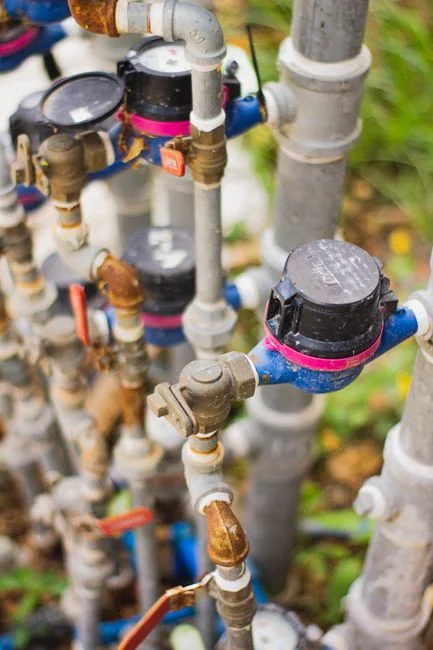
Match the unit process to the influent characteristic, not to a catalog page. The matrix below pairs each common 2026 unit with the Florida-specific operating envelope and the removal number a basis-of-design report can defend.
- Headworks screening. Rotary bar screens for Florida headworks with ≤6 mm openings protect downstream biology and membranes from the rag and fiber loads typical of food, pulp, and slaughterhouse discharges. Specify for 1,500–4,500 m³/day peak flow with screenings handling 0.5–1.5 m³/h of compacted waste.
- Primary clarification / flotation. DAF units for Florida food and industrial pretreatment achieve 80–95% TSS and 70–90% FOG removal at hydraulic loading 15–25 m/h — the standard pretreatment for Florida food, citrus, and pulp and paper operations where FOG and floatable solids dominate.
- Biological treatment. MBR systems for Florida warm-climate secondary treatment operated at MLSS 8,000–12,000 mg/L and 30–60 day SRT deliver BOD5 ≤10 mg/L, TSS ≤5 mg/L, and NH3-N ≤1 mg/L. That envelope sits inside the kinetic window for Florida's 25–32 °C summer mixed liquor and avoids the cold-weather nitrification stalls that hit northern plants.
- Disinfection. Chlorine dioxide generators for Florida reuse water avoid the bromate and trihalomethane formation that free chlorine produces in source water with bromide >0.1 mg/L — typical across central and south Florida groundwater. UV systems for chlorination-free Florida disinfection inactivate Cryptosporidium and Giardia at 40 mJ/cm² with no DBPs and are specified where the outfall enters a drinking-water-source watershed.
- Sludge handling. Lamella clarifiers and plate-and-frame filter presses handle the solids side at a typical Florida domestic yield of 0.15–0.25 kg DS/kg BOD removed, with cake target 22–28% DS for landfill or land-applying disposal.
| Unit Process | Florida-Specific Sizing / Parameter | Measured Removal or Performance | Climate / Matrix Caveat |
|---|---|---|---|
| Rotary bar screen, ≤6 mm | 1,500–4,500 m³/day, screenings 0.5–1.5 m³/h | Protects downstream biology from rags/fiber | High rag loads in food & pulp flows |
| DAF | Hydraulic loading 15–25 m/h | TSS 80–95%, FOG 70–90% | Standard for FOG-heavy Florida discharges |
| A/O or MBR | MLSS 8,000–12,000 mg/L; SRT 30–60 d | BOD5 ≤10, TSS ≤5, NH3-N ≤1 mg/L | Warm MLV speeds nitrification; cold snaps reduce rates |
| Chlorine dioxide (ClO2) | Dose 1–5 mg/L; CT per FAC 62-600 | Fecal coliform ≤25 CFU/100 mL; no bromate | Preferred where source bromide >0.1 mg/L |
| Medium-pressure UV | ≥40 mJ/cm² dose | 3–4 log Crypto/Giardia; no DBPs | Use where reuse enters drinking-water-source watershed |
| Lamella / plate-and-frame press | Yield 0.15–0.25 kg DS/kg BOD removed | Cake 22–28% DS | High summer sludge volumes; size for 5–10× ADF events |
Why Tertiary Treatment and Advanced Oxidation Are Routine in Florida, Not Optional
The Tallahassee study (Environ Monit Assess, 2025) reported the highest 1,4-dioxane concentrations in tertiary chlorination effluent — not in raw wastewater — at statistically significant seasonal and stage effects (p < 0.05). The proposed mechanism is in-situ formation from precursor oxidation during chlorination. That finding changes the polish step: free chlorine on a reuse train can raise the very trace organic the engineer is trying to control, particularly in spring when source-water precursor loading peaks.
UV/H2O2 or ozone-based advanced oxidation is therefore increasingly specified for Florida reuse projects feeding surface water augmentation or indirect potable reuse, with a target 1,4-dioxane reduction below 1 µg/L. UV systems for chlorination-free Florida disinfection paired with peroxide dosing, or ozone followed by a biologically active carbon (BAC) polisher, are the two trains the 2026 reuse permitting record favors. The takeaway for the design engineer: skip chlorination on the final polish step when the outfall enters a drinking-water-source watershed, and avoid the precursor-to-1,4-dioxane pathway entirely.
2026 Florida Compliance Checklist for Engineers and Plant Managers
Run these four checkpoints before submitting a basis-of-design to FDEP or commissioning in 2026. Each item maps to a specific rule or field-documented Florida condition.
| # | Checkpoint | Reference / Threshold | Deliverable |
|---|---|---|---|
| 1 | Confirm discharge or reuse classification | FAC 62-600 / 62-610 / 62-620; current FDEP wastewater rules | Classification memo in basis-of-design |
| 2 | Verify site-specific BMAP nutrient limits | FAC 62-303; TN ≤10 mg/L, TP ≤1 mg/L typical in listed watersheds | BMAP letter or outfall-specific limit table |
| 3 | Size equalization to storm envelope | ≥4× ADF; absorb 5–10× ADF wet-weather surge | EQ basin volume + basis-of-design calculation |
| 4 | Specify disinfection to avoid bromate | ClO2 or UV where source bromide >0.1 mg/L | Disinfection basis memo citing source-water bromide |
Match your basis-of-design report against the live FDEP Wastewater in Florida page before submission; rule text is updated more often than any consultant reference manual. For the brine and concentrate side, revisit the RO system design parameters 2026 guide to align recovery and flux assumptions with the same 500 mg/L-plus TDS matrix.
Frequently Asked Questions
What are the FDEP reuse classifications for Florida water treatment in 2026?
Chapter 62-610 FAC defines Type I (public access — irrigation, urban reuse, and most distribution systems), Type II (restricted access with site-specific controls), and Type III (industrial process water). Type I is the most common target and demands BOD5 ≤20 mg/L, TSS ≤5 mg/L, turbidity ≤2 NTU on a 75th-percentile basis, and fecal coliform ≤25 CFU/100 mL.
Why is advanced oxidation specified on Florida reuse trains instead of chlorination alone?
The 2025 Tallahassee study found the highest 1,4-dioxane in tertiary chlorination effluent, attributed to in-situ formation from precursor oxidation. UV/H2O2 or ozone-based AOPs target 1,4-dioxane below 1 µg/L without producing that precursor pathway, and they avoid bromate formation in source water with bromide above 0.1 mg/L.
How should engineers size equalization for Florida storm events?
Size equalization to at least 4× average daily flow to absorb the 5–10× ADF wet-weather surges that tropical systems produce. Document the basis-of-design calculation in the FDEP submittal; undersized EQ is one of the most common reasons Chapter 62-600 monthly averages fail after a hurricane.
Which disinfection chemistry avoids bromate in Florida source water?
Chlorine dioxide or medium-pressure UV. Free chlorine oxidizes bromide to bromate above 0.1 mg/L source bromide — typical across central and south Florida groundwater — pushing reuse effluents above the 10 µg/L drinking-water action level even when the disinfection target itself is met.
Do BMAP nutrient limits apply to every Florida discharge?
No. Basin management action plans apply to outfalls within listed watersheds — Lake Okeechobee, the Indian River Lagoon, Tampa Bay, and the Caloosahatchee are the most active in 2026. Outside those, Chapter 62-600 secondary limits still govern, but the BMAP letter is the binding number once the outfall sits inside a listed basin.