
Why an Arizona plant acquisition is a compliance event, not a financial one
An Arizona steel-mill acquisition by ArcelorMittal triggers three concurrent Arizona compliance tracks: an ADEQ Aquifer Protection Permit (APP) for any onsite wastewater irrigation or land disposal under A.A.C. R18-9-A906, an AZPDES individual or general permit for surface-water or storm-water discharges, and AAC R18-11 reclaimed-water classification if any effluent is reused. Federal Clean Water Act liability (33 U.S.C. §§ 1251 et seq.) attaches in addition, and the operator of record — not the prior owner — is accountable on closing day.
Arizona's environmental regime is structured around the polluter-pays doctrine, codified in the Arizona Environmental Quality Act (ARS Title 49). Unlike some jurisdictions that limit successor liability through statutory safe harbors, ARS Title 49 places enforcement authority with ADEQ and the Arizona Department of Law, and the rule of operator-of-record liability is applied without a buyer's shield for pre-closing contamination. A deal team evaluating a steel-mill asset should treat the closing date as the start of the regulatory calendar, not the date of first inspection.
The contrast with jurisdictions covered in the ArcelorMittal Mexico acquisition compliance guide is sharp. In Mexico, liability flows through CONAGUA discharge permits and SEMARNAT's COA registry, with no statute of limitations under LGEEPA. In Arizona, the stack is different: ADEQ enforcement, AZPDES individual or Multi-Sector General Permit (MSGP) coverage, and APP permitting under A.A.C. R18-9-A906 for any discharge that could impact a navigable water or aquifer. The ArcelorMittal Hungary acquisition compliance guide covers yet another framework. None of these are interchangeable.
Unannounced ADEQ inspections can trigger a Finding of Violation (FOV) with mandatory corrective-action orders. Civil penalties under ARS § 49-901 routinely reach six figures per violation, and ADEQ's 2025 enforcement summary recorded 142 formal FOVs against industrial facilities, with 38% involving wastewater or storm-water non-compliance (ADEQ Enforcement Report, 2025). The operator of record is the entity named on the permit on the date of inspection — meaning ArcelorMittal inherits all open findings, consent orders, and milestone schedules the day the stock-or-asset transfer closes.
The three Arizona permits that attach on closing day
An Arizona steel-mill acquisition requires the deal team to map three independent permit instruments, each with its own lead time, fee schedule, and inspection window, all running in parallel.
Aquifer Protection Permit (APP) under A.A.C. R18-9-A906. Any on-site wastewater disposal, irrigation, or recharge that could impact an aquifer requires an APP. The application is a three-step process: a Notice of Intent to Discharge, a Discharge Authorization Application with engineering design and hydrogeologic data, and a public-notice period. ADEQ review typically runs 180–270 days for a first-time industrial APP, and the fee schedule is set under A.A.C. R18-14 (ADEQ Fee Rule, 2025). For a steel-mill asset with legacy disposal ponds, the APP is the most likely instrument to delay closing-day novation.
AZPDES individual permit (A.A.C. R18-9-A201 et seq.) or Multi-Sector General Permit (MSGP). Discharges to surface waters of the United States require an individual AZPDES permit, while industrial storm-water discharges are covered under MSGP AZMSG2016-7246 (AZPDES MSGP, reissued 2021, active through 2026). The Notice of Intent (NOI) for MSGP coverage must be filed no later than 30 days before the closing date to ensure continuous coverage. Individual permits require a similar pre-closing application window and cannot be backdated.
Industrial Reclaimed Water classification under AAC R18-11. If any treated effluent is reused on-site — for cooling-tower makeup, gas-cleaning scrubbers, slag-area dust suppression, or rolling-mill scale flushing — the reclaimed-water class system applies. Class A+ is the only class suitable for unrestricted industrial contact, including closed-loop cooling and fire-protection systems. Classes A, B+, and B carry progressively looser microbiological limits and narrower end-use permissions.
All three permits run in parallel, and the federal Clean Water Act (33 U.S.C. §§ 1251 et seq.) overlay applies in addition to any state water quality standards, as confirmed in the EPA REUSExplorer summary for Arizona (2025). A single misstep in the novation sequence — for example, closing before the APP name change is recorded — leaves ArcelorMittal operating without permit coverage for the gap period, which is itself a violation.
Arizona reclaimed-water classes and which one an ArcelorMittal plant will land in
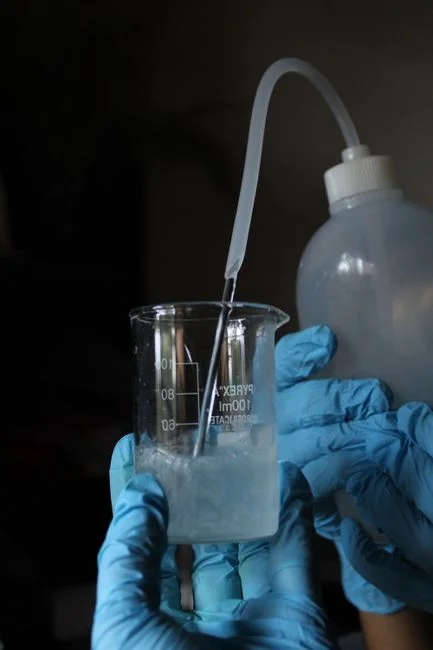
The AAC R18-11 reclaimed-water class system is the numeric centerpiece of any Arizona WWTP sizing decision. The table below summarizes the four classes, their microbiological and turbidity limits, and the end-uses each one permits. Source: EPA REUSExplorer summary for Arizona (2025), citing AAC R18-11.
| Class | Turbidity Limit | Fecal Coliform Limit | Single-Sample Max | Enteric Virus | Approved End-Uses |
|---|---|---|---|---|---|
| A+ | ≤2 NTU (24-hr avg); ≤5 NTU (any time), measured after filtration and immediately before disinfection | 0 org/100 mL in 4 of last 7 daily samples | ≤23 org/100 mL | No detectable enteric virus in 4 of last 7 monthly samples | Toilet/urinal flushing, fire protection, commercial closed-loop A/C, vehicle & equipment washing, snowmaking |
| A | ≤2 NTU (24-hr avg); ≤5 NTU (any time), measured after filtration and immediately before disinfection | 0 org/100 mL in 4 of last 7 daily samples | ≤23 org/100 mL | No detectable enteric virus in 4 of last 7 monthly samples | Toilet/urinal flushing, fire protection, commercial closed-loop A/C, vehicle & equipment washing, snowmaking |
| B+ | Not specified | <200 org/100 mL in 4 of last 7 daily samples | <800 org/100 mL | Not required | Dust control, soil compaction, concrete/cement mixing, materials washing & sieving, street cleaning |
| B | Not specified | <200 org/100 mL in 4 of last 7 daily samples | <800 org/100 mL | Not required | Dust control, soil compaction, concrete/cement mixing, materials washing & sieving, street cleaning |
For an ArcelorMittal steel-mill asset, the engineering question is which end-uses the plant targets. If the goal is closed-loop cooling-tower makeup, gas-cleaning scrubber supply, or fire-protection system feed, Class A+ is the only class that satisfies the unrestricted-contact requirement under AAC R18-11. Class B+ (200 org/100 mL fecal coliform) is too loose for any process-water contact and is typically limited to slag-area dust suppression and road compaction, where worker exposure is intermittent and PPE-mitigated.
Reclaimed water is defined under AAC R18-11 as "water that has been treated or processed by a wastewater treatment plant." This is the trigger term: if the plant discharges treated effluent to any on-site reuse, the class system applies. ADEQ will not accept a Class B+ reuse argument for a stream that enters the cooling-tower basin, because the end-use does not match the permitted application.
The turbidity chain for Class A+ is demanding: the 2-NTU 24-hour average and 5-NTU any-time limit are measured after filtration and immediately before disinfection, which means the WWTP must include a filtration stage with continuous turbidity monitoring on the filtrate line, not just at the final effluent. A coil-media or membrane filter is the typical answer; a simple sand filter rarely holds 2 NTU on steel-mill effluent without upstream coagulation optimization.
Steel-mill wastewater streams and the Arizona-fit treatment train
Each steel-mill process stream has a characteristic contaminant signature. The treatment train below maps the four primary streams an Arizona ArcelorMittal asset will generate to a unit process, with a CAPEX envelope sized for a 5–20 m³/h retrofit (illustrative, scope-dependent).
Coke-plant and blast-furnace contact water carries phenols (typically 20–200 mg/L), cyanides (1–10 mg/L), ammonia (50–500 mg/L), and free or emulsified oil. The conventional train is equalization, oil/water separation, anoxic-oxic (A/O) biological treatment for carbon and ammonia removal, and an MBR polishing step for residual COD and ammonia. An MBR for ammonia and COD polishing delivers the low effluent TSS and consistent quality that AZPDES permits and AAC R18-11 Class A+ reuse both demand.
Rolling-mill and machine-coolant water contributes high TSS (200–1,000 mg/L) and emulsified oil. A DAF system for steel-mill oil and TSS removal is the primary treatment, followed by settling and optional UF polishing if the plant targets closed-loop recycling of the coolant stream.
Slag-quench and gas-cleaning water routes high suspended solids at variable temperature (often 40–60 °C). A lamella clarifier for slag-quench and gas-cleaning water is the workhorse for this stream because of its high solids-loading capacity and small footprint — typically 80–90% less footprint than an equivalent conventional clarifier.
Mine-drainage or slurry-pipeline return water is relevant if the Arizona asset is co-located with ore handling. The treatment chain is solids management, reuse-side filtration, and tailings dewatering. For sites comparing DAF against lamella clarification on this stream, the DAF vs clarifier for mining wastewater trade-off analysis applies.
End-of-pipe sludge handling ties the train together. A filter press for steel-mill sludge dewatering sized to the dry-solids output of the DAF, clarifier, and MBR train produces a 25–35% dry-solids cake suitable for off-site disposal or, in some cases, blast-furnace sinter-feed recycling.
The 90-day post-close plan, Arizona edition
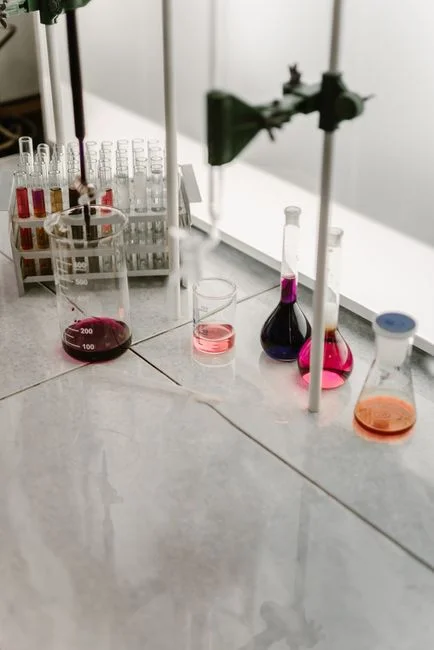
The first quarter after closing is when most inheritor-liability exposure is either captured or missed. The plan below sequences ADEQ and AZPDES actions into 30-day windows, each tied to a deliverable and a named owner. This structure mirrors the Mexico guide's framework but is keyed to Arizona instruments and milestones.
| Window | Action | Deliverable | Owner |
|---|---|---|---|
| Days 0–30 | File APP name change or new application with ADEQ; transfer AZPDES permit coverage; commission Phase II ESA covering soil, groundwater, and existing WWTP effluent data | Permit documents in new entity name; APP application accepted; ESA report draft | EHS Director + Arizona legal counsel |
| Days 31–60 | Align sampling frequency and analytical methods with AAC R18-11 and A.A.C. R18-9-A906; confirm continuous turbidity monitoring on filtration effluent; validate disinfection chain for Class A+ | Validated monitoring plan; commissioning records; turbidity chain audit | Plant EHS + WWTP operations |
| Days 61–90 | File any milestone schedule with ADEQ; commit to quarterly progress reports; centralize records; retain a local Arizona environmental consultant; train on-site EHS staff on new permit conditions | ADEQ-accepted milestone schedule; reporting calendar; document control system; training records | EHS Director + retained consultant |
Budget items are scope-dependent; the 5–20 m³/h retrofit envelope referenced above is illustrative, not a firm quotation. An unannounced ADEQ inspection under ARS § 49-901 carries a base civil penalty range that routinely reaches six figures per violation, and ADEQ's 2025 enforcement data shows 38% of FOVs in the industrial sector involved wastewater or storm-water non-compliance. The equipment scope — DAF primary removal, MBR polishing, lamella clarification, and filter-press dewatering — is a known CAPEX envelope; the audit risk is not.
Frequently Asked Questions
Which Arizona permits attach to a steel-mill asset on closing day?
Three instruments run in parallel: an ADEQ Aquifer Protection Permit under A.A.C. R18-9-A906 for any on-site wastewater disposal or irrigation, an AZPDES individual permit (A.A.C. R18-9-A201 et seq.) or MSGP AZMSG2016-7246 for surface-water or storm-water discharges, and an AAC R18-11 reclaimed-water classification if treated effluent is reused. Federal Clean Water Act (33 U.S.C. §§ 1251 et seq.) liability attaches in addition.
Who is liable for pre-closing contamination after an Arizona plant acquisition?
Under ARS Title 49 and the polluter-pays doctrine, the operator of record — the entity named on the permit on the date of inspection or enforcement action — is accountable. There is no statutory buyer's shield for pre-closing contamination, meaning ArcelorMittal inherits all open Findings of Violation, consent orders, and milestone schedules on the closing date.
What reclaimed-water class does an ArcelorMittal steel mill need for on-site reuse?
Class A+ under AAC R18-11 is the only class suitable for unrestricted industrial contact, including closed-loop cooling-tower makeup, gas-cleaning scrubbers, and fire-protection supply. Class A+ requires ≤2 NTU 24-hour average turbidity (measured after filtration, before disinfection) and 0 fecal coliform organisms per 100 mL in 4 of 7 daily samples (EPA REUSExplorer, 2025). Class B+ (200 org/100 mL) is limited to dust suppression and road compaction.