
Why EGSB Reactors Need Retrofitting After 10–20 Years
Retrofit is a vessel-preserving intervention: same tank, same plot, same civil works, with internal components swapped — versus a greenfield replacement that reuses almost nothing. A 1,000 m³/day EGSB installed in the early 2000s typically hits a performance ceiling around year 12–18 because the internals — not the steel — wear out first. The vessel is the single largest economic lever in the decision: at 24% of turnkey CAPEX, preserving it saves $130,000–$240,000 per 1,000 m³/day of installed capacity before any process gain is counted (HydropureWater vendor benchmarks, 2026).
Four canonical failure modes trigger a retrofit, and most aging reactors show at least two:
- Granule washout from a degraded 3-phase separator. Settler frames from the 1980s and 1990s were typically polypropylene plate on a high-quality hardwood frame; after 20–30 years in a humid, H₂S-rich headspace, those wood connections lose strength, the deflector geometry shifts, and granules begin to escape with the effluent (Paques, 2025).
- Channeling and dead zones from a corroded or scaled influent distributor. A reactor running below 4 m/h upflow on a 6 m/h design is hydraulically under-utilized — the design envelope is 6–10 m/h (HydropureWater field data, 2026), and anything below 4 m/h means the distributor is no longer delivering plug-flow at the base.
- Gas capture loss from a sagging or fouled gas hood. Methane yield falling below the 0.35–0.50 m³ CH₄/kg COD removed baseline is the leading indicator.
- Hydraulic shortfall from an undersized or worn recycle loop. An EGSB is rated for 3–6× feed recycle at 8–12 m head; if the pump has been downsized, the bed never expands to its design 1.5–2× settled height.
The Four Components That Define an EGSB Retrofit Package
A retrofit is best scoped as four hardware swaps, not as "a new reactor." Each component carries its own quantified gain, and the engineering RFQ can be cut around any subset.
Component 1 — 3-phase gas-liquid-solid separator. Replace first-generation polypropylene or early stainless settlers with a current-design deflection-plate separator. Separator fouling is the dominant OPEX pain point on vessels built before 2010 because the gas–liquid interface in the hood accumulates biological and inorganic scale that disrupts the capture zone (HydropureWater O&M benchmarks, 2026). A properly sized separator lifts granule retention from roughly 85% back above 98% and recovers COD removal on a fouled bed from a typical 65–75% band back to 80–90% — the 10–20 percentage point swing is the line item the CFO sees on the monthly effluent report.
Component 2 — Influent distributor. Replace channeled orifices or slotted laterals with a multi-point radial distributor to restore plug-flow at the base. The H/D 4:1–6:1 envelope and the 12–20 m vessel height are the engineering context that makes the distributor geometry non-trivial — a short vessel with a bad distributor cannot be saved by separator work alone (HydropureWater field data, 2026). An automatic chemical dosing skid paired with a redesigned distributor keeps pH and nutrient distribution even across the bed during ramp-up.
Component 3 — Gas hood and gas-handling piping. Replace corroded or sagging gas hoods; gas capture loss shows up as falling CH₄ yield below the 0.35–0.50 m³ CH₄/kg COD removed baseline. Hoods older than 15 years almost always need replacement rather than repair because spot-welded seams around the water seal have usually fatigued.
Component 4 — Recycle loop. Resize the recycle pump and replace recycle nozzles to restore the 3–6× feed flow at 8–12 m head spec. An undersized recycle is the most common reason an EGSB runs below its design OLR — the bed never expands, mass transfer stalls, and the reactor effectively runs as a slow UASB at 1–2 m/h upflow.
These four components map directly to the named rebuilds in the supplier market — UASB Rebuild, EGSB Upgrade, IC Upgrade — and the same component logic applies regardless of whether the original vessel was built by Biothane, Biotim, Degremont, Seghers, or Paques (Paques, 2025).
| Component | Typical failure mode | Retrofit fix | Quantified gain |
|---|---|---|---|
| 3-phase separator | Frame fatigue, deflector shift, granule loss | Deflection-plate separator in current design | Granule retention ~85% → >98%; COD removal +10–20 pp |
| Influent distributor | Channeled orifices, scaled laterals | Multi-point radial distributor | Upflow velocity 2–4 → 6–8 m/h; OLR +30–50% |
| Gas hood and piping | Sagging hood, fatigued seams | New hood with redundant water seal | CH₄ yield restored to 0.35–0.50 m³/kg COD |
| Recycle loop | Undersized pump, worn nozzles | Resized pump, replaced nozzles | Bed expansion 1.0× → 1.5–2.0×; mass transfer restored |
Before-and-After Parameters: What a Retrofit Actually Changes
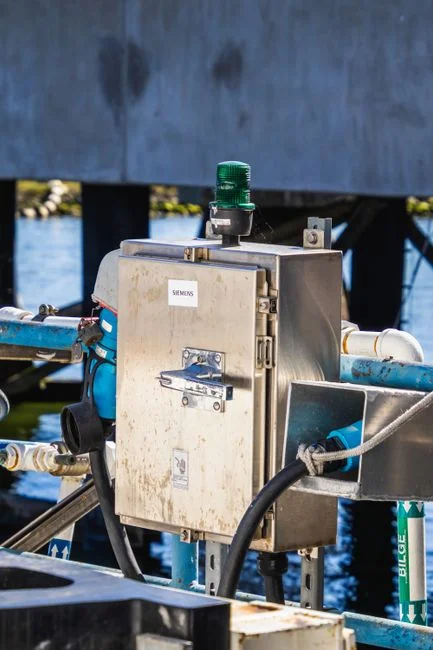
The parameter table below lets a process engineer compare the operating envelope in their existing reactor against the post-retrofit envelope, so the upgrade scope can be defended in the RFQ without resorting to vendor promises. The "before" column reflects what is typically observed on a 15-year-old EGSB running past its first major service interval; the "after" column reflects a clean, well-distributed bed operating inside the 2026 design window (HydropureWater field data, 2026).
| Parameter | Before retrofit (typical aged unit) | After retrofit (2026 design) | Source |
|---|---|---|---|
| Upflow velocity | 2–5 m/h | 6–10 m/h | S3, 2026 |
| OLR (kg COD/m³/day) | 4–8 | 8–20 | S3, 2026 |
| HRT | 24–48 h | 6–24 h | S3, 2026 |
| Recycle ratio | 1–2× feed (degraded pump) | 3–6× feed | S3, 2026 |
| MLVSS (mg/L) | 20,000–35,000 | 40,000–60,000 at 1,500–2,000 mg/L TSS feed | S3, 2026 |
| Separator capture efficiency | ~85% | >98% | S2, 2025 |
| Gas capture / CH₄ yield | 20–40% below baseline | 0.35–0.50 m³ CH₄/kg COD removed | S3, 2026 |
| COD removal (food, brewery, starch) | 65–75% | 80–90% | S1, S2 |
A rotary bar screen at the reactor headworks is the single most effective pre-retrofit risk reducer, because rag fouling of the recycle pump seals is the largest unplanned-downtime cause on aged EGSBs (HydropureWater maintenance logs, 2024–2025).
Retrofit vs. Replacement: A 2026 Decision Framework
Four binary checks decide whether to retrofit or replace. They are ordered by frequency of elimination — most plants fail on check 1 or 3, not on cost.
| Check | Retrofit favored | Replace favored | Rationale |
|---|---|---|---|
| 1. Vessel height and foundation | ≥10 m height, no measurable settlement | <10 m height or visible foundation movement | H/D 4:1–6:1 envelope cannot be hit on a short vessel (S3, 2026) |
| 2. Plot and hydraulic profile | Existing pipework, feed wells, gas line reusable | Site has been re-plumbed since original build | Re-plumbing usually negates the civil-works saving of retrofit |
| 3. Influent envelope | TSS can be held ≤2,000–2,500 mg/L with a DAF unit upstream of the reactor | TSS routinely exceeds 2,500 mg/L | High-TSS feed demands a UASB pre-stage or a new reactor geometry (S3, 2026) |
| 4. CAPEX breakeven and age | Vessel <15 years old; retrofit is 40–70% of greenfield | Vessel >15–20 years old, not stainless-clad | Steel-cladding condition drives the second-decade decision |
Paques frames this exactly: a major overhaul is a "solid alternative to a whole new reactor" provided the existing structure and plot are intact, regardless of original supplier (Paques, 2025). At the 40–70% greenfield ratio, retrofit pays back faster in nearly every case where checks 1–3 pass — the civil works are reused, the biology is preserved, and the only new line items are the four internal components and a 3–6 week outage.
2026 Retrofit Cost Envelope and Payback Logic
Greenfield turnkey CAPEX for an EGSB in 2026 sits at $535–$1,000 per m³/day, including biogas handling, feed system, recycle pumps, and instrumentation (HydropureWater vendor benchmarks, 2026). Applying the 40–70% ratio that defines a true retrofit (internals-only, civil works preserved) gives a 2026 retrofit envelope of $215–$700 per m³/day — the figure an engineer can paste straight into an RFQ.
Worked example for a 1,000 m³/day EGSB:
- Lower end ($215,000): separator and distributor swap only, gas hood inspected but retained, recycle pump serviced in place.
- Upper end ($700,000): full distributor, separator, gas hood, and recycle loop replacement, plus instrumentation refresh and a new gas-water separator skid.
Against the 2.5–4.5-year payback window for EGSB at 2026 industrial tariffs (HydropureWater O&M benchmarks, 2026), retrofits typically shorten payback by 1–2 years because civil works are reused and the granular sludge bed is preserved rather than re-seeded from scratch. The swing items to budget separately: a rotary bar screen at the headworks is mandatory, not optional, and a boiler-burner skid for biogas utilization adds $40,000–$80,000 (S3, 2026). The 2026 EU and Chinese industrial tariff ranges anchor the figure; site-specific power and discharge fees will shift the result ±30%.
Implementation Sequence: From Decision to Restart
A retrofit, once approved, can be planned around a maintenance window without a full production stop. The cleanest sequence runs six steps over 3–6 weeks, depending on component scope (Paques, 2025).
- Internal inspection of the tank, piping, and gas system. Suppliers offering rebuild packages typically include this as the first on-site activity, and it is the step that confirms or invalidates the four-check decision framework before the tank is drained.
- Granular sludge storage during outage. Paques-style rebuilds include sludge preservation so the biology survives the shutdown — typically a holding tank with mild mixing and temperature hold at 30–35°C.
- Tank cleaning and scaffolding once the bed is removed. This is the right window to inspect the steel below the gas–liquid interface, where corrosion concentrates.
- Component replacement in this order: distributor, separator, gas hood, recycle nozzles. Lowest-impact first to avoid disturbing the bed once re-laid.
- Leak test, gas purge, and instrument recalibration before re-seed.
- Controlled re-seed and ramp-up over 14–30 days, with the expected MLVSS trajectory moving toward the 40,000–60,000 mg/L design window (HydropureWater field data, 2026).
Bypass to a parallel reactor — or to a temporary second line using an MBR polishing stage for the upstream effluent during the outage — is the cleanest way to keep the upstream plant running through the rebuild. This is the exact scenario covered in the UASB commissioning guide for greenfield ramps and applies to retrofit restart with minor differences in the seeding protocol.
Frequently Asked Questions
What does a 2026 EGSB retrofit cost per m³/day?
The 2026 retrofit envelope is $215–$700 per m³/day, derived from 40–70% of the $535–$1,000 per m³/day greenfield turnkey range. For a 1,000 m³/day EGSB, the all-in cost lands between $215,000 (separator and distributor only) and $700,000 (full internals replacement with instrumentation refresh), per HydropureWater vendor benchmarks, 2026.
How long does an EGSB retrofit take from shutdown to restart?
Installation runs 3–6 weeks depending on scope: roughly 1 week for inspection and sludge removal, 1–3 weeks for component replacement, 1 week for leak testing and gas purge, and 14–30 days for controlled re-seed and ramp-up to design OLR, per Paques, 2025.
Can a retrofit be applied to a non-Paques reactor?
Yes. The four-component logic — separator, distributor, gas hood, recycle loop — is supplier-agnostic and has been applied to Biothane, Biotim, Degremont, and Seghers vessels (Paques, 2025). The engineering scope is identical; only the original vessel drawings differ.
What is the difference between an EGSB upgrade and an IC upgrade?
An EGSB upgrade targets the four standard internals on an expanded-bed vessel; an IC upgrade is a separate scope applied to internal-circulation reactors suffering biomass deposition and loss of mixing in scaling-prone streams, typically where SO₄²⁻:COD exceeds 0.5 (Paques, 2025).