Why Biddeford, ME Changes the Federal Pretreatment Math
Semiconductor plants near Biddeford, Maine meet 2026 sewer-discharge pretreatment limits by stacking three nested rules — 40 CFR Part 403 (the Industrial Pretreatment Program), 40 CFR Part 413 (the semiconductor categorical floor), and the City of Biddeford Sewer Use Ordinance Chapter 71 (the binding local ceiling) — and they hit the local ceiling with a four-stage train: source segregation, CaF2 precipitation at pH 6–8 and metal hydroxide at pH 9–10.5, DAF or lamella clarification, and ion exchange or RO polishing. The local ceiling is almost always stricter; Biddeford's Chapter 71 caps Cu at 2.00 mg/L, Ni at 5.20 mg/L, total Cr at 6.00 mg/L, Ag at 2.00 mg/L, NH3 at 593 mg/L, and pH at 5.0–11.5 s.u. (Ord. 2010.101; Ord. 2023.37). The same fab drain that sails through the federal Part 413 categorical floor in Phoenix will violate Chapter 71 on day one in Biddeford, and the POTW is authorized to enforce the tighter number under 40 CFR 403.5(c).
The three layers are not redundant. 40 CFR Part 403 establishes the Industrial Pretreatment Program itself: any "industrial user" discharging to a POTW must strip pollutants that pass through, interfere with biological treatment, or contaminate sludge (per EPA 40 CFR 403.3). 40 CFR Part 413 layers semiconductor-specific categorical daily and monthly maxima on top — the federal categorical floor, not the local ceiling. The receiving POTW's Sewer Use Ordinance is a third, often stricter ceiling, and federal rules explicitly permit a POTW to enforce limits tighter than the categorical floor when its headworks, digesters, or receiving stream require it.
For a Biddeford project, a fourth overlay is decisive and is the layer every competing top-ranked page misses. Maine statute 38 M.R.S. § 411 and the Maine Department of Environmental Protection (DEP) industrial waste rules add numerical limits, MEPDES-permit toxicity testing, and (where the receiving stream is on Maine's 303(d) list) TMDL-driven monitoring that the Wesson and BiCMOS templates do not address. Engineers who design to the categorical floor and hope the local limit is permissive discover the binding number during a baseline monitoring report — far too late to resize a chemical-precipitation skid. The right first move is to pull Chapter 71, the most-recent IPP discharge permit, and any active Maine DEP industrial waste findings before any CaCl2 dose rate is set.
The Biddeford Sewer Use Ordinance Limits an Engineer Must Design Against
Chapter 71 §2 of the Biddeford Sewer Use Ordinance, last amended by Ord. 2023.37, is the binding numeric ceiling for any industrial user tied to the Biddeford POTW. The Director of Wastewater may impose equivalent mass limits in addition to the concentration-based limits below and may set BMPs by ordinance or in individual wastewater discharge permits (per ecode360, City of Biddeford Chapter 71 §2). Chromium is regulated as total Cr — there is no Massachusetts/Ecology-style hex-chrome split at the local level, so Cr(VI) reduction is an engineering choice, not a permit trigger. Federal categorical standards (40 CFR Parts 405–471) apply in parallel where stricter.
| Parameter | Biddeford local limit (daily max) | 40 CFR Part 413 semiconductor categorical (reference) |
|---|---|---|
| pH | 5.0–11.5 s.u. (lower than 5.0 never; higher than 11.45 for 5 min only) | 5.0–10.0 s.u. (reportable range) |
| Copper (Cu) | 2.00 mg/L | 1.21 mg/L daily max / 0.96 mg/L 30-day avg |
| Nickel (Ni) | 5.20 mg/L | 1.59 mg/L daily max / 1.38 mg/L 30-day avg |
| Chromium, total (Cr) | 6.00 mg/L | 1.71 mg/L daily max / 1.07 mg/L 30-day avg |
| Lead (Pb) | 1.00 mg/L | 0.69 mg/L daily max / 0.32 mg/L 30-day avg |
| Silver (Ag) | 2.00 mg/L | 0.84 mg/L daily max / 0.43 mg/L 30-day avg |
| Zinc (Zn) | 2.00 mg/L | 2.61 mg/L daily max / 1.48 mg/L 30-day avg |
| Cadmium (Cd) | 0.20 mg/L | 0.69 mg/L daily max / 0.26 mg/L 30-day avg |
| Arsenic (As) | 0.30 mg/L | — |
| Selenium (Se) | 1.82 mg/L | — |
| Molybdenum (Mo) | 1.66 mg/L | — |
| Cyanide | 0.70 mg/L | 1.20 mg/L daily max / 0.65 mg/L 30-day avg |
| Mercury (Hg) | 1,270 ng/L (suggestive; State of Maine set) | 0.20 mg/L daily max / 0.10 mg/L 30-day avg |
| Ammonia (NH3) | 593 mg/L | — |
| BOD5 | 3,756 mg/L | — |
| TSS | 4,000 mg/L | — |
| Oil & grease (O&G) | 200 mg/L | — |
| TTO (total toxic organics) | 4.00 mg/L | 2.13 mg/L |
The specific prohibitions most relevant to a fab are pH below 5.0 or above 11.5, temperature above 104 °F (40 °C), detergents or surfactants that cause excessive foaming, dye/color-imparting wastes, and any wastewater that causes the treatment plant's effluent to fail toxicity testing under the City's MEPDES permit (per ecode360 Chapter 71 §2). Two non-numeric triggers will close a fab's discharge faster than a metals excursion: a foaming event in the POTW headworks and a positive whole-effluent toxicity test result. Both are common findings when segregated fab drains are recombined upstream of pretreatment.
Four Stream Families, Four Binding Parameters
Every Biddeford-area fab P&ID eventually resolves to four drain types, and each one trips a different Chapter 71 parameter. Mapping drains to the right treatment stage starts with this taxonomy — and it is the action step that prevents the most common IPP audit finding, which is misclassified streams. No single unit operation hits all four ceilings, and segregation is mandatory because pH windows (6–8 for F⁻, 9–10.5 for metals) and biological acclimation conflict (per HydropureWater field data, 2026).
| Stream family | Typical feed concentrations | Binding parameter (Chapter 71) | Working target |
|---|---|---|---|
| 1 — Wet-etch & post-etch cleaning | HF/NH4F as F⁻ 50–500 mg/L; Si, B, surfactant | Fluoride (pass-through; 20–30 mg/L already inhibitory to methanogens) | 5–8 mg/L F⁻ at train outlet |
| 2 — CMP slurry & filter backwash | Cu, Ni, Co, Cr, Pb, Ag; colloidal SiO2 200–1,000 mg/L | Individual metals caps: Cu 2.00, Ni 5.20, Pb 1.00, Ag 2.00 mg/L; combined ≤5 mg/L working | Single-digit mg/L per metal; ≤5 mg/L combined |
| 3 — TMAH photoresist developer | TMAH 100–200 mg/L as fed; COD 20,000–60,000 mg/L | NH3 593 mg/L (biodegrades to NH3-N) | <50 mg/L NH3-N before biotreatment |
| 4 — Utility floor drains | Lubricants, lint, hair; O&G 50–500 mg/L; TSS 200–1,000 mg/L | TSS 4,000 mg/L and O&G 200 mg/L | Pre-screen to ≤150 mg/L TSS; O&G ≤50 mg/L |
The TMAH → NH3-N linkage is the most commonly missed constraint. TMAH is not inhibitory at the wet-bench concentration, but the moment it lands in a biotreatment basin the molecule cleaves and the ammonia load pops. Combining the developer stream with the HF stream forces a pH compromise that hurts both CaF2 precipitation efficiency and downstream biological acclimation. Segregated piping is the only reliable answer.
The Four-Stage Train That Hits the Biddeford Ceiling
The de facto standard train is a four-stage sequence, and the design basis for every stage is the design-day pollutant mass load (kg/day), not the average flow. Batch discharges from wet-etch tools and post-CMP cleaning can swing the instantaneous fluoride load by a factor of 3–5× over the daily average (HydropureWater field data, 2026), which means sizing to average flow guarantees a permit excursion on a bad day.
Stage 1 — Source segregation. Fluoride-bearing streams from wet-etch and post-etch cleaning are kept separate from CMP slurry waste and from TMAH/ammonia developer streams. A GX series rotary mechanical bar screen with 2–6 mm spacing and auto-cleaning sits at the head of the train. Skipping this item is the single most common cause of Stage 2 dosing-pump failures in field audits (HydropureWater field data, 2026), because particulates, hair, and lint from utility-floor drains damage dosing-pump diaphragms and clog the DAF recycle eductor.
Stage 2 — pH neutralization and chemical precipitation. CaCl2 or lime is dosed into the fluoride stream to drive CaF2 (Ksp ≈ 3.9 × 10⁻¹¹) at pH 6–8, capable of single-digit mg/L effluent on a well-tuned system. NaOH or lime is then dosed into the metal-bearing stream at pH 9–10.5. A PLC-controlled automatic chemical dosing skid with pH and fluoride ISE feedback typically holds reagent addition within ±5% of the setpoint. A second, parallel stream handles TMAH/ammonia; the NH3 cap is not hit by precipitation but by source control and downstream biotreatment.
Stage 3 — Solids/liquid separation. A DAF system is preferred for high-flow (4–300 m³/h), low-density, or oily fluoride streams at 4–25 m/h hydraulic loading with consistent float capture. A high-efficiency lamella clarifier wins where footprint is constrained and solids are denser, at 20–40 m/h surface loading. Both devices routinely deliver overflow TSS in the 30–60 mg/L range when upstream chemistry is correct. The DAF-versus-lamella decision is covered in detail in the DAF vs lamella clarifier buyer's guide.
Stage 4 — Polishing. Ion exchange beds polish trace metals to single-digit µg/L, and an industrial RO polishing system at 75–95% recovery per pass brings TDS and residual fluoride below any applicable limit and produces reuse-grade permeate for non-critical rinsing or cooling-tower makeup. RO permeate that is not reused is sewered well below any applicable limit and acts as the compliance safety net. For BiCMOS or mixed-signal Cu-BEOL lines, the BiCMOS IC pretreatment compliance guide documents how a CMP-side metal-loading variant extends the same train. Engineers comparing Maine fab permitting to Washington fab permitting will find the parallel structure in the Camas semiconductor pretreatment guide.
Sludge Handling and the Haul-vs-Sewer Cost Crossover
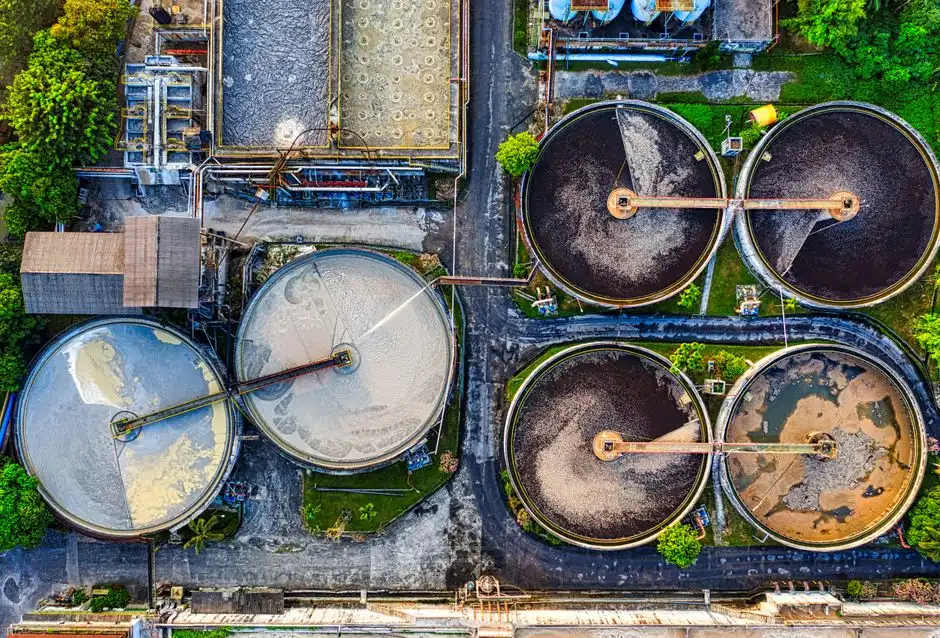
Sludge from Stage 3 reports as 1–4% dry solids. A plate and frame filter press sized from 1 m² (pilot) to 500 m² (full fab, multi-press line) dewaters that sludge to a 25–35% dry-solids cake for off-site disposal, with filtrate returned to the head of the train. If the upstream chemistry produces a sludge that retains pollutants through EPA's Toxic Characteristic Leaching Procedure (TCLP), the cake can be disposed of as non-hazardous waste at a fraction of the hazardous-waste rate. Polymer flocs that re-leach under dewatering pressure re-classify the cake as hazardous — the engineer who specifies a robust Stage 2 chemistry also closes the loop on Stage 3 solids handling, and these are not separable decisions.
Disposal routing is the OPEX swing on the back end. Sewer discharge is the cheap path and the only one that scales with fab throughput; off-site liquid hazardous-waste hauling runs roughly 5–10× the cost per cubic meter (per industry benchmarks, 2025-09). Pretreatment CapEx pays back the moment the haul-vs-sewer crossover is crossed, and the recycle filtrate stream must be folded into the equalization mass balance so the press does not silently re-load the head of the train.
Online Monitoring and the IPP Permit Cycle
Equipment alone does not keep a Biddeford-area fab in compliance; the online instrument suite and the SOP file do. The minimum IPP monitoring package for a fab regulated under 40 CFR Part 403 is a continuous pH probe and a fluoride ion-selective electrode (ISE) on the combined effluent header, plus a total-metals analyzer — typically an on-line ICP-OES or XRF-on-line unit — for Cu, Ni, Cr, and any other metal Chapter 71 specifically lists (per HydropureWater field data, 2026). Continuous monitoring satisfies the 24/7 expectation most POTWs now write into IPP permits and gives the operations team minutes of warning before a limit is exceeded, not hours.
The operational frame that turns equipment into a compliance program is the IPP permit cycle. A new or re-issued IPP permit runs 5 years and binds the fab to monthly Discharge Monitoring Reports, routine POTW inspections (typically annual baseline, more frequent for Significant Non-Compliance facilities), a slug-control plan for accidental releases, and SOPs plus calibration records for every piece of equipment on the train. Per 40 CFR Part 403, the slug-control plan must define maximum allowable slug discharge rates, storage capacity for accidental releases, and a notification protocol. Maine-specific overlay: Maine DEP may add monitoring or toxicity-character requirements on top of the POTW permit; the engineer should request both files at the start of basis-of-design. Procuring the PLC-controlled chemical dosing skid with a Modbus/OPC-UA data export is the single most consequential step to keep the SOP file aligned with the on-line instrument records.
Frequently Asked Questions
What are the binding 2026 sewer discharge limits for a semiconductor fab near Biddeford, ME?
The binding ceiling is the City of Biddeford Sewer Use Ordinance Chapter 71 (Ord. 2010.101; Ord. 2023.37), which sets Cu at 2.00 mg/L, Ni at 5.20 mg/L, total Cr at 6.00 mg/L, Ag at 2.00 mg/L, NH3 at 593 mg/L, and pH at 5.0–11.5 s.u. — almost all stricter than the 40 CFR Part 413 semiconductor categorical floor (per ecode360 Chapter 71 §2).
How does a four-stage treatment train reliably hit 5–8 mg/L fluoride and <2 mg/L copper at sewer discharge?
Source segregation splits the fluoride, metals, and TMAH streams; CaCl2 or lime precipitation at pH 6–8 drives CaF2 (Ksp ≈ 3.9 × 10⁻¹¹) to single-digit mg/L; metal hydroxide precipitation at pH 9–10.5 strips Cu/Ni; DAF or lamella clarification drops TSS to 30–60 mg/L; ion exchange or RO polishing takes residual metals to single-digit µg/L (per HydropureWater field data, 2026).
What is the IPP permit cycle and what paperwork does a Biddeford-area fab need to maintain?
An IPP permit under 40 CFR Part 403 typically runs 5 years and binds the fab to monthly Discharge Monitoring Reports, annual baseline POTW inspections, a slug-control plan for accidental releases, and SOP/calibration records for every piece of equipment on the train; Maine DEP may add toxicity-character monitoring on top of the POTW permit (per EPA 40 CFR 403).
Why is the Maine DEP overlay treated as a fourth regulatory layer for Biddeford fabs?
38 M.R.S. § 411 and the Maine Department of Environmental Protection industrial waste rules add MEPDES toxicity testing, TMDL-driven monitoring where the receiving stream is listed, and state-set clean mercury (1,270 ng/L) suggestive limits on top of the federal 40 CFR Part 403 / Part 413 framework and the Biddeford local ceiling — a layer Washington-state guides cover with Ecology but Maine-specific articles routinely miss.