
What Intel Inherits on Day 0 Under Malaysian Law
In 2026, an Intel acquirer of a Malaysian plant does not inherit a free-standing "transferred permit" the way an EU buyer inherits a re-issued IED permit. The buyer inherits the seller's environmental approval status under the Environmental Quality Act 1974 (EQA 1974) and must operate under the Industrial Effluent Regulations 2009 (P.U.(A) 434) and the scheduled-waste rules under the EQA 1974. A change-of-operator notification must be filed with the Department of Environment (DOE) within 30 days of legal transfer, a fresh written approval must be re-applied for where the prescribed activity, throughput, or effluent profile changes, and compliance with Standard A or B limits plus site-specific written-approval conditions is mandatory from Day 1 (per EQA 1974 Sections 18 and 18A and DOE IER 2009, doe.gov.my).
EQA 1974 Section 18 requires written approval to construct or operate any prescribed premises listed in the regulations; transfer of share or asset ownership does not automatically re-issue that approval. EQA 1974 Section 18A requires premises registration with a 30-day change-of-operator notification to the DOE state directorate where the plant sits. Any pending DOE directive, stop-work order, or scheduled-waste non-compliance transfers to the buyer by operation of law — that is the hard SPA indemnity line item, not the permit text alone.
The Four Compliance Layers That Govern a Malaysia Fab
Four parallel compliance regimes govern a Malaysia fab acquisition in 2026, and each one constrains a different part of the discharge envelope. Getting the routing right is the first job of the diligence lead, because the wrong instrument surfaces the wrong expert and misses the right defect.
Layer 1 is the EQA 1974 and its subsidiary regulations, the umbrella statute administered by DOE Malaysia. Layer 2 is the Industrial Effluent Regulations 2009 (P.U.(A) 434), which sets Standard A (for discharge upstream of a waterworks intake) and Standard B (downstream) for 31+ parameters. Layer 3 is the Environmental Quality (Scheduled Wastes) Regulations 2005 and the EQA 1974 HSIP framework, which governs consignment-note duty of care for hazardous sludge, waste solvent, and the heavy-metal-bearing waste streams typical of a fab. Layer 4 is the chemical-input overlay that travels with the product: RoHS 2011/65/EU, REACH (EC 1907/2006) for an EU-origin target, US TSCA, and the 2026 PFAS phase-in under EU Regulation 2023/915 — declare, do not discharge, for PFAS-bearing chemistries (per DOE IER 2009, P.U.(A) 434, and EQA 1974, doe.gov.my).
| Layer | Instrument | What it controls | Administering body |
|---|---|---|---|
| 1 | EQA 1974 / EQR 1979 | Written approval (s.18), premises registration (s.18A), change-of-operator notification | DOE Malaysia (state directorate) |
| 2 | Industrial Effluent Regulations 2009 (P.U.(A) 434) | Standard A & B effluent limits — COD, BOD₅, TSS, total N, total P, pH, F, metals | DOE Malaysia |
| 3 | EQA 1974 HSIP / Scheduled Wastes Regulations 2005 | Consignment notes, licensed carrier, scheduled-waste storage limits | DOE Malaysia |
| 4 | RoHS 2011/65/EU; REACH (EC 1907/2006); TSCA; PFAS EU 2023/915 | Substance authorisation, restriction, declaration for cross-jurisdictional buyers | EU ECHA / US EPA / corporate EHS |
For an EU-origin target, Layer 4 is the trip-wire most often missed by a Malaysia-only diligence team: REACH declaration duties travel with the product, not the discharge permit, and the 2023/915 PFAS ceiling applies to articles placed on the EU market irrespective of where the fab sits.
Fab-Specific Effluent Streams and Where the Permit Tightens
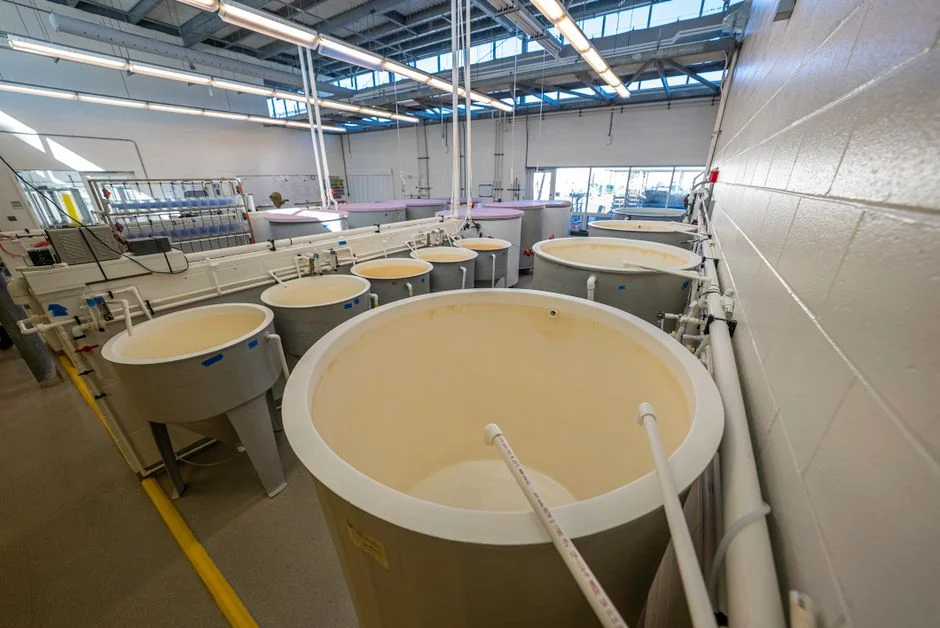
The four-layer stack only becomes useful when it is mapped to fab-typical streams. The diligence chemist will defend numbers, not statutes, so the table below pairs each fab stream with the IER 2009 parameter that actually binds the permit.
HF/oxide-etch fluoride arrives at the ETP head at roughly 1,000 mg/L HF-equivalent in concentrated waste; the IER 2009 Standard A fluoride ceiling is ≤8 mg/L, a 100× reduction requirement before the stream leaves the boundary. TMAH (tetramethylammonium hydroxide) from developer chemistry is biodegradable to trimethylamine, which carries its own aquatic toxicity — the right answer is a dedicated biological stage with acclimatised biomass, not chemical precipitation. CMP slurry and plating-rinse copper is typically 0.5–1 mg/L without pretreatment, and the binding number is the IER 2009 metal ceiling plus the HSIP scheduled-substance list, which is materially tighter than the influent figure. Nickel, zinc, and lead from solder and interconnect routes are tracked under IER 2009 Annex with site-specific permit values typically ≤0.2 mg/L Ni and ≤0.5 mg/L Zn. Nitrate carries a 50 mg/L drinking-water ceiling and a key National Water Quality Standards (NWQS) receiving-water classification parameter — the local river basin status can constrain the discharge above the IER limit alone (per DOE IER 2009 and DOE NWQS, doe.gov.my).
| Fab stream | Influent range | IER 2009 / HSIP binding parameter | Design implication |
|---|---|---|---|
| HF / oxide-etch fluoride | ~1,000 mg/L HF-eq. concentrated | F ≤8 mg/L (Standard A) | Ca precipitation + fluoride polishing; cannot rely on dilution |
| TMAH developer | Site-specific; biodegradable to trimethylamine | BOD/COD plus aquatic-toxicity envelope | Dedicated biological stage with acclimatised biomass |
| CMP slurry / plating Cu | 0.5–1 mg/L Cu | HSIP scheduled substance; site-specific metal ceiling | DAF + ion exchange; HSIP consignment note on sludge |
| Ni / Zn / Pb (solder, interconnect) | Variable, not separately disclosed | Ni ≤0.2 mg/L; Zn ≤0.5 mg/L (typical permit) | Precipitation + MBR polishing; sludge to HSIP route |
| Nitrate (UPW regen, acid neutralisation) | Site-specific | 50 mg/L drinking-water ceiling; NWQS receiving-water status | Biological denitrification stage; basin-status check |
The design margin that survives a substantive DOE review is 15–20% below the IER Standard A band, not at its upper edge — comparable to the 15–20% margin the Hungary BAT-AEL envelope demands, but operating here under a much narrower statutory appeal window.
Diligence Checklist Sized for a 2026 Fab Acquisition
The six-item checklist below is sized for a 2026 fab acquisition and is the same baseline structure used in comparable acquirer playbooks. Each item is paired with the specific red flag that should price into the SPA indemnity schedule.
- Current written approval text plus all modification approvals for the last 10 years — throughput caps, effluent conditions, expiry date. Red flag: approval expiring within 12 months of closing or conditions tighter than current DOE practice.
- 36 months of self-monitoring discharge data with chain-of-custody on lab accreditation (DOE-recognised or MS ISO/IEC 17025). Red flag: repeated Cu/Zn/Ni/F exceedances or missing months.
- Baseline soil and groundwater report (Malaysian equivalent of EU Article 22, triggered on operator change for prescribed premises). Red flag: missing or stale baseline.
- Scheduled-waste manifests and consignment notes under the EQA 1974 HSIP framework. Red flag: sludge to a non-licensed route or missing consignment notes.
- Open DOE enforcement actions, directives, and site-visit minutes. Red flag: pending notice of violation or overdue corrective-action plan.
- Process flow diagrams and hydraulic / pollution-load capacity check against the planned post-acquisition ramp. Red flag: undersized DAF (>20% shortfall) — a hard price-down item.
| Diligence item | Red flag triggering price-down |
|---|---|
| Written approval + modifications (10-yr) | Expiring within 12 months; conditions stricter than current DOE practice |
| 36-month self-monitoring data | Repeated Cu/Zn/Ni/F exceedances; missing months; non-accredited lab |
| Baseline soil & groundwater report | Missing or stale baseline; no baseline on file |
| Scheduled-waste manifests / consignment notes | Sludge to non-licensed route; missing consignment notes |
| Open DOE enforcement actions | Pending notice of violation; overdue corrective-action plan |
| P&IDs + hydraulic / pollution-load capacity | DAF undersized >20% against planned throughput |
Treatment Train for a Malaysia Fab ETP Retrofit
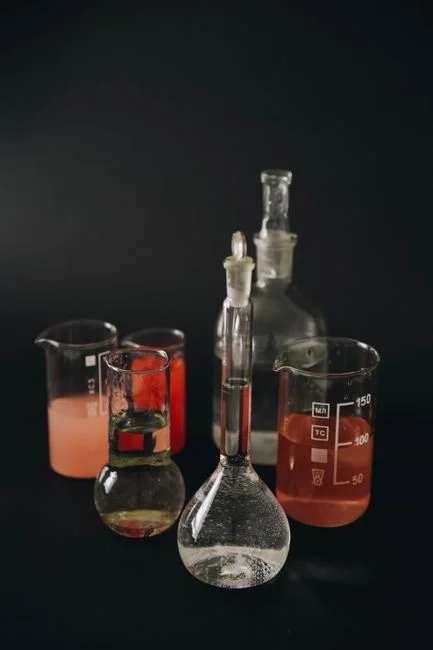
The treatment train below translates the regulatory envelope into equipment categories an M&A lead can price. Each stage carries a design margin that survives a substantive DOE review (per hydropurewater compliance library, 2026).
Stage 1 headworks protection uses a rotary mechanical bar screen at 2–6 mm aperture, sized for 8–24 hours of hydraulic equalization to dampen the diurnal single-shift tool peaking typical of a fab. Stage 2 physico-chemical treatment uses an industrial DAF system for FOG, suspended solids, and colloidal fluoride from HF-bearing streams, with standard frames covering 4–300 m³/h and a 4–300 m³/h frame range that suits 500 m³/day fab retrofits. Stage 3 secondary treatment is a PVDF flat-sheet MBR module at 0.1 µm pore size (DF-series), with each cassette delivering 32–135 m³/day and units scaled in parallel for 500 m³/day duty; this stage targets combined BOD, total N, and TSS polishing. Stage 4 tertiary treatment is an industrial RO polishing system with selective ion exchange for residual fluoride before recycle or discharge; recovery up to 95% cuts freshwater withdrawal, which is the negotiating point with the state water authority (e.g., Air Selangor, SAJ). A PLC-controlled chemical dosing system supports pH adjustment and fluoride precipitation across stages 2–4. Stage 5 sludge handling uses a plate-and-frame filter press to dewater metal-loaded biosludge above 22% dry solids, with filter pressate recycled to the head of the plant. See the CMP-slurry hybrid DAF-MBR-RO engineering case study for the cross-reference case on this train.
Day-1 Closure Plan: The 30/60/180-Day Gantt
Day 1 of operator control is the start of a 30-day clock that runs in parallel with the permit procedure. The integration team should treat the period as a Gantt, not a to-do list, because several filings have statutory deadlines that cannot slip without legal exposure.
Days 0–30: file the change-of-operator notification with the DOE state directorate where the plant sits; appoint a registered EIA consultant; serve a 24-hour non-compliance notification for any transition-period discharge. Days 30–60: re-file the Section 18A registration; novate any municipal discharge consent; refresh scheduled-waste carrier authorisations. Days 60–180: a new Section 18 written approval application, where the activity changes, runs in parallel with design and procurement — DOE substantive decision is due within the statutory window once the application is complete. Two adjacent rules shape the sequence. The 24-hour notification rule: any unplanned discharge during the transition triggers the 24-hour DOE notification rule, and failure to notify is itself a non-compliance event. The easement pitfall: the written approval does not grant pipeline right-of-way across public drainage — separate property easements and a parallel workstream with the state water authority are required, not optional.
| Window | Action | Statutory driver |
|---|---|---|
| Days 0–30 | File DOE change-of-operator notification; appoint EIA consultant; 24-h non-compliance notification ready | EQA 1974 s.18A; DOE practice |
| Days 30–60 | Re-file s.18A registration; novate municipal discharge consent; refresh HSIP carrier authorisations | EQA 1974 s.18A; municipal consent |
| Days 60–180 | Submit new s.18 written approval (if activity changes); design & procurement run in parallel | EQA 1974 s.18; DOE decision window |
2026 CAPEX, OPEX and SPA Pricing Levers
An M&A model needs a defensible 2026 cost band, not a placeholder. The indicative 2026 CAPEX for a 500 m³/day Malaysia fab ETP retrofit (screening + EQ + DAF + MBR + RO + sludge) is MYR 13–22 million, scaled from the HydropureWater 2026 field-data band and adjusted to the Malaysian fabrication cost base. OPEX is dominated by electricity and membrane replacement, driving 18–25% of CAPEX per year; a packaged skid approach compresses OPEX by 10–15% (per HydropureWater field data, 2026).
The freshwater-offset precedent matters because Malaysia's state-water-utility model is the binding constraint, not just the IER 2009 ceiling. A fab-scale site will need to negotiate a discharge / withdrawal envelope with the state water authority (e.g., Air Selangor in Selangor, SAJ in Johor), and the binding number is the local river basin status under the DOE National Water Quality Standards (NWQS). Comparable offset precedent and the parallel cost structure are set out in the Vancouver semiconductor and data-hall compliance guide.
The SPA line items the acquirer should price in are: 36-month self-monitoring exceedance history; baseline report status; undersized DAF; missing pipeline easements; and any pending DOE directive within the limitation window.
Frequently Asked Questions
Does the Malaysia written approval transfer automatically to Intel?
No. Automatic transfer is not the Malaysian doctrine. The buyer files a change-of-operator notification to DOE within 30 days under EQA 1974 Section 18A, and a fresh Section 18 written approval is re-applied for where the prescribed activity, throughput, or effluent profile changes. Pending directives, stop-work orders, and scheduled-waste non-compliance transfer to the buyer by operation of law and are priced as SPA indemnity items.
What effluent limits apply to a semiconductor fab in Malaysia in 2026?
IER 2009 Standard A or B limits apply depending on intake location relative to a waterworks intake, plus HSIP scheduled-substance thresholds for fluoride, copper, nickel, zinc, and other metals typical of fab chemistry. The headline parameters are COD ≤50/100 mg/L, BOD₅ ≤20/50 mg/L, TSS ≤50/100 mg/L, total N, total P, and pH 5.5–9.0 (per DOE IER 2009, P.U.(A) 434).
How long does DOE take to issue a new written approval?
DOE operates a statutory window of 180 days from receipt of a complete application. Design and procurement must run in parallel with the application rather than sequentially, or the schedule slips. A parallel data-room structure is set out in the Toronto semiconductor and data-hall wastewater guide.
What is the indicative CAPEX for a 500 m³/day Malaysia fab ETP retrofit in 2026?
MYR 13–22 million, depending on receiving-water constraints and freshwater-offset obligation (per HydropureWater field data, 2026). The range covers screening + EQ + DAF + MBR + RO + sludge handling.
Which treatment stages are non-negotiable for a fab ETP in Malaysia?
Equalization, DAF for FOG and colloidal fluoride, MBR for organics and metals, RO polishing for reuse or tight discharge, and sludge dewatering by filter press. Skipping any of these stages creates an exceedance exposure under IER 2009 or an HSIP consignment-note failure on the metal-loaded sludge route.
Related Equipment
- industrial RO polishing system — specifications, capacity range, and technical data