
Why Domestic Sewage Treatment in Cairns Is Different
Domestic sewage treatment in Cairns has to solve three problems that mainland-temperate guidance rarely covers: wet-season hydraulic shock, Great Barrier Reef nutrient accountability, and a sharp north-south soil split. Cairns records mean annual rainfall around 2,000 mm and 24-hour falls that have exceeded 200 mm in multiple wet seasons, which drives severe inflow and infiltration (I&I) into both septic tanks and buried package plants; hydraulic buffering equal to at least one day of peak flow is therefore a sizing prerequisite, not an option. The region sits inside the Great Barrier Reef catchment, where the Queensland Government has linked elevated nitrogen and phosphorus loads to inshore reef decline, so any discharge pathway — surface irrigation, subsurface disposal, or ocean outfall — is now scrutinised for total nitrogen (TN) and total phosphorus (TP) performance, not just BOD. Compliance flows from the Plumbing and Drainage Act 2018 (QLD) and AS/NZS 1547:2012 for on-site sewerage facility (OSF) design, with council-specific overlays such as Cairns Regional Council planning schemes controlling setback, flood, and tidal-influence overlays. Sub-regional soils are not uniform: the Cassowary Coast is dominated by recent alluvial and sandy profiles with high percolation but shallow groundwater, while the Atherton Tablelands sits on basaltic clay loams with slower percolation and lateral subsurface flow; both extremes break generic "soil class 6" assumptions used in temperate designs. Together these constraints mean that a system selected on CAPEX alone will often fail hydraulically in February or breach effluent targets by June.
QLD Compliance and Effluent Quality Targets for 2026
Two approval pathways govern domestic sewage treatment in Cairns in 2026. Where reticulated sewer is available within the Cairns Regional Council sewer service area, connection is mandatory and treatment is the utility's responsibility; outside that area, the owner must obtain an on-site sewerage facility (OSF) permit under the Plumbing and Drainage Act 2018 and demonstrate compliance with AS/NZS 1547:2012 through a site and soil assessment, design report, and licensed installer sign-off. The commonly required bands for secondary-treated effluent under AS/NZS 1547, used as design targets by Cairns Regional Council for standard residential discharge, are BOD₅ ≤ 20 mg/L, TSS ≤ 30 mg/L, and E. coli ≤ 10 cfu/100 mL, with TN typically targeted at ≤ 20 mg/L and TP ≤ 5–8 mg/L where surface irrigation is proposed. Advanced secondary or tertiary treatment — usually meaning denitrification plus filtration or membrane separation, often with UV or chlorination — is triggered when the disposal pathway is surface irrigation, when the site falls inside a GBR-sensitive receiving environment, or when the premises is a food business, healthcare facility, or commercial kitchen producing grease-laden trade waste. Owners also accept ongoing obligations: AWTS require a service contract with a Queensland-licensed service provider at intervals of roughly 3 months, septic tanks need a desludging cycle of 2–5 years depending on loading, and councils retain the right to inspect both performance and maintenance records.
| Parameter | Typical AS/NZS 1547 secondary target | When stricter tertiary target applies |
|---|---|---|
| BOD₅ | ≤ 20 mg/L | ≤ 10 mg/L (surface irrigation, reuse) |
| TSS | ≤ 30 mg/L | ≤ 10 mg/L (MBR effluent) |
| E. coli | ≤ 10 cfu/100 mL | ≤ 1 cfu/100 mL (subsurface drip, food premises) |
| Total nitrogen | ≤ 20 mg/L | ≤ 10 mg/L (GBR-sensitive catchment) |
| Total phosphorus | ≤ 5–8 mg/L | ≤ 2 mg/L (irrigation to GBR catchment) |
Main System Types Used for Cairns Domestic Sewage
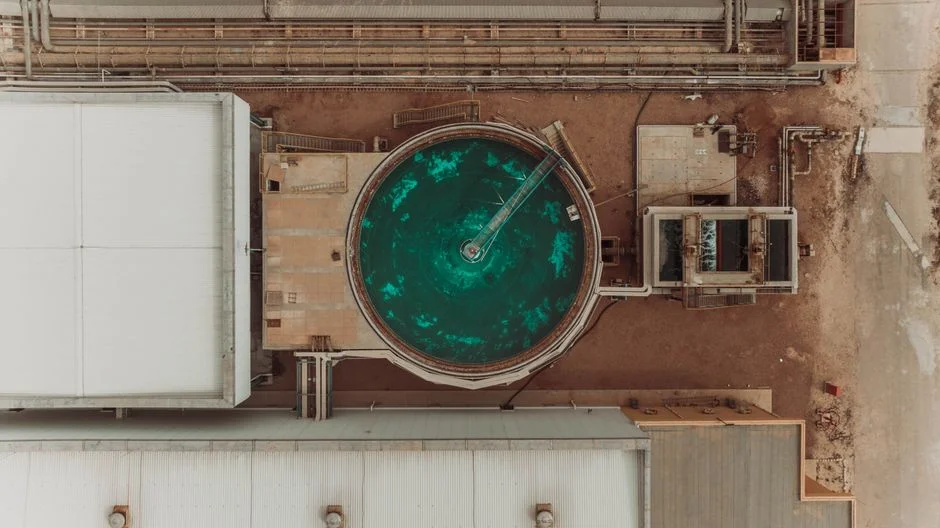
Four technology families cover the realistic 2026 Cairns market, and they differ sharply in footprint, power demand, and effluent quality. Septic tank plus drainfield or subsurface irrigation is the lowest-CAPEX option and remains the default for large rural lots with permeable soil, adequate setbacks, and a willing owner; effluent polishing depends on soil-aquifer treatment, so nitrogen removal is limited. Aerated wastewater treatment systems (AWTS) are the workhorse for residential lots: compact, powered, and capable of secondary effluent with modest nitrogen reduction, but they require a 3-monthly service contract and a reliable blower. Package A/O plants (WSZ-type) combine anoxic and aerobic contact oxidation in a single buried unit, run fully automated with no operator, and cover the 1–80 m³/h band used by hotels, schools, and workers' accommodation; for buried A/O package sewage treatment plant applications in this range the WSZ configuration is the standard reference. MBR package plants add a submerged membrane stage — typically a submerged PVDF MBR membrane module with nominal pore size below 1 μm — which cuts footprint by roughly 60% compared with conventional activated sludge and produces near-reuse effluent; an integrated MBR membrane bioreactor suits tight urban sites, water-reuse loops, and strict effluent targets. Vermifiltration is a niche low-energy option using earthworm-assisted media beds; it is documented for decentralised domestic flows (per S2, IntechOpen, 2022) but is not a Cairns mainstream solution and should be evaluated case by case.
| System type | Typical flow band | Footprint | Power | Effluent quality (BOD/TSS/N) | CAPEX band (AUD) |
|---|---|---|---|---|---|
| Septic + drainfield | 1–5 m³/d (residential) | Large (irrigation area dominant) | None | ~30/30/40 mg/L post-tank, soil-polished | Low tens of thousands |
| AWTS | 1–5 m³/d (residential) | Compact surface unit | Blower, ~1–2 kWh/d | ≤20/≤30/~30–40 mg/L | Low–mid tens of thousands |
| Package A/O (WSZ) | 1–80 m³/h | Buried, ~60% of CAS | Blower + dosing, ~0.4–0.6 kWh/m³ | ≤20/≤30/≤20 mg/L with anoxic stage | High tens to low hundreds of thousands |
| MBR package | 10–2,000 m³/d | ~40% of CAS | Blower + permeate pump, ~0.6–0.9 kWh/m³ | ≤5/≤5/≤10 mg/L | Premium over A/O, driven by membrane train |
| Vermifilter (niche) | 1–10 m³/d | Large bed area | Minimal (dosing pump) | ~20/15/25 mg/L, site-dependent | Low–mid, but limited local supply chain |
Cairns Site Constraints That Drive System Selection
Before comparing technology, eliminate options that your specific block cannot accept. Soil class and percolation dictate the size of the irrigation area: basaltic clay loams on the Atherton Tablelands typically fall into AS/NZS 1547 soil classes 5–6 with design percolation rates of 3–8 mm/d, which forces either a much larger drip-irrigation field or a packaged treatment plant with subsurface disposal under pressure; sandy coastal lots around Cairns city and Trinity Beach often sit in class 1–2 with rates of 30–80 mm/d, but the trade-off is rapid groundwater mounding and limited nutrient attenuation. Lot size and setbacks under AS/NZS 1547 impose minimum distances to boundaries, bores, and watercourses that frequently use up most of a suburban block, which is why the "available irrigation area" is the real sizing constraint rather than peak daily flow. Flood and tidal influence rules out surface equipment in low-lying suburbs prone to king-tide and storm-surge inundation — anchored, buried, watertight package plants are the only realistic option below the defined flood level. Power reliability in the Cairns grid is generally good, but cyclonic events cut supply for hours to days; AWTS and MBR owners should plan for emergency storage equal to at least one peak day's flow and a high-water alarm, since aeration loss for more than 6–8 hours risks partial biological failure and odour complaints.
Decision Framework: Which System Fits Your Project
The decision below is a starting point, not a substitute for a site and soil assessment by a Queensland-licensed designer. If the project is a single rural home on a large lot with permeable soil and adequate setbacks, the default remains septic tank plus subsurface irrigation — lowest CAPEX, no power, but limited nitrogen removal. For a residential subdivision without reticulated sewer, the practical choice is an AWTS for individual lots or a small package A/O plant in the 1–10 m³/h range serving a clustered development. Resorts, hotels, workers' camps, and schools in the 10–80 m³/h band are the sweet spot for a buried A/O package sewage treatment plant such as the WSZ series, which keeps the site clear for landscaping and parking. Where the site is a tight urban block, the operator wants water reuse for irrigation, or the discharge target is at the strict end of the AS/NZS 1547 range, step up to an MBR package plant in the 10–2,000 m³/day band, typically specified with a submerged PVDF MBR membrane module and UV or chlorination polish before subsurface drip irrigation. Every AWTS and MBR selection must be paired with a multi-year service contract with a Queensland-licensed provider; the contract is the single most common point of failure when councils issue non-conformance notices, and for hotel-scale flows a packaged MBR STP selection guide for hotels covers most of the same risk questions a Cairns resort will face.
2026 CAPEX and OPEX Bands for Domestic Sewage Treatment in Cairns
Treat the figures below as bands for sanity-checking quotes, not as fixed tender prices; site conditions, council fees, and 2026 supply-chain variation will move them. CAPEX: a small residential AWTS in the Cairns region typically lands in the low tens of thousands AUD installed; a mid-size package A/O plant sized for 10–80 m³/h generally sits in the high tens to low hundreds of thousands AUD; an MBR package plant at 10–2,000 m³/day commands a premium, with the membrane train and cassette system the single largest cost line. OPEX is dominated by electricity for blowers and permeate pumps, desludging (typically every 2–5 years for septic and AWTS sludge, less frequent for A/O and MBR due to lower sludge yield), AWTS service contracts at roughly 3-monthly intervals, membrane replacement for MBR (plan on 7–10 years for PVDF modules with proper maintenance), and consumables such as chlorine or UV lamps. On-site disposal is often 20–40% of total installed cost once drip lines, pump stations, and the reserve irrigation area are added, and that land is permanently sterilised for building — an OPEX in kind, not just in dollars. A useful rule of thumb: per ASABE field data, the treatment unit alone typically removes less than 50% of total nitrogen, with the rest achieved by soil-aquifer treatment in the drainfield; design as if the land itself is part of the treatment train. For municipal-scale cost and compliance context beyond a single site, the municipal sewage treatment cost and compliance engineering guide applies many of the same sizing and budgeting principles.
| Cost line | Septic + drainfield | AWTS (residential) | Package A/O (10–80 m³/h) | MBR package (10–2,000 m³/d) |
|---|---|---|---|---|
| CAPEX band (AUD) | $15k–$40k | $25k–$60k | $150k–$600k | $300k–$2m+ |
| Main OPEX lines | Desludging 2–5 yr | Power, 3-monthly service, desludging | Power, automated, low operator | Power, membrane life-cycle, service |
| Disposal-area cost share | 20–40% of total | 15–30% | 10–25% | 5–15% (drip or reuse) |
| Typical service interval | Annual inspection | 3-monthly | 6–12 monthly | Monthly to quarterly |
Frequently Asked Questions
Do I need council approval for a domestic sewage treatment system in Cairns?
Yes. Outside the reticulated sewer service area, an on-site sewerage facility (OSF) permit is required under the Plumbing and Drainance Act 2018 (QLD) and must demonstrate compliance with AS/NZS 1547:2012 via a site and soil assessment and licensed installer sign-off. Inside the sewer service area, connection to the Cairns Regional Council network is mandatory.
What effluent quality does AS/NZS 1547 require for irrigation in Cairns?
For standard subsurface disposal, secondary targets of BOD₅ ≤ 20 mg/L, TSS ≤ 30 mg/L, and E. coli ≤ 10 cfu/100 mL are commonly applied. Where the site drains to the Great Barrier Reef catchment or surface irrigation is proposed, expect stricter targets of TN ≤ 10 mg/L and TP ≤ 2 mg/L, which usually pushes the design toward an MBR package plant rather than a basic AWTS.
How often does an AWTS need servicing in Queensland?
A Queensland-licensed service provider must inspect a domestic AWTS roughly every 3 months under the standard service contract, with desludging typically scheduled every 2–5 years depending on household size and load. Skipping service intervals is the most common cause of council non-conformance and is grounds for permit revocation.
Is a buried package plant suitable for a flood-prone Cairns suburb?
Yes, provided the tank is anchored, watertight, and installed with electrical conduits and vents above the defined flood level. Buried A/O and MBR package plants are preferred over surface equipment in low-lying, king-tide-affected areas because the treatment process continues during partial inundation once power is restored. An emergency storage volume of at least one peak day's flow is still recommended.
Related Equipment
- buried A/O package sewage treatment plant — specifications, capacity range, and technical data