Municipal Sewage Treatment Plants in Gujarat India: 2025 Engineering Guide with Costs, Compliance & Equipment Checklist
Gujarat’s municipal sewage treatment plants (STPs) must meet CPCB 2022 norms (BOD ≤ 10 mg/L, TSS ≤ 20 mg/L) and local GPCB amendments. As of 2025, Gujarat has 12+ operational STPs, including Surat’s Anjana (82.5 MLD) and Bhesan (100 MLD) plants, with costs ranging from ₹120–₹450 per m³/day depending on technology (MBR vs. conventional) and scale. This guide provides engineering specs, compliance checklists, and equipment selection criteria for 50–200 MLD projects.Gujarat’s Municipal Sewage Treatment Landscape: 2025 Regulatory and Capacity Overview
Gujarat's urban population grew 22% between 2011 and 2021, according to the Census 2021, intensifying the demand for robust municipal sewage treatment infrastructure. This growth drives the need for new STPs and upgrades to existing facilities, with current installed capacity estimated at approximately 500 MLD across major cities. Surat alone accounts for around 300 MLD, Vadodara 100 MLD, and Ahmedabad 100 MLD. Meeting stringent environmental regulations is paramount for these facilities. The Central Pollution Control Board (CPCB) 2022 norms for municipal STPs mandate effluent quality with BOD ≤ 10 mg/L, TSS ≤ 20 mg/L, COD ≤ 50 mg/L, and fecal coliform ≤ 100 MPN/100 mL. Additionally, the Gujarat Pollution Control Board (GPCB) enforces local amendments, including pH between 6.5–8.5 and oil & grease ≤ 10 mg/L, ensuring comprehensive environmental protection. Key operational STPs in Gujarat include Surat's Anjana (82.5 MLD), Bhesan (100 MLD), and Bhatar (50 MLD) plants, Vadodara's 66 MLD facility, and Ahmedabad's 100 MLD plant. These plants represent a mix of technologies and capacities, providing valuable benchmarks for new projects. However, municipal STP projects in Gujarat face several challenges. Land scarcity in urban areas often limits the available footprint, making compact solutions like MBR systems, which can achieve footprints as small as 0.1–0.2 m²/m³/day, highly desirable. Energy costs, typically ranging from 0.3–0.6 kWh/m³ for conventional systems, also represent a significant operational expenditure. sludge disposal is a critical concern, with GPCB mandating co-processing in cement kilns to ensure environmentally sound management.Table 1: Key Operational Municipal STPs in Gujarat (2025)
| STP Name | Location | Capacity (MLD) | Approx. Technology |
|---|---|---|---|
| Anjana STP | Surat | 82.5 | Conventional Activated Sludge |
| Bhesan STP | Surat | 100 | Sequencing Batch Reactor (SBR) |
| Bhatar STP | Surat | 50 | Conventional Activated Sludge |
| Pirana STP (under construction) | Ahmedabad | 180 | Membrane Bioreactor (MBR) |
| Vadodara STP | Vadodara | 66 | Conventional Activated Sludge |
| Ahmedabad STP (various) | Ahmedabad | ~100 (total) | Mixed (Conventional, SBR) |
(Image placeholder: A Google Maps embed showing the locations of major STPs in Gujarat, highlighting Surat, Ahmedabad, and Vadodara.)
Engineering Specifications for Gujarat Municipal STPs: Influent, Effluent, and Process Parameters
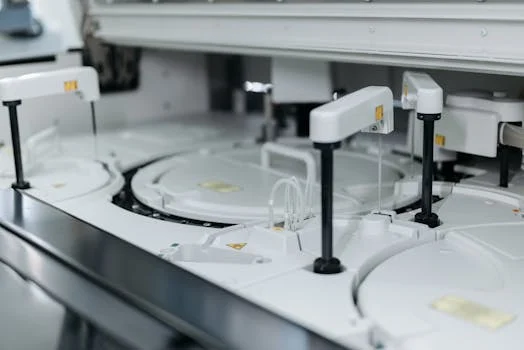
Table 2: CPCB 2022 Effluent Standards vs. Typical Influent Characteristics for Gujarat Municipal STPs
| Parameter | Typical Influent (mg/L) | CPCB 2022 Effluent Standard (mg/L) | Minimum Removal Efficiency Required |
|---|---|---|---|
| BOD | 150–300 | ≤ 10 | 93–97% |
| TSS | 200–400 | ≤ 20 | 90–95% |
| COD | 300–600 | ≤ 50 | 85–92% |
| NH₄-N | 20–40 | ≤ 5 (GPCB for sensitive areas) | 75–87.5% (if applicable) |
| Fecal Coliform | 106–108 MPN/100 mL | ≤ 100 MPN/100 mL | >99.9% |
| pH | 7.0–8.0 | 6.5–8.5 (GPCB) | N/A (adjustment if needed) |
| Oil & Grease | 10–20 | ≤ 10 (GPCB) | 0–50% (primary treatment) |
Cost Benchmarks for Municipal STPs in Gujarat: 2025 Capital and O&M Costs
The capital cost for municipal sewage treatment plants (STPs) in Gujarat ranges from ₹120–₹450 per m³/day in 2025, significantly influenced by technology choice and project scale. For conventional STPs designed for 50–200 MLD capacity, capital costs typically fall between ₹120–₹250 per m³/day. However, for Membrane Bioreactor (MBR) systems, particularly for capacities between 10–50 MLD (though larger MBRs are becoming more common), the capital cost increases to ₹250–₹450 per m³/day due to the specialized membrane technology. These figures encompass civil works, mechanical equipment, electrical systems, and instrumentation. Operational and maintenance (O&M) costs also exhibit a clear distinction by technology. Conventional STPs incur O&M costs ranging from ₹2.5–₹5.0 per m³, while MBR systems typically range from ₹5.0–₹8.0 per m³. A breakdown of these costs reveals that energy consumption accounts for approximately 50%, chemicals for 20%, labor for 15%, and maintenance for the remaining 15%. This highlights energy as the primary O&M cost driver. Several factors critically influence project costs. Land acquisition costs in urban Gujarat can range from ₹1,500–₹3,000 per m², making the land footprint of the chosen technology a major consideration. Energy tariffs, typically ₹6–₹8 per kWh, directly impact O&M expenses. Sludge disposal, particularly with GPCB mandates for co-processing, adds a significant cost of ₹2,000–₹4,000 per ton. An ROI framework for municipal STPs indicates payback periods of 5–10 years for conventional systems, reflecting their lower capital outlay. MBR systems, despite higher capital costs, offer payback periods of 7–12 years, often justified by their smaller footprint and superior effluent quality. For a more detailed understanding of cost benchmarks for South Asian STP projects, refer to this wastewater treatment plant cost in Pakistan engineering breakdown. A prominent example is the Pirana STP in Ahmedabad, a 180 MLD MBR facility under construction, with an estimated capital cost of ₹850 crore, translating to approximately ₹472 per m³/day. Its projected O&M cost is around ₹4.2 per m³.Table 3: Capital and O&M Cost Benchmarks for Municipal STPs in Gujarat (2025)
| Cost Category | Conventional STP (50-200 MLD) | MBR STP (10-50 MLD) | Key Drivers |
|---|---|---|---|
| Capital Cost (₹/m³/day) | ₹120–₹250 | ₹250–₹450 | Civil works, mechanical, electrical, instrumentation, land |
| O&M Cost (₹/m³) | ₹2.5–₹5.0 | ₹5.0–₹8.0 | Energy (50%), chemicals (20%), labor (15%), maintenance (15%) |
| Land Cost (₹/m²) | ₹1,500–₹3,000 (urban Gujarat) | Location, plot size, technology footprint | |
| Energy Tariff (₹/kWh) | ₹6–₹8 | Local electricity rates, power consumption | |
| Sludge Disposal (₹/ton) | ₹2,000–₹4,000 (for co-processing) | Volume, transport, co-processing facility charges | |
| ROI Payback Period (Years) | 5–10 | 7–12 | Capital cost, O&M savings, regulatory compliance value |
(Link placeholder: Download our simple ROI calculator Excel template for municipal STP projects.)
Equipment Selection Checklist for Gujarat Municipal STPs: MBR vs. SBR vs. Conventional
Table 4: Technology Comparison for Municipal STPs in Gujarat
| Criterion | Conventional Activated Sludge (CAS) | Sequencing Batch Reactor (SBR) | Membrane Bioreactor (MBR) |
|---|---|---|---|
| Footprint (m²/m³/day) | 0.4–0.8 (Largest) | 0.3–0.5 (Medium) | 0.1–0.2 (Smallest) |
| Effluent Quality (BOD) | ≤ 20 mg/L (Good) | ≤ 15 mg/L (Better) | ≤ 5 mg/L (Excellent) |
| Effluent Quality (TSS) | ≤ 30 mg/L (Good) | ≤ 25 mg/L (Better) | ≤ 5 mg/L (Excellent) |
| Energy Use (kWh/m³) | 0.3–0.6 (Lowest) | 0.4–0.7 (Medium) | 0.5–0.8 (Highest) |
| Capital Cost (₹/m³/day) | ₹120–₹250 (Lowest) | ₹150–₹300 (Medium) | ₹250–₹450 (Highest) |
| O&M Complexity | Low to Medium | Medium | Medium to High (membrane cleaning) |
| Sludge Production (kg TSS/kg BOD removed) | 0.2–0.4 (Highest) | 0.15–0.35 (Medium) | 0.1–0.3 (Lowest) |
| Process Flexibility | Moderate | High (for variable loads) | Moderate |
| Land Sensitivity | High | Moderate | Low |
Case Studies: Engineering Lessons from Gujarat’s Largest Municipal STPs
Analysis of Gujarat's largest municipal STPs, including Surat's Anjana and Bhesan plants and Ahmedabad's Pirana facility, reveals distinct engineering and operational characteristics based on their chosen treatment technologies. These case studies provide invaluable insights into design considerations, compliance achievements, and cost efficiencies for municipal engineers and urban planners.Table 5: Comparative Analysis of Major Municipal STPs in Gujarat
| Feature | Anjana STP (Surat) | Bhesan STP (Surat) | Pirana STP (Ahmedabad, under construction) |
|---|---|---|---|
| Capacity (MLD) | 82.5 | 100 | 180 |
| Technology | Conventional Activated Sludge | Sequencing Batch Reactor (SBR) | Membrane Bioreactor (MBR) |
| BOD Removal | 95% | 90% | 97% (projected) |
| TSS Removal | 92% | 88% | 95% (projected) |
| Energy Use (kWh/m³) | 0.45 | 0.55 | 0.7 (projected) |
| O&M Cost (₹/m³) | ₹3.8 | ₹4.5 | ₹4.2 (projected) |
| Capital Cost (₹/m³/day) | Approx. ₹180 | Approx. ₹220 | ₹472 (₹850 crore total) |
| Footprint (m²/m³/day) | ~0.6 | ~0.4 | ~0.2 |
Frequently Asked Questions

Q: How much does a municipal sewage treatment plant cost in Gujarat?
A: The capital cost for a municipal sewage treatment plant in Gujarat ranges from ₹120–₹450 per m³/day (2025), depending on the chosen technology (conventional vs. MBR) and the plant's scale. For example, the Pirana STP in Ahmedabad, with a capacity of 180 MLD, had a capital cost of ₹850 crore, which translates to approximately ₹472 per m³/day.
Q: What are the CPCB norms for STP effluent in Gujarat?
A: The CPCB 2022 norms for STP effluent in Gujarat require BOD ≤ 10 mg/L, TSS ≤ 20 mg/L, COD ≤ 50 mg/L, and fecal coliform ≤ 100 MPN/100 mL. Additionally, GPCB amendments specify pH between 6.5–8.5 and oil & grease ≤ 10 mg/L.
Q: Which is better for Gujarat: MBR or conventional STP?
A: The choice between MBR and conventional STP depends on specific project requirements. MBR systems are generally better for land-constrained urban areas due to their significantly smaller footprint (0.1–0.2 m²/m³/day) and deliver superior effluent quality. Conventional STPs are often more cost-effective for large-scale projects where land availability is not a major issue and where slightly less stringent effluent quality is acceptable.
Q: How many STPs are there in Gujarat?
A: As of 2025, Gujarat has more than 12 operational municipal STPs. Major cities like Surat (with a total capacity of ~300 MLD), Vadodara (~100 MLD), and Ahmedabad (~100 MLD) house a significant portion of this infrastructure.
Q: What are the disadvantages of STPs?
A: Key disadvantages of sewage treatment plants include high capital costs (ranging from ₹120–₹450 per m³/day), substantial energy consumption (typically 0.3–0.8 kWh/m³), and ongoing challenges with sludge disposal, which in Gujarat, is mandated by GPCB for co-processing in cement kilns, adding to operational expenses.