Why Wastewater Treatment Plant Costs in Pakistan Are Rising (And What It Means for Your Project)
Wastewater treatment plant costs in Pakistan range from PKR 600,000 for small commercial systems to PKR 56 billion for municipal mega-projects like Faisalabad’s Mahmudabad Nala plant in 2025. Key cost drivers include treatment technology, scale, and compliance with Pakistan’s NEQS standards. This guide provides engineering-level cost breakdowns, compliance requirements, and an ROI calculator for projects from 1 m³/h to 100,000 m³/day.
The Rawal Dam sewage treatment plant project serves as a critical benchmark for the 50% cost overruns currently affecting Pakistan’s infrastructure sector. Originally budgeted at PKR 4 billion, the revised PC-I for the three STPs in the dam’s catchment area now stands at PKR 6 billion. This escalation is primarily driven by the devaluation of the PKR against the USD and a 20% year-on-year increase in the cost of construction materials. For engineers, any project feasibility study older than six months is likely obsolete.
The scale of investment is shifting; the Mahmudabad Nala mega plant in Karachi is now estimated at PKR 56 billion, a massive leap from the PKR 7.5 billion figures discussed for similar capacities in 2020. These increases are not merely inflationary but also reflect the 2024 updates to the National Environmental Quality Standards (NEQS). The Pak-EPA now mandates tertiary treatment for all new plants exceeding 1,000 m³/day, which adds a minimum of 15–25% to initial CAPEX. Accurate cost planning is crucial to avoid the fate of Karachi’s existing STPs, which are largely non-functional due to inadequate O&M budgeting and poor initial engineering choices.
Wastewater Treatment Plant Cost Breakdown by Technology: MBR vs. DAF vs. Conventional Systems
Membrane Bioreactor (MBR) systems command a CAPEX of PKR 150,000 to 250,000 per m³ of capacity, compared to PKR 80,000 to 120,000 for conventional activated sludge (CAS). MBR systems eliminate the need for secondary clarifiers and tertiary media filters, reducing the physical footprint by approximately 60%. This is a vital factor for land-constrained sites in Lahore or Karachi. The MBR systems for high-efficiency wastewater treatment offer a viable solution.
For industrial applications, Dissolved Air Flotation (DAF) is the primary pretreatment choice. Implementing DAF systems for industrial wastewater pretreatment typically costs between PKR 100,000 and 150,000 per m³ of capacity. While the CAPEX is moderate, OPEX is heavily influenced by chemical dosing requirements, which can account for 30% of daily running costs. A 2023 pilot for a textile plant in Faisalabad resulted in annual savings of PKR 2.5 million by reducing chemical dependence and meeting reuse standards for process water.
| Technology Type | CAPEX (PKR/m³ Capacity) | OPEX (PKR/m³ Treated) | Footprint Requirement | NEQS Compliance Level |
|---|---|---|---|---|
| Conventional Activated Sludge (CAS) | 80,000 – 120,000 | 15 – 25 | High (100%) | Class B/C (Requires Tertiary) |
| Dissolved Air Flotation (DAF) | 100,000 – 150,000 | 25 – 40 | Medium | Pretreatment Only |
| Membrane Bioreactor (MBR) | 150,000 – 250,000 | 35 – 55 | Low (40%) | Class A (Direct Reuse) |
Operational costs in Pakistan are dominated by energy consumption, which accounts for 40–60% of the total, followed by chemicals and labor. For MBR systems, membrane replacement cycles represent an additional 10–15% of OPEX. Engineers should consult a detailed comparison of MBR vs. other treatment technologies to determine if the footprint savings justify the higher energy intensity.
Scale Matters: How Plant Capacity Affects Cost per Cubic Meter (With Data for 1 m³/h to 100,000 m³/day)
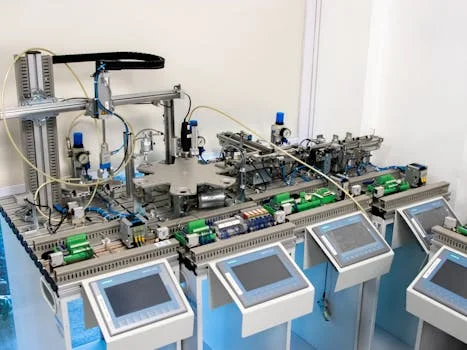
The cost efficiency of wastewater treatment in Pakistan follows a steep curve of economies of scale, where doubling the capacity typically reduces the cost per cubic meter by 20–30%. For small-scale commercial applications, the cost per m³ of capacity ranges from PKR 150,000 to 200,000. In contrast, municipal-scale plants see costs drop to PKR 50,000 to 80,000 per m³. This disparity is driven by the fixed costs of engineering, control systems, and civil works that do not scale linearly with flow volume.
Modular and containerized systems offer a significant advantage for projects in the 10–100 m³/h range. Utilizing modular sewage treatment plants for small to medium projects can reduce CAPEX by 15–20% compared to custom-built civil structures. However, for mega-projects like Lahore’s 50,000 m³/day STP, custom-built EPC solutions are necessary to achieve the 40% lower unit cost compared to decentralized industrial plants.
| Plant Capacity (m³/h) | Estimated CAPEX (PKR) | Unit Cost (PKR/m³ Capacity) | Construction Type |
|---|---|---|---|
| 1 – 10 m³/h | 1.5M – 5M | 150,000 – 200,000 | Modular/Package |
| 10 – 100 m³/h | 10M – 25M | 100,000 – 150,000 | Package/Hybrid |
| 100 – 1,000 m³/h | 70M – 150M | 70,000 – 100,000 | Civil/EPC |
| > 1,000 m³/h | 500M+ | 50,000 – 80,000 | Civil/EPC Mega-Project |
When comparing regional data, Pakistan's costs remain competitive with neighboring markets, though local currency volatility remains the primary risk factor. For a broader perspective on regional pricing, see the cost comparison for South Asian wastewater projects, which highlights how local labor and material costs vary across the border.
Compliance Costs: How Pakistan’s NEQS and Pak-EPA Standards Impact Your Budget
Compliance with the 2024 NEQS updates is mandatory, as the Pak-EPA has intensified enforcement through increased fines and mandatory Environmental Impact Assessments (EIA). For any plant exceeding 1,000 m³/day, "Class A" effluent standards are now the baseline. Achieving these levels necessitates tertiary treatment, which typically adds 15–25% to the total project CAPEX. Failure to account for these standards during the design phase can lead to costly retrofits or legal penalties.
The EIA process itself is a significant budget item for large-scale projects. Any facility processing more than 5,000 m³/day must undergo a full EIA, costing between PKR 500,000 and 2 million and adding 6 to 12 months to the project timeline. In industrial sectors like textiles and tanneries, meeting NEQS for heavy metals and COD requires specialized chemical dosing systems for NEQS compliance. These systems increase CAPEX by 30–40% compared to standard domestic sewage plants but are essential for avoiding daily fines.
A Faisalabad textile unit invested PKR 8 million in a high-efficiency DAF and dosing system, which was fully offset within 18 months by avoiding regulatory fines and reducing freshwater procurement costs. This highlights that compliance cost should be viewed as a risk-mitigation strategy rather than just a regulatory burden.
ROI Calculator: Is Your Wastewater Treatment Plant Financially Feasible?
Financial feasibility for wastewater projects in Pakistan is determined by the intersection of operational savings, regulatory avoidance, and potential revenue streams. The standard ROI formula for these projects is: (Annual Savings + Revenue - OPEX) / CAPEX × 100%. For most industrial users, the primary driver is "Annual Savings" through the avoidance of NEQS fines and the reduction of groundwater extraction. With industrial water rates rising, reusing treated water for cooling towers or irrigation can save PKR 10–50 per m³.
Revenue streams are becoming more viable as the market for treated effluent matures. In urban centers, treated water can be sold to construction sites or municipal parks for PKR 20–80 per m³. Additionally, sludge management is evolving; stabilized sludge can be sold as organic fertilizer for PKR 5,000–10,000 per ton. For larger plants, carbon credits represent a nascent but growing revenue source, potentially yielding PKR 1,000–3,000 per ton of CO2 equivalent captured through methane mitigation.
Financing options also play a role in ROI. The Punjab Green Development Program (PGDP) offers grants covering up to 30% of CAPEX for qualifying green technologies. Commercial bank loans for environmental projects currently carry interest rates of 12–18%, which must be factored into the lifecycle cost analysis. To estimate your specific project’s viability, enter your expected capacity and technology type into a feasibility framework to determine if your payback period falls within the typical 3-to-5-year industrial target.
Procurement Guide: How to Select a Wastewater Treatment Plant Supplier in Pakistan
Procuring a wastewater treatment plant in Pakistan requires a rigorous evaluation of the supplier’s local support capabilities and long-term O&M commitment. Engineering Procurement and Construction (EPC) contracts are standard for municipal projects, offering a turnkey solution where the contractor handles everything from design to commissioning. However, EPC contracts often carry higher upfront costs and can be prone to delays. For private sector projects, modular systems are often preferred for their speed of deployment and lower civil works requirements.
When drafting an RFP, engineers must include specific influent parameters and the target effluent standards. A common mistake in the Pakistani market is overlooking the availability of spare parts; a low-cost system from an international supplier without a local service center in Karachi or Lahore can lead to months of downtime. A local supplier comparison for Rawalpindi projects provides a template for evaluating vendors based on technical merit rather than just the lowest bid.
| Evaluation Criteria | EPC / Custom Civil | Modular / Package System |
|---|---|---|
| Upfront CAPEX | High (Includes Civil) | Lower (Factory Built) |
| Deployment Time | 12 – 24 Months | 3 – 6 Months |
| Customization | High | Limited |
| O&M Complexity | High | Low to Medium |
| Best For | Municipal / Large Industrial | <