Why Sand Filtration Belongs in a Textile Wastewater Train
Textile mills consume 100–200 L of process water per kilogram of finished fabric across pretreatment, bleaching, dyeing, and printing, and the resulting effluent carries suspended fibers, residual dyes, sizing agents, NaCl and sulfate salts, and pH swings from batch operations (per the MDPI textile reuse case study). That load makes textile wastewater the most polluting of the major industrial streams, and physical sand filtration is built to defuse it. A properly specified multi-media sand filter is a barrier against settleable and filterable solids, not against dissolved color, salts, or COD, so its real job is to protect the membrane block that follows.
Positioning is critical for effective treatment. In a 2026-aligned reuse train, sand filtration sits after equalization, pH correction, coagulation/flocculation, and a DAF system or lamella clarifier, and before UF/RO. The MDPI reference architecture places a primary sand filter immediately downstream of DAF for bulk solids capture, then a secondary sand filter after ozonation to polish for UF (MDPI, 2019). Skipping the sand stage sends fibers and colloids directly into the membranes: continuous sand filtration upstream of UF has been shown to prolong membrane life and reduce replacement frequency, which is the single largest OPEX lever in a textile reuse plant (MITA Water Technologies).
How a Sand Filter Actually Treats Textile Effluent
Three mechanisms work in parallel inside a sand bed to clean process water. Surface straining catches the larger fibers and lint that escape DAF — a textile-specific problem because loose fibers shed continuously from knit and woven goods. Depth filtration through the bed removes the smaller flocs that DAF carryover leaves behind, which is why the secondary sand stage after ozonation still pulls measurable load. Adhesion to grain surfaces captures the colloids responsible for the high influent turbidity that would otherwise foul UF capillaries within hours.
Every bed loads until head loss spikes, then backwash fires. In the MDPI reference plant, the backwash cycle is 0.5 h every 8 h on textile feed, with backwash water routed to a reaction + precipitation + sand filtration recycle loop and returned to the clean-water reservoir (MDPI, 2019). High salinity from NaCl and sulfate dosing in the dye bath, plus residual surfactants, weakens adhesion efficiency by compressing the double layer around colloids; the practical consequence is that influent characterization must drive backwash interval and air-scour intensity, rather than a generic timer.
Typical 2026 Textile Reuse Process Flow with Sand Filtration
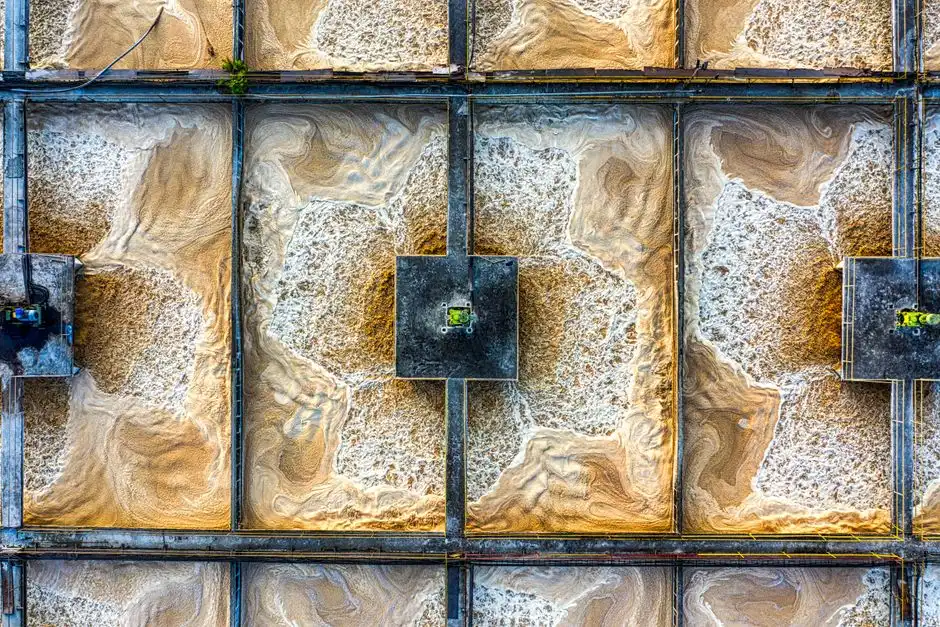
A defensible 2026 textile reuse train runs as follows: source segregation (dye bath vs general plant effluent) → equalization → pH correction → coagulation/flocculation, often using automated chemical dosing upstream of sand filtration to stabilize coagulant dose against batch swings → DAF or lamella clarifier → primary sand filter → ozonation → secondary sand filter → UF → RO → reuse. Sand filtration acts as the hinge between chemical/biological clarification and the membrane block.
Reference numbers from the MDPI case study anchor the design: 1,500 m³/d flow split across the primary and secondary sand filtration tanks, 6.4 h hydraulic retention time in the upstream tube settler, and an 86.8% overall water-reuse rate across the system — 31.8 percentage points higher than a forward-osmosis/RO comparison train (MDPI, 2019). Two sand stages are not redundancy: the primary handles bulk DAF carryover and the secondary delivers the low and consistent SDI that UF needs. Backwash water and RO concentrate are not wasted — both are routed back through reaction/precipitation/sand filtration and into the clean-water reservoir, which is the difference between 86.8% reuse and a much smaller number.
For mills that are not yet ready for full reuse, the same sand stage functions as a tertiary polishing step before discharge, which matters in 2026 because textile discharge limits for color, TDS, and chloride are tightening in most jurisdictions.
Performance Data: What Sand Filtration Removes from Textile Effluent
The table below separates sand-filter-only performance from whole-train performance. The 99.34% SS figure is a whole-train number (reaction + precipitation + primary sand + ozone + secondary sand), so quoting it as a sand-only removal inflates sand's role; the 37.42% turbidity number is the secondary sand filter specifically (MDPI, 2019).
| Parameter | Typical textile influent | After sand filtration (this stage) | After full train (DAF + sand + ozone + UF/RO) |
|---|---|---|---|
| Total suspended solids (SS) | 200–800 mg/L | 20–60 mg/L (≈90–95% capture on the primary stage) | 99.34% removal (whole train, MDPI 2019) |
| Turbidity | 50–300 NTU | 10–40 NTU; 37.42% reduction at the secondary sand stage (MDPI 2019) | ~93% overall; <1 NTU to RO |
| Color (Pt-Co) | 500–2,500 | Minimal change — sand does not remove dissolved color | 99.79% overall; 74.01% at the ozone stage (MDPI 2019) |
| COD (Cr) | 800–2,500 mg/L | 10–20% removal via captured solids | 99.57% overall; 39.85% across reaction/precipitation/sand/ozone (MDPI 2019) |
| SDI₁₅ to RO | >6.0 (unsuitable for RO) | SDI₁₅ typically 4–5 after multi-media or continuous-backwash sand | SDI₁₅ ≤ 3 required at RO feed |
Two practical consequences follow from the table. First, sand filtration alone cannot hit color or COD discharge limits — it is a guard stage for the membrane block, which is where the headline color and COD numbers are made. Second, the backwash water volume of 0.5 h every 8 h in the MDPI case study (MDPI, 2019) works out to roughly 3–5% of throughput, which is the planning number to use for the recycle loop and the RO reject balance.
Single-Media vs Multi-Media vs Continuous-Backwash Sand Filters for Textile Duty
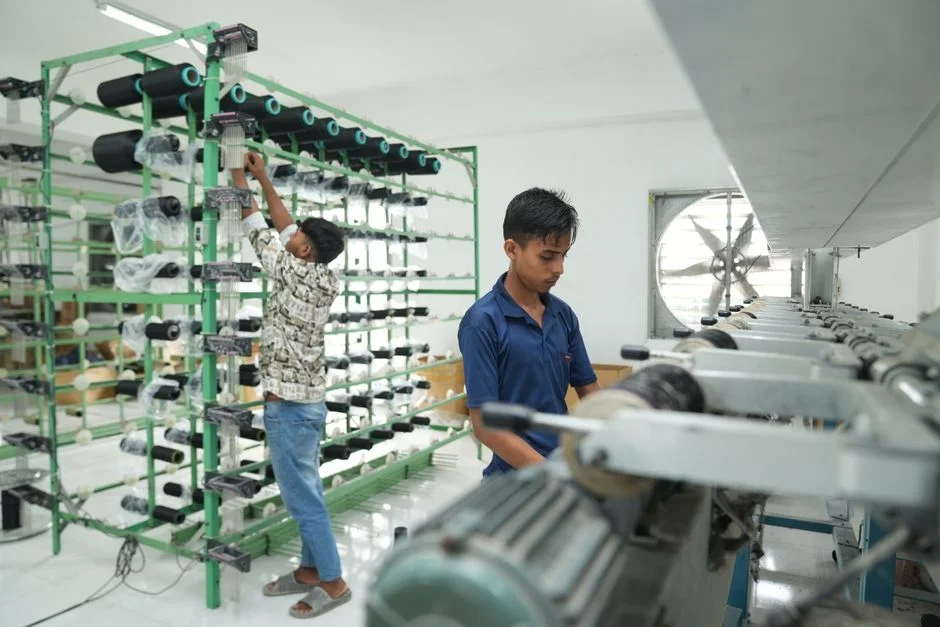
Three configurations dominate textile bids, and they trade off differently on the specific pain points of dye-house effluent. The choice should be driven by feed variability, footprint, and reuse targets, not by unit price alone.
| Criterion | Single-media (sand) | Multi-media (anthracite + sand + garnet) | Continuous-backwash (moving sand) |
|---|---|---|---|
| Relative CapEx | Lowest | Medium (15–30% above single-media) | Highest (modular skids, internal sand lift) |
| Footprint per m³/h | Largest | Medium (20–30% smaller than single-media) | Smallest (vertical sand column, modular) |
| Effluent turbidity | 5–15 NTU typical | 1–5 NTU typical; lowest SDI₁₅ | 2–8 NTU; stable under variable load |
| Fit for batch-dyeing shock loads | Poor — breakthrough risk between backwashes | Good — depth capacity absorbs pulses | Best — bed never reaches breakthrough (MITA) |
| Backwash water use | 5–8% of throughput | 3–5% of throughput | 2–4% of throughput; continuous |
| Ease of retrofit into an existing ETP | Easy (gravity or pressure vessel) | Moderate (media loading is heavier) | Easiest (modular, no shutdown for media change) per MITA |
Selection rules for a 2026 textile project: specify continuous-backwash for batch-dyeing mills with space constraints or with retrofit constraints on existing ETPs, because the moving bed never reaches breakthrough and tolerates the color and pH swings of dye-house discharge (MITA Water Technologies). Specify multi-media for new builds targeting maximum reuse, because the finer-to-coarse gradation captures more solids in depth, holds the SDI₁₅ in the 4–5 range, and gives the longest run times between backwashes. Specify single-media only for very small or budget-bound plants where SDI₅ at the RO feed is not the binding constraint. Sand filter media and valves are standardized consumables, so the lifetime OPEX difference between configurations is dominated by pumping energy and backwash water, not media replacement.
Sizing, Backwash, and 2026 OPEX Benchmarks
For multi-media sand filters on textile feed, a filtration velocity of 8–15 m/h is the working envelope. Pushing toward 15 m/h shrinks the tank and the CapEx but raises effluent turbidity and shortens the run between backwashes, which is the wrong trade if RO is downstream. For continuous-backwash units, sand recirculation rate is the equivalent control knob and is normally sized at 5–10% of forward flow.
Backwash design should specify air-scour followed by water backwash at 40–50 m/h water rate, with total backwash water at 3–5% of throughput, anchored on the 0.5 h every 8 h cycle reported for the MDPI plant (MDPI, 2019). On OPEX, the combined sand filtration + UF + RO stage in that study cost 0.19 USD/m³, which is 43% of the 0.44 USD/m³ total reuse OPEX (the remaining 40% is ozone production and 17% is maintenance, labor, and coagulants). For a 2026 budget case, treat the sand-filter slice alone as roughly 0.02–0.04 USD/m³ of the combined 0.19 USD/m³, with the rest absorbed by UF and RO membranes and their high-pressure pumps. Energy, media replacement, and backwash pumping are inside the headline figure, so a mill scaling this number to 2026 prices should add a 10–15% inflation buffer and treat it as a planning figure. The full RO for textile wastewater train is what makes the 0.19 USD/m³ number economically defensible at 86.8% reuse.
Frequently Asked Questions
What removal efficiency does sand filtration realistically achieve on textile effluent?
On textile feed, a multi-media or continuous-backwash sand filter typically removes 90–95% of suspended solids at the primary stage and posts about 37.42% turbidity reduction at the secondary stage, with the whole train reaching 99.34% SS removal only after reaction, precipitation, ozonation, and UF/RO are added (MDPI, 2019). Sand does not meaningfully reduce dissolved color or COD on its own.
What SDI value does the RO membrane need from the sand filter?
Reverse osmosis requires SDI₁₅ ≤ 3 at the feed, and most spiral-wound RO warranties cite SDI₁₅ ≤ 5 as the practical upper limit. Multi-media or continuous-backwash sand filters on textile feed typically hold SDI₁₅ in the 4–5 range, and a polishing cartridge or self-cleaning filter is usually added immediately before the RO high-pressure pump to lock in the ≤ 3 target.
How is high-color or high-salinity textile feed handled at the sand filter stage?
High color and high NaCl/sulfate salinity are not removed by sand filtration — the bed captures fibers, flocs, and colloids, not dissolved dye or salt. The correct 2026 response is to drop the oxidation load onto ozone or advanced oxidation after the primary sand stage, push the salt through to RO for concentration, and tune the backwash interval to compensate for the weaker colloid adhesion that high salinity causes. If color shock loads are routine, continuous-backwash sand is preferred because the bed never reaches breakthrough.
How much does sand filtration add to total reuse OPEX in a textile mill?
The combined sand filtration + UF + RO stage costs about 0.