Why an India Plant Acquisition Is a Day-One Production Risk
A missed Consent to Operate transfer window halts discharge authorization in India, and a halts in discharge authorization halts production. Under the Water Act 1974 (Sections 25/26) and the Air Act 1981 (Section 21), Consent to Establish and Consent to Operate are issued to a specific legal entity, not to the brick-and-mortar asset, so a share transfer does not transfer the permit by operation of law; the new owner must file a fresh application with the relevant State Pollution Control Board — typically GPCB for Gujarat, MPCB for Maharashtra, APPCB for Andhra Pradesh, TSPCB for Telangana — within 30 days of share transfer, or production must stop on Day One. Quantifying the urgency, a mid-sized Indian API or chemical plant running on 5–15 days of finished-goods inventory faces a Day-One loss exposure of roughly INR 65 lakh to INR 2.4 crore per day in lost margin (HydropureWater field data, 2026), derived from the USD 80,000–300,000/day benchmark for Asian API plants and adjusted for typical Indian API operating margins.
Lonza's likely India target archetype is a Vapi, Ankleshwar, or Patancheru API/intermediate plant; Lonza's publicly stated group EHS benchmark at the Visp, Hopkinton, and the recently acquired Vacaville biologics facility (lonza.com/sustainability/environment) operates a circular cascade-utilization loop with online monitoring, and that benchmark belongs in the SPA covenant envelope, not at the SPCB consent floor. The environmental workstream must therefore be a closing condition, not a 100-day-plan item, and the SPA should make the GPCB/MPCB consent re-issuance filing a condition precedent to closing. For the equivalent Vietnam framework and the parallel 30-day permit-re-issuance logic, see the Lonza Vietnam acquisition compliance guide.
EIA Notification 2006: The Highest-Leverage Diligence Question
EIA Notification 2006 (S.O. 1533(E)), issued 14 September 2006 under the Environment (Protection) Act 1986, is the binding instrument that determines whether an India plant acquisition requires central appraisal by MoEFCC or state appraisal by SEIAA, and the answer can shift the closing timeline by months and the escrow sizing by a factor of three or more. The 2020 amendment framework renamed SEIAA/SEAC at the state level and clarified appraisal timelines, but the trigger arithmetic has not changed for pharmaceutical projects: Schedule Item 4(f) covers manufacture of bulk drugs and intermediates requiring fabrication of the molecule, while Schedule Item 5(f) covers formulation. Any project that adds a new API, an antibiotic class, or mammalian-cell capacity typically sits inside Item 4(f) and demands central MoEFCC appraisal, with a 4–6 month typical review window at the sectoral Expert Appraisal Committee.
Category A projects (central MoEFCC appraisal) apply to all bulk drugs, intermediates, and API manufacture regardless of investment size, while Category B (state SEIAA appraisal, 2–4 months) applies only to formulations, R&D, and small-scale repackaging below the threshold. The trigger arithmetic that re-classifies a Category B project into Category A is: (1) capacity expansion of 25% or more over the EIA-approved baseline, (2) addition of a new API or antibiotic class not on the original EIA product list, or (3) expansion into a new notified industrial estate. A Lonza acquisition typically bundles process intensification, ADC payload conjugation (the Synaffix platform closed at USD 107 million, per ACS, 2023), or mammalian-cell expansion, and any of these can cross the 25% threshold and tip the deal into a fresh MoEFCC appraisal.
| EIA Notification 2006 Item | Project type | Appraisal authority | Typical review window | Lonza relevance |
|---|---|---|---|---|
| Schedule Item 4(f) | Bulk drugs, intermediates, API manufacture | MoEFCC (Category A) | 4–6 months | Vapi, Ankleshwar, Patancheru API targets |
| Schedule Item 5(f) | Formulation, R&D, small-scale repackaging | SEIAA (Category B) | 2–4 months | Sikkim/Sikkim-analog formulation plants |
| +25% capacity trigger | Process intensification / mammalian-cell expansion | Upgrades to Category A | Adds 2–3 months | Visp/Hopkinton/Vacaville benchmark gap |
| New API or antibiotic class | ADC payload conjugation (Synaffix-style) | Category A fresh EIA | 4–9 months | High-leverage trigger; escrow shifts |
GPCB and MPCB Consent: The Event 1, 2, 3 Decision Matrix

The deal team needs a deterministic matrix to classify the acquisition into administrative, amendment, or full re-permit events, because the SPCB review window and the escrow band scale by a factor of 10 or more across the three events. Event 1 is a legal-name-only change and is an administrative update to GPCB/MPCB; Event 2 is a scale, technology, or raw-material change within the existing consent envelope, processed as an amendment under Water Act Section 26; Event 3 is a capacity increase above 25% or the introduction of a new pollutant class, requiring a full re-permit with a new EIA. The typical SPCB review windows are: Event 1 = 15–30 days at GPCB/MPCB, Event 2 = 60–90 days, Event 3 = 4–6 months at SEIAA (Category B) or 4–9 months at MoEFCC (Category A).
The dossier requirement scales with the event. Event 1 needs Form XIII (application for consent under Water Act 1974), a board resolution authorising the name change, and share-transfer proof. Event 2 needs Form I, Form XIII, 12 months of self-monitoring reports, and a hazardous-waste manifest under the Hazardous and Other Wastes (Management and Transboundary Movement) Rules 2016. Event 3 needs Form I, a full EIA report, public-hearing minutes (where the state PCB mandates them), and CRZ clearance if the plant sits within 500 m of a coastal regulation zone. A parallel pharmaceutical-operating-license clock runs under CDSCO manufacturing license (Drugs and Cosmetics Act 1940, Rule 78A) plus Schedule T GMP, and the two clocks can lengthen the true Day-One readiness window well beyond 30 days, so the SPA should treat the CDSCO re-validation as a separate condition precedent with its own escrow tranche.
| Event | Trigger | SPCB review window | Dossier requirement | Escrow band (INR) |
|---|---|---|---|---|
| Event 1 — Administrative | Legal name only change | 15–30 days at GPCB/MPCB | Form XIII + board resolution + share-transfer proof | 4–12 lakh + brief indemnity |
| Event 2 — Amendment | Scale, technology, or raw-material change within consent envelope | 60–90 days at SPCB | Form I + Form XIII + 12 months self-monitoring + HW manifest | 50 lakh to 1.2 crore + 24-month covenant |
| Event 3 — Full re-permit | Capacity +25% or new pollutant class | 4–6 months (SEIAA) or 4–9 months (MoEFCC) | Form I + EIA report + public-hearing minutes + CRZ clearance | 1.2–2 crore+ + 4–9 months carrying-cost risk |
ZLD, CETP, and the Discharge Destination Stack
India's discharge framework is layered, and each envelope has different compliance math. Gujarat's Industrial Pollution Control Order 2018 and its 2020 amendment make zero-liquid-discharge mandatory for new or expanded pharma capacity in the Vapi, Ankleshwar, and Vatva notified industrial estates. Andhra Pradesh ZLD Order (G.O. Ms. 28, 2017, Industries) and Telangana's parallel policy for the Patancheru, Jeedimetla, and Hyderabad Pharma City estates place ZLD on a similar mandatory footing, and the diligence envelope must be locked before signing because ZLD retrofits can add INR 8–18 crore to the capex envelope (HydropureWater field data, 2026).
CETP membership is the second pillar. GIDC industrial-estate CETPs in Vapi, Tarapur, and Patancheru operate under consent limits tighter than IS 2490 — typical CETP inlet COD is 5,000 mg/L and inlet TDS is 3,000 mg/L — and member plants must pre-treat to those inlet envelopes before discharge. Direct discharge to inland surface water is governed by IS 2490 Part 1; discharge to a public sewer by IS 3306; discharge to marine waters by IS 12213; and CPCB SCHEDULE-II sets industry-specific standards, with pharma-typical consent floors at COD 250 mg/L, BOD₅ 100 mg/L, and TSS 100 mg/L. India's framework does not publish explicit numerical limits for active pharmaceutical ingredients, antibiotic residues, or trace organic solvents, so the deal team cannot rely on the IS envelope alone — the diligence checklist must include APIs by therapeutic class, ICH Q3C residual solvents (methanol, acetone, acetonitrile, dichloromethane), and antibiotic resistance gene markers.
| Discharge envelope | Binding standard | Typical limit | Geographic trigger | Pre-treatment required |
|---|---|---|---|---|
| GIDC CETP inlet (Vapi/Tarapur/Patancheru) | Member-plant consent | COD ≤5,000 mg/L; TDS ≤3,000 mg/L | Notified industrial estates | Equalisation + DAF + biological |
| Inland surface water | IS 2490 Pt 1 + CPCB SCHEDULE-II | COD 250 mg/L; BOD₅ 100 mg/L; TSS 100 mg/L | Plant-specific consent | MBR + tertiary polishing |
| Public sewer | IS 3306 | Local municipal limits | Urban industrial zones | Equalisation + biological |
| Marine outfall | IS 12213 | Site-specific MOEFCC clearance | Coastal Gujarat / Maharashtra | Full biological + disinfection |
| ZLD (Gujarat/AP/Telangana) | State ZLD order | Zero liquid discharge | Notified estates + new/expanded capacity | RO + brine concentrator + crystallizer |
| Land disposal | CPCB SCHEDULE-VI | Site-specific; irrigation mode | Rare; legacy arrangements | Tertiary + soil-loading check |
Treatment Train Selection for the India Envelope
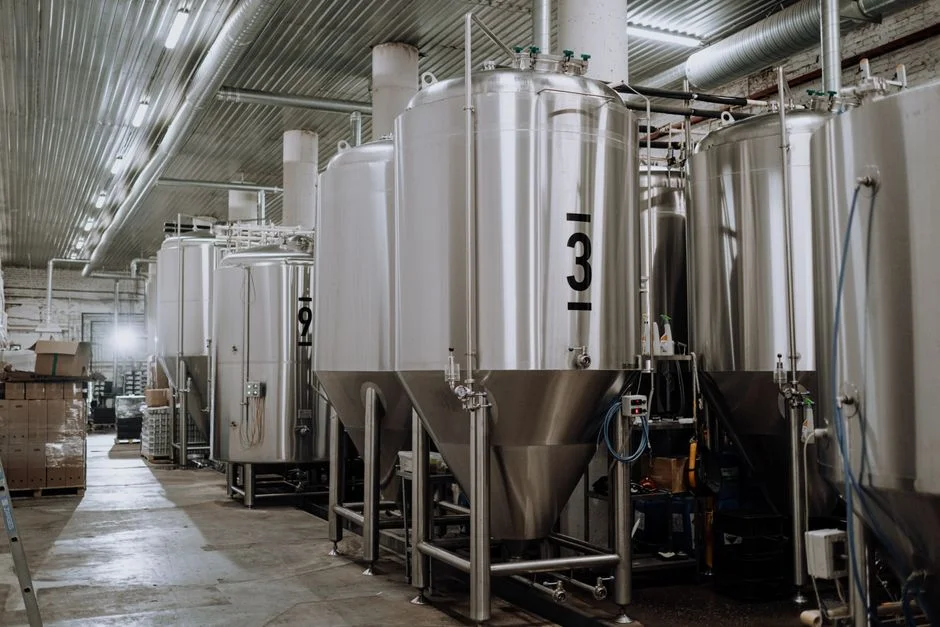
Once the consent envelope is locked, the engineering question becomes which treatment train delivers it. The standard train for an Indian pharma or API plant with CETP discharge is: equalisation and pH adjustment, then a HydropureWater DAF system in the 4–300 m³/h envelope for oil and suspended-solids removal, then an integrated MBR system in the 10–2,000 m³/day range for biological treatment and solids separation, then RO for TDS polishing where the consent floor or the CETP inlet requires it, then a plate-and-frame filter press delivering 60–70% dry cake for the sludge line. For the polishing-stage sizing behind the IS 2490 envelope, the RO for pharmaceutical water treatment guide maps directly onto the reuse-train sizing that future ZLD or reuse mandates will eventually require.
The ZLD branch for Gujarat/AP/Telangana sites adds: equalisation, DAF, A/O or SBR biological, MBR, RO, a brine concentrator (mechanical vapour recompression), and a crystallizer, with the typical ZLD retrofit adding INR 8–18 crore to the capex envelope over the discharge-to-CETP baseline (HydropureWater field data, 2026). The retrofit-vs-greenfield logic is mechanical: if the target's WWTP has fewer than 24 months of remaining useful life and the state ZLD policy is tightening (common in Vatva, Ankleshwar, and Patancheru through 2025–2026), a full MBR+RO rebuild is typically cheaper than incremental upgrades and positions the asset for any future ZLD or reuse mandate.
| Train branch | Sequence | Capex envelope (INR) | When specified |
|---|---|---|---|
| Discharge to CETP | EQ → DAF → A/O or SBR → MBR → sludge dewatering | 4–9 crore (retrofit) | Member plant in notified GIDC estate |
| Direct discharge (IS 2490) | EQ → DAF → A/O or SBR → MBR → RO (polish) → sludge dewatering | 7–14 crore (retrofit) | Plant-specific consent with TDS/TSS floors |
| ZLD (Gujarat/AP/Telangana) | EQ → DAF → A/O or SBR → MBR → RO → MVR brine concentrator → crystallizer | 15–32 crore (retrofit) | Notified estate; new or expanded pharma capacity |
Escrow Sizing and SPA Structure for the India Deal
Convert the engineering envelope into INR-denominated escrow bands and SPA covenant structure so the deal team can sign with a bounded downside. For Event 1 administrative change, ringfence INR 4–12 lakh in escrow plus a brief environmental indemnity. For Event 2 amendment, ringfence the upper end of the INR 50 lakh to 1.2 crore envelope for legal fees, EIA consultancy, and SPCB filing fees, plus a 24-month post-closing covenant covering any pre-closing non-compliance. For Event 3 full EIA, ringfence the upper end of the INR 1.2–2 crore+ envelope plus 4–9 months of carrying-cost risk, structured as 12–18 months of compliance-remediation cost against the engineering estimate of the gap between the target's actual discharge quality and the IS 2490 or CETP inlet envelope.
Add a Rep & Warranty insurance carve-out for environmental matters, because R&W insurers typically exclude pre-closing environmental liability and a separate indemnity tranche is required. A capex holdback sized against the engineering estimate of the retrofit gap — not the deal price — is the cleanest structure, because the buyer's downside is bounded by actual remediation cost rather than by seller willingness to fund escrows. The parallel CDSCO license clock under Drugs and Cosmetics Act Rule 78A and the Factories Act 1948 factory-plan approval each get their own escrow tranche and their own insurance carve-out, and the SPA should treat each as a separate condition precedent rather than rolling them into a single environmental workstream.
| SPA element | Trigger | INR band | Covenant / insurance |
|---|---|---|---|
| Event 1 administrative escrow | Name change at GPCB/MPCB | 4–12 lakh + indemnity | 15–30 day SPCB review |
| Event 2 amendment escrow | Scale/tech/RM change in envelope | 50 lakh to 1.2 crore | 24-month post-closing covenant |
| Event 3 full EIA escrow | Capacity +25% or new API class | 1.2–2 crore+ | 4–9 months carrying-cost risk |
| Capex holdback (engineering-driven) | Retrofit gap vs IS 2490 / CETP inlet | Per engineering audit, not deal price | R&W environmental carve-out |
| CDSCO license tranche | Drugs and Cosmetics Act Rule 78A | Per regulatory estimate | Schedule T GMP re-validation |
Frequently Asked Questions
Does the GPCB or MPCB consent to operate transfer automatically to Lonza on share acquisition?
No. Under the Water Act 1974 (Sections 25/26) and the Air Act 1981 (Section 21), Consent to Establish and Consent to Operate are issued to a specific legal entity, not to the asset. A share transfer does not transfer the permit by operation of law; the new owner must file a fresh application with the relevant SPCB — typically GPCB for Gujarat, MPCB for Maharashtra — within 30 days of share transfer, or discharge authorization lapses and production halts on Day One.
When does a Lonza India acquisition trigger a fresh EIA under EIA Notification 2006?
A fresh EIA is required when EIA Notification 2006 (S.O. 1533(E), 14 Sept 2006) thresholds are crossed: capacity expansion of 25% or more over the EIA-approved baseline, the addition of a new API or antibiotic class not on the original product list, or expansion into a new notified industrial estate. Any of these triggers central MoEFCC appraisal under Schedule Item 4(f) with a 4–6 month typical review window, and the deal team should map every announced capex item in the target's three-year plan against the trigger arithmetic before signing.
What is the ZLD exposure for a Lonza target in Gujarat, Andhra Pradesh, or Telangana?
ZLD is mandatory for new or expanded pharma capacity in notified estates under Gujarat's Industrial Pollution Control Order 2018 (as amended in 2020) covering Vapi, Ankleshwar, and Vatva, under Andhra Pradesh ZLD Order G.O. Ms. 28 of 2017 covering Patancheru and Jeedimetla, and under Telangana's parallel policy for Hyderabad Pharma City. A typical ZLD retrofit adds INR 8–18 crore to the capex envelope over a discharge-to-CETP baseline (HydropureWater field data, 2026), and the engineering audit must size the RO, MVR brine concentrator, and crystallizer scope before signing.
What is the standard treatment train for an Indian API or chemical plant?
The standard train for CETP discharge is equalisation and pH adjustment, DAF pre-treatment for oil and suspended solids, A/O or SBR biological, MBR for solids separation, and a plate-and-frame filter press for sludge dewatering. For IS 2490 direct discharge, add RO polishing; for ZLD sites, add RO, an MVR brine concentrator, and a crystallizer. A DAF in the 4–300 m³/h envelope and an integrated MBR in the 10–2,000 m³/day range are typical specifications for a mid-sized Indian API plant (HydropureWater field data, 2026).
How does the Visp/Hopkinton/Vacaville benchmark covenant differ from the IS 2490 or GPCB consent floor?
Lonza's publicly stated group EHS benchmark at Visp, Hopkinton, and the recently acquired Vacaville biologics facility (lonza.com/sustainability/environment) operates a circular cascade-utilization loop with online monitoring. Because IS 2490 and the GPCB consent envelope do not publish explicit limits for ADC payload solvents (methanol, acetone, acetonitrile, DCM) or ICH Q3C residual solvents, the SPA covenant envelope must set the buyer's reuse and discharge targets against the Visp benchmark rather than the SPCB floor, and any covenant gap should sit inside the capex holdback tranche, not the deal-price indemnity.