Why Cebu Hotels Need MBR — Not Just Any Sewage Plant
MBR is the right technology for most Cebu hotel projects because the operating environment punishes conventional activated sludge. Cebu hotel flows swing between roughly 30% occupancy in the off-season and 100% during Sinulog, Holy Week, and December — a 3–4× loading shift in a 24-hour window. MBR's flexible HRT and MLSS tolerance of 8,000–12,000 mg/L absorb those swings without the bulking and clarifier failure that plague conventional plants. Tropical temperatures of 27–32 °C accelerate biological kinetics, which shrinks the aeration tank but stresses membrane integrity — making PVDF flat-sheet or reinforced hollow-fiber the only safe material choice. Cebu's discharges to class SB/SC waters near Olango, Moalboal, and Malapascua trigger stricter BOD and fecal coliform limits that MBR effluent comfortably meets, and resort reuse demand (toilet flush, irrigation, laundry) is easier to justify when the membrane barrier is already producing reuse-grade water. MBR removes 90–95% of harmful substances from hotel wastewater, including bacteria and viruses that a simple chlorinated CAS effluent cannot guarantee (imemflo, 2026).
Sizing the MBR for a Cebu Hotel: The Engineering Math
Size a packaged MBR for a Cebu hotel using 0.20–0.30 m³ per available room-night at 80% peak occupancy for mid-scale business hotels, and 0.35–0.45 m³/room-night for resorts with pools, spa, and on-site laundry. Worked example: a 150-room Mactan resort at 0.35 m³ × 150 × 0.80 = 42 m³/day design flow; round up to a 50 m³/day packaged MBR for safety margin. Apply a 1.5× peaking factor for banquet events, F&B outlets, and convention loads — this is the single most common cause of undersized Philippine hotel STPs. Cross-check against high-amenity installations: a 200-bed 5-star hotel with a 250 m³/d MBR (imemflo, 2026) implies ~1.25 m³/bed at full load, consistent with resort duty. Size the equalization tank for at least 8 hours of average flow to buffer Sinulog-week peaks, and hold the HRT in the membrane tank at 4–6 hours for sustained BOD₅ removal. Cross-validate vendor proposals by asking for the daily flow assumption, the peaking factor, and the per-room consumption rate before you sign a PO.
| Hotel type | Flow factor (m³/room-night) | Peaking factor | Equalization (hr) | Example (rooms) | Design flow (m³/d) |
|---|---|---|---|---|---|
| Business / city | 0.20–0.30 | 1.3 | 6–8 | 120 | 29–43 |
| Resort with pool & spa | 0.35–0.45 | 1.5 | 8 | 150 | 63–101 |
| Resort + laundry + convention | 0.45–0.55 | 1.5–2.0 | 8–12 | 200 | 135–220 |
MBR vs MBBR vs SBR for Philippine Hotels
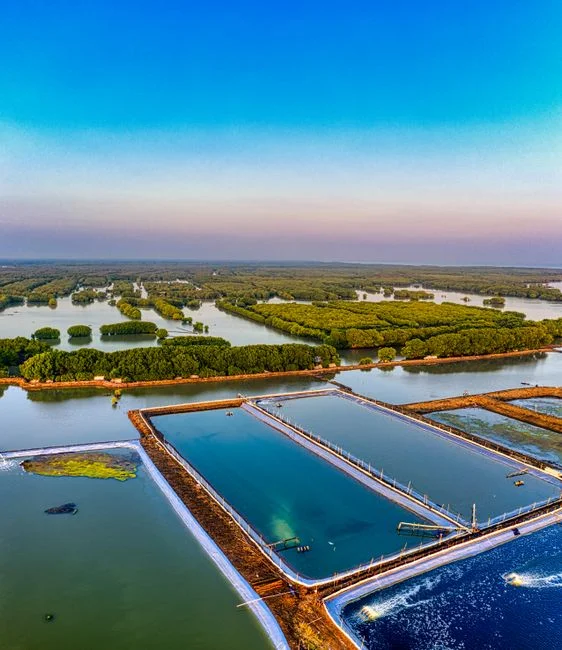
MBR delivers the smallest footprint (about 60% smaller than conventional activated sludge for equivalent loading), the best effluent, and supports toilet-flush or irrigation reuse; the trade-off is membrane replacement every 3–5 years and a higher operator skill requirement. MBBR carries lower capex, tolerates shock loads, and has no membrane to replace, but effluent typically lands at BOD 20–30 mg/L and TSS 30–50 mg/L — usable for landscape irrigation but not reliable for reuse. SBR has a long Philippine track record: Ecosystem Technologies pioneered SBR here in 1995 and the Cebu Citylight Garden underground SBR has run 20+ years without major repairs (ecosystemtech.com, 2026); it remains the budget choice but needs more footprint and operator attention. Choose MBR when reuse is a board-level priority, when footprint is constrained (Mandaue City, dense Lapu-Lapu parcels), or when the discharge point is inside a marine protected area. Choose SBR for budget-driven projects with land available; choose MBBR for shock-load-heavy sites like convention-driven city hotels where capex matters more than reuse.
| Criterion | MBR | MBR (MBBR) | SBR |
|---|---|---|---|
| Typical footprint (50 m³/d) | ~30 m² | ~45 m² | ~70 m² |
| BOD₅ effluent (mg/L) | ≤5 | 20–30 | 15–25 |
| TSS effluent (mg/L) | ≤5 | 30–50 | 20–40 |
| Reuse-ready | Yes | Limited | Limited |
| Membrane replacement | Every 3–5 yr | None | None |
| Operator skill | High | Medium | Medium |
Effluent Targets, Pretreatment, and the DENR Permit Timeline
Hotel STPs in Cebu must comply with DENR DAO 2016-08 (Water Quality Guidelines) and the discharge permit conditions issued under DAO 2021-19, typically BOD₅ ≤30 mg/L, TSS ≤50 mg/L, FOG ≤5 mg/L, fecal coliform <200 MPN/100 mL, and pH 6.0–9.0. Install a 3 mm rotary mechanical bar screen before the MBR to protect the membranes from lint, hair, and plastic; a 3 mm opening is the industry standard for hotel duty (cf. Smith & Loveless TITAN MBR QUBE specification, 2026). Grease trap sizing must hold at least 20 minutes of peak kitchen flow — FOG is the single biggest membrane-fouling risk in Philippine hotel STPs and the most common cause of premature membrane replacement. DENR-EMB Region 7 discharge permit processing typically runs 8–12 weeks once the engineer's report and signed/sealed plans are submitted; a packaged MBR quotation in Asturias, Cebu bundled ₱100,000 for the discharge permit package (engineer's report, signed drawings, application) — budget this as a discrete line item in the bid tabulation, not buried in the equipment line. Build the permit window into the construction schedule before the GC locks the handover date.
The Packaged MBR Specification That Actually Matters in Cebu
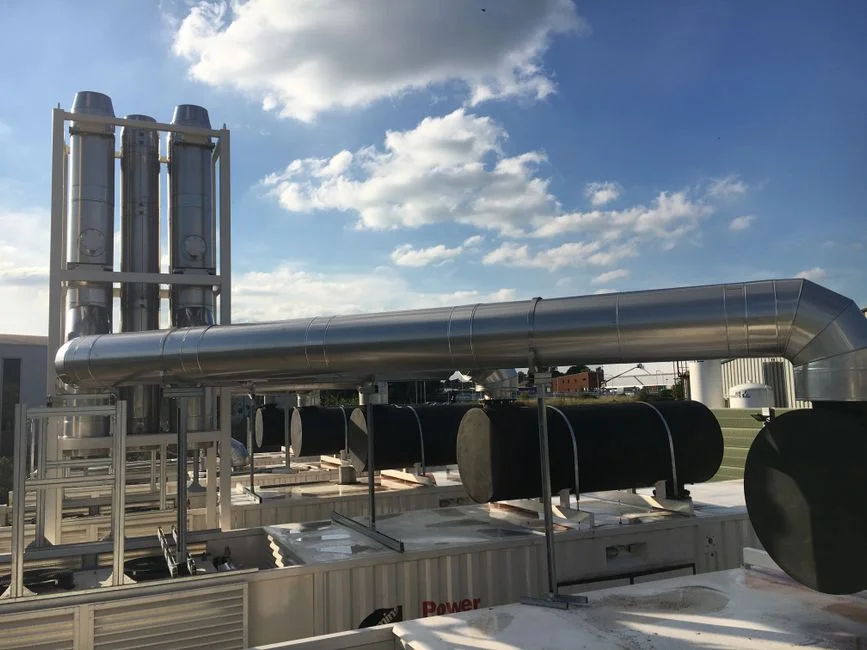
Convert vendor brochures into a tender-ready spec with five non-negotiables. First, the membrane: PVDF, pore size ≤0.1 μm, in flat-sheet cassette form (32–135 m³/d per cassette) or reinforced hollow-fiber; flat-sheet is more fouling-tolerant under variable hotel loads and easier to clean in place (Smith & Loveless TITAN MBR QUBE uses flat-plate for exactly this reason, 2026). Second, aeration: continuous scouring air at 0.1–0.3 m³ air per m² membrane area per minute, with the blower sized for site altitude — Cebu coastal sites run near sea level, so no derating. Third, footprint: a 50 m³/d packaged MBR should fit in a 40-ft equivalent container footprint or be skid-mounted in a 6 m × 2.5 m equipment room. Fourth, controls: PLC with HMI, remote monitoring via GSM/4G (essential for Cebu island locations where site visits are costly), and a dedicated alarm on transmembrane pressure that triggers before irreversible fouling sets in. Fifth, power: the Asturias 25 m³/d packaged MBR draws 4.47 kW — scale linearly to your design flow and confirm voltage is 220V/3-phase/60 Hz to match Cebu commercial supply.
| Parameter | Specification | Notes for Cebu |
|---|---|---|
| Membrane material | PVDF, ≤0.1 μm | Flat-sheet preferred for variable hotel loads |
| Scouring air rate | 0.1–0.3 m³/min per m² | Continuous, not intermittent |
| HRT (membrane tank) | 4–6 hr | Validate at peak occupancy |
| MLSS | 8,000–12,000 mg/L | Higher than CAS |
| TMP alarm | −30 kPa (typical) | Trigger CIP cycle |
| Power reference | 4.47 kW at 25 m³/d | Scale linearly; 220V/3φ/60 Hz |
| Footprint | 40-ft container or 6 m × 2.5 m skid | Check genset access and crane reach |
2026 Cost Benchmark: What a Packaged MBR Actually Costs in Cebu
The defensible peso anchor for a 2026 Cebu bid is the Asturias quotation: 25 m³/d packaged MBR (surface type) for ₱2,318,400 inclusive of equipment (₱1,705,000), spare parts, 2-week commissioning, on-site delivery, a 10 m³/hr non-clog submersible sewage pump, and a ₱100,000 DENR-EMB discharge permit package; power draw 4.47 kW (Jacynth Pro Farm quotation, Asturias, Cebu, 2022). Escalate to 2026 at 15–20% for materials, freight, and DENR fees: the working benchmark is ₱105,000–₱115,000 per m³/day for small packaged plants (10–50 m³/d) and ₱80,000–₱95,000 per m³/day for 50–200 m³/d plants where container and blower costs scale sub-linearly. Hidden costs that routinely miss the bid tabulation: site civil works (₱150,000–₱400,000 depending on soil and access), electrical interconnection, fence/canopy for outdoor units, and certified operator training. Budget a membrane replacement reserve of ₱8,000–₱12,000 per m² of membrane area every 3–5 years — this is the single largest lifecycle cost and the reason MBR opex runs roughly 25% above MBBR opex over a 10-year horizon.
| Cost line | Asturias 25 m³/d (2022) | 2026 small plant (10–50 m³/d) | 2026 mid plant (50–200 m³/d) |
|---|---|---|---|
| Equipment (per m³/d) | ₱68,200 | ₱90,000–₱100,000 | ₱70,000–₱85,000 |
| Spare parts | ₱30,000 lump | ~3% of equipment | ~2% of equipment |
| Commissioning | ₱60,000 lump | ~4% of equipment | ~3% of equipment |
| Delivery (Cebu) | ₱100,000 lump | Site-dependent | Site-dependent |
| DENR permit package | ₱100,000 lump | ₱100,000–₱150,000 | ₱150,000–₱250,000 |
| Sewage pump | ₱75,000 lump | ₱75,000–₱120,000 | ₱120,000–₱200,000 |
| VAT (12%) | ₱248,400 | Add 12% | Add 12% |
| All-in (per m³/d) | ₱92,700 | ₱105,000–₱115,000 | ₱80,000–₱95,000 |
Vendor Evaluation Checklist for a Cebu Hotel MBR
Award on more than price. Score each bidder against the following and reject any vendor who cannot answer in writing. Confirm a working Cebu or Visayas reference installation the owner can physically visit — a Manila demo unit does not count. Demand a named membrane brand (Suez, Toray, Mitsubishi, DuPont, or the equivalent HydropureWater DF series) — unbranded modules are an opex trap. Clarify who handles the DENR-EMB Region 7 discharge permit; if the owner carries it, make sure the bid excludes the ₱100,000–₱250,000 permit scope rather than burying it. Get the guaranteed membrane life in writing (PVDF is typically 3–5 years) and the exact conditions that void the warranty — cleaning chemistry, operating TMP, and idle-period limits are the usual escape clauses. Insist on a service-level agreement: ≤72-hour on-site response from a Cebu-based technician, not a Manila-based fly-in team. Operator training must be certified and included, and a 4G/SCADA remote-monitoring option should be quoted as a line item so the hotel engineering team can trend TMP, MLSS, and flow without driving to site.
Frequently Asked Questions
How much does a packaged MBR STP cost per m³/day for a hotel in Cebu in 2026?
For a small packaged plant (10–50 m³/day), budget ₱105,000–₱115,000 per m³/day all-in, including equipment, commissioning, delivery within Cebu, sewage pump, and the DENR-EMB discharge permit package. For mid-scale plants (50–200 m³/day), the per-m³/day cost drops to ₱80,000–₱95,000 because container, blower, and PLC costs scale sub-linearly. The 2022 Asturias benchmark of 25 m³/d at ₱2,318,400 (≈₱92,700/m³/d) is the most defensible Philippine reference, escalated 15–20% to 2026.
How do I size a packaged MBR for a 100-room hotel?
For a 100-room business hotel at 80% peak occupancy, apply 0.20–0.30 m³ per room-night to get 16–24 m³/day; round up and add a 1.3× peaking factor to land at a 25–35 m³/day packaged MBR. For a 100-room resort with pool, spa, and laundry, use 0.35–0.45 m³/room-night to get 28–36 m³/day; apply a 1.5× peaking factor and size to 50 m³/day for safety. Size the equalization tank for at least 8 hours of average flow to absorb occupancy swings.
What DENR effluent limits apply to hotel wastewater in the Philippines?
Hotel STPs discharging under a DENR-EMB Region 7 permit typically must meet BOD₅ ≤30 mg/L, TSS ≤50 mg/L, FOG ≤5 mg/L, fecal coliform <200 MPN/100 mL, and pH 6.0–9.0 under DAO 2021-19, with the receiving water body classification set by DAO 2016-08. Class SB and SC waters (marine sanctuaries, resort coastal areas) trigger stricter limits; class SD waters allow higher values. Confirm the exact parameters in the draft discharge permit before finalizing the bid.
How long do MBR membranes last in tropical Philippine conditions?
PVDF flat-sheet and reinforced hollow-fiber membranes in Philippine hotel duty typically last 3–5 years before replacement, assuming proper pretreatment (3 mm screening, grease trap), operating TMP below −30 kPa, and routine chemical cleaning. Tropical temperatures of 27–32 °C accelerate biological growth on the membrane surface, so CIP frequency may rise to every 4–6 months in high-load resorts. Budget ₱8,000–₱12,000 per m² of membrane area for the replacement event.
Can MBR-treated hotel water be reused for swimming pools or laundry?
MBR effluent is reuse-grade for toilet flushing, landscape irrigation, and cooling-tower make-up without further treatment. For swimming pools and laundry, route the MBR effluent through a polishing step — typically chlorination or UV plus residual control — to meet the secondary disinfection targets expected by hotel engineering and DENR. UV is preferred for tropical pool duty because it avoids the trihalomethane formation that chlorination creates in warm water; chlorine residual of 0.5–1.0 mg/L remains the practical choice for laundry reuse where residual acts as a whitening agent.
Related Equipment
- HydropureWater integrated MBR system — specifications, capacity range, and technical data
- PVDF flat-sheet MBR membrane module — specifications, capacity range, and technical data
- rotary mechanical bar screen — specifications, capacity range, and technical data
- underground package STP — specifications, capacity range, and technical data