Why Decanter Centrifuge Maintenance Is Really Variable Control
A decanter centrifuge maintenance guide organizes work around four controllable variables — G-force (1,000–4,000 G), bowl-to-scroll differential speed, pond depth, and L:D ratio (commonly 2, 3, or 4) — translated into daily, weekly, monthly, and annual tasks on bearings, gearbox, scroll flights, bowl protection tiles, and the VFD/torque-control loop. Field practice in 2026 layers vibration, oil analysis, and torque trending on top of the checklist. Every inspection, oil sample, and tile measurement serves to hold one of these four parameters inside its operating window.
G-force is set by bowl radius and rotational speed, so the nameplate value is fixed for a given geometry; if your operating G is drifting, look at VFD speed before touching the bowl. The L:D ratio (length-to-diameter of the bowl) sits at 2, 3, or 4 in most industrial units — a longer bowl conveys more solids and clarifies finer particles, but it loads the gearbox with more torque and accelerates flight wear. Differential speed is the single most adjustable parameter on a running decanter: low differential speed improves centrate clarity, while high differential speed raises cake solids but burns flights faster. Modern VFDs paired with a torque sensor automatically back the differential speed off when solids loading spikes, and that feedback loop is itself a maintenance target — a dirty torque sensor or stale VFD parameter set will let the gearbox trip or, worse, push the scroll past its design torque. The variables, the controls, and the sensors protecting them are what a service interval is really protecting, as outlined in this decanter centrifuge process flow diagram.
Anatomy of a Decanter Centrifuge and What Each Part Needs
A horizontal decanter is a cylindrical-conical bowl rotating inside a frame, with an internal screw conveyor (the scroll) turning at a slightly different speed. The differential between bowl RPM and scroll RPM is generated by a gearbox at the rear of the machine; on most modern units that gearbox is a planetary differential running in an oil bath. A VFD-driven main motor spins the bowl through a belt or direct coupling, and clarified liquid exits through a paring disc or centripetal pump at the liquid end. Each subassembly has a distinct failure mode and a distinct inspection point.
Four zones see the bulk of abrasive wear: the feed zone where slurry enters, the solids-discharge output zone at the small end of the cone, the bowl inner wall, and the scroll flight edges. OEM practice — and the industry reference here is welded tile systems such as FlightGuard — protects these zones with abrasion-resistant tiles that are replaceable but require bowl disassembly. Frames and covers on corrosive service should be TrueStainless™-grade stainless to resist atmospheric attack, which is a visual inspection point on quarterly walks. The pond-depth weir plates (or PowerTubes on higher-end units) sit at the liquid end and set the inner radius of the pond; they are adjustable, easily fouled with grease or polymer residue, and are the most common field fix for off-spec centrate clarity. Each of these parts has a finite service life that only measurement can catch.
Preventive Maintenance Checklist: Daily, Weekly, Monthly, Annual
The table below is the printable version a technician can take to the unit. The tolerances are starting points, not absolutes — every site should baseline its own values during the first 200 operating hours and adjust the action thresholds accordingly.
| Frequency | Task | Tolerance / Spec | Action if Out of Spec |
|---|---|---|---|
| Daily | Log bowl amps, scroll differential speed, VFD torque %, bearing housing temperature, centrate clarity (visual or turbidity) | ±10% of baseline; bearing housing <80 °C steady-state on most greases | Investigate deviation within the shift; trend against feed rate |
| Weekly | Check gearbox oil level and condition; inspect auto-lube reservoir on both end bearings; portable vibration probe at each pillow block; listen for gear mesh noise | Oil at sight-glass mid-level; lube reservoir >50%; vibration baseline per ISO 10816-3 for the machine class | Top up or sample oil; refill lube; schedule formal vibration analysis if handheld reading jumps |
| Monthly | Pull oil samples for particle count and wear-metal analysis (main bearings + gearbox); visual inspection of scroll flight edges and beach hardfacing for grooving; verify pond-depth weir plate setting against process spec sheet | Particle count per OEM cleanliness code (typically 18/16/13 or better); no visible edge rounding >2 mm; weir radius matches last setpoint | Schedule oil change or filtration; plan tile replacement; reset weir to spec |
| Quarterly | Laser alignment check between motor, gearbox, and bowl coupling; formal vibration analysis on each bearing; inspect VFD cooling fans, heatsinks, and torque sensor calibration; check frame and covers for corrosion | Alignment <0.05 mm offset, <0.05 mm/100 mm angular; vibration spectra within OEM envelope; VFD internal temp <70 °C | Re-align; investigate bearing fault frequencies; clean VFD filters; recalibrate torque sensor |
| Annual | Full bearing inspection and re-grease (or replacement per OEM hour rating); gearbox overhaul with seal and bearing inspection; bowl balance verification on a balancing stand; replacement of wear tiles in high-duty service; full functional test of protective interlocks and VFD trip setpoints | Bearings within OEM hour rating; gear backlash within spec; residual imbalance per ISO 1940 G6.3 for the bowl; all interlocks functioning | Replace bearings; rebuild gearbox; rebalance or refurbish bowl; renew tiles; restore interlock logic |
Because the centrifuge is rarely the only moving assembly in a dewatering train, the same maintenance discipline applies downstream on a sludge dewatering filter press, which sees a different but related wear pattern on its plates and cloth.
Wear Inspection: Scroll Flights, Beach Tiles, and the Bowl
Tile loss greater than 10% of surface area, edge rounding greater than 2 mm, or any cracking visible to the eye means schedule replacement — do not wait for a catastrophic event. The four OEM-protected wear zones (feed, solids discharge, bowl inner wall, and scroll flights) carry welded tiles because they take the brunt of abrasive feed; tiles are replaceable, but the job requires bowl disassembly, so it gets planned, not improvised. Visual criteria, not micrometer readings, are the field standard: a tile that has thinned to a knife edge, pulled away from its weld, or cracked across its face is done.
Beach-zone wear accelerates as differential speed rises and as cone angle increases — a small cone angle produces a lower slip force on the cake and a lower wear rate on the scroll, but it costs torque. That trade-off explains why two identical bowls with different cone angles can show very different wear logs at the same operating hours. Keep a wear-measurement log keyed to operating hours, feed type, and differential speed; OEM 4,000-hour figures are starting points, and most abrasive-duty sites find their own replacement interval is shorter. The connection between these geometric choices and the operating envelope is laid out in detail in the decanter centrifuge process flow diagram.
Bearing, Gearbox, and Lubrication Service
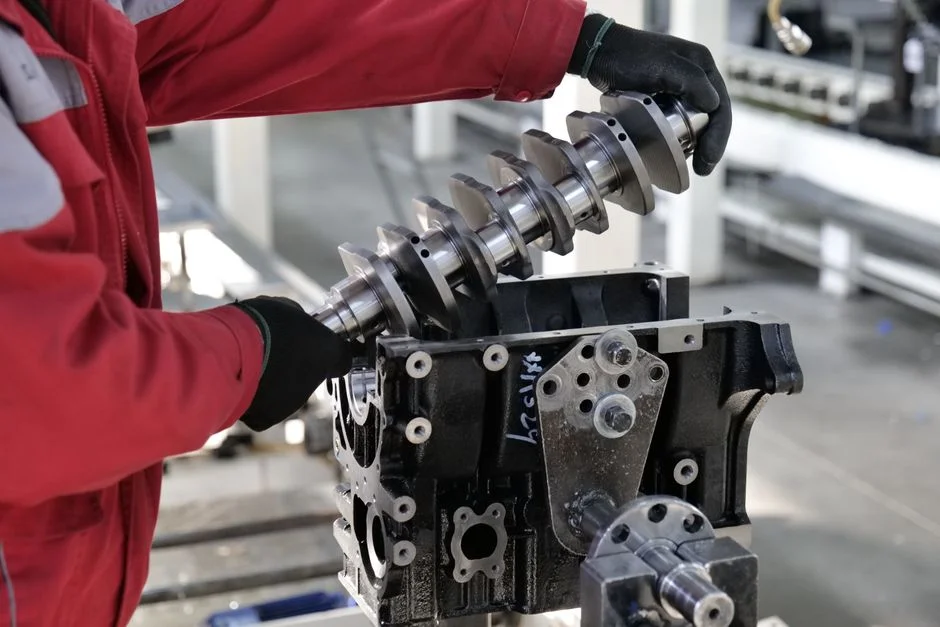
Two main bearing housings — drive end and gearbox end — carry the rotating assembly, and their re-grease interval is a function of speed, load, and grease grade. The OEM-hour approach (re-grease every 2,000–4,000 hours for most main bearings, shorter for high-speed pillow blocks) is the starting point; sites running abrasive feed or high differential speed shorten that interval. Use the grease quantity and grade specified on the nameplate — over-greasing heats bearings faster than under-greasing.
The planetary differential gearbox is the most serviced subassembly on a decanter. Oil change triggers are hours on the nameplate, oil analysis results (iron, copper, and particle count trending up), or visible discoloration. A quarterly sample that catches a wear-metal excursion early saves the gearbox; a missed one leads to a multi-week rebuild. The main-drive VFD deserves its own line item: filter cleaning on the cooling fans, heatsink inspection, and a verified parameter backup after any firmware update. Belt or coupling inspection between the motor and the gearbox on top-driven units is a five-minute check that catches misalignment before it destroys a bearing.
Troubleshooting: Symptom → Cause → Fix
The four most common field complaints map to a small set of root causes. Use the table to move from observation to action.
| Symptom | Likely Causes | Corrective Action |
|---|---|---|
| High vibration | Scroll imbalance from uneven cake buildup; worn bearing; partial tile loss on bowl wall | Stop, clean scroll and bowl, check tile integrity, verify bearing health with vibration spectra; rebalance if needed |
| Cloudy centrate | Pond depth set too high; G-force below spec (VFD speed low); differential speed set too high | Lower pond-depth weir plate; verify VFD speed against nameplate G; reduce differential speed setpoint at the cost of throughput |
| Wet cake / poor dewatering | Feed rate too high; worn beach tiles; differential speed too low | Slow feed; plan tile replacement; raise differential speed modestly to improve cake transport and drainage |
| High motor amps or VFD torque trip | Solids overload; slug feed from upstream; gearbox wear | Verify the VFD torque-control loop is functioning; check feed consistency; pull gearbox oil sample if persistent |
If the VFD torque-control loop is doing its job, a torque trip is information, not damage — the loop already reduced differential speed under load. Persistent trips mean the loop is not seeing the load correctly, or the load is genuinely above design. Companion guidance for fouled diffusers upstream of the centrifuge — another common cause of feed inconsistency — is covered in this aeration diffuser fouling troubleshooting reference.
Predictive Maintenance in 2026: Vibration, Oil Analysis, and Connected Monitoring
Static calendar-based PM is giving way to condition-based care, and 2026 is the year most retrofits are happening. Vibration sensors on each bearing pillow block feed a spectrum analyzer; oil-particle counters on the gearbox reservoir flag wear-metal trends weeks before a hand sample would; torque trending on the VFD bus shows load excursions in real time. These three layers together convert a calendar into a condition.
Vendor offerings in this space — Alfa Laval Connected Services is the most-cited example — bundle remote monitoring, predictive preventive maintenance, and remote assistance into a service agreement. The business case is operational: unplanned decanter downtime costs more per hour than the same unit in any other stage of a wastewater train because the centrifuge sits between thickening and dewatering, and everything upstream and downstream either holds or diverts when it stops. A 30/60/90-day adoption plan works: instrument the bearings in month 1, add gearbox oil sampling in month 2, layer VFD torque trending in month 3. Plants already running this stack report moving from 80% calendar-based to 70% condition-based task triggering within a year, which directly extends bearing and tile life.
Frequently Asked Questions
How often should a decanter centrifuge be serviced?
A decanter centrifuge is serviced on a layered cadence: daily readings on amps, differential speed, torque, and centrate clarity; weekly oil level, lube reservoir, and handheld vibration checks; monthly oil sampling and visual wear inspection; quarterly laser alignment and formal vibration analysis; annual bearing inspection, gearbox overhaul, and bowl balance verification. OEM hour ratings (commonly 2,000–4,000 hours for bearing re-grease and around 4,000 hours for first major gearbox service) set the floor, but high-abrasion or high-differential-speed service shortens every interval. Track your own hours against the PM tasks to build a site-specific schedule.
What causes high vibration in a decanter centrifuge?
Three causes account for most decanter vibration events: scroll imbalance from uneven cake buildup (corrected by cleaning and rebalancing), worn bearings (confirmed by vibration spectra showing outer- or inner-race fault frequencies), and partial tile loss on the bowl wall (visible on borescope inspection). Always stop and inspect before running a high-vibration unit; the cost of
Frequently Asked Questions
How often should a decanter centrifuge be serviced?
Routine maintenance should be performed every 2,000 to 4,000 operating hours, depending on the severity of the application and abrasive nature of the solids. A comprehensive overhaul, including bearing replacement and seal inspection, is recommended every 8,000 to 10,000 hours of operation.
What causes high vibration in a decanter centrifuge?
High vibration is typically caused by uneven solids buildup inside the bowl, mechanical imbalance of the rotating assembly, or bearing fatigue. If vibrations exceed 4.5 mm/s (RMS) under normal load, the unit should be shut down immediately for inspection of internal clearance, feed distribution, and structural mounting bolts.
How do you improve centrate clarity on a decanter?
To improve centrate clarity, you can decrease the differential speed between the scroll and the bowl to increase solids residence time, or increase the pond depth to promote better clarification. Additionally, adjusting the feed rate to stay within 70-80% of the machine's rated hydraulic capacity often yields a significant reduction in suspended solids.
When should scroll flight wear tiles be replaced?
Scroll flight wear tiles must be replaced when the base metal of the flight is exposed or when the tile thickness is reduced by more than 50% of its original dimension. In high-abrasion environments, failure to replace these tiles before the base metal is compromised can lead to irreversible damage to the scroll helix and reduced solids conveying efficiency.
What is the normal G-force range for a decanter centrifuge?
Most industrial decanter centrifuges operate within a G-force range of 2,000 to 4,000 Gs. High-speed specialized units may reach up to 5,000 Gs, but operation must remain within the manufacturer's specified maximum RPM to prevent structural deformation of the bowl shell and catastrophic mechanical failure.