Why a Lonza Acquisition Is Not a Generic Pharma Deal
A Lonza acquisition in 2026 is a biologics CDMO transaction first and a pharmaceutical deal second. Lonza's M&A footprint over the last 24 months has skewed toward biologics consolidation: the documented precedent is the 2023 acquisition of Synaffix, an ADC platform developer, for approximately $107 million (C&EN, Vol. 101, Issue 18, 2023-05). Synaffix operated as a Dutch biologics specialist and continued under its own name post-closing, which is a useful structural template: a Lonza Texas deal in 2026 is more likely to be a mammalian-cell-culture or microbial-fermentation asset than a small-molecule API site.
That distinction drives the wastewater envelope. A Lonza fermentation or mammalian-cell-culture plant carries high-BOD broth, antibiotic-residue carryover, endotoxin control, and a meaningful fraction of process-water reuse. Each of those alters the categorical pretreatment ceiling a POTW will enforce and shifts the unit-operation baseline inside the four walls of the plant. The same standard applied to a Merck-style synthetic API site would miss the biology-driven peaks in BOD, the antibiotic residue footprint, and the heat-stable endotoxin load that the receiving POTW will see in the first month of Lonza operation.
Three audiences are reading this brief. Corporate environmental counsel needs the regulatory citations to draft the purchase agreement representations. The M&A integration PMO needs the day-counted sequence to build a closing schedule. The plant environmental manager needs the unit-operation envelope to scope pretreatment upgrades before the new owner takes the keys. The rest of this article is sequenced for that handoff.
The Federal Floor: 40 CFR Part 439 and the Pharmaceutical Subparts
40 CFR Part 439 — Pharmaceutical Manufacturing — is the EPA effluent limitations guideline that supersedes any general 40 CFR 133 secondary-treatment argument for a Lonza site. The categorical standard is enforced by the local POTW under its EPA-approved pretreatment program (40 CFR 403), with program approval administered by TCEQ in Texas. The top-ranking piece on the SERP for a Texas pharma acquisition copy-pastes 40 CFR Part 433 (Metal Finishing); that category is wrong for Lonza and the error cascades into the parameter list, the DMR review, and the unit-operation sizing.
Part 439 is subpart-driven, and the subpart drives the numerical limits. Subpart A covers fermentation products; Subpart D covers biological products and finished dosage forms; Subpart E covers pharmaceutical-industry fermentation. A Lonza mammalian-cell-culture or microbial-fermentation plant typically maps to Subpart A or E depending on the product mix, and a co-located secondary dosage-form operation would be Subpart D. The buyer's environmental team must pull the seller's current POTW industrial user permit and the most recent categorical monitoring report to confirm the subpart before signing — the categorical ceiling is a property of what the plant actually makes, not what the press release says it will make.
The core regulated parameters under Part 439 include BOD and TSS daily-maximum and monthly-average limits set per subpart, a Total Toxic Organics (TTO) daily maximum of 2.13 mg/L across regulated subparts, pH 6.0–9.0 standard units at all times, and metal ceilings (cadmium, chromium, copper, lead, nickel, silver, zinc, total cyanide) tailored to the subpart. A buyer who sees a TTO daily maximum above 2.13 mg/L in the seller's DMRs is looking at an open pretreatment violation that becomes Lonza's exposure on the closing date. For a side-by-side read of how a different industry frames its categorical compliance, the categorical pretreatment compliance guide for plastics and rubber plants covers the equivalent parameter framing for 40 CFR Part 463. The seller remains the permittee of record until the POTW industrial user permit is re-issued in Lonza's name; ownership change is not a defense under the Clean Water Act.
| Subpart | Process Scope | Typical Lonza Fit | Key Parameter (illustrative) |
|---|---|---|---|
| A — Fermentation Products | Fermentation, recovery, finishing | Microbial fermentation, antibiotic API | BOD/TSS, TTO 2.13 mg/L daily max, pH 6.0–9.0 |
| D — Biological Products | Biological products and dosage forms | Mammalian-cell-culture finishing, fill-finish | Subpart D numerical limits per effluent table |
| E — Pharmaceutical Fermentation | Pharmaceutical-industry fermentation | Large-scale biologics fermentation | BOD/TSS, TTO 2.13 mg/L daily max, pH 6.0–9.0 |
TPDES Permit Transfer: 30 TAC Chapter 305 and the 30-Day Clock
TPDES is the Texas-implemented version of the federal NPDES program, authorized by TCEQ under Texas Water Code Chapter 26 and 30 TAC Chapter 305. Any industrial wastewater discharge in Texas requires either an individual TPDES permit or coverage under a multi-sector general permit, and the authorization is issued to a specific permittee. When ownership changes, the authorization does not transfer automatically — the new owner must file a written notification with TCEQ within 30 days of the closing date under 30 TAC §305.64. Miss that window and the seller remains the permittee of record while Lonza operates the plant without an authorization, a fact pattern that produces a Notice of Violation on day 31.
Three outcomes cover the realistic cases. First, if the change is a name change inside the same legal entity, TCEQ processes an administrative permit amendment with no change to permit conditions. Second, if the target holds an individual TPDES industrial wastewater permit, the buyer files a full permit transfer and TCEQ re-issues the permit in Lonza's name with the same effluent limits, monitoring frequencies, and compliance schedule. Third, if the target qualifies for the multi-sector general permit TXR050000, the new operator files a new Notice of Intent (NOI) for coverage under Lonza's ownership. The transfer submission is standardized: TCEQ Form 20049 (Core Data Form) capturing the new operator's regulated entity and customer reference numbers, a signed transfer application, the existing permit number, the proposed effective date, and a demonstration of the new operator's technical and financial capacity to comply.
TCEQ will review the existing DMRs and the seller's enforcement record to evaluate the new operator's ability to comply, and a pattern of late reports or exceedances can be used to slow or condition the transfer. Until TCEQ processes the application, the seller remains the permittee of record and is liable for any discharge violations, even after closing — a sequencing risk the purchase agreement must address with escrow, a specific indemnity, or a pre-closing consent order. TCEQ typically processes an administratively complete transfer in 30–60 days; a major amendment with mandatory public notice can extend review to 90+ days (per 30 TAC §305.64 review timelines).
The PUC Trap: 120-Day Clock When a CCN Is in the Deal
A Certificate of Convenience and Necessity (CCN) is a PUC-issued authorization to provide water or sewer utility service within a defined service area in Texas. A typical Lonza manufacturing plant does not hold a CCN; it discharges to a municipal POTW under a private industrial user agreement. The 120-day clock applies only when the asset bundle includes a regulated water or sewer utility that serves outside customers — for example, a plant-owned wastewater treatment works that also accepts haul waste or serves a co-located industrial park.
If a CCN is in the deal, Texas Water Code §13.301 sets a sequencing rule: on or before the 120th day before the effective date of the sale, acquisition, lease, or rental, the parties must file a written application with the PUC and issue customer notice, unless the PUC waives notice. That 120-day clock runs backwards from the closing date, so the LOI stage is when the deal team must confirm whether a CCN exists and whether the closing date is feasible. In practice, the closing date is set backwards from a target PUC sign-off date, not the other way around. The PUC's substantive review covers financial, managerial, and technical capability; if the PUC is not satisfied, it can require a bond or other financial assurance in a form and amount the PUC specifies, which is a purchase-price cost item. Customers in the CCN service area are entitled to notice of the application and can protest, which is the most common source of delay. For facilities that do not hold a CCN, this section is informational only and the team can move directly to the TPDES sequencing.
Federal Adjacent Filings: TRI, RMP, and the CERCLA Phase I Update
Two non-TPDES compliance items are commonly under-scoped on a Lonza deal and have hard time windows. First, EPA Risk Management Program (40 CFR Part 68): if the target stores any of 140 listed chemicals above threshold quantities (for example, anhydrous ammonia on the fermentation side, or chlorine at the disinfection step), the new operator must re-evaluate the RMP within 60 days of acquisition, regardless of whether the prior RMP was up to date. Second, EPCRA §313 Toxic Release Inventory (TRI): SIC 2833 (Medicinals and Botanicals) and 2834 (Pharmaceutical Preparations) trigger TRI Form R for facilities that manufacture or process more than 25,000 lb or otherwise use more than 10,000 lb of any listed TRI chemical per year, and the new operator must file under the new facility ID within 30 days.
The CERCLA liability envelope is closed by a Phase I update, not by the original report. An ASTM E1527-21 Phase I completed more than 180 days before closing must be updated before the buyer can rely on it for the CERCLA §101(35) innocent landowner defense. Under CERCLA §101(35) and §107, a buyer who knew or should have known of a release at closing is an "owner" for liability purposes, and the Phase I update is the closing-condition protection. The integration team should also flag 30 TAC Chapter 116 air permits and the Industrial and Hazardous Waste (IHW) permit transfer for the environmental transaction screen, even though they are out of scope for a wastewater-only brief.
Day-Counted Closing Checklist for a Lonza Texas Acquisition
The single most common mistake in Texas plant acquisitions is treating the TPDES and PUC filings as post-closing housekeeping. The 120-day PUC clock (if a CCN is involved) and the 30-day TCEQ clock run from the closing date, and a plant cannot legally operate under a new owner with the prior operator's permit in the interim. The table below is the day-counted sequence the deal team should hand to outside counsel and the integration PMO. A useful cross-reference for the same sequencing logic applied to a different industry is the Bayer Arizona plant acquisition compliance guide.
| Phase | Trigger / Owner | Action | Rule Citation |
|---|---|---|---|
| Pre-LOI (60+ days before signing) | Buyer | Confirm whether target holds a CCN; pull existing TPDES permit number and most recent 12 months of DMRs; order ASTM E1527-21 Phase I if none exists within 180 days of target closing | Texas Water Code §13.301; CERCLA §101(35) |
| Signing to closing (≥120 days before closing if CCN) | Buyer / Outside counsel | File PUC §13.301 written application and issue customer notice; finalize TCEQ Form 20049 and transfer application package; negotiate pre-closing consent order language | Texas Water Code §13.301; 30 TAC §305.64 |
| Signing to closing (risk window) | Purchase agreement | Seller remains TPDES permittee of record; any pre-closing spill or sampling anomaly is seller's exposure; address via escrow or specific indemnity | Contractual (Clean Water Act §301) |
| Day 0 (closing) | Both parties | Effective date of ownership; seller hands over keys, DMRs, and IU permit file; new operator takes physical control but cannot yet operate under new permit until TCEQ processes transfer | 30 TAC §305.64 |
| Day 0–30 | Buyer EHS | File TCEQ permit transfer or new NOI under TXR050000; file post-closing POTW industrial user permit re-application in new operator's name; file EPA TRI Form R under new facility ID if SIC 2833/2834 thresholds are triggered | 30 TAC §305.64; EPCRA §313 |
| Day 0–60 | Buyer EHS | Re-evaluate EPA RMP under 40 CFR Part 68; update ASTM E1527-21 Phase I if needed; complete buyer-specific environmental due-diligence integration into Lonza EHS management system | 40 CFR Part 68; CERCLA §101(35) |
| Day 0–90 | Integration PMO | TCEQ typically processes the transfer within 30–60 days, or up to 90+ days for major amendments with mandatory public notice — plan for 90 days of operating with the prior operator's permit as cover | 30 TAC §305.64 |
Engineering Implications: What a Lonza Process Water Envelope Demands
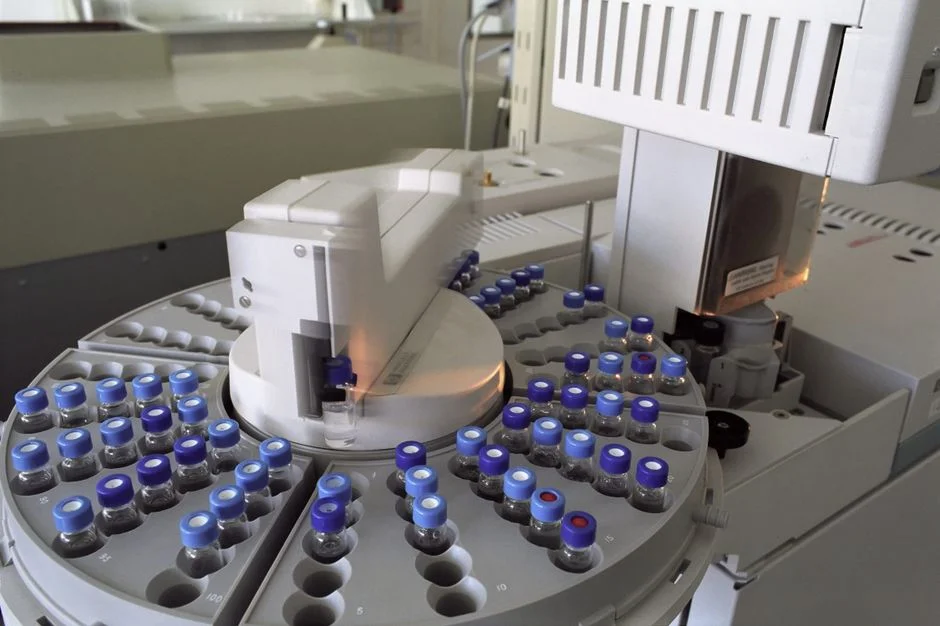
A Lonza fermentation or mammalian-cell-culture process typically generates high-strength BOD/COD streams with antibiotic residue carryover, suspended biomass, and stringent endotoxin limits. The existing POTW industrial user permit was sized for the prior product mix, and the integration engineer should model whether the Part 439 categorical ceilings can be met with the existing equalization and biological train or whether a dissolved air flotation system, an MBR membrane bioreactor system, or advanced oxidation is required.
If the Phase I or DMR review surfaces oil and grease, TSS excursions, or high FOG in the outfall, a dissolved air flotation unit is a common first upgrade to protect downstream biology. If residual disinfection is the constraint at the TPDES-permitted outfall, a chlorine dioxide disinfection system is the typical add-on, particularly where the receiving POTW or downstream TPDES-permitted outfall enforces a chlorine residual limit and a traditional chlorine feed is being phased out. Lonza's published direction toward wastewater-incineration reduction (per its own sustainability knowledge center) implies a long-term move toward on-site volume reduction, process-water reuse, and lower-strength outfalls — the 2026 integration plan should leave room for a phased upgrade to a reuse or RO polishing step rather than a single CAPEX push.
Frequently Asked Questions
Does 40 CFR Part 433 or Part 439 apply to a Lonza plant?
Part 439 applies. Part 433 is the Metal Finishing category, which the top-ranking SERP piece on Texas pharma acquisitions copy-pastes into the wrong context. A Lonza mammalian-cell-culture or microbial-fermentation plant maps to Part 439 Subpart A (Fermentation Products) or Subpart E (Pharmaceutical Fermentation), and a co-located secondary dosage-form operation would be Subpart D. The subpart drives the numerical effluent limits, so the buyer must confirm it from the seller's DMRs before signing.
How long does TCEQ have to process a TPDES permit transfer?
Under 30 TAC §305.64, TCEQ typically processes an administratively complete transfer in 30 to 60 days. If the transfer is treated as a major amendment with mandatory public notice, the review can extend to 90 days or longer. The integration PMO should plan for 90 days of operating with the prior operator's permit as cover rather than assuming a 30-day turnaround.
Is a PUC §13.301 filing always required?
No. Texas Water Code §13.301 only applies when the asset bundle includes a Certificate of Convenience and Necessity — that is, a regulated water or sewer utility serving outside customers. A typical Lonza manufacturing plant discharges to a municipal POTW under a private industrial user agreement and does not hold a CCN, in which case the §13.301 filing is informational only and the deal team can move directly to TPDES sequencing.
When does the new operator become liable for the existing TPDES permit?
Liability for environmental violations transfers to the new owner on the effective date of the acquisition as a matter of Clean Water Act §301, regardless of permit status. TCEQ is the day-to-day enforcement authority in Texas, but the seller remains the TPDES permittee of record until TCEQ processes the transfer. Purchase agreement reps, escrow, specific indemnities, and a pre-closing consent order are the standard tools to bridge that gap.
What is the difference between a TPDES individual permit and TXR050000 coverage?
A TPDES individual permit is a site-specific authorization with numeric effluent limitations tailored to the facility's wastewater characteristics and flow. TXR050000 is the Multi-Sector General Permit for industrial stormwater discharges and requires a Stormwater Pollution Prevention Plan rather than process-wastewater numeric limits. Most Lonza fermentation plants hold an individual TPDES industrial wastewater permit; only the stormwater portion of the site would typically be under TXR050000.