
The Day-0 Trigger: What Activates When the SPA Closes in Malaysia
When Bayer acquires a Malaysian plant in 2026, four instruments activate in parallel at deed transfer: a DOE Section 18 EQA 1974 written approval reissue (Peninsular, Sarawak, or Sabah jurisdiction), an IWK industrial discharge approval if the site routes to municipal sewer, a JAS-SPAN groundwater extraction licence if the ETP draws from a private well, and the site-specific schedule under the Environmental Quality (Prescribed Premises) Regulations 2009. Successor liability attaches at closing under common-law and EQA Section 38A; Bayer cannot rely on the seller's licence to bridge production. The DOE requires pre-closing notification and a 30-to-90-day transfer window depending on state.
The EQA 1974 Section 18 written approval is the binding federal instrument, and although it is property-like, it is reissued — not automatically transferred — on change of control. A single SPA condition-precedent track that says "all environmental permits" is wrong: each instrument runs its own clock, has its own rejection risk, and has its own DOE office counter-party. For a Bayer deal committee the practical consequence is that the seller's environmental representations must cover the licence status at signing, the bridging mechanism during the transfer window, and the post-closing compliance file from month 1. The corporate-disclosure driver is Bayer's 2023 water-stewardship strategy (bayer.com, March 2023), which the deal committee file should treat as a material item — not a footnote — because the same strategy will set the post-close operating covenant.
| Track | Instrument | Trigger | Typical clock | Counter-party |
|---|---|---|---|---|
| 1 | DOE Section 18 EQA 1974 written approval reissue | Change of control of prescribed premises | 30–90 days (state-dependent) | DOE Peninsular / Sarawak / Sabah |
| 2 | IWK industrial discharge approval | Discharge to municipal sewer | 3–6 months | Indah Water Konsortium |
| 3 | JAS-SPAN groundwater extraction licence | Private well supply to ETP | 2–4 months | Jabatan Air dan Saliran Negara |
| 4 | Prescribed-premises schedule reclassification | Schedule B activity under EQA 1974 | Aligned with Track 1 | State DOE office |
Federal vs State: Why the Peninsular-Sarawak-Sabah Split Matters to the SPA
The single most under-modelled variable in a Malaysian cross-border deal is which DOE office will issue the reissued written approval, because the same plant envelope produces a 30-day clock in Petaling Jaya and a 90-day clock in Bintulu. Peninsular Malaysia uses DOE HQ Putrajaya with a 30–60 day transfer window against the standard EQA 1974 template. Sarawak uses DOE Sarawak in Kuching with a 60–90 day window and parallel state-level requirements under the Sarawak Natural Resources and Environment Board (NREB) — the NREB pathway must be tracked as a fifth track in the Gantt. Sabah uses DOE Sabah in Kota Kinabalu with a 60-day typical window, and the Sabah Water Resources Enactment 1998 adds an extraction-side requirement if the site uses more than 250 m³/day from private supply.
The macro-capex backdrop is real but not a deal trigger: Malaysia's wastewater treatment services market reached USD 995M in 2025 and is projected to reach USD 1,380.6M by 2030 at 6.77% CAGR (marketsandmarkets, 2025). What the deal counsel needs is the state-specific clock, because assuming a Peninsular timeline for a Sarawak site slips the outside date by 30 days and exposes Bayer to operating without a valid written approval during the gap.
| State | Issuing authority | Typical transfer window | State-level overlay |
|---|---|---|---|
| Peninsular Malaysia | DOE HQ Putrajaya | 30–60 days | EQA 1974 standard template |
| Sarawak | DOE Sarawak (Kuching) | 60–90 days | Sarawak NREB parallel track |
| Sabah | DOE Sabah (Kota Kinabalu) | 60 days typical | Sabah Water Resources Enactment 1998 if > 250 m³/day |
Modelling the Right Bayer Process Envelope: Crop Science vs Pharma API
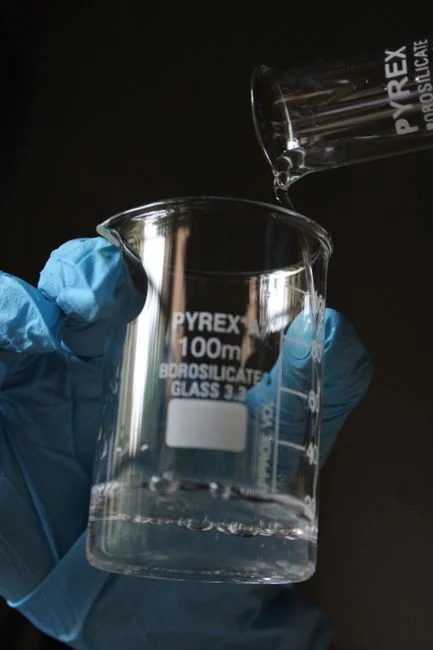
Bayer is not a generic pharmaceutical name. The deal team must model the right envelope before sizing capex; generic pharma assumptions under-size Crop Science surfactant peaks and over-size Pharma API biological oxygen demand. The Bayer Crop Science formulation envelope typically runs COD 200–800 mg/L with surfactant peaks from CIP cycles, TDS 1,500–4,000 mg/L from formulation salts, and a trace load of pesticide actives, co-formulants, and solvents that drives endocrine-disruptor screening on the receiving water (HydropureWater process engineering data, 2026). The Bayer Pharma API fermentation envelope can reach COD 5,000–15,000 mg/L and BOD 2,000–6,000 mg/L, requiring approximately 99.5% COD removal to meet the DOE Standard B envelope (HydropureWater process engineering data, 2026).
The receptor class set by DOE at the time of written approval issuance is non-negotiable at transfer. Standard A (sensitive receiving waters — water supply intakes, catchment reservoirs, environmentally sensitive habitats) tightens the nutrient caps substantially; Standard B (common rivers and inland waters) follows the published Industrial Effluent Regulations 2009 limits. Any post-closing production-mix change — adding a biological crop-protection line on a chemistry-only site — requires a written-approval modification, not just an internal ETP retune. The SPA should covenant the seller's representations about the historic production mix and bind the seller to disclose any pending production-mix changes that would shift the receptor class at the next DOE review.
| Parameter | Crop Science formulation | Pharma API fermentation | DOE Standard B envelope |
|---|---|---|---|
| COD (influent) | 200–800 mg/L | 5,000–15,000 mg/L | ≤ 200 mg/L monthly average |
| BOD (influent) | 100–400 mg/L | 2,000–6,000 mg/L | ≤ 50 mg/L monthly average |
| TDS | 1,500–4,000 mg/L | Variable, salt-driven | Site-specific |
| Removal required | ~50–75% COD | ~99.5% COD | — |
| Trace organics | Pesticide actives, surfactants, solvents | API intermediates, solvents | Standard A: endocrine screening |
Industrial Effluent Regulations 2009: The Binding Discharge Envelope
The Industrial Effluent Regulations 2009 (DOE) set the published monthly-average envelope: BOD ≤ 50 mg/L, COD ≤ 200 mg/L, TSS ≤ 100 mg/L, FOG ≤ 20 mg/L, total N site-specific, and total P site-specific, with Standard A tightening the nutrient caps when the receiving water is sensitive. Instantaneous maxima are typically 1.5× the monthly average, and the receptor class is set by DOE at written-approval issuance and is not renegotiable at transfer. The IWK industrial discharge approval is a parallel, often more restrictive envelope when the site routes to municipal sewer — IWK limits are commercial, site-specific, and must be tracked from month 0 because IWK can impose tighter caps than the IER 2009 to protect the municipal works.
JAS-SPAN extraction licence adds a separate cap on groundwater draw if the ETP uses a private well — a capex side-issue often missed in cross-border due diligence. For a Bayer site with a 1,200 m³/day feed and > 70% private-well supply, the JAS-SPAN cap is typically 250–500 m³/day per well, and exceeding the registered draw is treated as an unauthorised extraction under the Sabah Water Resources Enactment 1998 or the equivalent Peninsular water-services instrument.
| Parameter | Standard B (common rivers) | Standard A (sensitive waters) | IWK commercial envelope (typical) |
|---|---|---|---|
| BOD (mg/L, monthly avg) | 50 | 20 | 20–50 |
| COD (mg/L, monthly avg) | 200 | 80 | 100–200 |
| TSS (mg/L, monthly avg) | 100 | 50 | 50–100 |
| FOG (mg/L, monthly avg) | 20 | 10 | 10–20 |
| Total N | Site-specific | Tightened | Site-specific |
| Total P | Site-specific | Tightened | Site-specific |
The 24-Month Compliance Gantt: How to Build a Defensible Filing Schedule
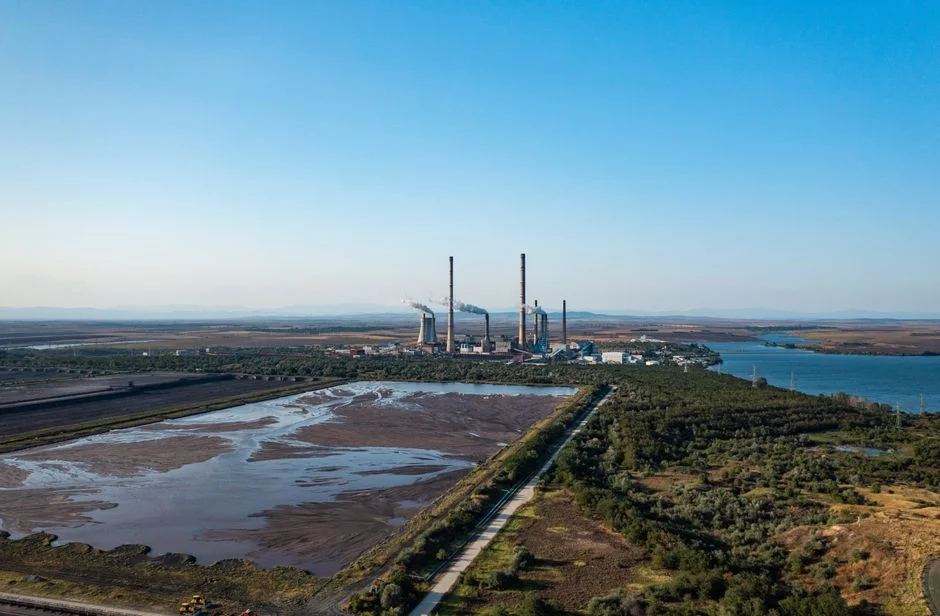
Treat deed transfer as month 0. File the DOE Section 18 written-approval transfer application and acknowledge receipt as a condition precedent by month 1; expect 30–90 days depending on state. File the IWK industrial discharge approval by month 1, expect a 3–6 month clock, and track it in parallel with the DOE schedule. File the JAS-SPAN extraction licence by month 1 if a private well is part of the ETP supply, expect 2–4 months. The 24-month envelope covers the four-track filing window, ETP upgrade detailed design, procurement, installation, and a 90-day performance trial that clears the operational milestone without holding the ETP as the critical path.
The reference treatment train for a 1,200 m³/day acquired Bayer site is equalisation at 1.5–2.0× diurnal flow to buffer CIP chemistry peaks, an anaerobic reactor (UASB or CSTR) at HRT 20–30 days driving 60–80% COD reduction, aerobic polishing at HRT 4–8 hours, an MBR cassette system as the final biological and solids barrier, a plate and frame filter press for sludge dewatering to 60–80% dry solids, and either a chlorine dioxide generator or open-channel UV depending on receptor class. A DAF system upstream of the equalisation basin handles the surfactant peaks that drive foam events in the aeration basin. CAPEX bands for the dominant deal-committee lines are MBR cassette replacement at USD 420,000–1,800,000 and the filter press at USD 150,000–450,000 (HydropureWater field data, 2026) — both are 5-year survival indemnity candidates. The same parallel filing logic for a Bayer site in a different jurisdiction is detailed in the Bayer Mexico acquisition compliance guide.
| Month (from deed) | Track 1 DOE Section 18 | Track 2 IWK | Track 3 JAS-SPAN | Track 4 ETP upgrade |
|---|---|---|---|---|
| 0 | Deed transfer; pre-closing notice to DOE | — | — | — |
| 1 | Application filed; receipt acknowledged | Application filed | Application filed (if private well) | Design basis locked |
| 2–4 | DOE review (Peninsular) or NREB parallel (Sarawak) | IWK technical review | JAS-SPAN review | Detailed design |
| 5–6 | Reissue expected (Peninsular) | Approval expected | Licence expected | Procurement |
| 7–12 | — | — | — | Installation, commissioning |
| 21–24 | — | — | — | 90-day performance trial |
Successor Liability and the Indemnity-Escrow Framework
Malaysian successor liability attaches under EQA 1974 Section 38A and DOE enforcement guidance treats the new title-holder as the responsible party from deed transfer. Unlike Mexico's LGPGIR, EQA 1974 does not contain an express no-limitations clause, but DOE practice treats pre-closing contamination as part of the closing record and will not allow the new title-holder to disclaim it. The three automatic-Fail triggers for a dedicated indemnity-escrow line are a sludge lagoon older than 10 years, unlined lagoon construction, and missing scheduled-waste manifests — any one of which demands a 10–15% of total enterprise value escrow independent of the ETP operating budget.
The SPA mechanics should extend environmental representations and warranties to at least 5 years, carve ETP and groundwater liability out of the general warranty cap, hold a 10–15% of total enterprise value environmental indemnity in escrow, and include a regulatory-change cost-sharing clause covering any tightening of the Industrial Effluent Regulations 2009 limits during the 5-year window. The standard 5% of EV environmental reserve is too low for a Malaysian asset with a long-operating history, and the deal committee should staff a 14-day pre-close work plan that compresses without skipping steps. For the parallel SPA-mechanic framework on a different jurisdiction, the Bayer Mexico acquisition compliance guide sets out the same four-track escrow logic; the Malaysian numbers differ, but the structure is identical.
Frequently Asked Questions
Does the seller's DOE Section 18 written approval survive the closing date in Malaysia?
No. The EQA 1974 Section 18 written approval is reissued, not automatically transferred, on change of control. The DOE requires pre-closing notification and operates a 30-day clock in Peninsular Malaysia (DOE HQ Putrajaya), 60–90 days in Sarawak (DOE Sarawak, Kuching) under EQA 1974, and 60 days in Sabah. Bayer cannot rely on the seller's licence to bridge production across closing.
What is the binding discharge envelope under the Industrial Effluent Regulations 2009?
The Industrial Effluent Regulations 2009 (DOE) set the monthly-average envelope at BOD ≤ 50 mg/L, COD ≤ 200 mg/L, TSS ≤ 100 mg/L, and FOG ≤ 20 mg/L for Standard B receiving waters. Standard A sensitive waters tighten BOD to 20 mg/L and COD to 80 mg/L. Instantaneous maxima are typically 1.5× the monthly average, and the receptor class is set by DOE at written-approval issuance.
What CAPEX should the deal committee price for the ETP upgrade on a 1,200 m³/day Bayer site?
The dominant lines are MBR cassette replacement at USD 420,000–1,800,000 and plate and frame filter press at USD 150,000–450,000 (HydropureWater field data, 2026). The reference treatment train is equalisation, anaerobic reactor (UASB or CSTR, HRT 20–30 days), aerobic polishing, MBR, and either chlorine dioxide or UV depending on receptor class. The Malaysia wastewater treatment services market is valued at USD 995M in 2025, projected to USD 1,380.6M by 2030 (marketsandmarkets, 2025), which is the macro-capex backdrop for vendor pricing.
How large should the environmental indemnity escrow be for a Malaysian asset deal?
For a Malaysian asset with a long-operating history, 10–15% of total enterprise value held in escrow for at least 5 years, with ETP and groundwater liability carved out of the general warranty cap. Any one of the three automatic-Fail triggers — sludge lagoon older than 10 years, unlined lagoon construction, or missing scheduled-waste manifests — independently justifies a 10–15% escrow line, separate from the ETP operating budget.