
Why Monterrey Hotels Need a Packaged MBR in 2026
Monterrey sits in a semi-arid basin where average annual rainfall is roughly 550–600 mm and pan-evaporation exceeds 1,600 mm, meaning the region runs a structural water deficit that CONAGUA and the local utility Servicios de Agua y Drenaje de Monterrey (SADM) have addressed through repeated tariff adjustments and scarcity surcharges since 2022. For a new-build 180-room hotel generating on the order of 70 m³/day of sewage, reuse is no longer a CSR line item — it is the only way to keep operating cost flat as potable rates rise. Hotel sewage also has a specific signature: BOD 250–400 mg/L, COD 500–800 mg/L, suspended solids 200–350 mg/L, plus surfactants, FOG, lint and hair from on-site laundry (Imemflo field characterisation). Flow itself varies sharply with occupancy and amenity mix, with morning checkout surges producing 1.5–2.0× the daily average. Comas et al. (2017) showed that dense, space-constrained tourist sites are exactly where compact MBR-based greywater reuse systems beat conventional trains — a finding that maps directly onto Monterrey hotel sites. The binding discharge standard is NOM-001-SEMARNAT-2024, and any reuse for toilet flushing, irrigation or cooling-tower makeup falls under NOM-003-SSA1-2006. See the underlying MBR process explainer for the technology background.
Sizing a Packaged MBR STP for a Hotel: Rooms to m³/day
Start with the room count, not the developer's nominal flow number. The working rule is 0.2–0.4 m³ per bed per day; add 30–50% on top when the property has a full kitchen, a gym/spa and on-site laundry, and apply a 1.5–2.0× peak factor to handle the 07:00–10:00 checkout surge and the dinner return. For a 200-room full-service property: 200 × 0.3 m³ + 40% F&B/laundry allowance ≈ 84 m³/day average, rounded to 100 m³/day design flow with 1.8× peak → 180 m³/day hydraulic capacity. This is the number to size the membrane tank, blowers and equalisation on. The Imemflo 200-bed, 5-star benchmark — a 250 m³/day hollow-fibre MBR — is a useful upper bound for luxury properties with extensive F&B, ballrooms and spa facilities; undersizing against this reference is the most common cause of early retrofit. Corporate and medical-travel hotels in Monterrey routinely sustain occupancy above 80% year-round, which compounds the peak and pushes effective loading 15–20% above the developer's projection. Always size the bioreactor on average BOD load, not just on hydraulic flow.
| Hotel profile | Rooms | Specific flow (m³/bed·d) | F&B/laundry uplift | Average daily flow (m³/d) | Peak flow @ 1.8× (m³/d) | Recommended MBR module count* |
|---|---|---|---|---|---|---|
| Limited-service / business | 80 | 0.20 | +20% | ~20 | ~36 | 1 |
| Full-service mid-scale | 150 | 0.30 | +35% | ~60 | ~108 | 2 |
| Full-service upper-scale | 200 | 0.30 | +40% | ~85 | ~153 | 2–3 |
| 5-star / luxury (Imemflo benchmark) | 200 | 0.40 | +50% | ~120 | ~216 | 3 |
| Resort / convention | 350 | 0.35 | +45% | ~180 | ~324 | 4–5 |
| Large convention / mixed-use | 500 | 0.30 | +40% | ~210 | ~378 | 5–6 |
*Module count based on a nominal 40 m³/day per submerged PVDF module; confirm against the specific membrane supplier's flux rating at 25–35°C.
NOM-001 Effluent Limits and NOM-003 Reuse Targets in 2026
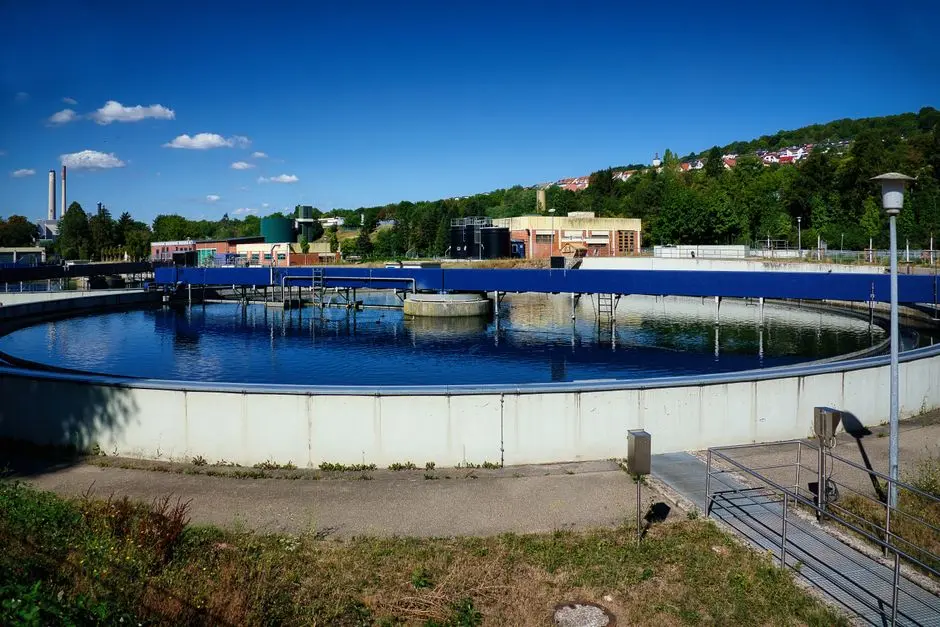
For a packaged MBR sized to a 50–500 m³/day hotel in the Monterrey metropolitan area, the receiving body is typically classified under NOM-001-SEMARNAT-2024 as a C-body (río o embalse usado para riego), which sets monthly-average discharge ceilings of BOD ≤30 mg/L, TSS ≤40 mg/L, COD ≤120 mg/L, fats and oils ≤15 mg/L, and total nitrogen ≤25 mg/L for new urban discharges. Where the hotel discharges to a B-body (protection of aquatic life), tighten to BOD ≤20 mg/L and TSS ≤30 mg/L. A well-operated MBR with PVDF ultrafiltration routinely achieves 80–95% COD removal and <1 NTU turbidity (Comas et al., 2017, confirmed by HydropureWater DF module data at 0.1 µm pore size), so these limits are cleared with margin and no tertiary coagulation in most cases. If the effluent is reused for toilet flushing, landscape irrigation or cooling-tower makeup, NOM-003-SSA1-2006 additionally requires fecal coliforms <1,000 NMP/100 mL (or <240 NMP/100 mL for unrestricted reuse), turbidity <2 NTU, and residual chlorine 0.2–1.5 mg/L — a UV or chlorine dioxide polish closes that gap. Commissioning in Mexico also requires a registered Responsable Técnico to sign the operating parameters and the Manifiesto de Descarga for the Registro de Descargas de Aguas Residuales (REDA) of CONAGUA.
| Parameter | NOM-001 B-body (avg/month) | NOM-001 C-body (avg/month) | NOM-003 reuse (typical) | Typical MBR effluent (PVDF UF) |
|---|---|---|---|---|
| BOD₅ (mg/L) | ≤ 20 | ≤ 30 | — | < 5 |
| COD (mg/L) | ≤ 100 | ≤ 120 | — | 20–40 |
| TSS (mg/L) | ≤ 30 | ≤ 40 | ≤ 5 (irrigation) | < 1 |
| Turbidity (NTU) | — | — | ≤ 2 (toilet/irrigation) | < 1 |
| Fats & oils (mg/L) | ≤ 15 | ≤ 15 | — | < 10 |
| Total nitrogen (mg/L) | ≤ 20 | ≤ 25 | — | 10–20 |
| Fecal coliforms (NMP/100 mL) | ≤ 1,000 | ≤ 1,000 | < 240 (unrestricted) / < 1,000 | < 100 (post-UV) |
MBR vs MBBR vs SBR: Which Suits a Hotel Flow Range
For 50–500 m³/day hotels with a reuse target, MBR wins on total-life economics despite the highest CAPEX per m³. MBR delivers the smallest footprint — typically ~60% smaller than conventional activated sludge for the same load (HydropureWater product data, 2026) — because the membrane tank replaces the clarifier and supports MLSS of 8,000–12,000 mg/L. Effluent is the cleanest of the three at <1 NTU turbidity, <5 mg/L BOD and reusable without a downstream UF polish. The trade-offs are real: energy at 0.4–0.8 kWh/m³ and membrane replacement every 5–8 years for PVDF. MBBR cuts footprint 30–40% versus CAS, handles load swings well, and costs less, but its effluent typically runs 20–30 mg/L TSS — not reuse-ready without a UF polish, and once you add UF you have a hybrid that is functionally an MBR. SBR has the lowest CAPEX and simplest controls, but needs large equalisation tanks, struggles on a tight Monterrey hotel footprint, and produces 20–30 mg/L TSS effluent that fails reuse without tertiary filtration. The detailed head-to-head for industrial envelopes is laid out in this MBR vs MBBR comparison; the table below trims that to the hotel flow band.
| Criterion (at 150 m³/day hotel) | MBR (submerged PVDF) | MBBR + clarifier | SBR |
|---|---|---|---|
| Footprint | ~60 m² (smallest) | ~110 m² | ~180 m² (equalisation dominates) |
| Effluent BOD (mg/L) | < 5 | 15–25 | 15–25 |
| Effluent TSS (mg/L) | < 1 | 20–30 | 20–30 |
| Reuse-ready without tertiary | Yes | No (UF needed) | No (UF needed) |
| Specific energy (kWh/m³) | 0.4–0.8 | 0.3–0.5 | 0.3–0.6 |
| Automation complexity | High (TMP, CIP, backwash) | Medium | Medium (cycle timing) |
| CAPEX band (Mexico, 2026, USD/10 m³/d) | 35,000–60,000 | 20,000–35,000 | 18,000–30,000 |
| Best fit in 50–500 m³/d band | Hotels with reuse, tight sites | Discharge-only, large sites | Budget-driven, large sites |
What to Specify in the Packaged MBR: Membranes, Aeration, Controls

The tender spec should pin the membrane geometry, the aeration control strategy and the pretreatment train — these three drive operating cost and membrane life. Specify submerged PVDF hollow-fibre for flows above 200 m³/day (high packing density, single-train redundancy) or submerged PVDF flat-sheet for the 30–200 m³/day band where the integrated aeration box simplifies civil works; the DF-series flat-sheet module runs 32–135 m³/day per cassette at 0.1 µm nominal pore size. For the system-level package, reference an integrated packaged MBR system in the 10–2,000 m³/day envelope and the PVDF flat-sheet MBR module for module-level replacement pricing. Aeration must be on VFD blowers with dissolved-oxygen cascade control, paired with an intermittent air-scour regime modelled on Comas's SmartAir-MBR — the pilot showed measurable energy reduction while holding TMP under 30 kPa. Pretreatment is non-negotiable for hotel waste: a rotary fine bar screen at 1–3 mm aperture ahead of a grit chamber and a DAF (or oil-skimming zone) removes FOG, hair and lint before they foul the membrane. Controls should include a PLC with remote telemetry, automatic backwash on TMP and time triggers, chemical-enhanced wash (CEB) on a weekly or TMP-based schedule, and a UV disinfection polish sized to the design flow to close NOM-003 reuse compliance without a chlorine contact tank.
2026 Cost, Payback, and Local Sourcing in Mexico
Turnkey CAPEX for a packaged MBR in Mexico in 2026 sits in the range of USD 25,000–60,000 per 10 m³/day of installed capacity, with containerised plants at the lower end and concrete-buried "WSZ-style" plants cheaper per m³ at flows above 200 m³/day (cross-checked against HydropureWater Mexico distributor quotes, 2026-01). OPEX is dominated by energy at 0.4–0.8 kWh/m³ and membrane replacement on a 5–8 year cycle for PVDF; chemical costs for CEB and cleaning-in-place typically add 5–10% on top. The Comas et al. (2017) result — a 3-year payback at 30 m³/day in a Mediterranean tourist setting — is conservative for Monterrey because the 2026 potable water tariff structure (SADM block tariffs plus scarcity surcharges introduced since 2023) makes avoided potable water worth more than the Mediterranean baseline, so payback frequently compresses to 2–2.5 years at 100+ m³/day when reuse displaces toilet-flush and irrigation demand. International membrane and packaged-plant suppliers must contract with a Mexican partner for NOM certification, NOM-001-SEDE electrical compliance, and on-site commissioning, and they should already have a SADM or CONAGUA point-of-contact for the discharge permit trail. A buried underground integrated sewage treatment train keeps the visual footprint at zero on tight urban sites in San Pedro or the centro of Monterrey.
| Cost element | Unit / basis | 2026 Mexico benchmark | Notes |
|---|---|---|---|
| CAPEX — packaged MBR, turnkey | USD per 10 m³/day | 25,000–60,000 | Containerised low end, concrete-buried WSZ high end |
| OPEX — energy | kWh/m³ | 0.4–0.8 | VFD blowers + SmartAir-MBR air scour |
| OPEX — membrane replacement (PVDF) | Years | 5–8 | Flux loss and breakages drive timing |
| OPEX — chemicals (CEB / CIP) | % of energy OPEX | 5–10% | NaOCl + citric acid typical |
| Payback — hotel reuse, 30 m³/d | Years | ~3 (Comas 2017 baseline) | Conservative for Mediterranean |
| Payback — hotel reuse, 100+ m³/d, Monterrey | Years | 2.0–2.5 | Higher 2026 SADM tariffs + scarcity surcharges |
| Footprint reduction vs CAS | % | ~60% | HydropureWater product data, 2026 |
4-Step Selection Checklist Before You Sign the PO
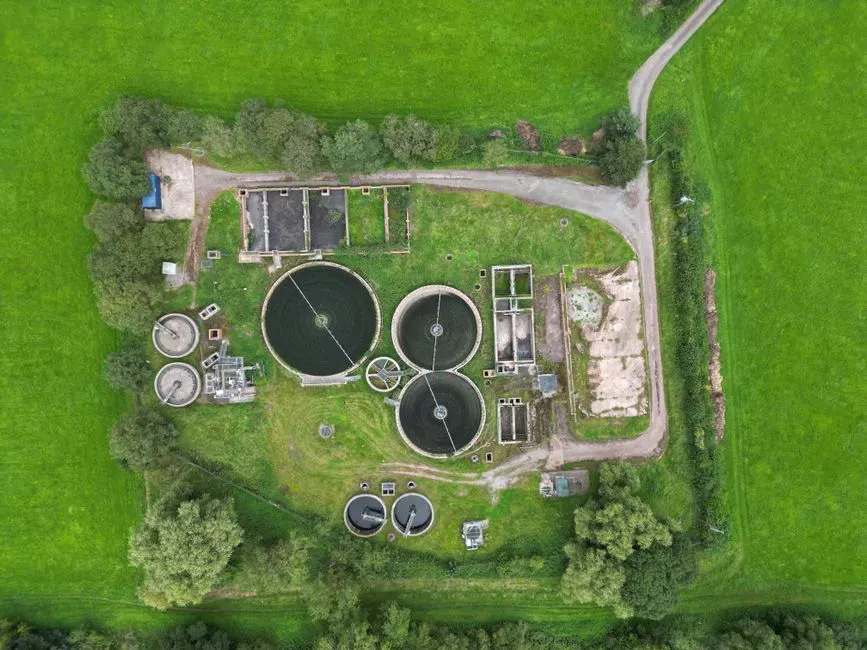
Treat the PO as the end of a measurement-led process, not the start. Step 1 — Confirm the design flow. Do not accept the developer's nominal number; run a 7-day measurement on the existing building (or a hydraulic model on a brownfield conversion) and apply a 1.8× peak factor before sizing the membrane tank and blowers. Step 2 — Write the effluent spec against NOM-001-SEMARNAT-2024 or NOM-003. For discharge, lock BOD ≤30 mg/L and TSS ≤40 mg/L as a C-body ceiling; for reuse, add turbidity ≤2 NTU, fecal coliforms <1,000 NMP/100 mL, and fats/oils ≤15 mg/L — all of which an MBR hits with margin (Comas et al., 2017; HydropureWater DF module data, 2026). Step 3 — Demand reference plants of similar size and use. A 2-week on-site membrane pilot is worth more than any brochure, and any supplier quoting >300 m³/day in the hotel segment should be able to name an Imemflo-style 200-bed reference at 250 m³/day or equivalent. Step 4 — Lock the service contract in writing. Monterrey sites cannot wait five days for a membrane cleaning crew from Mexico City; the contract must specify guaranteed response time, the membrane-replacement schedule (years 5, 7), remote monitoring, and stocking of critical spares (CEB chemicals, pump seals) in a local warehouse. The full process background and chemistry of the MBR process should be referenced in the technical specification annex.
Frequently Asked Questions
How do I size a packaged MBR STP for a 200-room hotel in Monterrey?
Apply the 0.2–0.4 m³/bed/day rule: 200 rooms × 0.3 m³ + 30–50% for F&B, gym and laundry, then multiply by a 1.5–2.0× peak factor. A 200-room full-service property lands at roughly 85 m³/day average and 150–180 m³/day peak, which maps to 2–3 submerged PVDF modules at ~40 m³/day each. For a 5-star benchmark use the Imemflo 250 m³/day reference plant.
What NOM-001-SEMARNAT-2024 effluent limits must a packaged MBR hit in Monterrey?
For a typical C-body discharge (river or reservoir used for irrigation), the binding limits are BOD ≤30 mg/L, TSS ≤40 mg/L, COD ≤120 mg/L, fats and oils ≤15 mg/L, and total nitrogen ≤25 mg/L as monthly averages. An MBR with PVDF UF routinely produces BOD <5 mg/L, TSS <1 mg/L and turbidity <1 NTU, clearing these limits with margin.
Is greywater reuse really economic in Monterrey, or is it a CSR play?
It is economic. The Comas et al. (2017) baseline was a 3-year payback at 30 m³/day in a Mediterranean tourist setting. Monterrey's 2026 SADM potable tariffs plus scarcity surcharges are higher than that baseline, so 100+ m³/day hotel reuse schemes typically pay back in 2.0–2.5 years. For a 180-room hotel generating ~70 m³/day, reuse for toilet flushing, irrigation and cooling-tower makeup replaces roughly 40–60% of potable demand.
How much smaller is an MBR than a conventional activated sludge plant for a hotel?
An MBR delivers a ~60% footprint reduction versus conventional activated sludge at the same loading, because the membrane tank replaces the clarifier and supports MLSS of 8,000–12,000 mg/L (HydropureWater product data, 2026). For a 150 m³/day hotel this translates to roughly 60 m² of process area versus ~150 m² for a CAS train of equivalent capacity.
What pretreatment does a hotel sewage MBR need to protect the membranes?
Specify a 1–3 mm rotary fine bar screen (GX-series or equivalent) ahead of a grit chamber and a DAF or oil-skimming zone to strip FOG, lint, hair and food solids before they reach the membrane tank. Without this train, hotel waste fouls PVDF membranes in weeks rather than years. An integrated packaged MBR system with a flat-sheet PVDF module is the practical match for the 50–200 m³/day hotel band.