What Counts as Domestic Sewage in Brisbane
Domestic sewage in Brisbane is the wastewater stream generated by toilets, showers, baths, kitchen sinks and laundries in homes, workers' accommodation, schools, hotels and hospitals — explicitly distinct from industrial or trade waste and from stormwater runoff. Per the Queensland Department of Environment, an average household produces 200–300 L of wastewater per person per day, of which roughly 99% is water and 1% is contaminating waste (source: environment.qld.gov.au). That 1% carries human waste, food organics, oils, grease, soaps and detergents, plus trace heavy metals, pesticides, pharmaceuticals and microplastics — the contaminant mix that drives biological oxygen demand (BOD), total suspended solids (TSS), nutrient load and disinfection requirements downstream.
For any site connecting to the Urban Utilities sewerage network, non-domestic streams — commercial kitchens, laundromats, hospital steriliser discharges, trade workshops — require a separate trade-waste approval with sewer admission limits for grease, pH, temperature and heavy metals. The Urban Utilities network spans roughly 19,000 km across SEQ, feeding the terminal at Pinkenba (source: Urban Utilities, 2025). Stormwater cross-connections to the sewer remain illegal under the Environmental Protection Act 1994 and routinely cause treatment-plant bypass events, so drainage separation must be confirmed before a packaged plant is specified for a Brisbane site.
The Four Treatment Stages Used in Queensland
Queensland defines domestic wastewater treatment as a four-stage cascade, and every packaged plant, lagoon system or membrane bioreactor (MBR) specified for a Brisbane site can be mapped back to it (source: environment.qld.gov.au). The stages are not optional individually; they are the engineering backbone of the decision framework that follows.
Stage 1 — Primary. Screening removes plastics, rags and large debris; grit traps capture sand; primary settling tanks drop out settleable solids as raw sludge, with grease and scum skimmed from the surface. Typical primary clarifier overflow rates sit between 1.0 and 1.7 m/h for municipal flow, with HRT of 1.5–2.5 h.
Stage 2 — Secondary. Biological oxidation by activated sludge, biofilm carriers, trickling filters or membrane bioreactors removes dissolved organics. Mixed liquor suspended solids (MLSS) typically run 3,000–5,000 mg/L in conventional activated sludge and 8,000–12,000 mg/L in MBR systems, with food-to-mass ratios (F/M) of 0.05–0.2 kg BOD/kg MLSS·day.
Stage 3 — Nutrient removal. Targeted nitrification, denitrification and biological or chemical phosphorus removal cut total nitrogen (TN) below 10–15 mg/L and total phosphorus (TP) below 1–2 mg/L. The Department of Environment notes nutrient removal is not available at all Queensland STPs because it requires specialised equipment — making it a key specification differentiator for Brisbane sites discharging to the Brisbane River or Moreton Bay.
Stage 4 — Disinfection. Chlorination, chlorine dioxide or UV irradiation delivers the E. coli reduction required for discharge or reuse. UV doses of 30–40 mJ/cm² achieve ≤10 cfu/100 mL, the default trigger for urban SEQ waterways. Lagoon retention is acceptable only in low-density settings where HRT exceeds 20–30 days.
Brisbane and SEQ Discharge Routes: Where Treated Sewage Can Go
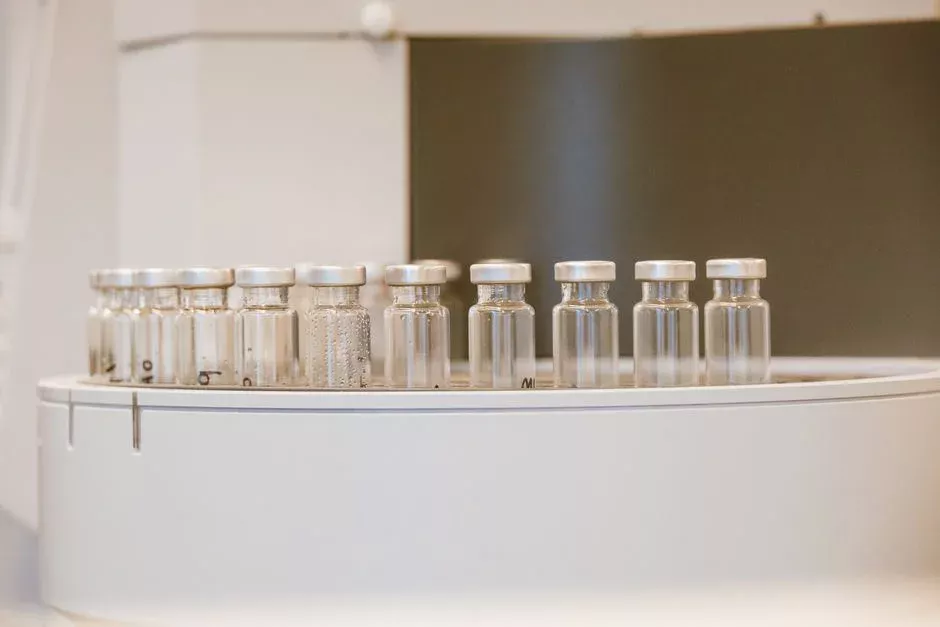
The single most common procurement error on a Brisbane sewage project is to pick a process before picking a discharge route. The discharge destination sets the effluent envelope, the licence tier and the process shortlist, in that order.
Three practical discharge routes exist for a domestic sewage treatment plant in Brisbane in 2026:
- Route 1 — Urban Utilities sewer. The default for sites inside the SEQ service area. Requires a trade-waste approval with compliance to Urban Utilities' Trade Waste Customer Charter (BOD ≤ 600 mg/L, TSS ≤ 600 mg/L, pH 6–10, oil/grease ≤ 200 mg/L, no stormwater cross-connections). Anaerobic or aerobic packaged units feeding the sewer are common on small commercial sites.
- Route 2 — Brisbane River, Moreton Bay or local creek. Discharges to waters are licensed under the Environmental Protection Act 1994 and must meet water-quality goals set by the Environmental Protection (Water and Wetland Biodiversity) Policy 2019. Typical licence envelopes are BOD ≤ 20 mg/L, TSS ≤ 30 mg/L, NH3-N ≤ 5 mg/L, total P ≤ 1–2 mg/L and E. coli ≤ 200 cfu/100 mL for recreational waters — which is why MBR or SBR with disinfection is the dominant configuration.
- Route 3 — On-site irrigation / subsurface drip. Off-sewer sites in Brisbane, Ipswich, Logan, Moreton Bay and Somerset councils fall under the Queensland Plumbing and Wastewater Code and the Department of Natural Resources household-system authorisation. Surface irrigation requires secondary-treated effluent with E. coli ≤ 10 cfu/100 mL and a buffer zone of typically 2–6 m from property boundaries and bores.
Capacity is the second decision gate. Schedule 2 of the EP Act sets the environmentally relevant activity (ERA) thresholds; for sewage treatment, ERA 63 (sewage treatment works) triggers a development approval at design capacities commonly above 21 EP or about 4.2 m³/day, after which a site-specific environmental authority is required. Packaged plants below that threshold still need council sign-off, but skip the full state licence track.
| Discharge route | Governing instrument | Typical effluent envelope (BOD / TSS / TN / TP / E. coli) | ERA licence trigger |
|---|---|---|---|
| Urban Utilities sewer | Urban Utilities Trade Waste Charter + EP Act 1994 | ≤600 / ≤600 mg/L per consent; nutrient limits set case-by-case | None at domestic scale; trade-waste approval only |
| Brisbane River / Moreton Bay | EP Act 1994 + EPP (Water & Wetland Biodiversity) 2019 | ≤20 / ≤30 / ≤15 / ≤2 mg/L / ≤200 cfu/100 mL | ERA 63 above ~21 EP or ~4 m³/day |
| On-site subsurface irrigation | QLD Plumbing & Wastewater Code + DNR authorisation | ≤20 / ≤30 mg/L / ≤10 cfu/100 mL (Class A) | Council approval; DNR endorsement for household system |
Process Options for Domestic Sewage in Brisbane (2026 Comparison)
For Brisbane sites in 2026, four process families dominate: buried A/O packaged plants, MBR systems, sequencing batch reactors (SBR) and lagoon or constructed-wetland systems. The right choice is driven by discharge route, footprint and reuse intent — not by which technology is newest.
The WSZ series buried A/O packaged sewage treatment plant combines anoxic/aerobic biological contact oxidation, sedimentation and disinfection in a single buried skid, running fully automatic with no on-site operator across a 1–80 m³/h band (HydropureWater verified product data, 2026). It is the default for suburban schools, residential estates, hotels and worker camps where the treated stream goes to the Urban Utilities sewer or to subsurface irrigation, and where a 15–20 m² footprint with a lawn-on-top finish is acceptable.
For tighter envelopes and any reuse application, the HydropureWater MBR integrated wastewater treatment system delivers 10–2,000 m³/day with PVDF ultrafiltration at <1 μm nominal pore size, typically producing BOD ≤ 5 mg/L, TSS ≤ 5 mg/L and TN ≤ 10 mg/L on domestic sewage. MBR systems run MLSS at 8,000–12,000 mg/L and achieve roughly 60% smaller footprint than conventional activated sludge at the same loading. DF series PVDF flat-sheet MBR modules cover the smaller end, with a single cassette delivering 32–135 m³/day, which suits worker accommodation, school upgrades and hospital wings.
SBR is competitive for sites that need biological phosphorus removal without chemical dosing and have the buffer volume for cyclic operation. A 2026 Brisbane pilot by the University of Queensland, Urban Utilities and Seqwater (Gan et al., Water Research, 2026, DOI 10.1016/j.watres.2026.126273) demonstrated a return-sludge sidestream (RSS) EBPR configuration achieving 93.3 ± 7.0% P removal at 24 h sidestream HRT — versus 75.7 ± 17.0% at 16 h — with ~31–47% lower total sludge yield than the MLE baseline and a N₂O emission factor of 1.1 ± 0.7%. The same pilot eliminated the need for chemical P precipitation, an important operating-cost line item for SEQ sites that must hit ≤1 mg/L TP.
Lagoon systems and constructed wetlands remain appropriate for low-density rural lots and worker camps beyond the Urban Utilities network, where land is cheap and a 20–30 day retention can satisfy E. coli targets without disinfection hardware. They will not meet urban Brisbane effluent envelopes on BOD or phosphorus without polishing.
| Parameter | A/O packaged (WSZ) | MBR integrated | SBR (incl. RSS-EBPR) | Lagoon / constructed wetland |
|---|---|---|---|---|
| Capacity range | 1–80 m³/h buried | 10–2,000 m³/day | 20–5,000 EP typical | 20–500 EP typical |
| Footprint (relative) | Low (buried) | ~60% of CAS | Moderate (batch buffers) | High (≥10 m²/EP) |
| BOD / TSS effluent | ≤20 / ≤30 mg/L | ≤5 / ≤5 mg/L | ≤10 / ≤15 mg/L | ≤30 / ≤60 mg/L |
| TN / TP | Limited (no dedicated anoxic) | TN ≤10; TP via coagulant | TN ≤10; TP ≤1 (RSS-EBPR 93.3%) | TN ≤15; TP 2–4 mg/L |
| Power (kWh/m³) | ~0.3–0.5 | ~0.6–1.0 | ~0.4–0.7 | ~0.05–0.1 |
| Sludge yield (kg DS/kg BOD) | ~0.3–0.4 | ~0.25–0.35 | ~0.15–0.25 (RSS-EBPR, 2026 UQ pilot) | Negligible (accumulated) |
| Operator skill | None (PLC) | Membrane maintenance | Process control | Periodic desludging |
| Best-fit Brisbane site | Suburban school, residential estate, hotel, hospital, urban worker camp | Reuse, footprint-constrained, urban | Sites with tight TP / TN envelope | Rural, off-sewer, large lot |
Brisbane Compliance and Licensing in 2026
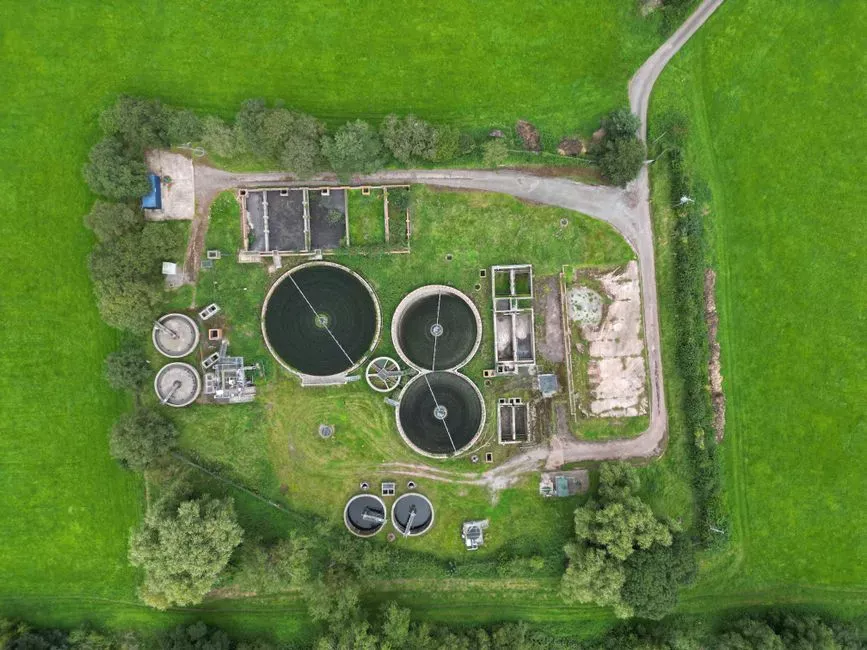
The Environmental Protection Act 1994 is the master law, and the Environmental Protection (Water and Wetland Biodiversity) Policy 2019 is the subordinate instrument that sets water-quality goals for SEQ waterways and obliges local councils to prepare and implement Sewage Management Plans. Under this pair, the Department of Environment, Tourism, Science and Innovation administers ERAs of regional or statewide impact, while Brisbane, Logan, Ipswich, Moreton Bay and Somerset councils administer ERAs of local impact — including small packaged plants that do not cross the Schedule 2 ERA 63 threshold.
Operators must hold an EP Act licence or approval, monitor and report discharge quality to the regulator, and renew on the cycle specified in the environmental authority (commonly 5 years for sewage works). Urban Utilities additionally enforces a trade-waste approval for any discharge to its network, with mandatory flow metering, sampling ports and — for discharges above 20 kL/day — online pH and conductivity monitoring. Stormwater cross-connection to the sewer remains an enforced offence under the EP Act.
For packaged plants under the threshold, a building and plumbing approval under the Queensland Plumbing and Wastewater Code is still required for any on-site effluent disposal, and the Department of Natural Resources must authorise any household sewage treatment system. On the project-management side, checking the ERA tier and the council's Sewage Management Plan before finalising process selection avoids the rework that derails Brisbane projects when an approval pathway is missed.
Engineering Checklist for Specifying a Brisbane Sewage Treatment Plant
This five-step checklist is the workflow a consulting or in-house engineer in Brisbane can hand directly to a project manager or estimator in 2026.
- Fix the design flow. Multiply the design population by 200–300 L/person/day (QLD Government figure), add a peaking factor of 2.5–4.0× for residential estates and 1.5–2.0× for hotels, hospitals and worker camps, and confirm the design flows against any Urban Utilities network capacity constraints.
- Decide the discharge route. Urban Utilities sewer, Brisbane River / Moreton Bay, or on-site subsurface irrigation. The route sets the effluent envelope — BOD, TSS, NH3-N, TP and E. coli — and is the dominant input into process selection.
- Match the process to the envelope. Buried A/O packaged (WSZ) for 1–80 m³/h on sewer-discharge or rural irrigation sites. MBR for reuse, footprint-constrained urban sites, or anywhere E. coli ≤10 cfu/100 mL is required. SBR with RSS-EBPR where the licence demands ≤1 mg/L TP without chemical dosing. Lagoon only for low-density rural.
- Confirm compliance. EP Act 1994 and EPP 2019 for any waterway discharge, Urban Utilities trade-waste approval for any sewer connection, QLD Plumbing and Wastewater Code sign-off for on-site disposal, and council Sewage Management Plan alignment for the local government area.
- Plan sludge handling and disinfection. Sludge yield at Brisbane strength sewage runs 0.25–0.40 kg DS/kg BOD removed (and ~31–47% lower with RSS-EBPR per the 2026 UQ/Urban Utilities/Seqwater pilot), so a HydropureWater plate-and-frame filter press sized to weekly or fortnightly draw is the standard dewatering step. For disinfection, a chlorine dioxide generator is the typical choice where chlorination is preferred over UV, particularly on hospital and hotel sites handling trade waste. The same packaged-plant workflow used for Brisbane applies on the other side of the border, and a parallel procurement view is set out in this 2026 buyer's engineering guide to effluent treatment plants in Melbourne.
Frequently Asked Questions
Do I need council approval to install a packaged sewage treatment plant in Brisbane?
Yes. Any packaged sewage treatment plant in Brisbane requires a building/plumbing approval under the Queensland Plumbing and Wastewater Code, and may also need an EP Act 1994 development approval if the design capacity exceeds the Schedule 2 ERA 63 threshold (typically ~21 EP or about 4.2 m³/day). Discharges to the Urban Utilities sewer additionally require a trade-waste approval, and discharges to the Brisbane River or Moreton Bay require an EP Act environmental authority and alignment with the EPP (Water and Wetland Biodiversity) Policy 2019.
How much domestic sewage does a Brisbane household actually produce?
The Queensland Department of Environment cites 200–300 L per person per day for an average household, of which 99% is water and 1% is contaminating waste. This figure is the standard design basis for Brisbane residential developments, hotels, hospitals and worker camps, and feeds directly into the average dry-weather flow used to size packaged plants and lagoons.
Which system is best for a small Brisbane site not on the sewer?
For sites below ~80 m³/h not on the Urban Utilities network, a buried A/O packaged plant (WSZ series) is the default 2026 choice where the treated stream goes to subsurface irrigation. If reuse for toilet flushing or irrigation is required, or the footprint is constrained, an MBR (10–2,000 m³/day) with PVDF flat-sheet modules delivers BOD ≤ 5 mg/L, TSS ≤ 5 mg/L and E. coli ≤ 10 cfu/100 mL. Lagoon systems suit only low-density rural lots above 1,000 m² of available land.
What effluent quality is needed to discharge to the Brisbane River or Moreton Bay?
Discharges to the Brisbane River, Moreton Bay or any SEQ waterway require an EP Act 1994 environmental authority, with limits set by the EPP (Water and Wetland Biodiversity) Policy 2019. Typical licence envelopes for domestic sewage are BOD ≤ 20 mg/L, TSS ≤ 30 mg/L, NH3-N ≤ 5 mg/L, total P ≤ 1–2 mg/L and E. coli ≤ 200 cfu/100 mL. Hitting the phosphorus target without chemical dosing typically requires SBR with RSS-EBPR or MBR with coagulant dosing.
Can treated sewage be reused for irrigation on a Brisbane property?
Yes, for sites not on the Urban Utilities sewer. The Queensland Plumbing and Wastewater Code and the Department of Natural Resources' household-system authorisation set the framework, with class A effluent (BOD ≤ 20 mg/L, TSS ≤ 30 mg/L, E. coli ≤ 10 cfu/100 mL) required for surface irrigation and a buffer zone of typically 2–6 m from property boundaries, bores and waterways. MBR effluent with chlorine dioxide or UV disinfection is the standard way to hit class A consistently at flows above 5 m³/day.